• Fri frakt över 249 kr
  • •
  • Snabba leveranser
  • •
  • Billiga böcker
Kundservice

Du är på sajten för privatpersoner.

Företag, bibliotek eller offentlig verksamhet?

Du handlar på classic.bokus.com, där alla dina funktioner finns intakta.
Till classic.bokus.com
Bokus logotyp. Gå till startsidan.
  • Erbjudanden
  • Nyheter
  • Student
  • Topplistor
  • Barn & ungdom
  • Bokus Play
  • E-böcker
  • Pocketböcker
  • Spel & pussel

10% rabatt på allt med kod: NYSTART10 →

Sidfot

Mina sidor

    Hjälp

    • Kundservice
    • Vanliga frågor och svar
    • Frakt och leverans
    • Retur vid ångerrätt
    • Reklamera vara
    • Betalning
    • Köpvillkor
    • Allmänna villkor
    • Information om webbplatsens tillgänglighet

    Om Bokus

    • Om oss
    • Pressrum
    • För studenter
    • För företag
    • För bibliotek och offentlig verksamhet
    • För leverantörer
    • Hållbarhet

    Populärt

    • Aktuella erbjudanden
    • Presentkort
    • Studentlitteratur
    • Nya böcker
    • Topplistor
    • Signerade böcker
    • Engelska böcker

    Inspiration

    • Boktips
    • BookTok
    • Populära bokserier
    • Barnbokskaraktärer
    • Populära författare
    Logotyp för Bokus
    Följ oss på Facebook (extern länk)Följ oss på Instagram (extern länk)Följ oss på YouTube (extern länk)Följ oss på TikTok (extern länk)
    bokus @ CookiesAnpassa cookiesIntegritetspolicyKöpvillkor
    Till Citymail hemsida (extern länk)Till Budbee hemsida (extern länk)Till Postnord hemsida (extern länk)Till Schenker hemsida (extern länk)Till Early Bird hemsida (extern länk)Till Walleys hemsida (extern länk)
    1. Juridik
    2. Rättsvetenskap
    3. Komparativ rätt

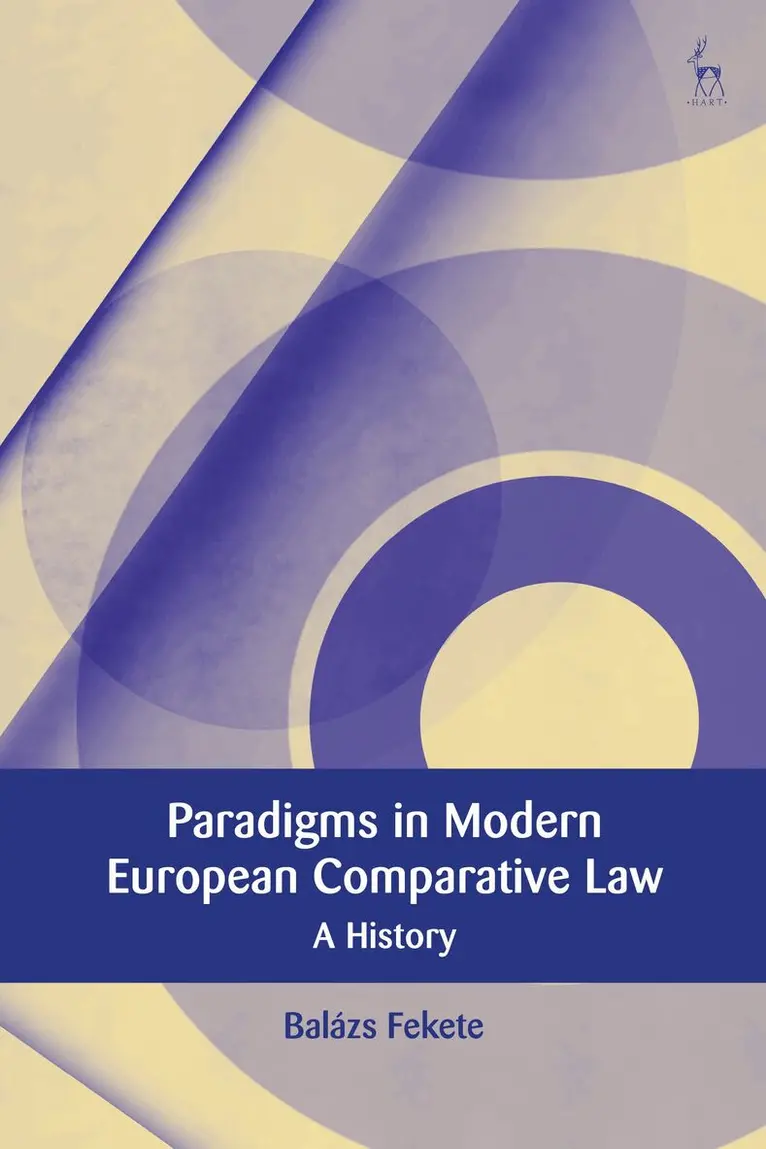
    Paradigms in Modern European Comparative Law

    A History

    AvBalázs Fekete,Mark Van Hoecke

    Häftad, Engelska, 2022

    Del i serien European Academy of Legal Theory Series

    491 kr

    Beställningsvara. Skickas inom 10-15 vardagar. Fri frakt över 249 kr.

    Fler format och utgåvor

    Inbunden

    1 028 kr

    E-bok

    528 kr

    E-bok

    528 kr

    Beskrivning

    This book uses the philosophy of Thomas Kuhn to provide a new vision of the development of European comparative law that will challenge and inspire scholars in the field.With the ‘empathic’ use of some ideas from Kuhn’s theories on the history of science – paradigm, paradigm-shift, puzzle-solving research and incommensurability – the book rethinks the modern history of European comparative law from the late 19th century to the modern day. It argues that three major paradigms determine modern comparative law:- historical and comparative jurisprudence, - droit comparé, and - post-World War II comparative law.It concludes that contemporary methodological trends are not signs of a paradigm-shift toward a postmodern and culturalist understanding of comparative law, but that the new approach spreads the idea of methodological plurality.

    Produktinformation

    • Utgivningsdatum:2022-11-24
    • Mått:232 x 156 x 10 mm
    • Vikt:340 g
    • Format:Häftad
    • Språk:Engelska
    • Serie:European Academy of Legal Theory Series
    • Antal sidor:240
    • Förlag:Bloomsbury Publishing PLC
    • ISBN:9781509946969

    Utforska kategorier

    • Komparativ rätt inom Juridik

    Mer om författaren

    Balázs Fekete is Associate Professor at the Eötvös Loránd University Faculty of Law and Senior Research Fellow at the Centre of Social Sciences Institute for Legal Studies, Hungary.

    Recensioner i media

    A brilliant book which deserves serious attention from comparatists and scholars employing comparative legal methods … Fekete’s meticulous and innovative historical appraisal of comparative law’s modern development represents an important step towards the formation of a discipline fully aware of, and confident in, its value and potential.

    Innehållsförteckning

    • Introduction: Scope and Subject I. The History of Comparative Law and a History of Comparative Law II. The Dominance of Descriptive Linearity III. Comparative Law as a Discipline and the Application of Comparative Methods in Law IV. Ancient or Modern History of Comparative Law Thinking V. Comparative Law and Comparative Constitutional Law VI. A Mezzo Perspective Approach 1. The History of Comparative Law and Kuhn’s Oeuvre I. Studying Science as a Historical Phenomenon: Some Preliminaries A. On the Necessity of an Elaborated Historical Approach B. On the Historical Character of Scientific Development C. Choosing a Proper Starting Point – The Importance of the Definition of Science II. Applying Kuhn’s Legacy to Understand the History of Comparative Legal Studies A. The History of Science and Kuhn’s Paradigm Shift B. The Very First Problem: How to Apply Kuhn’s Findings to Legal Scholarship C. Which Kuhn to Apply for This Study? D. The Novelty of Kuhn’s Work from the Perspective of Legal Scholarship E. Refining the Kuhnian Vocabulary: Science F. Refining the Kuhnian Vocabulary: Parallel Paradigms G. Refining the Kuhnian Vocabulary: Paradigm H. Refining the Kuhnian Vocabulary: Paradigm Shift III. Lessons from Kuhn in the Historiography of Legal Scholarship 2. Historical and Comparative Jurisprudence I. Introduction: The Centuries-long Pre-paradigm Period and the Rise of the First Paradigm II. Prologue: The Modern Precursors and the Pre-Paradigm Period A. Seventeenth- and Eighteenth-century Examples of the Use of Comparative Methods B. Early Nineteenth-century Precursors: End of the Pre-paradigm Period C. The Relevance of the Early-Modern Pre-paradigm Period III. General Background: The Rise of Positivism and the Idea of Evolution IV. Historical and Comparative Jurisprudence – The Emergence of the Paradigm in England A. The Fusion of the Historical and Comparative Methods in Maine’s Ancient Law B. The Development of Historical and Comparative Jurisprudence V. From Ethnologische Jurisprudenz to Vergleichende Rechtswissenschaft – The Birth of a Paradigm in Germany A. The Beginning: Ethnological Perspectives in the Legal Scholarship B. Joseph Kohler’s General Philosophy of Law VI. The First Paradigm of Modern Comparative Law: A Summary 3. The Paradigm of Droit Comparé I. Fin-de-siècle Atmosphere II. A New Wave of Institutionalisation III. The 1900 Paris Congress of Comparative Law IV. The Establishment of the New Paradigm A. Comparative Law as an Autonomous Field of Legal Scholarship B. Comparative Law and Common Legislative Law i. The New Methodological Principles of Comparative Law – Lambert’s Interpretationii. New Emphases in Lambert’s Oeuvre – The Start of Puzzle-solving Research V. The Development of the Paradigm – Functionalism, Global Law and Scepticism A. The ‘Re-founding’ of German Comparative Law B. Developing the Institutional Background and the Attraction of ‘Global Law’ C. The English Initiatives of the Period – Deviating from Maine’s Heritage VI. Characteristics of the Second Paradigm4. The Third Paradigm – Post-World War II Comparative Law I. Introductory Remarks: The New World Order and Comparative Law Scholarship II. The Taxonomy of the World’s Legal Orders A. The First New Try: The Arminjon–Nolde–Wolff Manual B. The Attraction of Ideology and Ideals – The Typology of René David C. The Style of Legal Families – The Taxonomy of Konrad Zweigert D. The Concept of the EncyclopediaE. The Perspectives of a Multi-level Classification F. Patterns and Dynamics in Law – The Innovation of Ugo Mattei G. The Classification of Legal Orders in Post-World War II Comparative Law III. The Renewal of Comparative Law Methodology: The Victory of Functionalism A. Conceptual Discussion B. The Earliest Attempts to Apply the Idea of Functionalism in Comparative Law i. Preliminaries ii. Functionalism and Legal Principles C. The Fundamental Principles of Functionalist Methodology i. Historical Roots of Functionalism: Jhering’s Method as an Ideal and as a Programme ii. The Research Programme of Comparative Law Functionalism D. The ‘Case-oriented Factual Approach’ – The North-American Approach to Functionalism E. Criticism of Comparative Law Functionalism F. Common Core and Ius Commune Casebooks Projects IV. The Third Paradigm 5. New Trends in Contemporary Comparative Law: Towards a Paradigm Shift? I. A Changing Scholarly Landscape II. A Cultural Turn in Comparative Law? A. Cultural Claims in Comparative Law: The Example of Legrand B. The Proliferation of the Use of Legal Culture: Trends and Problems i. Legal Culture as Background of Law ii. Legal Culture as Interactions Around Law iii. Legal Culture as a Sum of Attitudes Towards Law C. Three Typical Inconsistencies in the Application of Legal Culture in Comparative Law i. Confusion of Different Understandings in the Same Study ii. Under-theorisation of Legal Culture iii. Over-theorisation of Legal Culture III. The Decline of Methodological Exclusivity in Comparative Law Thinking A. The Functionalist-Culturalist Divide B. The Rise of Methodological Tolerance: The Recognition of a Methodological Plurality IV. Paradigm Shift in Contemporary Comparative Law? Concluding Thoughts I. On the Validity of this Research, with Special Regard to the Relevance of Kuhn’s Ideas II. On the Utility of having a Single Book on the History of Modern European Comparative Law III. On the Recent Perspectives of Comparative Law