Joshua Jowitt – författare
Visar alla böcker från författaren . Handla med fri frakt och snabb leverans.
5 produkter
5 produkter
Inbunden, Engelska, 2026
2 306 kr
Kommande
This collection explores the existence and extent of the divide between analytic legal philosophy and critical legal theory.Motivated by a shared desire to bridge these traditions, the editors and contributors establish meaningful dialogue between the two, identifying key points of overlap and divergence. Discussing the genesis of analytic and critical work within jurisprudence, remarking upon their distinctive perspectives, methods, and politics, and engaging in personal reflections along the way, the contributions to this collection each approach their subject matter in slightly different and complementary modes. With detailed argumentative chapters from leading scholars within both traditions, and edited by a team that sits across the two, this collection provides an essential point of reference and reflection for students, teachers, and researchers interested in jurisprudence and legal theory, very broadly construed. Topics covered include the nature of law and legal reasoning, the history of jurisprudence within legal education and scholarship, and the connections between law, politics, power, and morality.The first sustained attempt by analytic legal philosophers and critical legal theorists to find some common ground and move forward together, Dialogues in Jurisprudence asks what the theory of law might look like if we go beyond the ridged but ultimately contingent categories of scholarship handed to us by history.
Inbunden, Engelska, 2023
1 163 kr
Skickas inom 10-15 vardagar
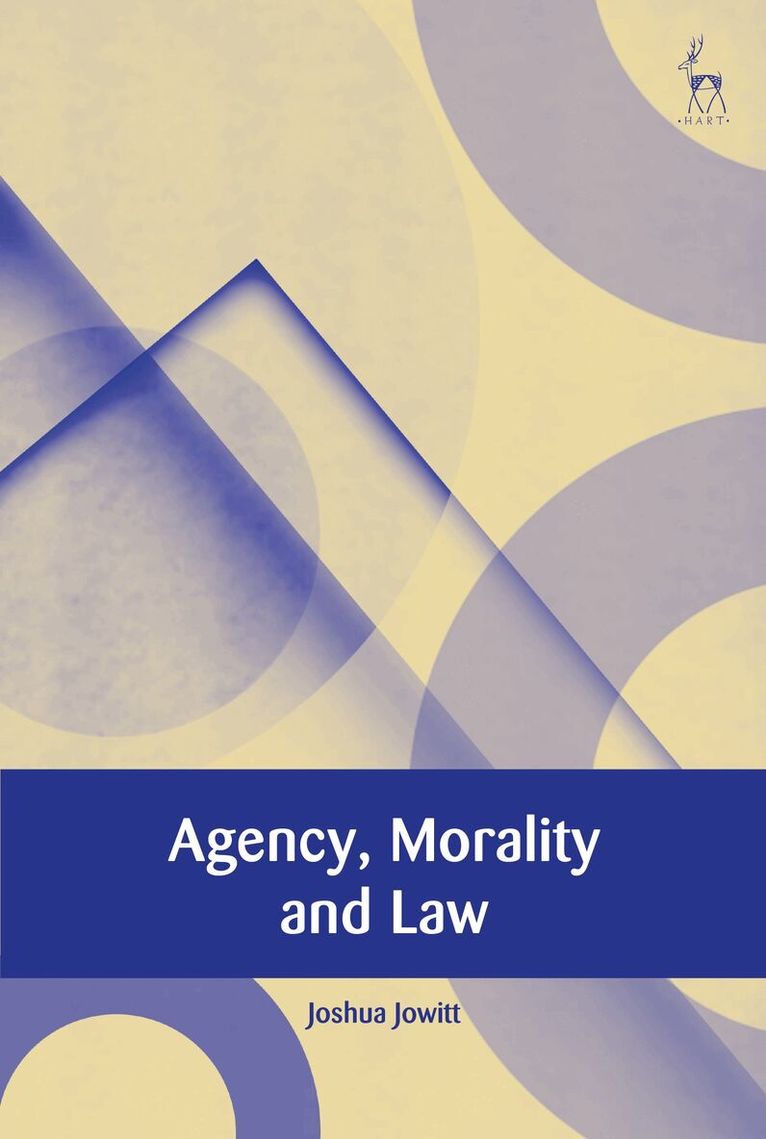
How does law possess the normative force it requires to direct our actions?This book argues that this seemingly innocuous question is of central importance to the philosophy of law and, by extension, of the very concept of law itself. It advances a position grounded in the secular natural law tradition, and in doing so addresses the two success criteria for this position head on: Firstly, that commitment to the existence of a supreme moral principle is required; Secondly, that any supreme moral principle must be identifiable through human reason.The book argues that these conditions are met by Alan Gewirth's Principle of Generic Consistency (PGC), which – through a dialectically necessary argument – locates the existence of universally applicable moral norms in the concept of agency. Given the very purpose of law is to guide action, legal norms must be located in a unified hierarchy of practical reason. It follows that, if law is to succeed in claiming to be capable of guiding our action, moral permissibility with reference to the PGC is a necessary condition of a rule’s legal validity.This strong theory of natural law is defended throughout, both against moral sceptics and positions within contemporary legal positivism.
E-bok
Engelska, 2023613 kr
Läs direkt efter köp
How does law possess the normative force it requires to direct our actions?This book argues that this seemingly innocuous question is of central importance to the philosophy of law and, by extension, of the very concept of law itself. It advances a position grounded in the secular natural law tradition, and in doing so addresses the two success criteria for this position head on: Firstly, that commitment to the existence of a supreme moral principle is required; Secondly, that any supreme moral principle must be identifiable through human reason.The book argues that these conditions are met by Alan Gewirth''s Principle of Generic Consistency (PGC), which – through a dialectically necessary argument – locates the existence of universally applicable moral norms in the concept of agency. Given the very purpose of law is to guide action, legal norms must be located in a unified hierarchy of practical reason. It follows that, if law is to succeed in claiming to be capable of guiding our action, moral permissibility with reference to the PGC is a necessary condition of a rule''s legal validity. This strong theory of natural law is defended throughout, both against moral sceptics and positions within contemporary legal positivism.
E-bok
PDF, Engelska, 2023613 kr
Läs direkt efter köp
How does law possess the normative force it requires to direct our actions?This book argues that this seemingly innocuous question is of central importance to the philosophy of law and, by extension, of the very concept of law itself. It advances a position grounded in the secular natural law tradition, and in doing so addresses the two success criteria for this position head on: Firstly, that commitment to the existence of a supreme moral principle is required; Secondly, that any supreme moral principle must be identifiable through human reason.The book argues that these conditions are met by Alan Gewirth''s Principle of Generic Consistency (PGC), which – through a dialectically necessary argument – locates the existence of universally applicable moral norms in the concept of agency. Given the very purpose of law is to guide action, legal norms must be located in a unified hierarchy of practical reason. It follows that, if law is to succeed in claiming to be capable of guiding our action, moral permissibility with reference to the PGC is a necessary condition of a rule''s legal validity. This strong theory of natural law is defended throughout, both against moral sceptics and positions within contemporary legal positivism.
Häftad, Engelska, 2024
572 kr
Skickas inom 10-15 vardagar
How does law possess the normative force it requires to direct our actions?This book argues that this seemingly innocuous question is of central importance to the philosophy of law and, by extension, of the very concept of law itself. It advances a position grounded in the secular natural law tradition, and in doing so addresses the two success criteria for this position head on: Firstly, that commitment to the existence of a supreme moral principle is required; Secondly, that any supreme moral principle must be identifiable through human reason.The book argues that these conditions are met by Alan Gewirth's Principle of Generic Consistency (PGC), which – through a dialectically necessary argument – locates the existence of universally applicable moral norms in the concept of agency. Given the very purpose of law is to guide action, legal norms must be located in a unified hierarchy of practical reason. It follows that, if law is to succeed in claiming to be capable of guiding our action, moral permissibility with reference to the PGC is a necessary condition of a rule’s legal validity.This strong theory of natural law is defended throughout, both against moral sceptics and positions within contemporary legal positivism.