Franklin G. Miller - Böcker
Visar alla böcker från författaren Franklin G. Miller. Handla med fri frakt och snabb leverans.
9 produkter
9 produkter
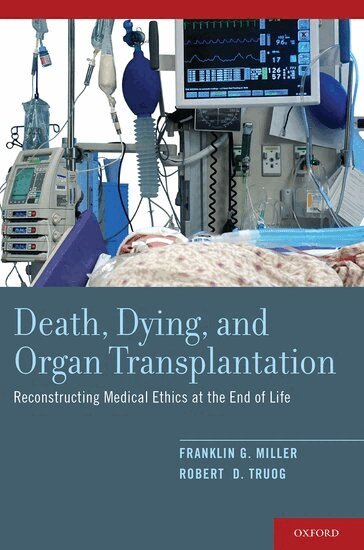
Death, Dying, and Organ Transplantation
Reconstructing Medical Ethics at the End of Life
Häftad, Engelska, 2016
438 kr
Skickas inom 5-8 vardagar
In Death, Dying, and Organ Transplantation: Reconstructing Medical Ethics at the End of Life, Miller and Truog challenge fundamental doctrines of established medical ethics. They argue that the routine practice of stopping life support technology in hospitals causes the death of patients and that donors of vital organs (hearts, lungs, liver, and both kidneys) are not really dead at the time that their organs are removed for life-saving transplantation. These practices are ethically legitimate but are not compatible with traditional rules of medical ethics that doctors must not intentionally cause the death of their patients and that vital organs can be obtained for transplantation only from dead donors. In this book Miller and Truog undertake an ethical examination that aims to honestly face the reality of medical practices at the end of life. They expose the misconception that stopping life support merely allows patients to die from their medical conditions, and they dispute the accuracy of determining death of hospitalized patients on the basis of a diagnosis of "brain death" prior to vital organ donation. After detailing the factual and conceptual errors surrounding current practices of determining death for the purpose of organ donation, the authors develop a novel ethical account of procuring vital organs. In the context of reasonable plans to withdraw life support, still-living patients are not harmed or wronged by organ donation prior to their death, provided that valid consent has been obtained for stopping treatment and for organ donation. Recognizing practical difficulties in facing the truth regarding organ donation, the authors also develop a pragmatic alternative account based on the concept of transparent legal fictions. In sum, Miller and Truog argue that in order to preserve the legitimacy of end-of-life practices, we need to reconstruct medical ethics.
553 kr
Skickas inom 5-8 vardagar
Hospice is the premiere end of life program in the United States, but its requirement that patients forgo disease-directed therapies and that they have a prognosis of 6 months or less means that it serves less than half of dying patients and often for very short periods of time. Palliative care offers careful attention to pain and symptom management, added support for patients and families, and assistance with difficult medical decision making alongside any and all desired medical treatments, but it does not include a comprehensive system of care as is provided by hospice. The practice of palliative care and hospice is filled with sometimes overt (requests for hastened death in an environment where such acts are legally prohibited) and other times covert (the delay in palliative care referral because the health care team believes it will undermine disease directed treatment) ethical issues. The contributors to this volume use a series of case presentations within each chapter to illustrate some of the palliative care and hospice challenges with significant ethical dimensions across the three overarching domains: 1) care delivery systems; 2) addressing the many dimensions of suffering; and 3) difficult decisions near the end of life. The contributors are among the most experienced palliative care, hospice and ethics scholars in North America and Western Europe. Each has been given relatively free reign to address what they feel are the most pressing ethical challenges within their domain, so a wide range of positions and vantage points are represented. As a result, the volume provides a very diverse ethical exploration of this relatively young field that can deepen, stretch, and at times confront any simple notion of the challenges facing patients, their families, professional caregivers, and policy makers.
868 kr
Skickas inom 5-8 vardagar
Hospice is the premiere end of life program in the United States, but its requirement that patients forgo disease-directed therapies and that they have a prognosis of 6 months or less means that it serves less than half of dying patients and often for very short periods of time. Palliative care offers careful attention to pain and symptom management, added support for patients and families, and assistance with difficult medical decision making alongside any and all desired medical treatments, but it does not include a comprehensive system of care as is provided by hospice. The practice of palliative care and hospice is filled with sometimes overt (requests for hastened death in an environment where such acts are legally prohibited) and other times covert (the delay in palliative care referral because the health care team believes it will undermine disease directed treatment) ethical issues. The contributors to this volume use a series of case presentations within each chapter to illustrate some of the palliative care and hospice challenges with significant ethical dimensions across the three overarching domains: 1) care delivery systems; 2) addressing the many dimensions of suffering; and 3) difficult decisions near the end of life. The contributors are among the most experienced palliative care, hospice and ethics scholars in North America and Western Europe. Each has been given relatively free reign to address what they feel are the most pressing ethical challenges within their domain, so a wide range of positions and vantage points are represented. As a result, the volume provides a very diverse ethical exploration of this relatively young field that can deepen, stretch, and at times confront any simple notion of the challenges facing patients, their families, professional caregivers, and policy makers.
Death, Dying, and Organ Transplantation
Reconstructing Medical Ethics at the End of Life
Inbunden, Engelska, 2011
1 128 kr
Skickas inom 5-8 vardagar
In Death, Dying, and Organ Transplantation: Reconstructing Medical Ethics at the End of Life, Miller and Truog challenge fundamental doctrines of established medical ethics. They argue that the routine practice of stopping life support technology in hospitals causes the death of patients and that donors of vital organs (hearts, lungs, liver, and both kidneys) are not really dead at the time that their organs are removed for life-saving transplantation. These practices are ethically legitimate but are not compatible with traditional rules of medical ethics that doctors must not intentionally cause the death of their patients and that vital organs can be obtained for transplantation only from dead donors. In this book Miller and Truog undertake an ethical examination that aims to honestly face the reality of medical practices at the end of life. They expose the misconception that stopping life support merely allows patients to die from their medical conditions, and they dispute the accuracy of determining death of hospitalized patients on the basis of a diagnosis of "brain death" prior to vital organ donation. After detailing the factual and conceptual errors surrounding current practices of determining death for the purpose of organ donation, the authors develop a novel ethical account of procuring vital organs. In the context of reasonable plans to withdraw life support, still-living patients are not harmed or wronged by organ donation prior to their death, provided that valid consent has been obtained for stopping treatment and for organ donation. Recognizing practical difficulties in facing the truth regarding organ donation, the authors also develop a pragmatic alternative account based on the concept of transparent legal fictions. In sum, Miller and Truog argue that in order to preserve the legitimacy of end-of-life practices, we need to reconstruct medical ethics.
1 236 kr
Skickas inom 5-8 vardagar
The Oxford Textbook of Clinical Research Ethics is the first comprehensive and systematic reference on clinical research ethics. Under the editorship of experts from the U.S. National Institutes of Health of the United States, the book's 73 chapters offer a wide-ranging and systematic examination of all aspects of research with human beings.Considering the historical triumphs of research as well as its tragedies, the textbook provides a framework for analyzing the ethical aspects of research studies with human beings. Through both conceptual analysis and systematic reviews of empirical data, the contributors examine issues ranging from scientific validity, fair subject selection, risk benefit ratio, independent review, and informed consent to focused consideration of international research ethics, conflicts of interests, and other aspects of responsible conduct of research.The editors of The Oxford Textbook of Clinical Research Ethics offer a work that critically assesses and advances scholarship in the field of human subjects research. Comprehensive in scope and depth, this book will be a crucial resource for researchers in the medical sciences, as well as teachers and students.
948 kr
Skickas inom 5-8 vardagar
The use of human beings as research subjects poses distinctive ethical issues. Subjects of medical research are exposed to risks of harm for the sake of generating scientific knowledge that can benefit future patients and society. Ethical analysis of the challenges posed by research involving human subjects requires careful attention to the contextual details of scientific experimentation. This book contains 22 essays by Franklin G. Miller on research ethics written over a 15-year period. With the exception of the first essay, all have been previously published in bioethics and medical journals. The book is arranged into four parts. Part One addresses a general ethical perspective on the protection of human subjects in clinical research, including paternalism in research regulation and acceptable limits to research risks. The essays in Part Two examine ethical issues in study design. It includes ethical analyses of controversial types of medical experimentation-studies that provoke psychiatric symptoms, induce infections, provide patients with placebos that withhold proven effective treatments or administer fake invasive procedures, test experimental treatments in cancer patients who have exhausted all standard treatment options, and employ the use of deception to generate scientifically valid data. Part Three offers a systematic critique of "the therapeutic orientation" to clinical trials and the principle of clinical equipoise, which is widely regarded as a fundamental norm for randomized treatment studies. Part Four takes up a range of ethical issues relating to informed consent for research participation, including examination of "the therapeutic misconception" and presentation of a novel approach to the validity of consent: "the fair transaction model." An abiding theme, developed in many of the essays is that the ethics of clinical research is importantly different from the ethics of medical care.
1 064 kr
Skickas inom 10-15 vardagar
Prominent bioethicists whose work is rooted in philosophy, religion, medicine, nursing, literature, history, and policy analysis join together to discuss their methods and professional insights, as well as to better define the field and its future development. Writing from the perspective of their own specialties, the authors: review just how their personal disciplines have contributed to bioethics, debate the current and future bioethical issues they face, and identify the most significant strengths and weaknesses in the current practice of bioethics. Seeking a sound foundation for the discipline, they also consider what basic knowledge and skills are necessary to be competent in bioethics, what methods and theoretical approaches are most promising for its future development, and what issues or perspectives have been neglected.
601 kr
Skickas
The placebo effect is a fascinating but elusive phenomena. Although no standard definition of the placebo effect exists, it is generally understood as consisting of responses of individuals to the psychosocial context of medical treatments or clinical encounters, as distinct from specific physiological effects of medical interventions. The Placebo is the first book to compile a selection of classic and contemporary published articles on the topic. Systematic investigation of the placebo effect emerged in the 1950s in response to the development of randomized controlled clinical trials that used "inert" placebo interventions as a pivotal element of scientific evaluation of novel drugs. In recent years, scientific and scholarly investigation of the placebo effect has increased dramatically, reflecting a growing interest in the connection between mind and body with respect to health, the development of brain imaging techniques, dissatisfaction with the reductionist and technological orientation of biomedicine, and growing attention to the use of complementary and alternative medical treatments.The Placebo is organized into three sections: the nature and significance of the placebo effect, experimental studies of the placebo effect, and ethical issues of placebos in research and in clinical practice. This comprehensive sourcebook will be invaluable to investigators and scholars alike.
1 170 kr
Skickas inom 10-15 vardagar
Prominent bioethicists whose work is rooted in philosophy, religion, medicine, nursing, literature, history, and policy analysis join together to discuss their methods and professional insights, as well as to better define the field and its future development. Writing from the perspective of their own specialties, the authors: review just how their personal disciplines have contributed to bioethics, debate the current and future bioethical issues they face, and identify the most significant strengths and weaknesses in the current practice of bioethics. Seeking a sound foundation for the discipline, they also consider what basic knowledge and skills are necessary to be competent in bioethics, what methods and theoretical approaches are most promising for its future development, and what issues or perspectives have been neglected.