• Fri frakt över 249 kr
  • •
  • Snabba leveranser
  • •
  • Billiga böcker
Kundservice

Du är på sajten för privatpersoner.

Företag, bibliotek eller offentlig verksamhet?

Du handlar på classic.bokus.com, där alla dina funktioner finns intakta.
Till classic.bokus.com
Bokus logotyp. Gå till startsidan.
  • Erbjudanden
  • Nyheter
  • Student
  • Topplistor
  • Barn & ungdom
  • Bokus Play
  • E-böcker
  • Pocketböcker
  • Spel & pussel

10% rabatt på allt med kod NYSTART10 →

Sidfot

Mina sidor

    Hjälp

    • Kundservice
    • Vanliga frågor och svar
    • Frakt och leverans
    • Retur vid ångerrätt
    • Reklamera vara
    • Betalning
    • Köpvillkor
    • Allmänna villkor
    • Information om webbplatsens tillgänglighet

    Om Bokus

    • Om oss
    • Pressrum
    • För studenter
    • För företag
    • För bibliotek och offentlig verksamhet
    • För leverantörer
    • Hållbarhet

    Populärt

    • Aktuella erbjudanden
    • Presentkort
    • Studentlitteratur
    • Nya böcker
    • Topplistor
    • Signerade böcker
    • Engelska böcker

    Inspiration

    • Boktips
    • BookTok
    • Populära bokserier
    • Barnbokskaraktärer
    • Populära författare
    Logotyp för Bokus
    Följ oss på Facebook (extern länk)Följ oss på Instagram (extern länk)Följ oss på YouTube (extern länk)Följ oss på TikTok (extern länk)
    bokus @ CookiesAnpassa cookiesIntegritetspolicyKöpvillkor
    Till Citymail hemsida (extern länk)Till Budbee hemsida (extern länk)Till Postnord hemsida (extern länk)Till Schenker hemsida (extern länk)Till Early Bird hemsida (extern länk)Till Walleys hemsida (extern länk)
    1. Medicin
    2. Medicin: allmänt
    3. Den medicinska professionen
    4. Medicinsk etik och läkaretik

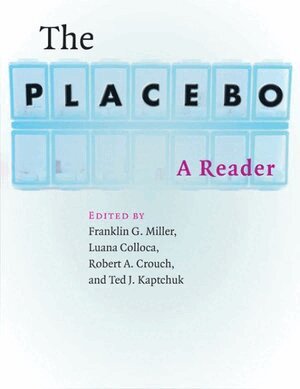
    Placebo

    A Reader

    AvFranklin G. Miller,Luana Colloca

    Häftad, Engelska, 2013

    612 kr

    Skickas . Fri frakt över 249 kr.

    Beskrivning

    The placebo effect is a fascinating but elusive phenomena. Although no standard definition of the placebo effect exists, it is generally understood as consisting of responses of individuals to the psychosocial context of medical treatments or clinical encounters, as distinct from specific physiological effects of medical interventions. The Placebo is the first book to compile a selection of classic and contemporary published articles on the topic. Systematic investigation of the placebo effect emerged in the 1950s in response to the development of randomized controlled clinical trials that used "inert" placebo interventions as a pivotal element of scientific evaluation of novel drugs. In recent years, scientific and scholarly investigation of the placebo effect has increased dramatically, reflecting a growing interest in the connection between mind and body with respect to health, the development of brain imaging techniques, dissatisfaction with the reductionist and technological orientation of biomedicine, and growing attention to the use of complementary and alternative medical treatments.The Placebo is organized into three sections: the nature and significance of the placebo effect, experimental studies of the placebo effect, and ethical issues of placebos in research and in clinical practice. This comprehensive sourcebook will be invaluable to investigators and scholars alike.

    Produktinformation

    • Utgivningsdatum:2013-10-09
    • Mått:216 x 279 x 21 mm
    • Vikt:975 g
    • Format:Häftad
    • Språk:Engelska
    • Antal sidor:352
    • Förlag:Johns Hopkins University Press
    • ISBN:9781421408668

    Utforska kategorier

    • Medicinsk etik och läkaretik inom Medicin
    • Medicinhistoria inom Medicin
    • Psykologi inom Psykologi och pedagogik

    Mer om författaren

    Franklin G. Miller is a member of the senior faculty in the Department of Bioethics at the National Institutes of Health (NIH) and a special expert at the National Institute of Mental Health Intramural Research Program. Luana Colloca is a research fellow at the National Center for Complementary and Alternative Medicine and the National Institute of Mental Health, and an adjunct faculty member in the Department of Bioethics at NIH. Robert A. Crouch is an independent consultant. Ted J. Kaptchuk is an associate professor of medicine at Harvard Medical School and the director of the Program in Placebo Studies and the Therapeutic Encounter at the Beth Israel Deaconess Medical Center.

    Recensioner i media

    A 'must' for any professional health collection including discussions of media ethics, and provides a find definition of the placebo effect and its physiological and ethical ramifications. Midwest Book Review Nowadays, we will only buy [readers] if they combine an excellence of editorial taste and readability that beats the temptation of downloading our own selection directly from a journal archive. In this regard, I must admit that the editors of this placebo reader have succeeded in producing a volume worth buying... each section is preceded by a short (but incisive) introduction intended as a road map of the papers to come. These are short and clear, and very accessible for the lay reader. -- David Teira, Ph.D., UNED Metapsychology

    Innehållsförteckning

    • Preface AcknowledgmentsContributorsPart I: The Concept and Significance of The Placebo EffectChapter 1. Conferences on Therapy: The Use of Placebos in TherapyChapter 2. The Powerful PlaceboChapter 3. How Much of the Placebo "Effect" Is Really Statistical Regression?Chapter 4. The Powerful Placebo Effect: Fact or Fiction?Chapter 5. Is the Placebo Powerless? An Analysis of Clinical TrialsComparing Placebo with No TreatmentChapter 6. The Placebo Concept in Medicine and PsychiatryChapter 7. Deconstructing the Placebo Effect and Finding the Meaning ResponseChapter 8. The Placebo Effect in Alternative Medicine: Can the Performance of a Healing Ritual Have Clinical Significance?Part II: Experimental Studies of the Placebo EffectSection A. Pioneering Efforts Chapter 9. Effects of Suggestion and Conditioning on the Action of Chemical Agents in Human Subjects: The Pharmacology of PlacebosChapter 10. A Study of the Placebo ResponseChapter 11. Chance Distribution and the Placebo "Reactor"Chapter 12. Placebo Effect in the RatChapter 13. Reduction of Postoperative Pain by Encouragement and Instruction of Patients: A Study of Doctor-Patient RapportChapter 14. The Interaction of Psychologic Stimuli and Pharmacologic Agents on Airway Reactivity in Asthmatic SubjectsChapter 15. The Mechanism of Placebo AnalgesiaChapter 16. Behaviorally Conditioned Immunosuppression and Murine Systemic Lupus ErythematosusChapter 17. An Investigation of Drug Expectancy as a Function of Capsule Color and Size and Preparation FormChapter 18. Clinicians' Expectations Influence Placebo AnalgesiaSection B. Psychological MechanismsChapter 19. The Role of Conditioning and Verbal Expectancy in the Placebo ResponseChapter 20. Classical Conditioning and the Placebo EffectChapter 21. An Analysis of Factors That Contribute to the Magnitude of Placebo Analgesia in an Experimental ParadigmChapter 22. Neuropharmacological Dissection of Analgesia: Expectation- Activated Opioid Systems versus Conditioning- Activated Specific SubsystemsChapter 23. Placebo Analgesia Induced by Social Observational LearningSection C. Neurobiological MechanismsChapter 24. Placebo and Opioid Analgesia: Imaging a Shared Neuronal NetworkChapter 25. Placebo- Induced Changes in fMRI in the Anticipation and Experience of PainChapter 26. Placebo Effects Mediated by Endogenous Opioid Activity on - Opioid ReceptorsChapter 27. Direct Evidence for Spinal Cord Involvement in Placebo AnalgesiaChapter 28. The Biochemical and Neuroendocrine Bases of the Hyperalgesic Nocebo EffectChapter 29. Expectation and Dopamine Release: Mechanism of the Placebo Effect in Parkinson's DiseaseChapter 30. Placebo- Responsive Parkinson Patients Show Decreased Activity in Single Neurons of Subthalamic NucleusChapter 31. Expectation Enhances the Regional Brain Metabolic and the Reinforcing Effects of Stimulants in Cocaine AbusersSection D. Contextual FactorsChapter 32. Do Double- Blind Studies with Informed Consent Yield Externally Valid Results? An Empirical TestChapter 33. Response Expectancies in Placebo Analgesia and Their Clinical RelevanceChapter 34. Placebos without Deception: A Randomized Controlled Trial in Irritable Bowel SyndromeChapter 35. Finasteride 5 mg and Sexual Side Effects: How Many of These Are Related to a Nocebo Phenomenon?Chapter 36. Overt versus Covert Treatment for Pain, Anxiety, and Parkinson's DiseaseChapter 37. Components of Placebo Effect: Randomised Controlled Trial in Patients with Irritable Bowel SyndromeChapter 38. Conditioned Pharmacotherapeutic Effects: A Preliminary StudyPart III: Ethical Issues Raised by the Use of Placebos in Research and Clinical PracticeSection A. Research Chapter 39. The Continuing Unethical Use of PlaceboControlsChapter 40. Placebo Orthodoxy in Clinical Research II: Ethical, Legal, and Regulatory MythsChapter 41. Placebo- Controlled Trials and Active- Control Trials in the Evaluation of New Treatments: Part 1. Ethical and Scientific IssuesChapter 42. The Ethics of Placebo- Controlled Trials: A Middle GroundChapter 43. Is Placebo Surgery Unethical?Chapter 44. Deception in Research on the Placebo EffectChapter 45. Inclusion of Authorized Deception in the Informed Consent Pro cess Does Not Affect the Magnitude of the Placebo Effect for Experimentally Induced PainChapter 46. False Hopes and Best Data: Consent to Research and the Therapeutic MisconceptionSection B. Clinical PracticeChapter 47. The Use of Placebo Interventions in Medical Practice: A National Questionnaire Survey of Danish CliniciansChapter 48. Prescribing "Placebo Treatments": Results of National Survey of U.S. Internists and RheumatologistsChapter 49. The Ethics of Giving PlacebosChapter 50. The Lie That Heals: The Ethics of Giving PlaceboChapter 51. Placebo as a Treatment for DepressionChapter 52. The Legitimacy of Placebo Treatments in Clinical Practice: Evidence and EthicsIndex