Gábor Egry – författare
Visar alla böcker från författaren Gábor Egry. Handla med fri frakt och snabb leverans.
3 produkter
3 produkter
Central European Elites in Post-Imperial Transition
Locality, Agency, Capital
Inbunden, Engelska, 2026
2 176 kr
Skickas inom 10-15 vardagar
This book examines how local elites from the dissolved Austria-Hungary managed to survive and often thrive despite the empire's collapse in 1918. When faced with national and social revolutions, these figures—many of whom suddenly found themselves ethnic minorities—seemed destined to lose their positions entirely. Yet a surprising number not only persisted but became essential to the state-building efforts of Austria-Hungary's successor states.Through detailed case studies of Catholic priests from Tyrol, postmen and teachers in Czechoslovakia, a vocational school director from Southern Moravia, a forestry magnate from Romania, and bank and industrial managers and politicians from Transylvania, this book reveals how these elites successfully navigated the transition from empire to nation-state. The analysis traces how they leveraged material and social resources accumulated before 1918, converting capital from one form to another as they moved from local elite positions in the old empire to new elite roles in emerging states. In doing so, they knowingly or unintentionally strengthened the very states that had initially threatened their existence, leading these new governments to relax their homogenizing efforts in exchange.This book will appeal to historians specializing in Central and Eastern European history, scholars of empire and nationalism, and researchers interested in elite studies and social mobility. It contributes to the broader fields of Habsburg studies, post-imperial transitions, state formation, and the sociology of elites, making it valuable for both academic researchers and advanced students in history, political science, and sociology.The chapters in this book were originally published as a special issue of European Review of History.
1 077 kr
Skickas inom 10-15 vardagar
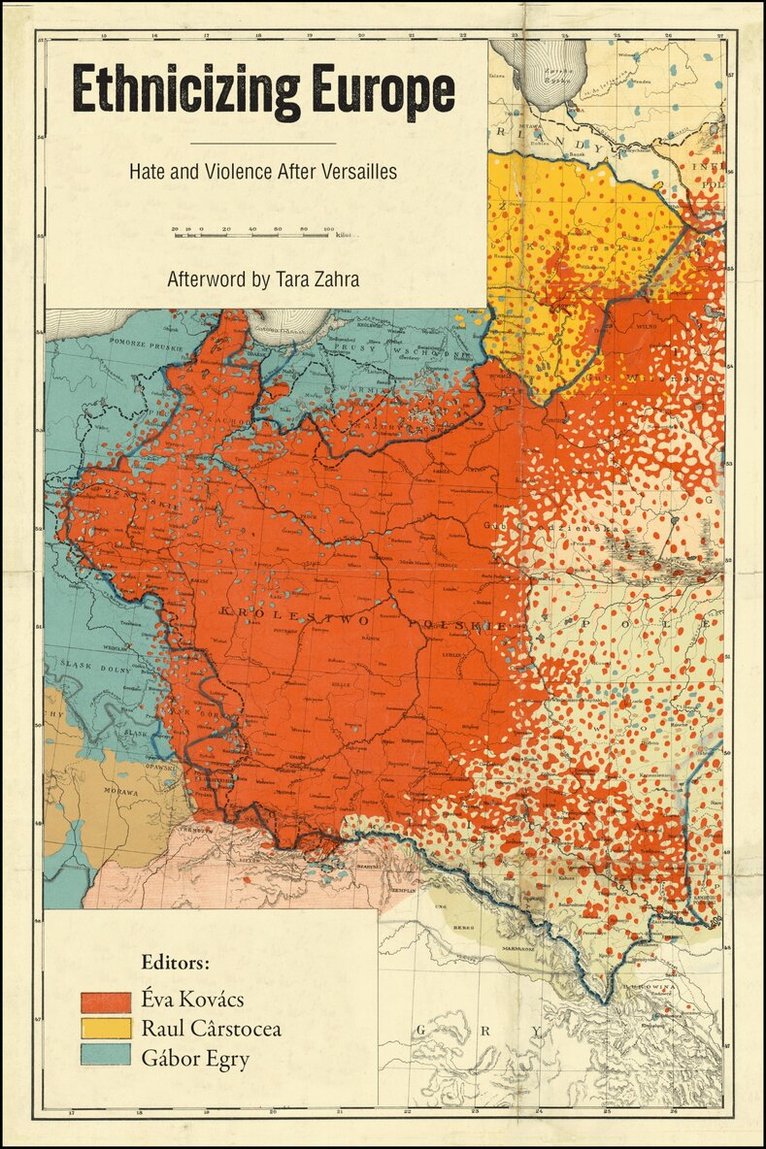
Ethnicizing Europe focuses on the dynamics of interethnic violence in Europe between the two world wars. The new international system that was enshrined by the Versailles peace treaties after World War I did not bring stability to East-Central Europe. Rather, it resulted in a host of conditions like self-determination, international oversight, revolutionary political ideas, and democratic processes, which eventually gave new meaning to already established conflicts, as well as igniting new conflicts in the region. This book opens with a discussion of the theoretical scholarship on ethnicity before proceeding to specific case studies investigating the different ways in which ethnicity was enacted and contested during a period of European transformation, focusing mostly on ethnically heterogeneous locales. Rather than concentrating on either political violence or ethnonationalism, this collection brings these two literatures together to show how ethnicization, the legal concepts of citizenship, and violence were intertwined in post-Versailles Europe, not only shaping the period between the wars, but also the Europe we know today. The book concludes with an afterword by Tara Zahra, which expands this perspective to the wider transatlantic region.
569 kr
Skickas inom 10-15 vardagar
Ethnicizing Europe focuses on the dynamics of interethnic violence in Europe between the two world wars. The new international system that was enshrined by the Versailles peace treaties after World War I did not bring stability to East-Central Europe. Rather, it resulted in a host of conditions like self-determination, international oversight, revolutionary political ideas, and democratic processes, which eventually gave new meaning to already established conflicts, as well as igniting new conflicts in the region. This book opens with a discussion of the theoretical scholarship on ethnicity before proceeding to specific case studies investigating the different ways in which ethnicity was enacted and contested during a period of European transformation, focusing mostly on ethnically heterogeneous locales. Rather than concentrating on either political violence or ethnonationalism, this collection brings these two literatures together to show how ethnicization, the legal concepts of citizenship, and violence were intertwined in post-Versailles Europe, not only shaping the period between the wars, but also the Europe we know today. The book concludes with an afterword by Tara Zahra, which expands this perspective to the wider transatlantic region.