Gina Dalfonzo - Böcker
Visar alla böcker från författaren Gina Dalfonzo. Handla med fri frakt och snabb leverans.
4 produkter
4 produkter
329 kr
Skickas inom 3-6 vardagar
There are now more single adults than married adults in the United States, yet the evangelical church continues to focus primarily on serving couples and families with ministries geared toward their particular needs. This can lead, however unintentionally, to the marginalization of adults who are single by choice, divorce, or death, or who are simply not yet married. Families are a good thing, but so are all of God's people, and singles long to be lovingly integrated into the Body of Christ.In One by One, Gina Dalfonzo explores common misconceptions and stereotypes about singles, including the idea that they must be single because something is wrong with them, and the subtle (and not-so-subtle) ways they are devalued, like when sermons focus overmuch on navigating marital relationships or raising children. She shows how the church of Paul, who commended those who remained single, became the church where singles are too often treated like second class Christians. Then she explores what the church is doing right, what unique services singles can offer the church, and, most importantly, what the church can do to love and support the singles in their midst.
Dorothy and Jack: The Transforming Friendship of Dorothy L. Sayers and C. S. Lewis
Häftad, Engelska, 2020
307 kr
Skickas inom 3-6 vardagar
198 kr
Skickas inom 5-8 vardagar
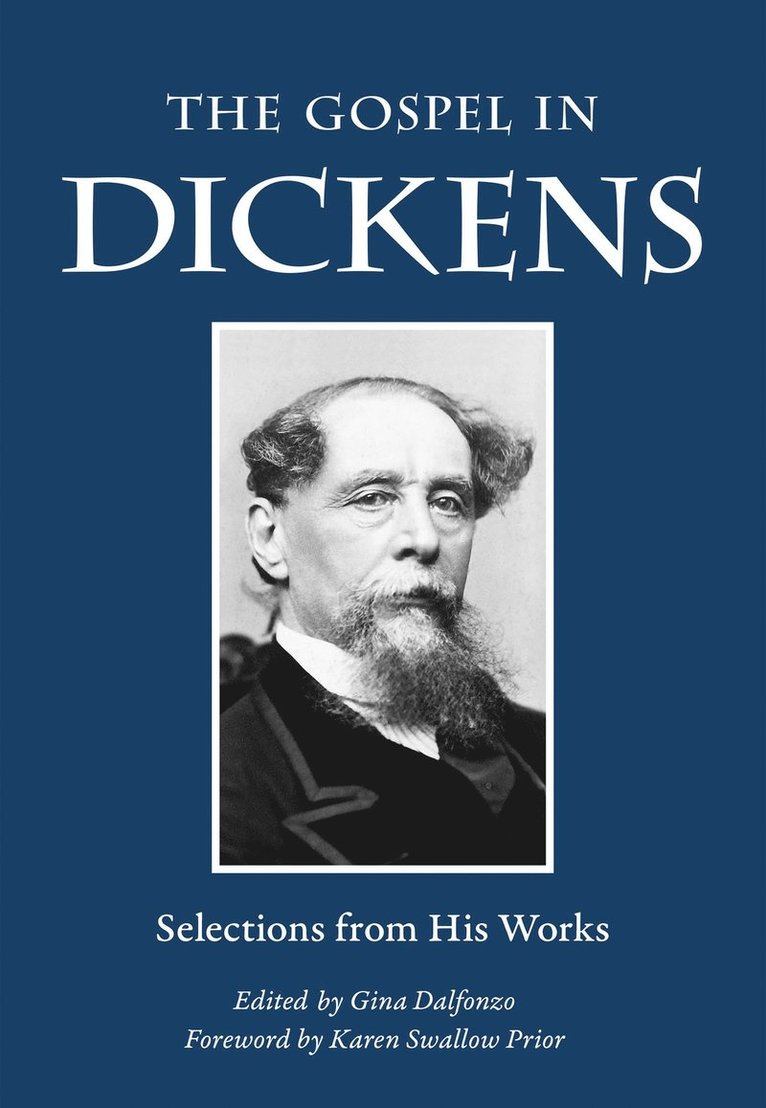
Wish you had time to re-read and enjoy that daunting stack of Charles Dickens novels? Take heart: Dickens enthusiast Gina Dalfonzo has done the heavy lifting for you. In short, readable excerpts she presents the essence of the great novelist’s prodigious output, teasing out dozens of the most memorable scenes to reveal the Christian vision and values that suffuse all his work.Dickens can certainly entertain, but his legacy endures because of his power to stir consciences with the humanity of his characters and their predicaments. While he could be ruthless in his characterization of greed, injustice, and religious hypocrisy, again and again the hope of redemption shines through.In spite of – or perhaps because of – his own failings, Dickens never stopped exploring the themes of sin, guilt, repentance, redemption, and restoration found in the gospel. In some passages the Christian elements are explicit, in others implicit, but, as Dickens himself said, they all reflect his understanding of and reverence for the gospel.The Gospel in Dickens includes selections from Oliver Twist, David Copperfield, A Tale of Two Cities, Great Expectations, A Christmas Carol, Nicholas Nickleby, The Old Curiosity Shop, Martin Chuzzlewit, Dombey and Son, Bleak House, Hard Times, Little Dorrit, Our Mutual Friend, The Mystery of Edwin Drood, and Sketches by Boz – with a cast of unforgettable characters such as Ebenezer Scrooge, Sydney Carton, Jenny Wren, Fagin, Pip, Joe Gargery, Mr. Bumble, Miss Havisham, betsey Trotwood, and Madame Defarge.
100 kr
Tillfälligt slut
What is a family and what is it good for?Story 1: Families are in crisis, and the cause is moral breakdown. We urgently need a deep renewal of our family culture, supported by public policies that strengthen traditional marriage and encourage childbearing.Story 2: Families are in crisis, and the cause is capitalism. We need structural changes in society so that all families can flourish: parental leave, guaranteed healthcare, flexible work hours for parents, restorative justice.What if both these stories are true? This issue of Plough reflects on what a family is and what it is for, so that the transformations needed to solve the crisis of the family start from a firm basis, not a nostalgic ideal or progressive theorizing. As always, we take as a starting point the teachings of Jesus. It turns out his idea of family values might not be what people think. He calls us to extend our natural love for our biological family to a vast new throng of siblings – a family of many ethnicities and cultures that includes the widowed, the unmarried, the outsider, and the stranger. In this issue: - Ross Douthat asks what is stopping people from having the one more child they desire.- Edwidge Danticat says families are not nuclear.- Gina Dalfonzo reveals what singles know best about the church as family.- Norann Voll remembers a Jewish woman who escaped the Holocaust and married a German.- W. Bradford Wilcox and Alysse ElHage report on how the Covid pandemic has impacted the family.- Noah Van Niel asks whether masculinity is OK anymore.- Cardinal Christoph Schönborn reflects the burden of family history, celibacy, and monument toppling.- Sarah C. Williams pinpoints the source of feminist pioneer Josephine Butler’s daring.- Rabbi Jonathan Sacks begins the story of marriage 385 million years ago in a lake in Scotland.- Zito Madu recalls how his father’s amazing storytelling saved the past from oblivion.You’ll also find:- M. M. Townsend on what Louisa May Alcott and Simone de Beauvoir had in common- A special announcement about Plough’s new poetry contest: the Rhina Espaillat Poetry Award- A reading from G. K. Chesterton- Two new poems by Rachel Hadas- Reviews of Eric Edstrom’s Un-American, Maya Schenwar and Victoria Law’s Prison by Any Other Name, Brian Doyle’s One Long River of Song, and Martín Caparrós’s HungerPlough Quarterly features stories, ideas, and culture for people eager to put their faith into action. Each issue brings you in-depth articles, interviews, poetry, book reviews, and art to help you put Jesus’ message into practice and find common cause with others.