Gretchen Murphy - Böcker
Visar alla böcker från författaren Gretchen Murphy. Handla med fri frakt och snabb leverans.
5 produkter
5 produkter
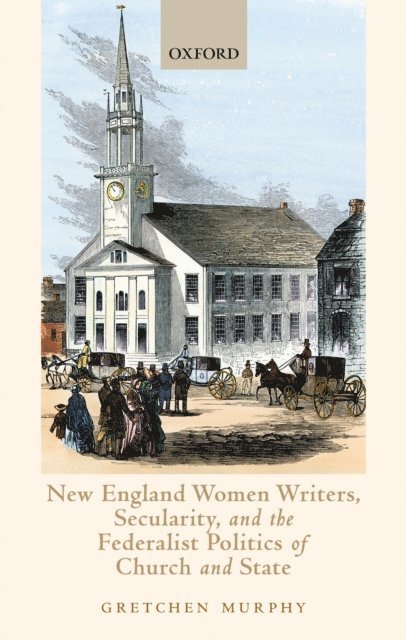
New England Women Writers, Secularity, and the Federalist Politics of Church and State
Inbunden, Engelska, 2021
1 364 kr
Skickas inom 5-8 vardagar
Drawing on literature, correspondence, sermons, legal writing, and newspaper publishing, this book offers a new account women's political participation and the process of religious disestablishment. Scholars have long known that eighteenth- and nineteenth-century American women wrote pious, sentimental stories, but this book uses biographical and archival methods to understand their religious concerns as entry points into the era's debates about democratic conditions of possibility and the role of religion in a republic. Beginning with the early republic's constitutional and electoral contests about the end of religious establishment and extending through the nineteenth century, Murphy argues that Federalist women and Federalist daughters of the next generation adapted that party's ideas and fears by promoting privatized Christianity with public purpose. Harriet Beecher Stowe, Catharine Sedgwick, Lydia Sigourney, Judith Sargent Murray, and Sally Sayward Wood authorised themselves as Federalism's literary curators, and in doing so they imagined new configurations of religion and revolution, faith and rationality, public and private. They did so using literary form, writing in gothic, sentimental, and regionalist genres to update the Federalist concatenation of religion, morality, and government in response to changing conditions of secularity and religious privatization in the new republic. Murphy shows that their project both complicates received narratives of separation of church and state and illuminates the problem of democracy and belief in postsecular America.
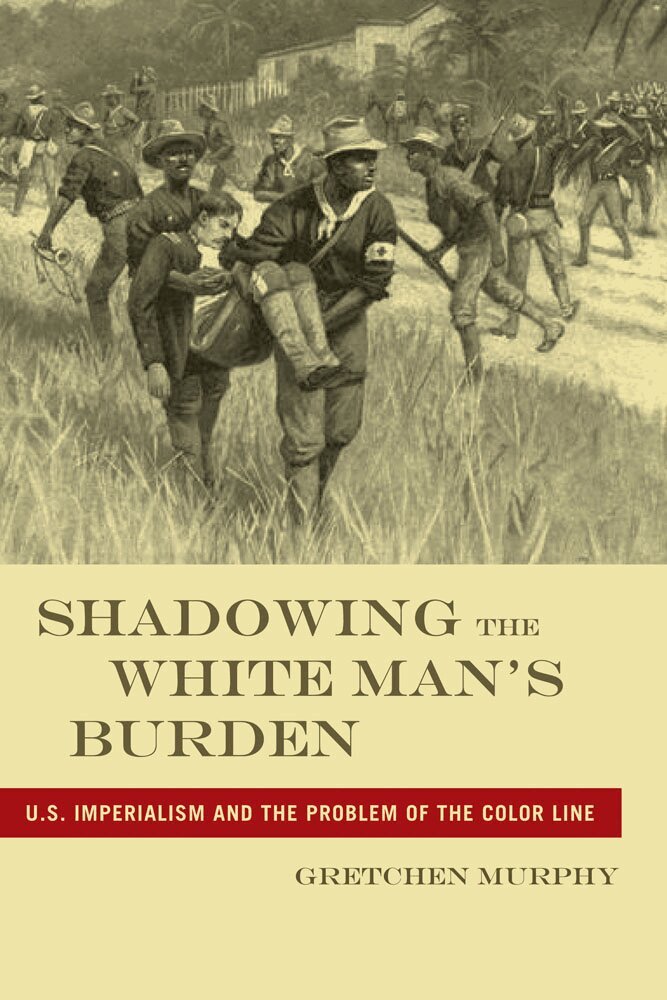
Shadowing the White Man's Burden
U.S. Imperialism and the Problem of the Color Line
Inbunden, Engelska, 2010
1 054 kr
Skickas inom 10-15 vardagar
During the height of 19th century imperialism, Rudyard Kipling published his famous poem "The White Man's Burden." While some of his American readers argued that the poem served as justification for imperialist practices, others saw Kipling's satirical talents at work and read it as condemnation. Gretchen Murphy explores this tension embedded in the notion of the white man's burden to create a new historical frame for understanding race and literature in America.Shadowing the White Man's Burden maintains that literature symptomized and channeled anxiety about the racial components of the U.S. world mission, while also providing a potentially powerful medium for multiethnic authors interested in redrawing global color lines. Through a range of archival materials from literary reviews to diplomatic records to ethnological treatises, Murphy identifies a common theme in the writings of African-, Asian- and Native-American authors who exploited anxiety about race and national identity through narratives about a multiracial U.S. empire. Shadowing the White Man's Burden situates American literature in the context of broader race relations, and provides a compelling analysis of the way in which literature came to define and shape racial attitudes for the next century.
Shadowing the White Man's Burden
U.S. Imperialism and the Problem of the Color Line
Häftad, Engelska, 2010
463 kr
Skickas inom 7-10 vardagar
During the height of 19th century imperialism, Rudyard Kipling published his famous poem "The White Man's Burden." While some of his American readers argued that the poem served as justification for imperialist practices, others saw Kipling's satirical talents at work and read it as condemnation. Gretchen Murphy explores this tension embedded in the notion of the white man's burden to create a new historical frame for understanding race and literature in America.Shadowing the White Man's Burden maintains that literature symptomized and channeled anxiety about the racial components of the U.S. world mission, while also providing a potentially powerful medium for multiethnic authors interested in redrawing global color lines. Through a range of archival materials from literary reviews to diplomatic records to ethnological treatises, Murphy identifies a common theme in the writings of African-, Asian- and Native-American authors who exploited anxiety about race and national identity through narratives about a multiracial U.S. empire. Shadowing the White Man's Burden situates American literature in the context of broader race relations, and provides a compelling analysis of the way in which literature came to define and shape racial attitudes for the next century.
1 342 kr
Skickas inom 7-10 vardagar
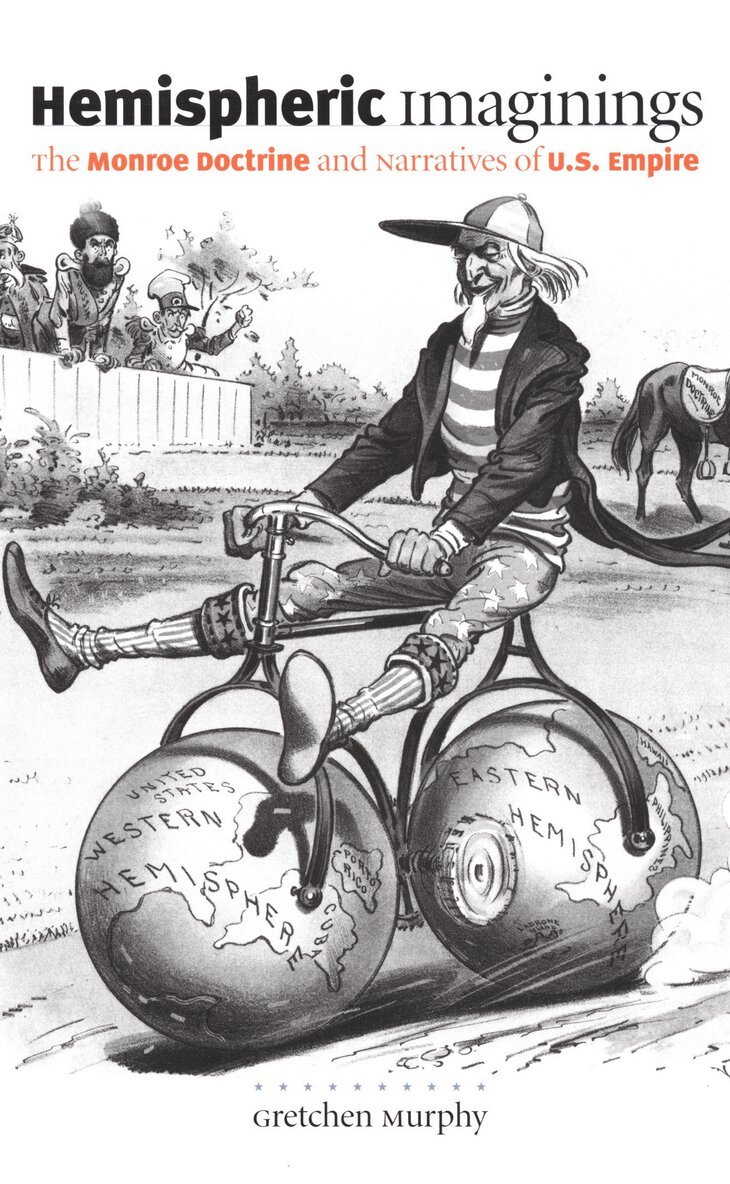
In 1823, President James Monroe announced that the Western Hemisphere was closed to any future European colonization and that the United States would protect the Americas as a space destined for democracy. Over the next century, these ideas-which came to be known as the Monroe Doctrine-provided the framework through which Americans understood and articulated their military and diplomatic role in the world. Hemispheric Imaginings demonstrates that North Americans conceived and developed the Monroe Doctrine in relation to transatlantic literary narratives. Gretchen Murphy argues that fiction and journalism were crucial to popularizing and making sense of the Doctrine’s contradictions, including the fact that it both drove and concealed U.S. imperialism. Presenting fiction and popular journalism as key arenas in which such inconsistencies were challenged or obscured, Murphy highlights the major role writers played in shaping conceptions of the U.S. empire.Murphy juxtaposes close readings of novels with analyses of nonfiction texts. From uncovering the literary inspirations for the Monroe Doctrine itself to tracing visions of hemispheric unity and transatlantic separation in novels by Lydia Maria Child, Nathaniel Hawthorne, MarÍa Amparo Ruiz de Burton, Lew Wallace, and Richard Harding Davis, she reveals the Doctrine’s forgotten cultural history. In making a vital contribution to the effort to move American Studies beyond its limited focus on the United States, Murphy questions recent proposals to reframe the discipline in hemispheric terms. She warns that to do so risks replicating the Monroe Doctrine’s proprietary claim to isolate the Americas from the rest of the world.
372 kr
Skickas inom 7-10 vardagar
In 1823, President James Monroe announced that the Western Hemisphere was closed to any future European colonization and that the United States would protect the Americas as a space destined for democracy. Over the next century, these ideas-which came to be known as the Monroe Doctrine-provided the framework through which Americans understood and articulated their military and diplomatic role in the world. Hemispheric Imaginings demonstrates that North Americans conceived and developed the Monroe Doctrine in relation to transatlantic literary narratives. Gretchen Murphy argues that fiction and journalism were crucial to popularizing and making sense of the Doctrine’s contradictions, including the fact that it both drove and concealed U.S. imperialism. Presenting fiction and popular journalism as key arenas in which such inconsistencies were challenged or obscured, Murphy highlights the major role writers played in shaping conceptions of the U.S. empire.Murphy juxtaposes close readings of novels with analyses of nonfiction texts. From uncovering the literary inspirations for the Monroe Doctrine itself to tracing visions of hemispheric unity and transatlantic separation in novels by Lydia Maria Child, Nathaniel Hawthorne, MarÍa Amparo Ruiz de Burton, Lew Wallace, and Richard Harding Davis, she reveals the Doctrine’s forgotten cultural history. In making a vital contribution to the effort to move American Studies beyond its limited focus on the United States, Murphy questions recent proposals to reframe the discipline in hemispheric terms. She warns that to do so risks replicating the Monroe Doctrine’s proprietary claim to isolate the Americas from the rest of the world.