• Fri frakt över 249 kr
  • •
  • Snabba leveranser
  • •
  • Billiga böcker
Kundservice

Du är på sajten för privatpersoner.

Företag, bibliotek eller offentlig verksamhet?

Du handlar på classic.bokus.com, där alla dina funktioner finns intakta.
Till classic.bokus.com
Bokus logotyp. Gå till startsidan.
  • Erbjudanden
  • Nyheter
  • Student
  • Topplistor
  • Barn & ungdom
  • Bokus Play
  • E-böcker
  • Pocketböcker
  • Spel & pussel

10% rabatt på allt med kod: NYSTART10 →

Sidfot

Mina sidor

    Hjälp

    • Kundservice
    • Vanliga frågor och svar
    • Frakt och leverans
    • Retur vid ångerrätt
    • Reklamera vara
    • Betalning
    • Köpvillkor
    • Allmänna villkor
    • Information om webbplatsens tillgänglighet

    Om Bokus

    • Om oss
    • Pressrum
    • För studenter
    • För företag
    • För bibliotek och offentlig verksamhet
    • För leverantörer
    • Hållbarhet

    Populärt

    • Aktuella erbjudanden
    • Presentkort
    • Studentlitteratur
    • Nya böcker
    • Topplistor
    • Signerade böcker
    • Engelska böcker

    Inspiration

    • Boktips
    • BookTok
    • Populära bokserier
    • Barnbokskaraktärer
    • Populära författare
    Logotyp för Bokus
    Följ oss på Facebook (extern länk)Följ oss på Instagram (extern länk)Följ oss på YouTube (extern länk)Följ oss på TikTok (extern länk)
    bokus @ CookiesAnpassa cookiesIntegritetspolicyKöpvillkor
    Till Citymail hemsida (extern länk)Till Budbee hemsida (extern länk)Till Postnord hemsida (extern länk)Till Schenker hemsida (extern länk)Till Early Bird hemsida (extern länk)Till Walleys hemsida (extern länk)
    1. Skönlitteratur
    2. Litteraturvetenskap
    3. Litteraturvetenskap

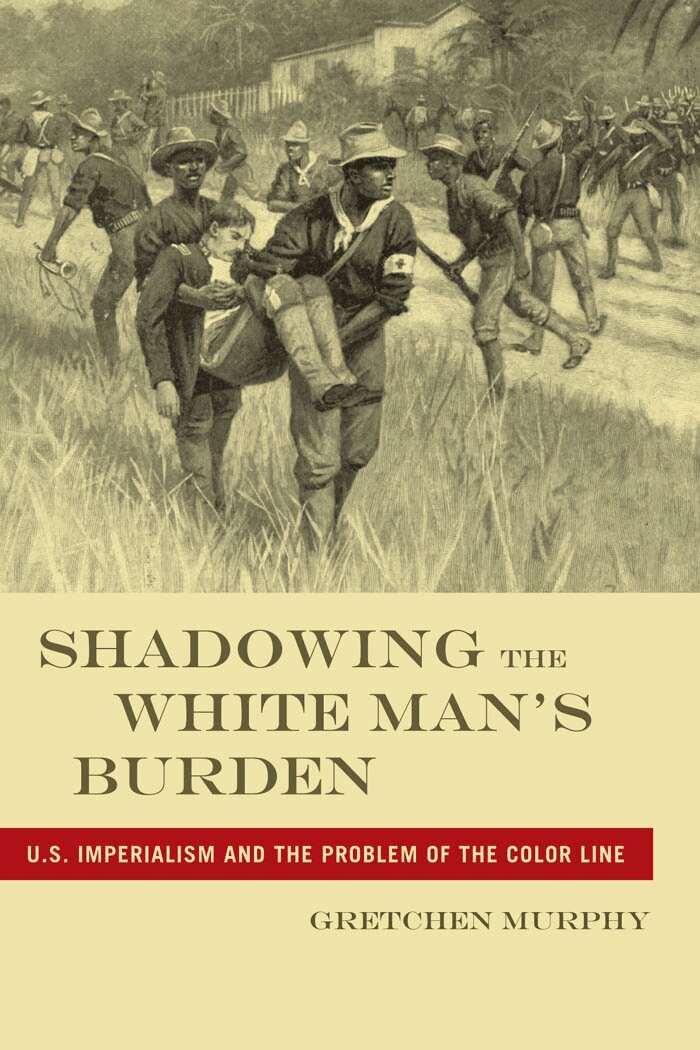
    Shadowing the White Man's Burden

    U.S. Imperialism and the Problem of the Color Line

    AvGretchen Murphy

    Häftad, Engelska, 2010

    Del i serien America and the Long 19th Century

    480 kr

    Beställningsvara. Skickas inom 5-8 vardagar. Fri frakt över 249 kr.

    Fler format och utgåvor

    Inbunden

    1 094 kr

    Beskrivning

    During the height of 19th century imperialism, Rudyard Kipling published his famous poem "The White Man's Burden." While some of his American readers argued that the poem served as justification for imperialist practices, others saw Kipling's satirical talents at work and read it as condemnation. Gretchen Murphy explores this tension embedded in the notion of the white man's burden to create a new historical frame for understanding race and literature in America.Shadowing the White Man's Burden maintains that literature symptomized and channeled anxiety about the racial components of the U.S. world mission, while also providing a potentially powerful medium for multiethnic authors interested in redrawing global color lines. Through a range of archival materials from literary reviews to diplomatic records to ethnological treatises, Murphy identifies a common theme in the writings of African-, Asian- and Native-American authors who exploited anxiety about race and national identity through narratives about a multiracial U.S. empire. Shadowing the White Man's Burden situates American literature in the context of broader race relations, and provides a compelling analysis of the way in which literature came to define and shape racial attitudes for the next century.

    Produktinformation

    • Utgivningsdatum:2010-05-03
    • Mått:152 x 229 x 18 mm
    • Vikt:408 g
    • Format:Häftad
    • Språk:Engelska
    • Serie:America and the Long 19th Century
    • Antal sidor:288
    • Förlag:New York University Press
    • ISBN:9780814795996

    Utforska kategorier

    • Litteraturvetenskap inom Skönlitteratur

    Mer om författaren

    Gretchen Murphy is Associate Professor of English at the University of Texas-Austin. She is the author of Hemispheric Imaginings: The Monroe Doctrine and Narratives of U.S. Empire.

    Recensioner i media

    This beautifully argued and engaging literary history addresses a fairly simple question: How did the distinctive multiracial nature of the United States transform that country's sense of itself as an empire? The result is a fascinating and rewarding book worth reading closely and carefully. - Matthew Pratt Guterl (The Journal of American History) Gretchen Murphy's new book is a compelling work that synthesizes critical race theory and U.S. empire studies to produce an original analysis of whiteness in national and international contexts . . . Shadowing the White Man's Burden is a valuable book that makes an important contribution to the growing body of work on U.S. imperialism. Scholars interested in the topic would do well to attend to this remarkable achievement. - Harilaos Stecopoulos (American Historical Review) This impressive book, which is based on extensive archival research, shows how the transformation of racial categories at the turn of the 20th century was a multidirectional process that often generated new meanings. Murphy reveals how multiple imperial histories shaped changing ideas about race and how readers and writers who engaged the trope of the white mans burden exposed contradictory ideas about whiteness as a domestic and transnational racial construct. Shadowing the White Mans Burden is part of an exciting new body of work on race in transnational contexts. It is one of the best accounts we have of the significance of literature in transformations of and contests over race in this period. - Shelley Streeby,author of American Sensations: Class, Empire, and the Production of Popular Culture Murphy's analysis has much to offer to scholars in the humanities...Shadowing the White Man's Burdenis an exciting contribution to transnational analysis, African American Studies, and a welcome gift to scholars in various fields interested in deconstructing concepts of race and nation in the modern era. (Journal of African American History) Through a careful and attentive comparative analysis of literature and history, [Murphy] demonstrates the constructed nature of race in the imperialist mind and shows that, for many, the United States was never able to fix its own white identity strongly enough to fully participate in the & white mans burden, but with every foray into international empire-building, it opened itself up to internal scrutiny about its own racial heterogeneity. (Journal of American Ethnic History)

    Innehållsförteckning

    • Acknowledgments Introduction: Writing Race on the World's Stage Part I: Reading Kipling in America 1 The Burden of Whiteness 2 The White Man's Burden or the Leopard's Spots? Dixon's Political ConundrumPart II: The Black Cosmopolite 3 The Plain Citizen of Black Orientalism: Frank R. Steward's Filipino American War Fiction 4 Pauline Hopkins's "International Policy": Cosmopolitan Perspective at the Colored American MagazinePart III: Pacific Expansion and Transnational Fictions of Race 5 How the Irish Became Japanese: Winnifred Eaton's Transnational Racial Reconstructions 6 American Indians, Asiatics, and Anglo-Saxons: Ranald MacDonald's Japan Story of Adventure Conclusion Notes Index About the Author