Irad Malkin - Böcker
Visar alla böcker från författaren Irad Malkin. Handla med fri frakt och snabb leverans.
13 produkter
13 produkter
1 603 kr
Skickas
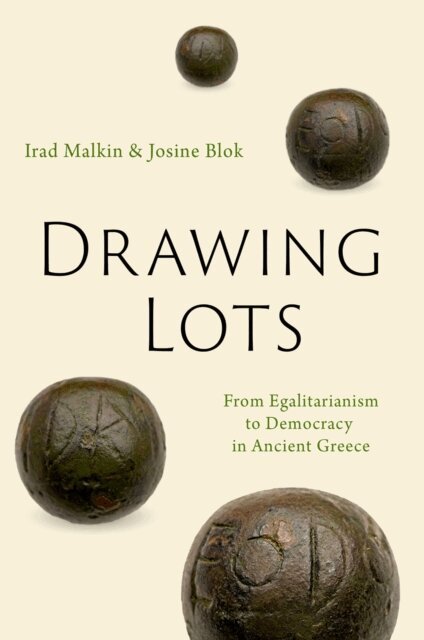
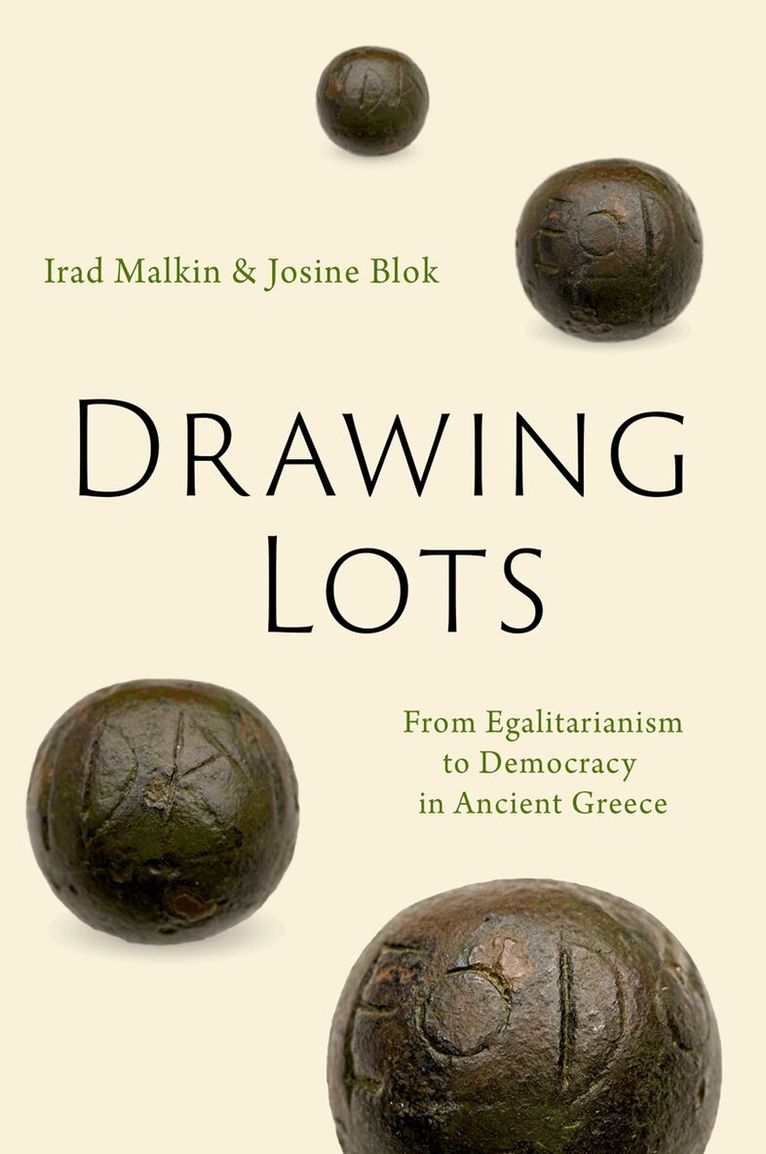
For the first time, this volume by two leading historians offers a comprehensive study of drawing lots as a central institution of ancient Greek society. Drawing lots expressed an egalitarian mindset that guided selection, procedure, and distribution by lot and was eventually introduced for polis governance, a Greek innovation that appears to be of increasing relevance today. The authors explore the egalitarian, "horizonal," mindset expressed in using the lot instead of a top-down vision of authority and sovereignty. Drawing lots presupposed equality among participants deserving equal "portions" and was used for distributing land, inheritance, booty, sacrificial meat, selecting individuals, setting turns, mixing and reorganizing groups, and divining the will of the gods. Lot-oracles were used for divination; otherwise, the gods guarded the justice of the procedure but only rarely determined the outcome. It was a self-evident method broadly and ubiquitously applied. Drawing lots would crystallize community boundaries and emphasize its sovereignty. The book further investigates the transposition of the drawing of lots to the governance of the polis. The implied egalitarianism of the lot often conflicted with top-down perceptions of society and the values of inequality, status, and merit. Drawing lots was introduced into oligarchies and democracies at an uneven pace and scale. Its wide use in the democracy of classical Athens was an exceptional case, eye-catching both in antiquity and today. The book concludes with a discussion about the meaning of the Greek examples for drawing lots today and the increasing interest in using random selection in politics as a possibility for modern democracies around the world. The appendix surveys the Greek vocabulary of lottery practices.
446 kr
Skickas inom 5-8 vardagar
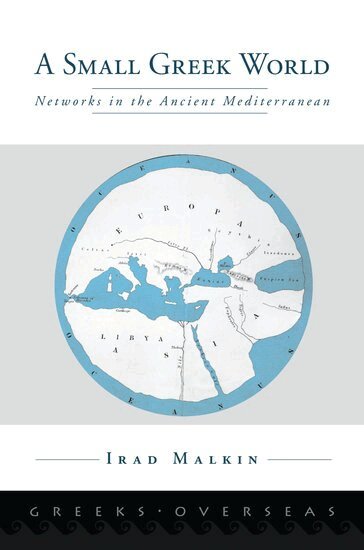
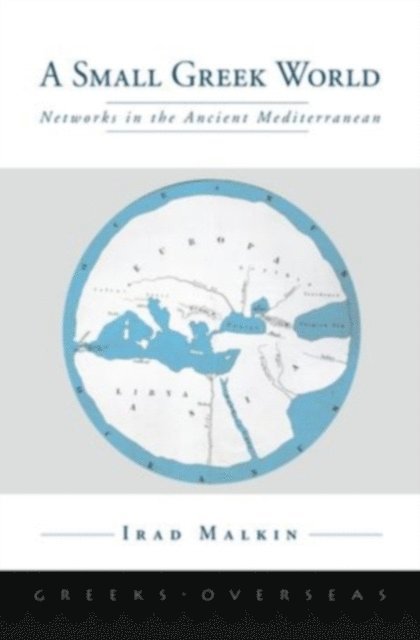
Greek civilization and identity crystallized not when Greeks were close together but when they came to be far apart. It emerged during the Archaic period when Greeks founded coastal city states and trading stations in ever-widening horizons from the Ukraine to Spain. No center directed their diffusion: mother cities were numerous and the new settlements ("colonies") would often engender more settlements. The "Greek center" was at sea; it was formed through back-ripple effects of cultural convergence, following the physical divergence of independent settlements. "The shores of Greece are like hems stitched onto the lands of Barbarian peoples" (Cicero). Overall, and regardless of distance, settlement practices became Greek in the making and Greek communities far more resembled each other than any of their particular neighbors like the Etruscans, Iberians, Scythians, or Libyans. The contrast between "center and periphery" hardly mattered (all was peri-, "around"), nor was a bi-polar contrast with Barbarians of much significance. Should we admire the Greeks for having created their civilization in spite of the enormous distances and discontinuous territories separating their independent communities? Or did the salient aspects of their civilization form and crystallize because of its architecture as a de-centralized network? This book claims that the answer lies in network attributes shaping a "Small Greek World," where separation is measured by degrees of contact rather than by physical dimensions.
1 128 kr
Skickas inom 5-8 vardagar
Greek civilization and identity crystallized not when Greeks were close together but when they came to be far apart. It emerged during the Archaic period when Greeks founded coastal city states and trading stations in ever-widening horizons from the Ukraine to Spain. No center directed their diffusion: mother cities were numerous and the new settlements ("colonies") would often engender more settlements. The "Greek center" was at sea; it was formed through back-ripple effects of cultural convergence, following the physical divergence of independent settlements. "The shores of Greece are like hems stitched onto the lands of Barbarian peoples" (Cicero). Overall, and regardless of distance, settlement practices became Greek in the making and Greek communities far more resembled each other than any of their particular neighbors like the Etruscans, Iberians, Scythians, or Libyans. The contrast between "center and periphery" hardly mattered (all was peri-, "around"), nor was a bi-polar contrast with Barbarians of much significance. Should we admire the Greeks for having created their civilization in spite of the enormous distances and discontinuous territories separating their independent communities? Or did the salient aspects of their civilization form and crystallize because of its architecture as a de-centralized network? This book claims that the answer lies in network attributes shaping a "Small Greek World," where separation is measured by degrees of contact rather than by physical dimensions.
2 150 kr
Skickas inom 10-15 vardagar
In this book, prominent historians apply Mediterranean paradigms to Classical Mediterranean Antiquty (Greece and Rome), allowing for a new approach to the ancient world and enhancing antiquity's relevance to the understanding of other historical periods as well as our contemporary world.This book was previously published as a special issue of the journal Mediterranean Historical Review.
2 150 kr
Skickas inom 10-15 vardagar
How useful is the concept of "network" for historical studies and the ancient world in particular? Using theoretical models of social network analysis, this book illuminates aspects of the economic, social, religious, and political history of the ancient Greek and Roman worlds. Bringing together some of the most active and prominent researchers in ancient history, this book moves beyond political institutions, ethnic, and geographical boundaries in order to observe the ancient Mediterranean through a perspective of network interaction. It employs a wide range of approaches, and to examine relationships and interactions among various social entities in the Mediterranean. Chronologically, the book extends from the early Iron Age to the late Antique world, covering the Mediterranean between Antioch in the east to Massalia (Marseilles) in the west. This book was published as two special issues in Mediterranean Historical Review.
831 kr
Skickas inom 10-15 vardagar
How useful is the concept of "network" for historical studies and the ancient world in particular? Using theoretical models of social network analysis, this book illuminates aspects of the economic, social, religious, and political history of the ancient Greek and Roman worlds. Bringing together some of the most active and prominent researchers in ancient history, this book moves beyond political institutions, ethnic, and geographical boundaries in order to observe the ancient Mediterranean through a perspective of network interaction. It employs a wide range of approaches, and to examine relationships and interactions among various social entities in the Mediterranean. Chronologically, the book extends from the early Iron Age to the late Antique world, covering the Mediterranean between Antioch in the east to Massalia (Marseilles) in the west. This book was published as two special issues in Mediterranean Historical Review.
691 kr
Skickas inom 10-15 vardagar
In this book, prominent historians apply Mediterranean paradigms to Classical Mediterranean Antiquty (Greece and Rome), allowing for a new approach to the ancient world and enhancing antiquity's relevance to the understanding of other historical periods as well as our contemporary world.This book was previously published as a special issue of the journal Mediterranean Historical Review.
1 252 kr
Skickas inom 3-6 vardagar
This remarkably rich and multifaceted study of early Greek exploration makes an original contribution to current discussions of the encounters between Greeks and non-Greeks. Focusing in particular on myths about Odysseus and other heroes who visited foreign lands on their mythical voyages homeward after the Trojan War, Irad Malkin shows how these stories functioned to mediate encounters and conceptualize ethnicity and identity during the Archaic and Classical periods. Synthesizing a wide range of archaeological, mythological, and literary sources, this exceptionally learned book strengthens our understanding of early Greek exploration and city-founding along the coasts of the Western Mediterranean, reconceptualizes the role of myth in ancient societies, and revitalizes our understanding of ethnicity in antiquity. Malkin shows how the figure of Odysseus became a proto-colonial hero whose influence transcended the Greek-speaking world. The return-myths constituted a generative mythology, giving rise to oral poems, stories, iconographic imagery, rituals, historiographical interpretation, and the articulation of ethnic identities.Reassessing the role of Homer and alternative return-myths, the book argues for the active historical function of myth and collective representations and traces their changing roles through a spectrum of colonial perceptions--from the proto-colonial, through justifications of expansion and annexation, and up to decolonization.
2 150 kr
Skickas inom 10-15 vardagar
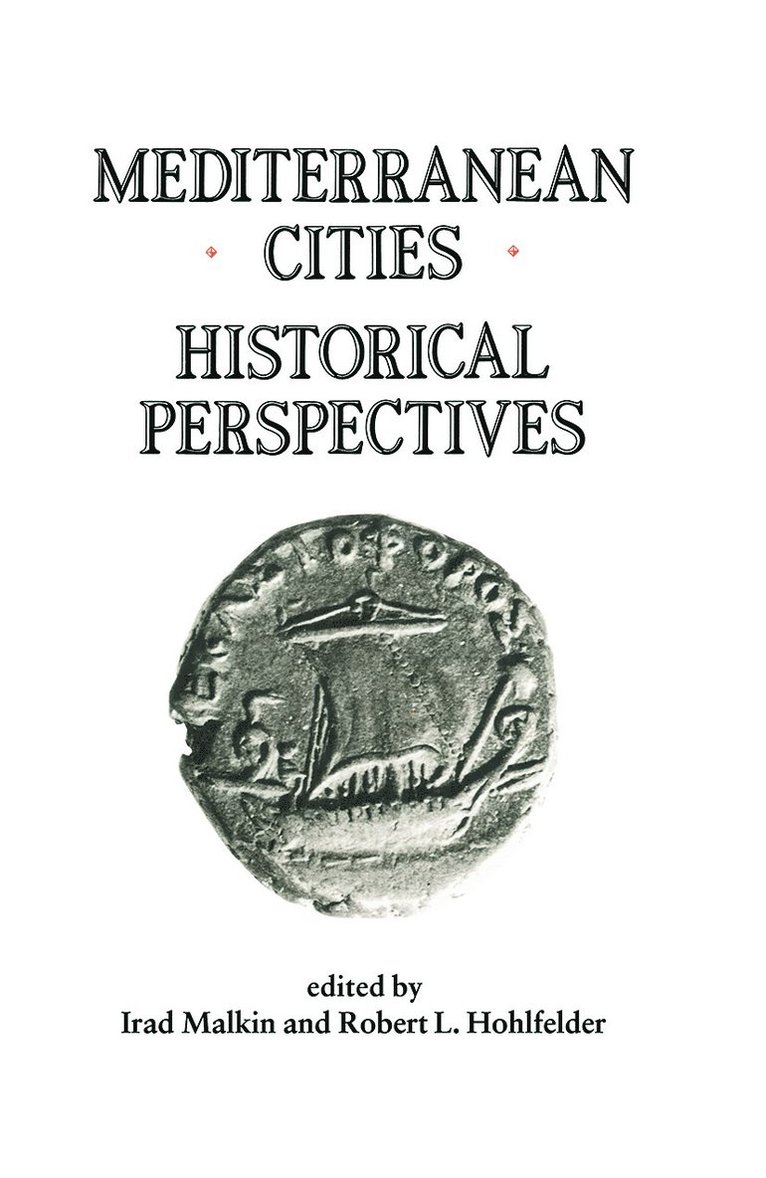
First published in 1988. This is a collection of works where the Mediterranean provides the context for all the cities which appear in this volume: all are (or have been) port cities, and as such their harbours played a significant role in shaping their histories. In essence, the question of ‘interaction between man and sea’ is one of the influence of the maritime position on the human communities constituting the ‘Mediterranean cities’: the connections between them, and the link of each city with its hinterland, as well as the influence of its position on the city’s internal development and character.
298 kr
Skickas inom 7-10 vardagar
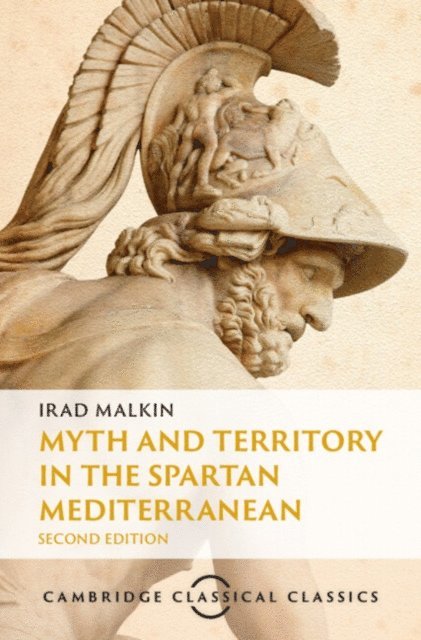
Greek attitudes to settlement and territory were often articulated through myths and cults. This book emphasizes less the poetic, timeless qualities of the myths than their historical function in the archaic and Classical periods, covering the spectrum from explicit charter myths legitimating conquest, displacement, and settlement to the 'precedent-setting' and even aetiological myths, rendering new landscapes 'Greek'. This spectrum is broadest in the world of Spartan colonization - the Spartan Mediterranean - where the greater challenges to territorial possession and Sparta's acute self-awareness of its relative national youthfulness elicited explicit responses in the form of charter myths. The concept of a Spartan Mediterranean, in contrast to the image of a land-locked Sparta, is a major contribution of this book. This revised edition contains a substantial new Introduction which engages with critical and scholarly developments on Sparta since the original publication.
1 295 kr
Skickas inom 7-10 vardagar
Greek attitudes to settlement and territory were often articulated through myths and cults. This book emphasizes less the poetic, timeless qualities of the myths than their historical function in the archaic and Classical periods, covering the spectrum from explicit charter myths legitimating conquest, displacement, and settlement to the 'precedent-setting' and even aetiological myths, rendering new landscapes 'Greek'. This spectrum is broadest in the world of Spartan colonization - the Spartan Mediterranean - where the greater challenges to territorial possession and Sparta's acute self-awareness of its relative national youthfulness elicited explicit responses in the form of charter myths. The concept of a Spartan Mediterranean, in contrast to the image of a land-locked Sparta, is a major contribution of this book. This revised edition contains a substantial new Introduction which engages with critical and scholarly developments on Sparta since the original publication.
705 kr
Skickas inom 10-15 vardagar
First published in 1988. This is a collection of works where the Mediterranean provides the context for all the cities which appear in this volume: all are (or have been) port cities, and as such their harbours played a significant role in shaping their histories. In essence, the question of ‘interaction between man and sea’ is one of the influence of the maritime position on the human communities constituting the ‘Mediterranean cities’: the connections between them, and the link of each city with its hinterland, as well as the influence of its position on the city’s internal development and character.
Del 44 - Trends in Classics - Supplementary Volumes
Panhellenes at Methone
Graphê in Late Geometric and Protoarchaic Methone, Macedonia (ca 700 BCE)
Inbunden, Engelska, 2017
2 230 kr
Skickas inom 5-8 vardagar
This volume discusses the multidimensional aspects of the unique, and so far unprecedented for Macedonia, 191 sherds from Methone in Pieria, dated to ca 700 BCE, which bear inscriptions, graffiti, and (trade)marks inscribed, incised, scratched and rarely painted. The 191 vessels were unearthed during excavations in ancient Methone in Pieria, the oldest colony of Greeks from Eretria in the north according to tradition. The Methone find is unique for two reasons. First, most of the pottery dates between 730 and 700 BCE, a period from which very few examples of Greek writing survives. And second, inscribed ceramics, scratched or painted, are extremely rare in Macedonia. This new evidence of inscribed pottery from Methone is invaluable for classical studies, and the papers of this volume contribute notably to current discussions about: the Greeks and the Greek language in Macedonia; the Greek colonization; the pottery trade and the early Greek transport amphoras; trade, the symposium, and other contexts for the development of writing; the ‘alphabets’ of Methone and the introduction of the alphabet in Greece; the dialect(s) of Methone in relation to the Greek dialects; early Greek writing, literacy, and literary beginnings.