• Fri frakt över 249 kr
  • •
  • Snabba leveranser
  • •
  • Billiga böcker
Kundservice

Du är på sajten för privatpersoner.

Företag, bibliotek eller offentlig verksamhet?

Du handlar på classic.bokus.com, där alla dina funktioner finns intakta.
Till classic.bokus.com
Bokus logotyp. Gå till startsidan.
  • Erbjudanden
  • Student
  • Topplistor
  • Barn & ungdom
  • Bokus Play
  • E-böcker
  • Ljudböcker
  • Pocketböcker
  • Spel & pussel

Upp till 25% på utvalda nyheter →

Sidfot

Mina sidor

    Hjälp

    • Kundservice
    • Vanliga frågor och svar
    • Frakt och leverans
    • Retur vid ångerrätt
    • Reklamera vara
    • Betalning
    • Köpvillkor
    • Allmänna villkor
    • Information om webbplatsens tillgänglighet

    Om Bokus

    • Om oss
    • Pressrum
    • För studenter
    • För företag
    • För bibliotek och offentlig verksamhet
    • För leverantörer
    • Hållbarhet

    Populärt

    • Aktuella erbjudanden
    • Presentkort
    • Studentlitteratur
    • Nya böcker
    • Topplistor
    • Signerade böcker
    • Engelska böcker

    Inspiration

    • Boktips
    • BookTok
    • Populära bokserier
    • Barnbokskaraktärer
    • Populära författare
    Logotyp för Bokus
    Följ oss på Facebook (extern länk)Följ oss på Instagram (extern länk)Följ oss på YouTube (extern länk)Följ oss på TikTok (extern länk)
    bokus @ CookiesAnpassa cookiesIntegritetspolicyKöpvillkor
    Till Citymail hemsida (extern länk)Till Budbee hemsida (extern länk)Till Postnord hemsida (extern länk)Till Schenker hemsida (extern länk)Till Early Bird hemsida (extern länk)Till Walleys hemsida (extern länk)
    1. Historia och arkeologi
    2. Historia
    3. Forntidens historia

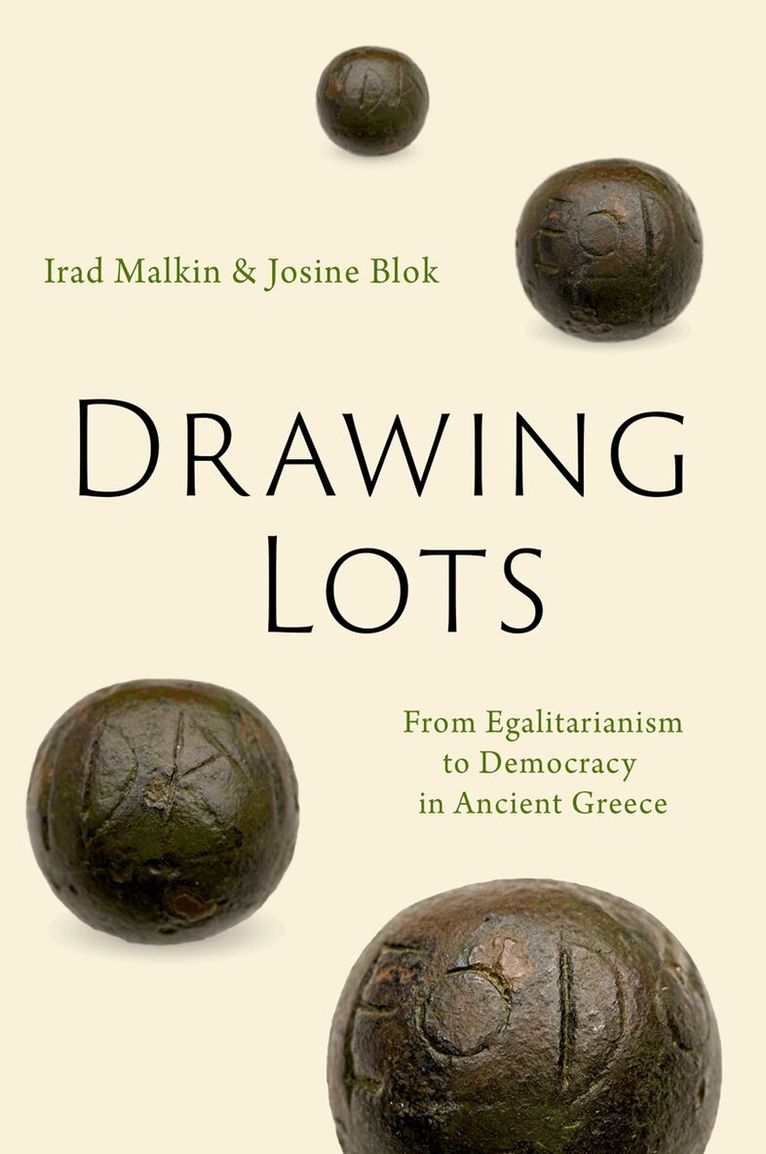
    Drawing Lots

    From Egalitarianism to Democracy in Ancient Greece

    AvIrad Malkin,Josine Blok

    Inbunden, Engelska, 2024

    1 685 kr

    Skickas . Fri frakt över 249 kr.

    Beskrivning

    For the first time, this volume by two leading historians offers a comprehensive study of drawing lots as a central institution of ancient Greek society. Drawing lots expressed an egalitarian mindset that guided selection, procedure, and distribution by lot and was eventually introduced for polis governance, a Greek innovation that appears to be of increasing relevance today. The authors explore the egalitarian, "horizonal," mindset expressed in using the lot instead of a top-down vision of authority and sovereignty. Drawing lots presupposed equality among participants deserving equal "portions" and was used for distributing land, inheritance, booty, sacrificial meat, selecting individuals, setting turns, mixing and reorganizing groups, and divining the will of the gods. Lot-oracles were used for divination; otherwise, the gods guarded the justice of the procedure but only rarely determined the outcome. It was a self-evident method broadly and ubiquitously applied. Drawing lots would crystallize community boundaries and emphasize its sovereignty. The book further investigates the transposition of the drawing of lots to the governance of the polis. The implied egalitarianism of the lot often conflicted with top-down perceptions of society and the values of inequality, status, and merit. Drawing lots was introduced into oligarchies and democracies at an uneven pace and scale. Its wide use in the democracy of classical Athens was an exceptional case, eye-catching both in antiquity and today. The book concludes with a discussion about the meaning of the Greek examples for drawing lots today and the increasing interest in using random selection in politics as a possibility for modern democracies around the world. The appendix surveys the Greek vocabulary of lottery practices.

    Produktinformation

    • Utgivningsdatum:2024-08-29
    • Mått:145 x 226 x 43 mm
    • Vikt:907 g
    • Format:Inbunden
    • Språk:Engelska
    • Antal sidor:536
    • Förlag:OUP USA
    • ISBN:9780197753477

    Utforska kategorier

    • Forntidens historia inom Historia och arkeologi
    • Rättssystem inom Juridik
    • Forntida religioner och mytologier inom Filosofi och religion

    Mer om författaren

    Irad Malkin is Emeritus Professor of History at Tel Aviv University, a Foreign Member of the Athens National Academy, a member of the European Network for the Study of Ancient Greek History, and the author of numerous books, including A Small Greek World. Josine Blok is Professor Emeritus of Ancient History and Classical Civilization at Utrecht University, a member of the Royal Dutch Academy of Sciences, and co-founder and chair of the European Network for the Study of Ancient Greek History. Her previous books include Citizenship in Classical Athens.

    Recensioner i media

    There's much talk in western democracies about possible uses of the lot -the random allocation of civic resources and of political offices in the interests of equality and justice. In this prodigiously researched monograph, two historians track back to a culture and a political model in which the lot came to be seen as central and fundamental to the world's first democratic regimes. Politicians of today, please note -and act.

    Innehållsförteckning

    • List of abbreviationsPreface Introduction Greeks drawing lots: the practice and the mindset of egalitarianism Part I The lottery mindset: religion and society1. Lotteries divine and human: the world of the Homeric epics2. When does the lot reflect the will of the gods? Lots, oracles, divination, and the notion of moira3. Sacrifice and feast: social values and the distribution of meat by lot Part II Equal and fair: inheritance, colonization, and mixture4. Partible Inheritance by lot5. Drawing lots on the Athenian stage6. Founding cities and sharing in the polis: equality, allotment, and civic mixture Part III Drawing lots in polis governance7. Setting the stage8. Drawing lots for polis office9. Drawing lots for governance: a political innovation Part IV Conclusions 10. Conclusions and implications11. Drawing lots today: fair distribution and a stronger democracy Appendix A Lexicographical survey: lottery practices in the archaic and classical periods BibliographyIndexIndex locorum