• Fri frakt över 249 kr
  • •
  • Snabba leveranser
  • •
  • Billiga böcker
Kundservice

Du är på sajten för privatpersoner.

Företag, bibliotek eller offentlig verksamhet?

Du handlar på classic.bokus.com, där alla dina funktioner finns intakta.
Till classic.bokus.com
Bokus logotyp. Gå till startsidan.
  • Erbjudanden
  • Nyheter
  • Student
  • Topplistor
  • Barn & ungdom
  • Bokus Play
  • E-böcker
  • Pocketböcker
  • Spel & pussel

10% rabatt på allt med kod NYSTART10 →

Sidfot

Mina sidor

    Hjälp

    • Kundservice
    • Vanliga frågor och svar
    • Frakt och leverans
    • Retur vid ångerrätt
    • Reklamera vara
    • Betalning
    • Köpvillkor
    • Allmänna villkor
    • Information om webbplatsens tillgänglighet

    Om Bokus

    • Om oss
    • Pressrum
    • För studenter
    • För företag
    • För bibliotek och offentlig verksamhet
    • För leverantörer
    • Hållbarhet

    Populärt

    • Aktuella erbjudanden
    • Presentkort
    • Studentlitteratur
    • Nya böcker
    • Topplistor
    • Signerade böcker
    • Engelska böcker

    Inspiration

    • Boktips
    • BookTok
    • Populära bokserier
    • Barnbokskaraktärer
    • Populära författare
    Logotyp för Bokus
    Följ oss på Facebook (extern länk)Följ oss på Instagram (extern länk)Följ oss på YouTube (extern länk)Följ oss på TikTok (extern länk)
    bokus @ CookiesAnpassa cookiesIntegritetspolicyKöpvillkor
    Till Citymail hemsida (extern länk)Till Budbee hemsida (extern länk)Till Postnord hemsida (extern länk)Till Schenker hemsida (extern länk)Till Early Bird hemsida (extern länk)Till Walleys hemsida (extern länk)
    1. Historia och arkeologi
    2. Historia
    3. Forntidens historia

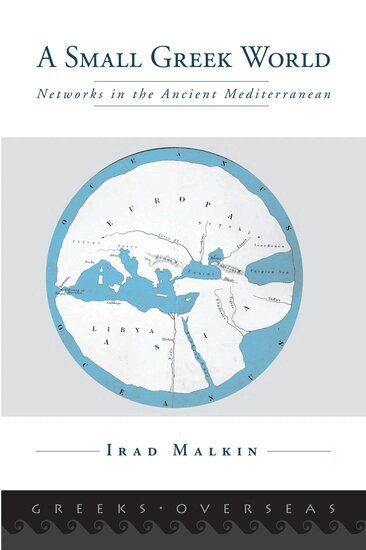
    A Small Greek World

    Networks in the Ancient Mediterranean

    AvIrad Malkin

    Häftad, Engelska, 2013

    Del i serien Greeks Overseas

    895 kr

    Beställningsvara. Skickas inom 5-8 vardagar. Fri frakt över 249 kr.

    Fler format och utgåvor

    Inbunden

    1 952 kr

    Beskrivning

    Greek civilization and identity crystallized not when Greeks were close together but when they came to be far apart. It emerged during the Archaic period when Greeks founded coastal city states and trading stations in ever-widening horizons from the Ukraine to Spain. No center directed their diffusion: mother cities were numerous and the new settlements ("colonies") would often engender more settlements. The "Greek center" was at sea; it was formed through back-ripple effects of cultural convergence, following the physical divergence of independent settlements. "The shores of Greece are like hems stitched onto the lands of Barbarian peoples" (Cicero). Overall, and regardless of distance, settlement practices became Greek in the making and Greek communities far more resembled each other than any of their particular neighbors like the Etruscans, Iberians, Scythians, or Libyans. The contrast between "center and periphery" hardly mattered (all was peri-, "around"), nor was a bi-polar contrast with Barbarians of much significance. Should we admire the Greeks for having created their civilization in spite of the enormous distances and discontinuous territories separating their independent communities? Or did the salient aspects of their civilization form and crystallize because of its architecture as a de-centralized network? This book claims that the answer lies in network attributes shaping a "Small Greek World," where separation is measured by degrees of contact rather than by physical dimensions.

    Produktinformation

    • Utgivningsdatum:2013-09-19
    • Mått:155 x 231 x 17 mm
    • Vikt:431 g
    • Format:Häftad
    • Språk:Engelska
    • Serie:Greeks Overseas
    • Antal sidor:306
    • Förlag:OUP USA
    • ISBN:9780199315727

    Utforska kategorier

    • Forntidens historia inom Historia och arkeologi
    • Arkeologiska perioder och områden inom Historia och arkeologi

    Mer om författaren

    Irad Malkin is Cummings Chair for Mediterranean History and Culture and Professor of Ancient Greek History at Tel Aviv University.

    Recensioner i media

    Malkin has written a thought-provoking and very readable book, which introduces a promising new method to the study of Greek colonisation and identity. Jorrit M. Kelder, Landscape History this book succeeds in evoking a compelling image of The Greek Wide Web as multidirectional, decentralized, nonhierarchical, boundless and proliferating, accessible, expansive, and interactive.

    Innehållsförteckning

    • List of Figures and Maps ; Acknowledgements ; A note on transliteration ; Abbreviations ; 1. Introduction: Networks and History ; 2. Island Networking and Hellenic Convergence: From Rhodes to Naukratis ; 3. Sicily and the Greeks: Apollo Archegetes and the Sikeliote Network ; 4. Herakles and Melqart: Networking Heroes ; 5. Networks and Middle Grounds in the Western Mediterranean ; 6. Cult and Identity in the Far West: Phokaians, Ionians, and Hellenes ; Conclusion