Iris Moon - Böcker
Visar alla böcker från författaren Iris Moon. Handla med fri frakt och snabb leverans.
7 produkter
7 produkter
452 kr
Skickas inom 7-10 vardagar
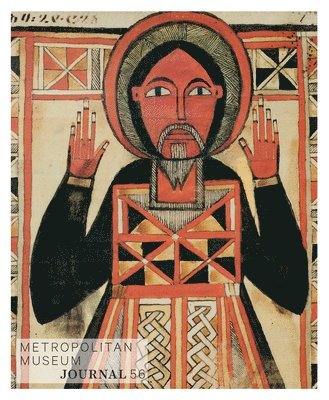
Founded in 1968, the Metropolitan Museum Journal is a blind, peer-reviewed scholarly journal published annually that features original research on the history, interpretation, conservation, and scientific examination of works of art in the Museum’s collection. Its scope encompasses the diversity of artistic practice from antiquity to the present day. The Journal encourages contributions offering critical and innovative approaches that will further our understanding of works of art.
356 kr
Skickas
An experimental biography of the ceramics entrepreneur Josiah Wedgwood that reveals the tenuous relationship of eighteenth-century England to late-capitalist modernity.Melancholy Wedgwood traces the multiple strands in the life of the ceramic entrepreneur Josiah Wedgwood (1730–1795) to propose an alternative view of eighteenth-century England’s tenuous relationship to our own lives and times, amid the ruins of late-capitalist modernity. Through intimate vignettes and essays, and in writing at turns funny, sharp, and pensive, Iris Moon chips away at the mythic image of Wedgwood as singular genius, business titan, and benevolent abolitionist, revealing an amorphous, fragile, and perhaps even shattered life. In the process the book goes so far as to dismantle certain entrenched social and economic assumptions, not least that the foundational myths of capitalism might not be quite so rosy after all, and instead induce a feeling that could only be characterized as blue.
1 152 kr
Skickas
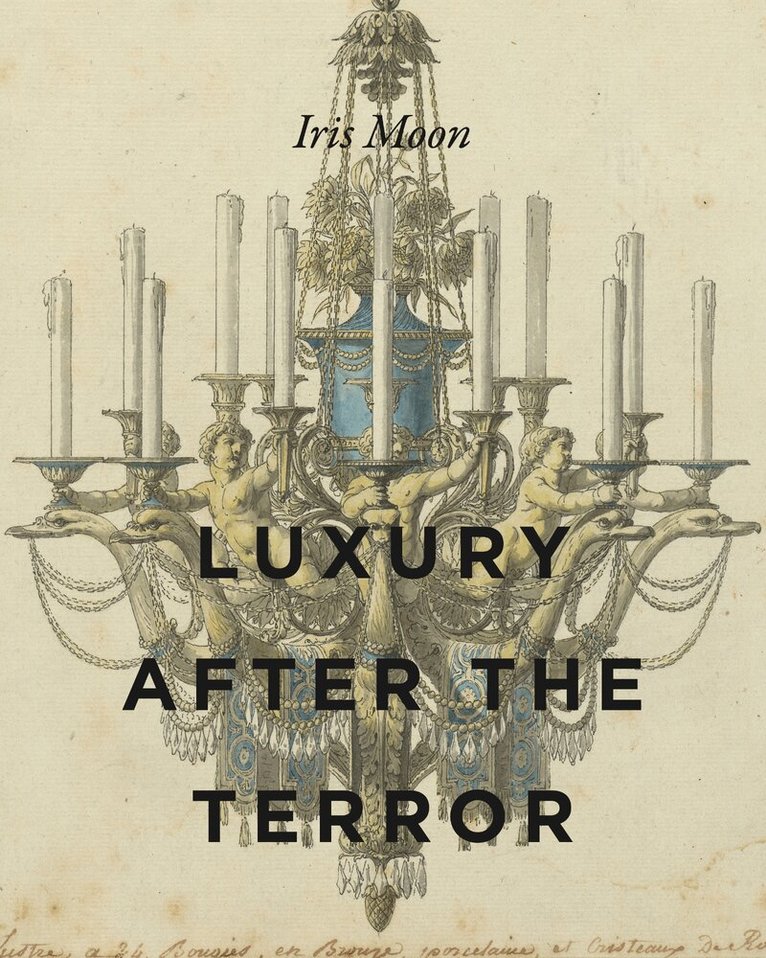
When Louis XVI was guillotined on January 21, 1793, vast networks of production that had provided splendor and sophistication to the royal court were severed. Although the king’s royal possessions—from drapery and tableware to clocks and furniture suites—were scattered and destroyed, many of the artists who made them found ways to survive. This book explores the fabrication, circulation, and survival of French luxury after the death of the king.Spanning the final years of the ancien régime from the 1790s to the first two decades of the nineteenth century, this richly illustrated book positions luxury within the turbulent politics of dispersal, disinheritance, and dispossession. Exploring exceptional works created from silver, silk, wood, and porcelain as well as unrealized architectural projects, Iris Moon presents new perspectives on the changing meanings of luxury in the revolutionary and Napoleonic periods, a time when artists were forced into hiding, exile, or emigration. Moon draws on her expertise as a curator to revise conventional accounts of the so-called Louis XVI style, arguing that it was only after the revolutionary auctions liquidated the king’s collections that their provenance accrued deeper cultural meanings as objects with both a royal imprimatur and a threatening reactionary potential.Lively and accessible, this thought-provoking study will be of interest to curators, art historians, scholars, and students of the decorative arts as well as specialists in the French Revolution.
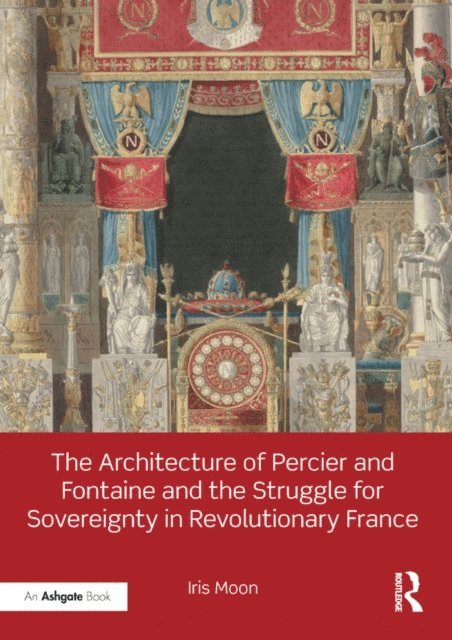
Architecture of Percier and Fontaine and the Struggle for Sovereignty in Revolutionary France
Häftad, Engelska, 2019
648 kr
Skickas inom 10-15 vardagar
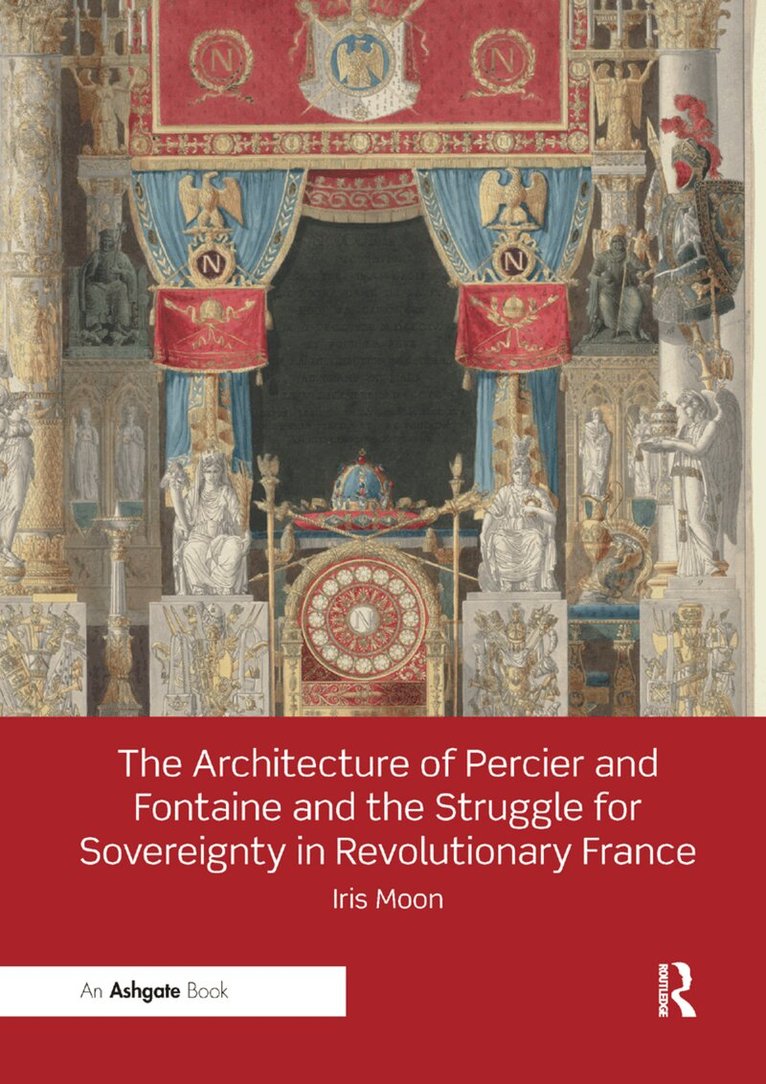
As the official architects of Napoleon, Charles Percier (1764–1838) and Pierre-François-Léonard Fontaine (1762–1853) designed interiors that responded to the radical ideologies and collective forms of destruction that took place during the French Revolution. The architects visualized new forms of imperial sovereignty by inverting the symbols of monarchy and revolution, constructing meeting rooms resembling military encampments and gilded thrones that replaced the Bourbon lily with Napoleonic bees. Yet in the wake of political struggle, each foundation stone that the architects laid for the new imperial regime was accompanied by an awareness of the contingent nature of sovereign power. Contributing fresh perspectives on the architecture, decorative arts, and visual culture of revolutionary France, this book explores how Percier and Fontaine’s desire to build structures of permanence and their inadvertent reliance upon temporary architectural forms shaped a new awareness of time, memory, and modern political identity in France.
358 kr
Skickas inom 7-10 vardagar
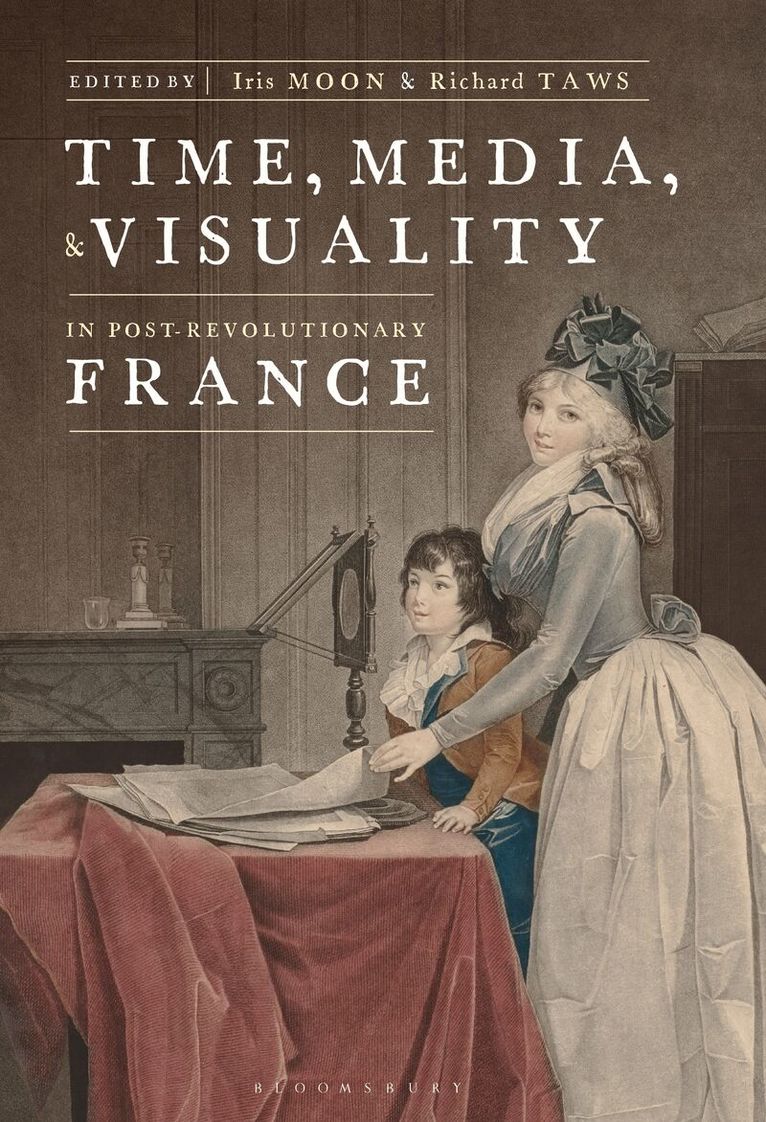
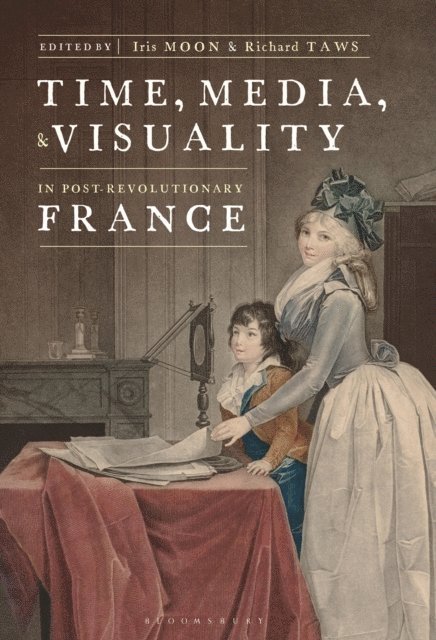
Time, media, and visuality are watchwords of modernity across science, culture and the arts. At which point in history, though, did they decisively intersect? Identifying the year 1789 – or the beginning of the French Republic – as the radical moment at which science and the arts came together through radical innovation, this volume questions the reigning teleologies of modern art. Uniting two key areas of 19th-century European art – the French Revolution and 19th-century technological and reproductive experimentation – this novel volume highlights the dual impact these developments had on the art of the period. In doing so, it opens up new and distinctive lines of inquiry around French visual culture, all the while mapping an expanded terrain of art objects, along with makers, consumers and situations of art.Considering a remarkably broad range of media and practices through an interdisciplinary lens, this diverse collection of essays brings together both eminent and emerging scholars in 18th- and 19th-century French visual culture and enriches our understanding of the period. The essays provide thought-provoking insights on the temporal dimension of art, challenging oversimplified views of artistic progress in modernity. They question teleological narratives, emphasizing the complexity of influences shaping the modern artist. As such, the book offers a new account of the story of French art’s modernity by exploring the work of genre painters and miniaturists, sign-painters and animal artists, landscapists, architects, and restorers, as they worked out what it meant to be “post-revolutionary.” As a result, the book promises appeal to academic audiences both within and beyond the discipline of art history.
Architecture of Percier and Fontaine and the Struggle for Sovereignty in Revolutionary France
Inbunden, Engelska, 2016
2 305 kr
Skickas inom 10-15 vardagar
As the official architects of Napoleon, Charles Percier (1764–1838) and Pierre-François-Léonard Fontaine (1762–1853) designed interiors that responded to the radical ideologies and collective forms of destruction that took place during the French Revolution. The architects visualized new forms of imperial sovereignty by inverting the symbols of monarchy and revolution, constructing meeting rooms resembling military encampments and gilded thrones that replaced the Bourbon lily with Napoleonic bees. Yet in the wake of political struggle, each foundation stone that the architects laid for the new imperial regime was accompanied by an awareness of the contingent nature of sovereign power. Contributing fresh perspectives on the architecture, decorative arts, and visual culture of revolutionary France, this book explores how Percier and Fontaine’s desire to build structures of permanence and their inadvertent reliance upon temporary architectural forms shaped a new awareness of time, memory, and modern political identity in France.
292 kr
Skickas inom 7-10 vardagar
Curiosity and critique foreground this novel history of porcelain that unravels the cultural myths of Chinoiserie, Europe’s fantasy of the East Monstrous Beauty presents a bold cross-cultural history of porcelain told through a feminist lens. Prized for its delicate quality and whiteness, porcelain was first imported to Europe from China in the early modern period and gained lasting associations with Chinoiserie, a style that encapsulated associations of mystery and enchantment with Asia. This book probes the collective anxieties around gender, race, and sexuality lurking under the surface of this ornate style, derided by some eighteenth-century critics as monstrous and unnatural. In interconnected essays, Iris Moon unpacks Chinoiserie’s language of curiosity and exoticism. Here, close looking at garnitures, plates, teacups and saucers reveals how the desire to collect and possess porcelain created entrenched cultural myths of the Asian woman, and how it later extended into such mediums as photography and film. In addition, sixteen readings by contemporary artists and scholars, of works ranging from the sixteenth century to the present, respond to this fraught history by asking how we can engage in meaningful dialogues about Chinoiserie today. Published by The Metropolitan Museum of Art/Distributed by Yale University Press Exhibition Schedule: The Metropolitan Museum of Art, New York(March 25–August 17, 2025)