James R. Siemon - Böcker
Visar alla böcker från författaren James R. Siemon. Handla med fri frakt och snabb leverans.
6 produkter
6 produkter
167 kr
Skickas
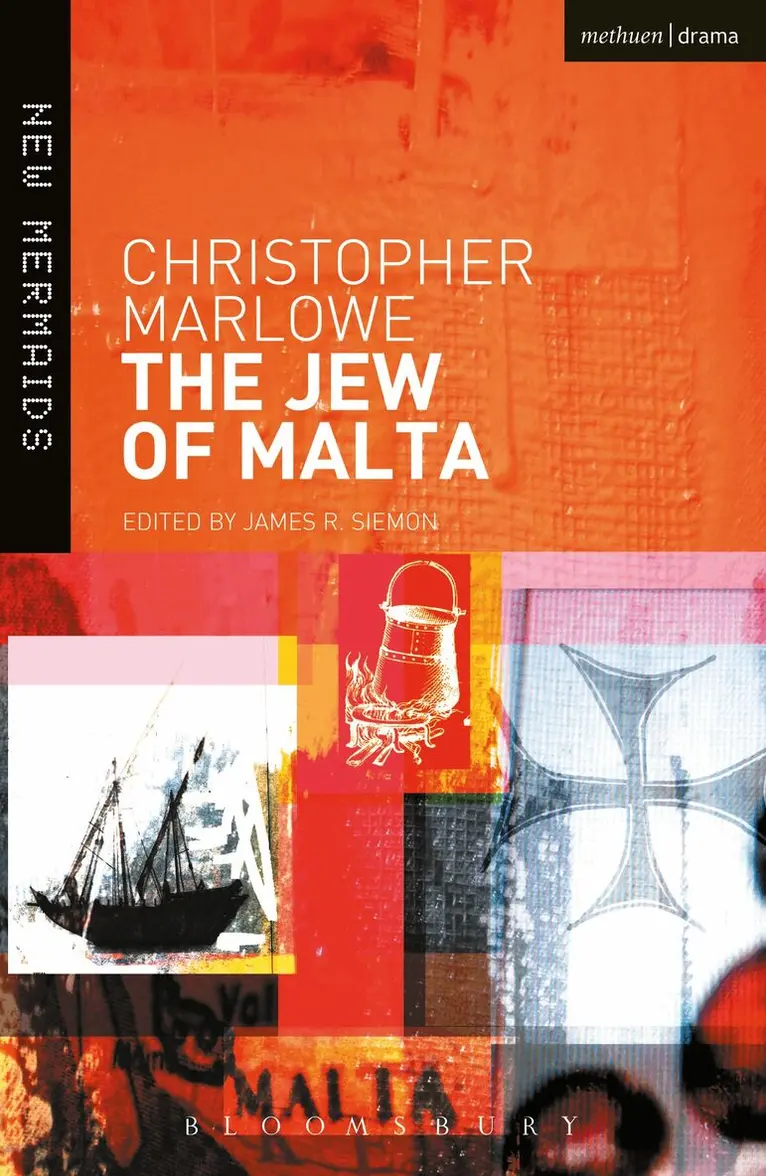
'Tell me worldlings, underneath the sun, If greater falsehood ever has been done' The Jew of Malta, written around 1590, can present a challenge for modern audiences. Hugely popular in its day, the play swings wildly and rapidly in genre, from pointed satire, to bloody revenge tragedy, to melodrmatic intrigue, to dark farce and grotesque comedy. Although set in the Mediterranean island of Malta, the play evokes contemporary Elizabethan social tensions, especially the highly charged issue of London's much-resented community of resident merchant foreigners. Barabas, the enormously wealthy Jew of the play's title, appears initially victimized by Malta's Christian Governor, who quotes scripture to support the demand that Jews cede their wealth to pay Malta's tribute to the Turks. When he protests, Barabas is deprived of his wealth, his means of livelihood, and his house, which is converted to a nunnery. In response to this hypocritical extortion, Barabas launches a horrific (and sometimes hilarious) course of violence that goes well beyond revenge, using murderous tactics that include everything from deadly soup to poisoned flowers.The play's sometimes complex treatment of anti-Semitism and its relationship to Shakespeare's Merchant of Venice remain matters of continuing scholarly reflection. This student edition contains a lengthy Introduction with background on the author, date and sources, theme, critical interpretation and stage history, as well as a fully annotated version of the playtext in modern spelling. James R. Siemon is Professor of English at Boston University.
1 467 kr
Skickas inom 10-15 vardagar
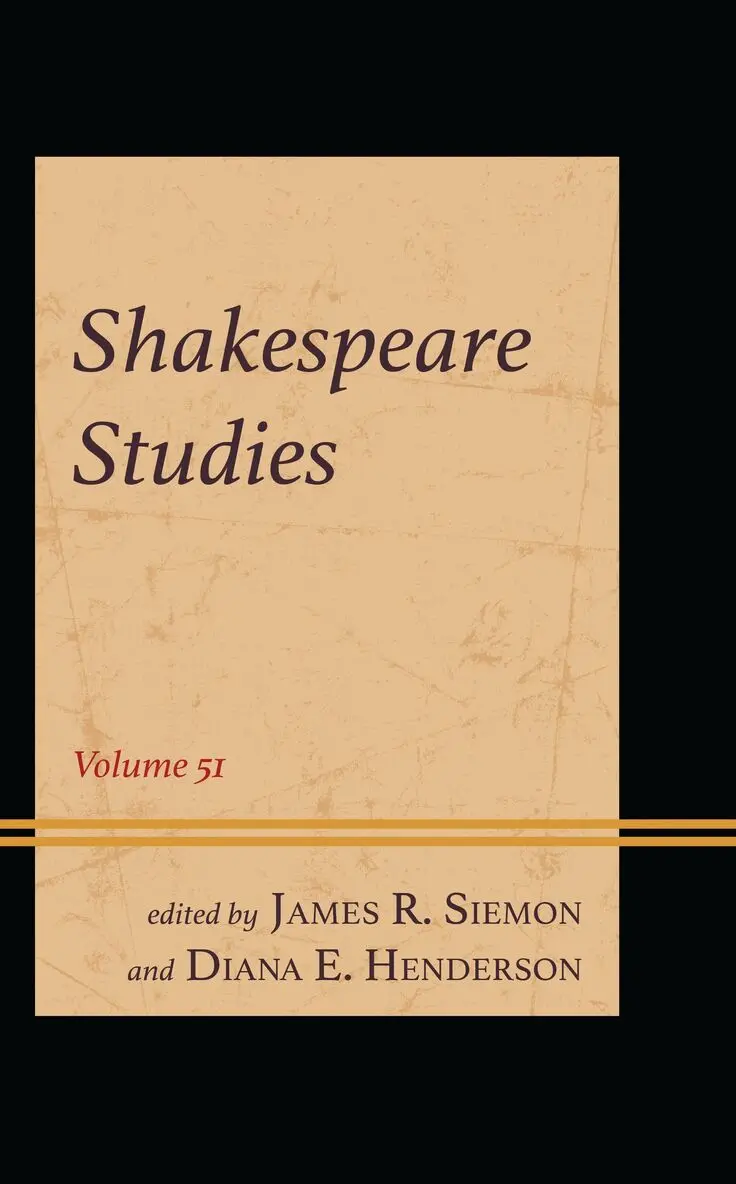
Shakespeare Studies is an annual peer-reviewed volume featuring the work of performance scholars, literary critics and cultural historians. The journal focuses primarily on Shakespeare and his contemporaries, but embraces theoretical and historical studies of socio-political, intellectual and artistic contexts that extend well beyond the early modern English theatrical milieu. In addition to articles, Shakespeare Studies offers opportunities for extended intellectual exchange through its thematically-focused forums, and includes substantial reviews. An international Editorial Board maintains the quality of each volume so that Shakespeare Studies may serve as a reliable resource for all students of Shakespeare and the early modern period – for research scholars and also for teachers, actors and directors.Volume 51 includes a Forum on the work of Michael D Bristol, with contributions from J. F. Bernard, Gail Kern Paster, James Siemon, Jill Ingram, Unhae Park Langis and Julia Reinhard Lupton, Anna Lewton-Brain and Brooke Harvey, Nicholas Utzig, and Paul Yachnin. Volume 51 includes articles from the Next Generation Plenary of the Shakespeare Association of America and essays by Laurence Senelick ("A Gift to Anti-Semites: Shylock on the Pre-Revolutionary Russian Stage"), Christopher D'Addario ("Metatheater and the Urban Everyday in Ben Jonson's Epicoene and The Alchemist"), and Denise A. Walen ("Elbowing Katherine of Valois"). Book reviews consider eleven important publications on liberty of speech and female voice; theaters of catastrophe; adaptations of Macbeth; staging touch in Shakespeare's England; the criticism of Hugh Grady; Shakespeare and World War II film; Shakespeare and digital pedagogy; Shakespeare and forgetting; Shakespeare and disability studies, and Shakespeare's private life.
1 467 kr
Skickas inom 10-15 vardagar
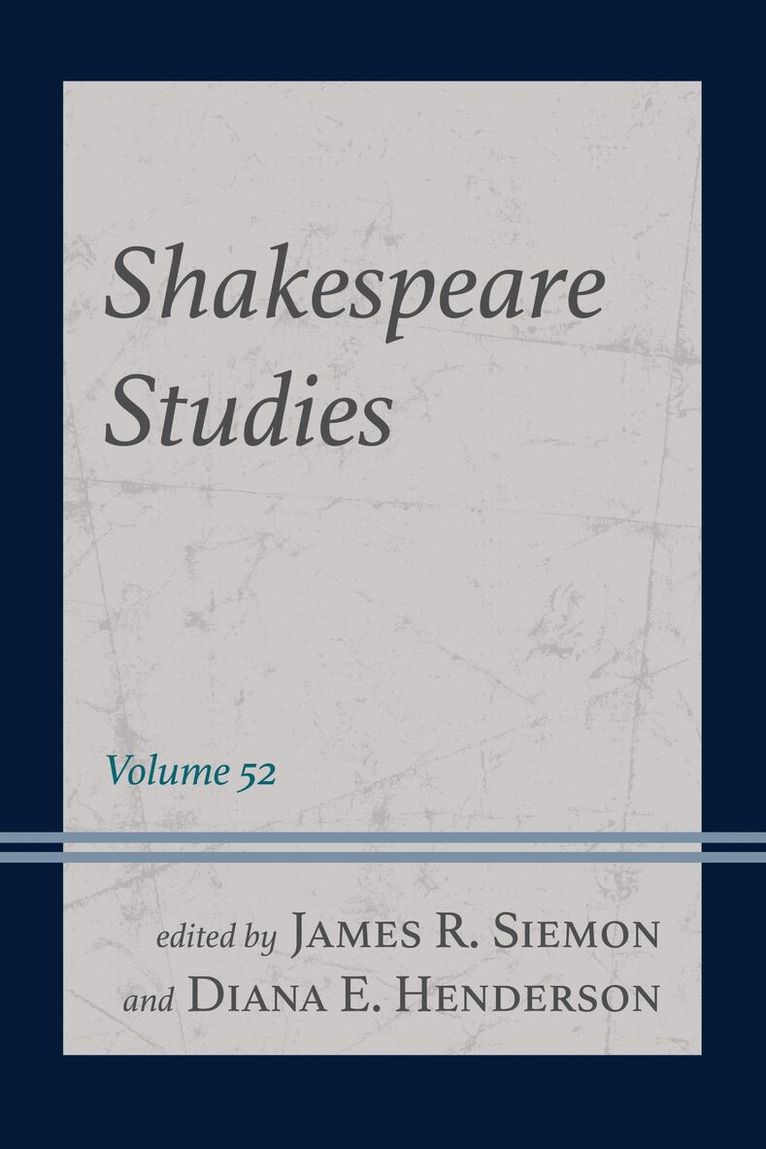
Shakespeare Studies is an annual peer-reviewed volume featuring work of performance scholars, literary critics and cultural historians. The journal focuses primarily on Shakespeare and his contemporaries but embraces theoretical and historical studies of socio-political, intellectual and artistic contexts that extend well beyond the early modern English theatrical milieu. In addition to articles, Shakespeare Studies offers unique opportunities for extended intellectual exchange through its thematically-focused forums, and includes substantial reviews. An international editorial board maintains the quality of each volume so that Shakespeare Studies may serve as a reliable resource for all students of Shakespeare and the early modern period – for research scholars as well as teachers, actors and directors.Volume 52 includes a Forum devoted the "Second Acts" of Shakespeare scholars with contributions from Mary Thomas Crane, Ayanna Thompson, Emily C. Bartels, Carla Della Gatta, Mary Jo Kietzman, Gina Bloom, Kevin Windhauser, Brinda Charry, Andrew J. Hartley, and Emma Whipday. Volume 52 includes contributions from the Next Generation Plenary of the Shakespeare Association of America as well as articles by Kinga Földváry ("From Melodrama to Tragedy and Back – Closing the Melodramatic Gap between Bollywood and Hollywood Shakespeare Adaptations"), Laura Higgins ("Locating Herself, Finding Her Voice: Mapping the Queen's Story in Shakespeare's Richard II"), Wesley Kisting ("The Theater of Conscience: Reforming Punishment in Measure for Measure"), Wolfgang G. Müller ("The Political Philosophies of Brutus and Cassius in Julius Caesar and the Theory of Preventive Tyrannicide"), and Greg M. Colón Semenza ("'Please, just no Shakespeare': Station Eleven's Utopian Economy of Cultural Distinction").Book reviews consider important publications on Shakespeare and university drama; Shakespeare and race; textual studies, editing and performance; poetry, science and the sublime; and entertaining uncertainty in early modern theater.
1 391 kr
Skickas inom 10-15 vardagar
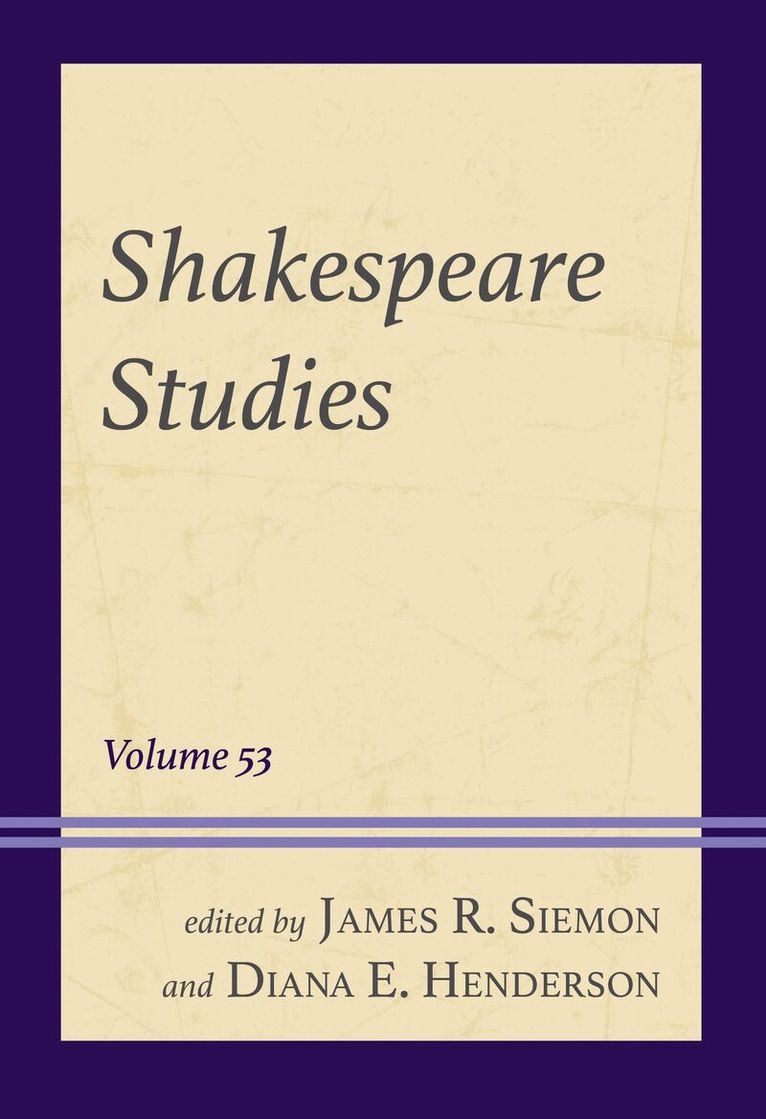
Volume 53 of the academic journal devoted to Shakespeare and Early Modern English Drama, Culture and Literature, published annually with peer-reviewed articles, forums, and reviews.Shakespeare Studies is an annual peer-reviewed volume featuring the work of performance scholars, literary critics, and cultural historians. The journal focuses primarily on Shakespeare and his contemporaries but embraces theoretical and historical studies of socio-political, intellectual, and artistic contexts that extend well beyond the early modern English theatrical milieu. In addition to articles, Shakespeare Studies offers opportunities for extended intellectual exchange through its thematically focused forums and includes substantial reviews. An international editorial board maintains the quality of each volume so that Shakespeare Studies may serve as a reliable resource for all students of Shakespeare and the early modern period—for research scholars as well as teachers, actors, and directors.Volume 53 includes a Forum entitled "Marlowe Revisited: Text, Performance, Legacy" with contributions from Lucy Munro, Adam Zucker, Kerry Cooke, Hannah L. Wilson, Cecilia Lindskog Whiteley, Jade Standing, Kitamura Sae, Christine Varnado, and Lisa M. Barksdale-Shaw. And featuring contributions from the Next Generation Plenary of the Shakespeare Association of America with articles by Andrew Hiscock ("'you performe your Antique round': Taking the Measure of Tyranny for a Twenty-first Century Macbeth"); Laura Kolb ("Becoming Tricky in Measure for Measure: Isabella's Silences Revisited"); Jessica M. Rosenberg ("Two Knacks in The Winter's Tale"); Kelly Lehtonen ("Virtuous Attention: Desire, Knowledge, and Compassion in Much Ado about Nothing"); and Kelsey Ridge ("'It was a torment / To lay upon the damned': Ariel and Trauma in The Tempest"). Book reviews consider important publications: Staging Female Characters in Shakespeare's English History Plays; Shakespeare through Islamic Worlds; Generic Innovation in Shakespeare and His Contemporaries; The Bard in the Borderlands; Shakespeare's White Others; The Great White Bard; Wartime Shakespeare; and Shakespeare on the Ecological Surface.
1 467 kr
Skickas inom 10-15 vardagar
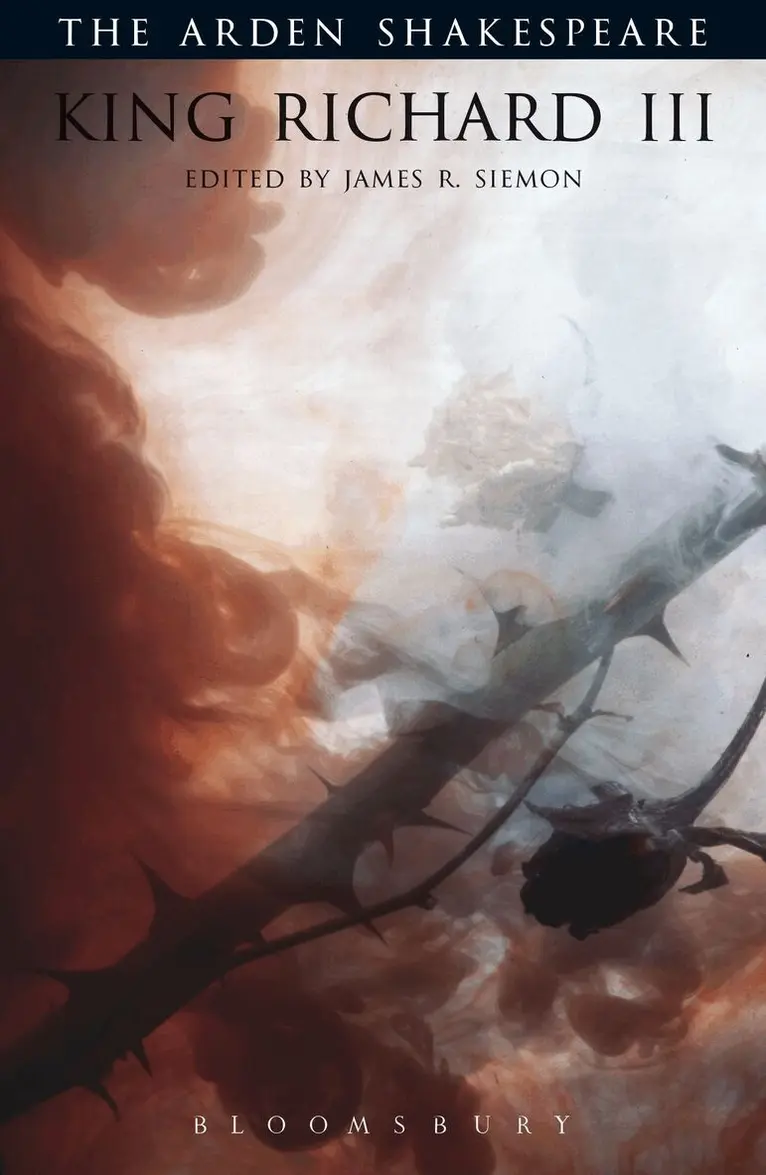
Richard III is one of the great Shakespearean characters and roles. James R Siemon examines the attraction of this villain to audiences and focuses on how beguiling, even funny, he can be, especially in the earlier parts of the play. Siemon also places King Richard III in its historical context; as Elizabeth I had no heirs the issue of succession was a very real one for Shakespeare's audience. The introduction is well-illustrated and provides a comprehensive account of the play and of critical approaches to it. The edition also provides a clear and authoritative playtext, edited to the most rigorous standards of scholarship, with detailed notes and commentary on the same page. With a wealth of helpful and incisive commentary the Arden Shakespeare is the finest edition of Shakespeare you can find, giving a deeper understanding and appreciation of his work.
167 kr
Skickas
Richard III is one of the great Shakespearean characters and roles. James R Siemon examines the attraction of this villain to audiences and focuses on how beguiling, even funny, he can be, especially in the earlier parts of the play. Siemon also places King Richard III in its historical context; as Elizabeth I had no heirs the issue of succession was a very real one for Shakespeare's audience. The introduction is well-illustrated and provides a comprehensive account of the play and of critical approaches to it. The edition also provides a clear and authoritative playtext, edited to the most rigorous standards of scholarship, with detailed notes and commentary on the same page. With a wealth of helpful and incisive commentary the Arden Shakespeare is the finest edition of Shakespeare you can find, giving a deeper understanding and appreciation of his work.