Jean C. Oi - Böcker
Visar alla böcker från författaren Jean C. Oi. Handla med fri frakt och snabb leverans.
14 produkter
14 produkter
Del 30 - Center for Chinese Studies, UC Berkeley
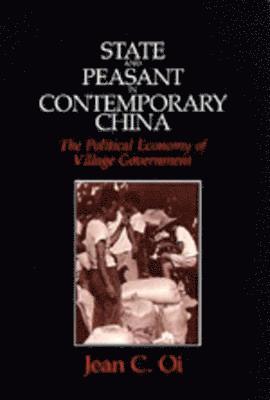
State and Peasant in Contemporary China
The Political Economy of Village Government
Häftad, Engelska, 1991
577 kr
Skickas inom 3-6 vardagar
This is a study of peasant-state relations and village politics as they have evolved in response to the state's attempts to control the division of the harvest and extract the state-defined surplus. To provide the reader with a clearer sense of the evolution of peasant-state relations over almost a forty-year period and to highlight the dramatic changes that have taken place since 1978,1 have divided my analysis into two parts: Chapters 2 through 7 are on Maoist China, and chapters 8 and 9 are on post-Mao China. The first part examines the state's grain policies and patterns of local politics that emerged during the highly collectivized Maoist period, when the state closed free grain markets and established the system of unified purchase and sales (tonggou tongxiao). The second part describes the new methods for the production and division of the harvest after 1978, when the government decollectivized agriculture and abolished its unified procurement program.
548 kr
Skickas inom 3-6 vardagar
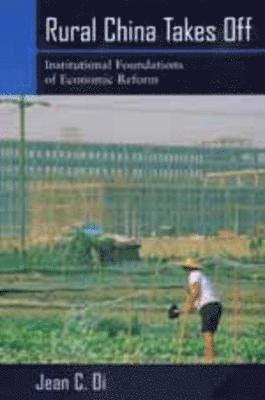
In this incisive analysis of one of the most spectacular economic breakthroughs in the Deng era, Jean C. Oi shows how and why Chinese rural-based industry has become the fastest growing economic sector not just in China but in the world. Oi argues that decollectivization and fiscal decentralization provided party officials of the localities--counties, townships, and villages--with the incentives to act as entrepreneurs and to promote rural industrialization in many areas of the Chinese countryside. As a result, the corporatism practiced by local officials has become effective enough to challenge the centrality of the national state. Dealing not only with the political setting of rural industrial development, Oi's original and strongly argued study also makes a broader contribution to conceptualizations of corporatism in political theory. Oi writes provocatively about property rights and principal-agent relationships and shows the complex financial incentives that underpin and strengthen the growth in local state corporatism and shape its evolution. This book will be essential for those interested in Chinese politics, comparative politics, and communist and post-communist systems.
1 724 kr
Skickas inom 10-15 vardagar
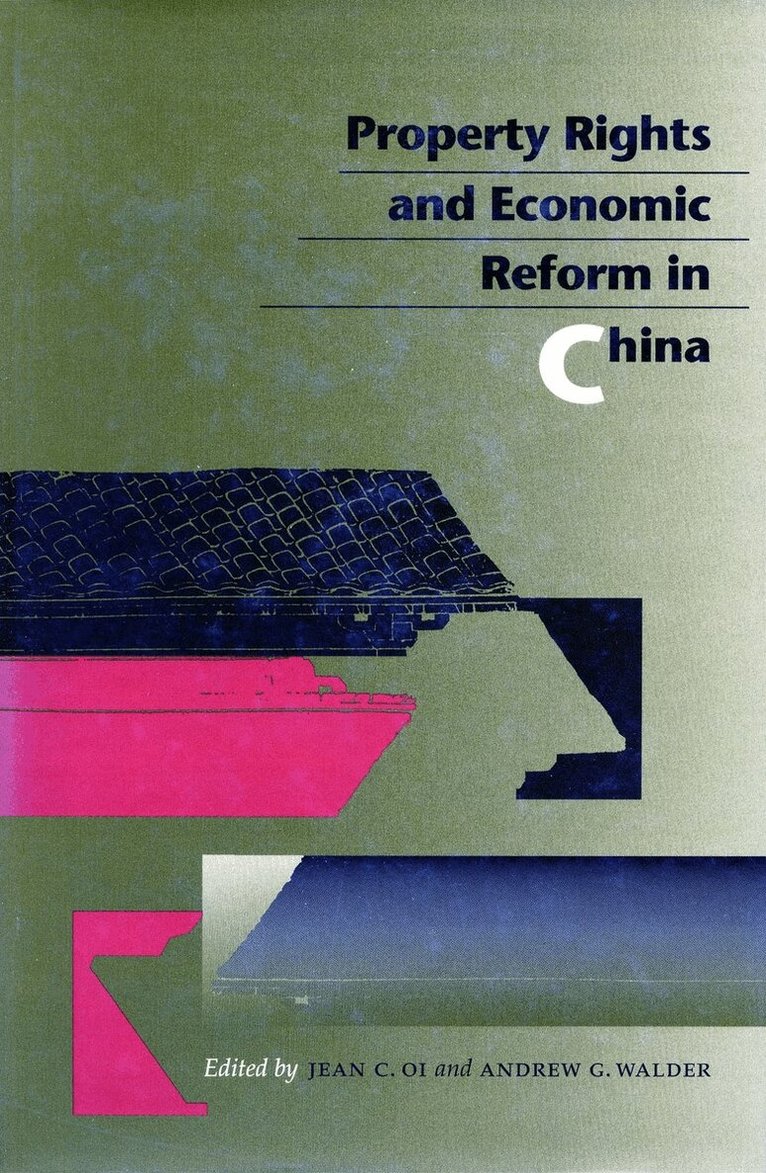
China's rapid economic growth during the past two decades has occurred without the systematic privatization programs once urged upon the former Communist regimes of Europe and the USSR. Some observers have argued that this shows that changes in property rights are not important in reforming a command economy; others insist that in China a façade of public ownership hides a variety of ownership forms that are essentially private in nature. This volume seeks to adjudicate these opposing views by clarifying conceptually and factually the pattern of property rights changes in the contemporary Chinese economy.The contributors to this volume, from the fields of anthropology, economics, political science, and sociology, have all conducted fieldwork in China on specific economic sectors or enterprise types. Working with a common definitional framework derived from the work of the institutional economist Harold Demsetz, they seek to establish which actors exercise what kinds of rights in practice over what kinds of economic assets, documenting changes through time. Most of the essays examine the rural industrial economy—the fastest-growing sector—or the "spin-off" economic enterprises and activities of public enterprises and institutions.The research presented in this volume supports several specific conclusions. First, industrializing rural regions have emerged with diametrically opposed property rights regimes: in one kind of region public ownership only marginally different in form from that of the Mao years has predominated; in other regions wholly new forms of private household and foreign-funded enterprise have arisen. Second, the regimes of all the examined regions and sectors have evolved continually since the outset of reform, and in recent years change has accelerated because of the increased pressures of competitive markets. Third, in the evolution of property rights the distinction between public and private is not crucial in differentiating the key arrangements; instead, a more finely differentiated set of gradations from "public" to "private" prove central to the story of the Chinese economy.
427 kr
Skickas inom 7-10 vardagar
China's rapid economic growth during the past two decades has occurred without the systematic privatization programs once urged upon the former Communist regimes of Europe and the USSR. Some observers have argued that this shows that changes in property rights are not important in reforming a command economy; others insist that in China a façade of public ownership hides a variety of ownership forms that are essentially private in nature. This volume seeks to adjudicate these opposing views by clarifying conceptually and factually the pattern of property rights changes in the contemporary Chinese economy.The contributors to this volume, from the fields of anthropology, economics, political science, and sociology, have all conducted fieldwork in China on specific economic sectors or enterprise types. Working with a common definitional framework derived from the work of the institutional economist Harold Demsetz, they seek to establish which actors exercise what kinds of rights in practice over what kinds of economic assets, documenting changes through time. Most of the essays examine the rural industrial economy—the fastest-growing sector—or the "spin-off" economic enterprises and activities of public enterprises and institutions.The research presented in this volume supports several specific conclusions. First, industrializing rural regions have emerged with diametrically opposed property rights regimes: in one kind of region public ownership only marginally different in form from that of the Mao years has predominated; in other regions wholly new forms of private household and foreign-funded enterprise have arisen. Second, the regimes of all the examined regions and sectors have evolved continually since the outset of reform, and in recent years change has accelerated because of the increased pressures of competitive markets. Third, in the evolution of property rights the distinction between public and private is not crucial in differentiating the key arrangements; instead, a more finely differentiated set of gradations from "public" to "private" prove central to the story of the Chinese economy.
At the Crossroads of Empires
Middlemen, Social Networks, and State-Building in Republican Shanghai
Inbunden, Engelska, 2007
776 kr
Skickas inom 10-15 vardagar
To a degree uncommon in among Chinese cities, Republican Shanghai had no center. Its territory was divided among three (sometimes more) municipal governments integrated into various national states and empires. No government building or religious institution gave Shanghai a "center." Yet amidst deep cleavages, the city functioned as a coherent whole. What held Shanghai together? The authors' answer is that a group of middlemen with myriad connections across political and social boundaries created networks that held Republican Shanghai together.Contributors Include: Sei Jeong Chin, Parks Coble, Bryna Goodman, Brian Martin, Elizabeth J. Perry, Kuiyi Shen, Jeffrey Wasserstrom, and Wen-hsin Yeh
743 kr
Skickas inom 7-10 vardagar
China has undergone dramatic change in its economic institutions in recent years, but surprisingly little change politically. Somehow, the political institutions seem capable of governing a vastly more complex market economy and a rapidly changing labor force. One possible explanation, examined in Zouping Revisited, is that within the old organizational molds there have been subtle but profound changes to the ways these governing bodies actually work. The authors take as a case study the local government of Zouping County and find that it has been able to evolve significantly through ad hoc bureaucratic adaptations and accommodations that drastically change the operation of government institutions. Zouping has long served as a window into local-level Chinese politics, economy, and culture. In this volume, top scholars analyze the most important changes in the county over the last two decades. The picture that emerges is one of institutional agility and creativity as a new form of resilience within an authoritarian regime.
1 570 kr
Skickas inom 7-10 vardagar
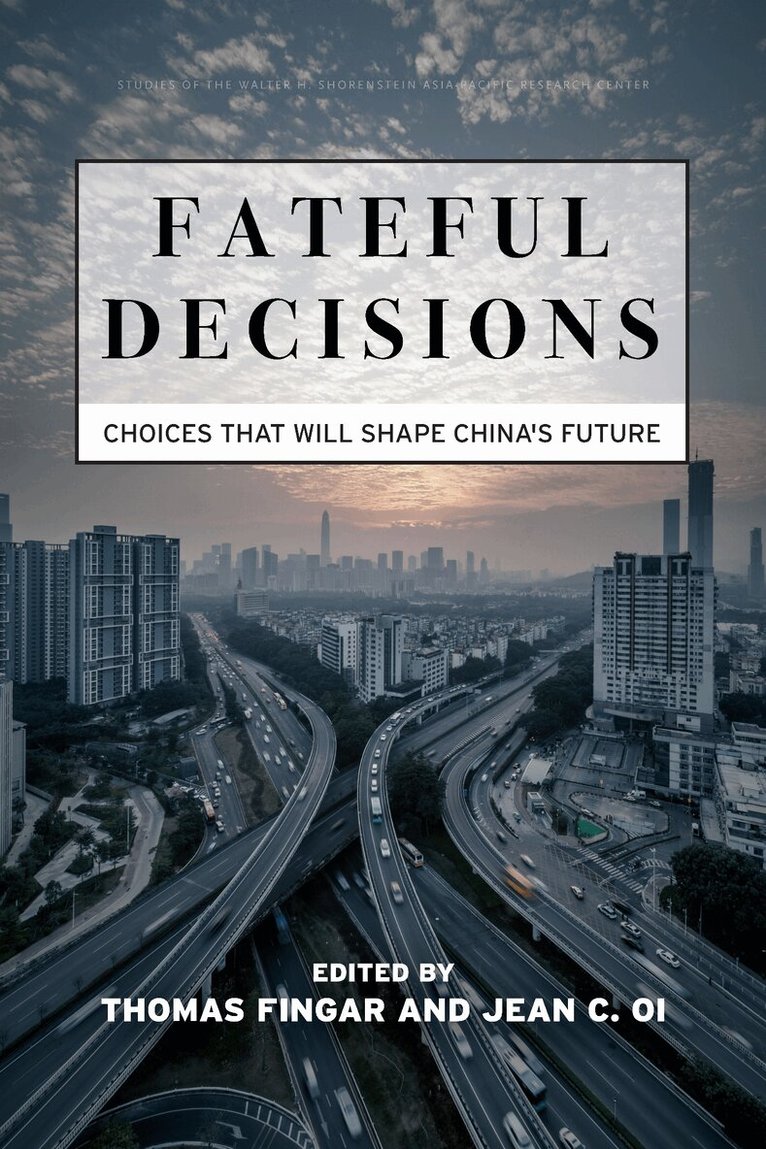
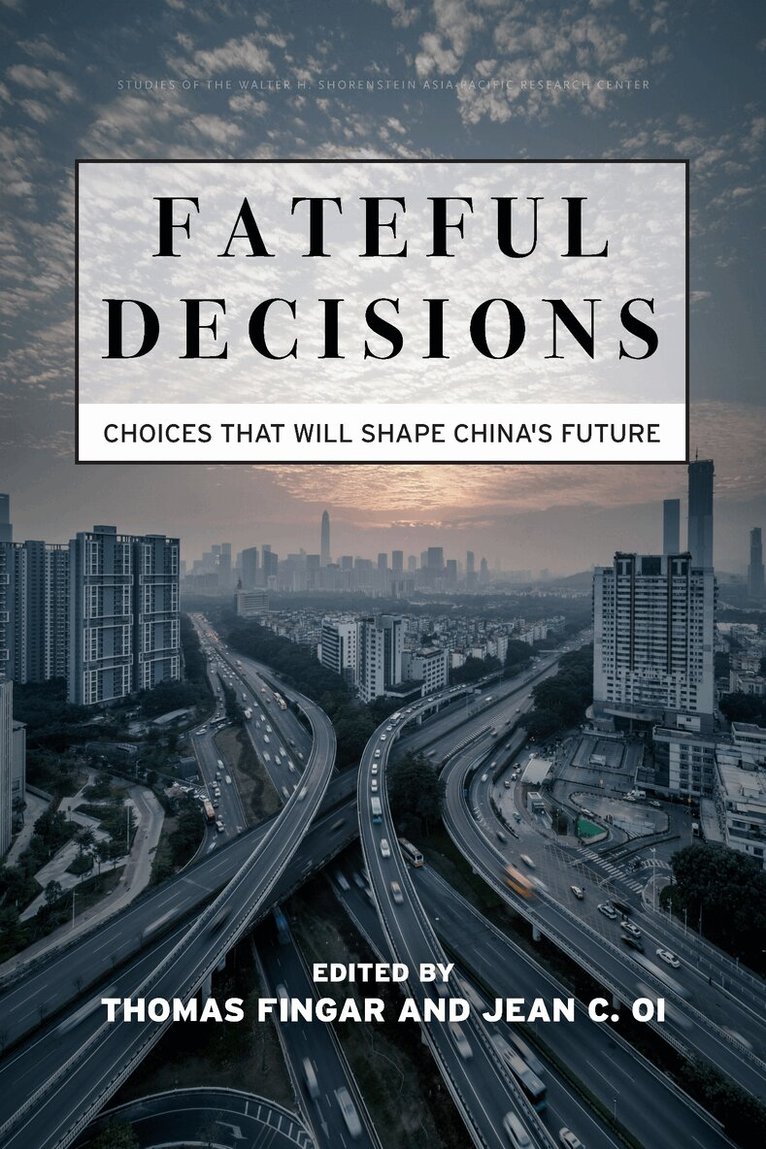
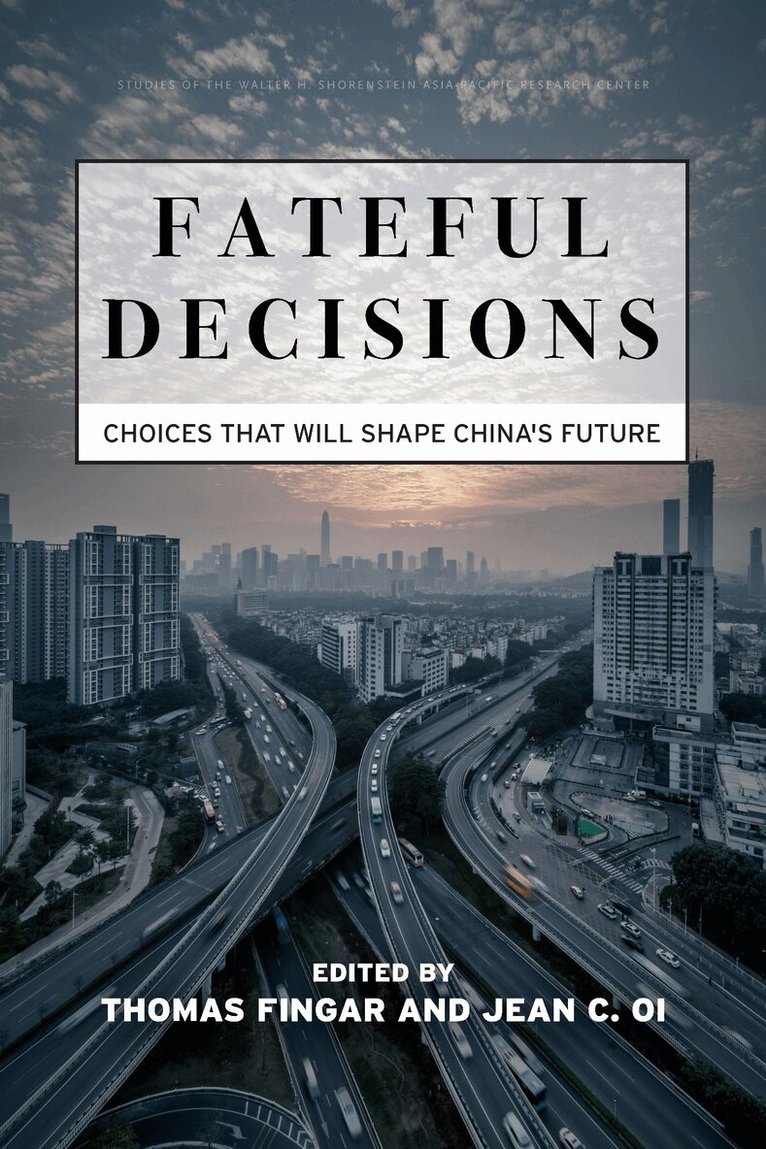
China's future will be determined by how its leaders manage its myriad interconnected challenges. In Fateful Decisions, leading experts from a wide range of disciplines eschew broad predictions of success or failure in favor of close analyses of today's most critical demographic, economic, social, political, and foreign policy challenges. They expertly outline the options and opportunity costs entailed, providing a cutting-edge analytic framework for understanding the decisions that will determine China's trajectory.Xi Jinping has articulated ambitious goals, such as the Belt and Road Initiative and massive urbanization projects, but few priorities or policies to achieve them. These goals have thrown into relief the crises facing China as the economy slows and the population ages while the demand for and costs of education, healthcare, elder care, and other social benefits are increasing. Global ambitions and a more assertive military also compete for funding and policy priority. These challenges are compounded by the size of China's population, outdated institutions, and the reluctance of powerful elites to make reforms that might threaten their positions, prerogatives, and Communist Party legitimacy. In this volume, individual chapters provide in-depth analyses of key policies relating to these challenges. Contributors illuminate what is at stake, possible choices, and subsequent outcomes. This volume equips readers with everything they need to understand these complex developments in context.
388 kr
Skickas inom 7-10 vardagar
China's future will be determined by how its leaders manage its myriad interconnected challenges. In Fateful Decisions, leading experts from a wide range of disciplines eschew broad predictions of success or failure in favor of close analyses of today's most critical demographic, economic, social, political, and foreign policy challenges. They expertly outline the options and opportunity costs entailed, providing a cutting-edge analytic framework for understanding the decisions that will determine China's trajectory.Xi Jinping has articulated ambitious goals, such as the Belt and Road Initiative and massive urbanization projects, but few priorities or policies to achieve them. These goals have thrown into relief the crises facing China as the economy slows and the population ages while the demand for and costs of education, healthcare, elder care, and other social benefits are increasing. Global ambitions and a more assertive military also compete for funding and policy priority. These challenges are compounded by the size of China's population, outdated institutions, and the reluctance of powerful elites to make reforms that might threaten their positions, prerogatives, and Communist Party legitimacy. In this volume, individual chapters provide in-depth analyses of key policies relating to these challenges. Contributors illuminate what is at stake, possible choices, and subsequent outcomes. This volume equips readers with everything they need to understand these complex developments in context.
346 kr
Skickas inom 7-10 vardagar
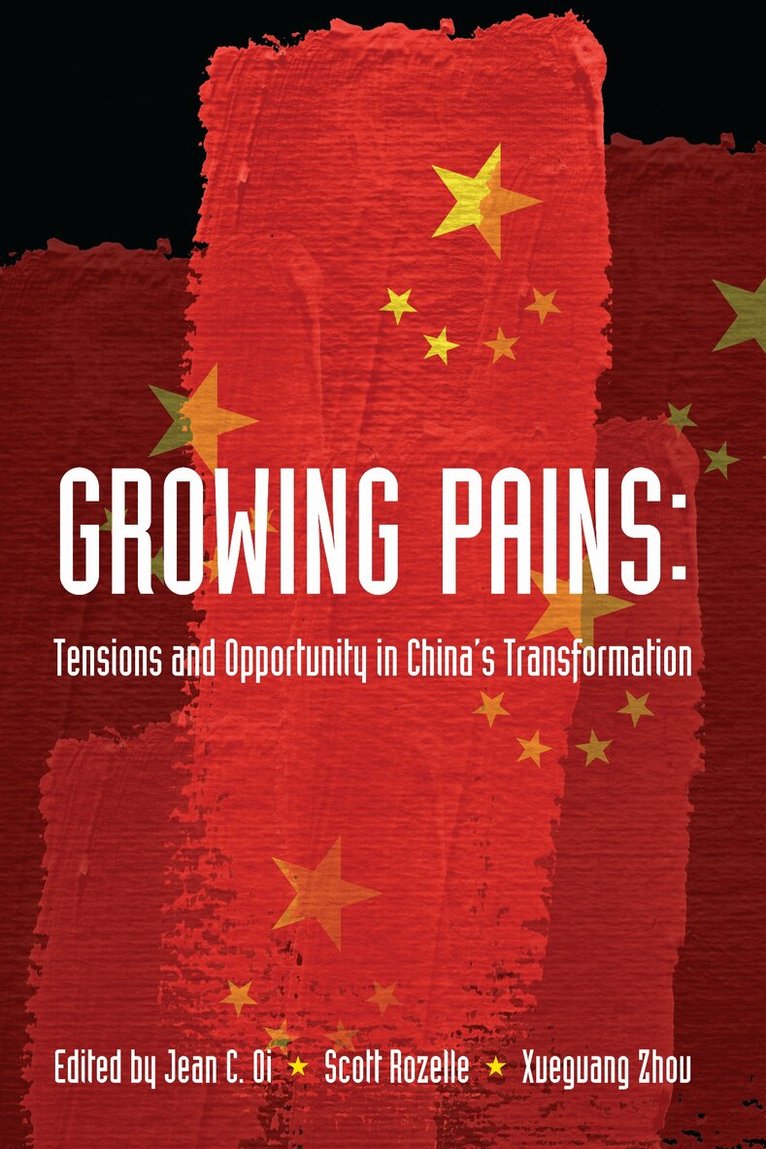
China is transforming itself, and the world is adapting in response. Profound forces have reshaped the country's socioeconomic and political landscapes, but they have also brought challenges—growing pains—that China must face if it is to continue its upward trajectory.Despite its successes, China is experiencing sharp growing pains. Rising levels of protest have accompanied the country's wrenching structural transformation. Corruption has prompted some observers to claim that the Chinese government is nothing short of a "predatory state." Legal reform continues to languish. Given that such challenges remain, can it be said that China's structural changes have succeeded? Or is the country trapped in transition?Growing Pains contains new analytical and empirical research from preeminent scholars working on contemporary China. These scholars identify which of the many problems thought to threaten China's reforms are not as serious as some interpreters claim, as well as those that have already been solved. Further, they point to other high-profile challenges, some of which truly are serious and loom on the horizon. With thoughtful, nuanced analysis, the contributors tackle thorny issues in China's ongoing reforms—employment, land policy, village elections, family planning, health care, social inequality, and environmental degradation—and use rich survey data and on-the-ground observation to assess the severity of the problems and the likelihood of near-term solutions.Moving beyond the hype and hysteria that often characterize conversations about contemporary China, Growing Pains seeks to present not an optimistic or pessimistic perspective but rather an objective, empirically based view of the country's transition.
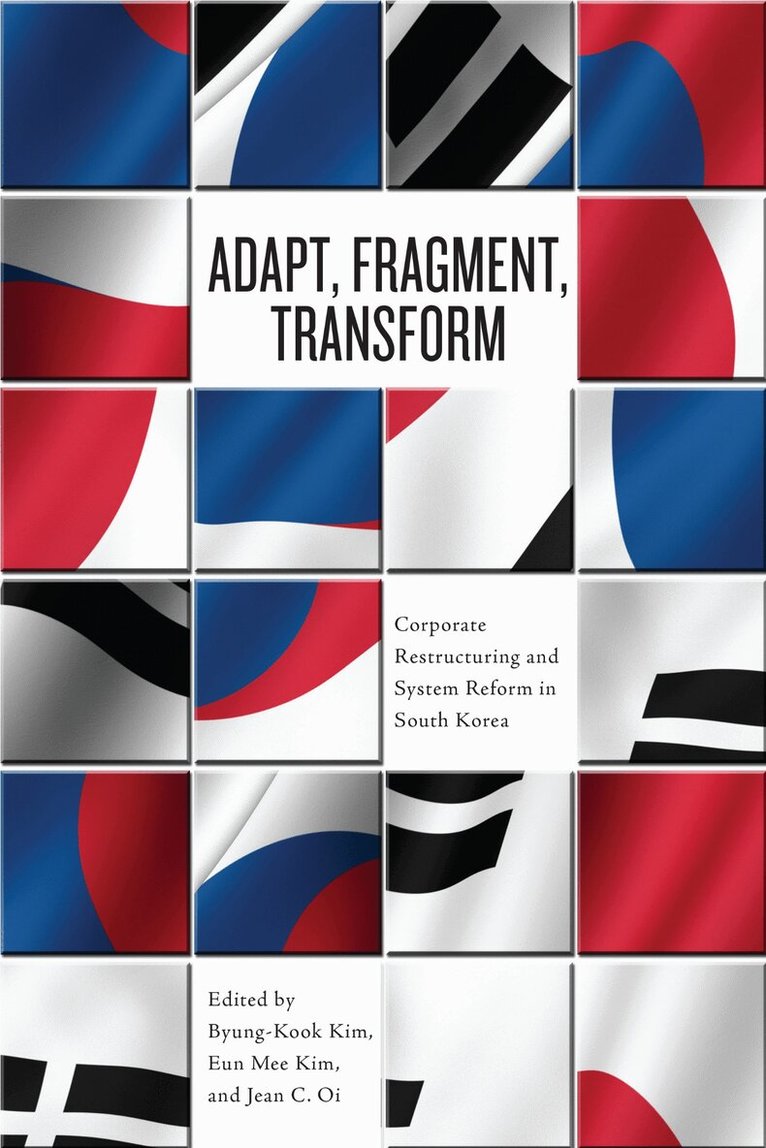
Adapt, Fragment, Transform
Corporate Restructuring and System Reform in South Korea
Häftad, Engelska, 2012
296 kr
Skickas inom 7-10 vardagar
South Korea remains a puzzle for political economists. The country has experienced phenomenal economic growth since the 1960s, but its upward trajectory has been repeatedly diverted by serious systemic crises, followed by spectacular recoveries. The recoveries are often the result of vigorous structural reforms that nonetheless retain many of South Korea's traditional economic institutions. How, then, can South Korea suffer from persistent systemic instability and yet prove so resilient? What remains the same and what changes?The contributors to this volume consider the South Korean economy in its larger political context. Moving beyond the easy dichotomies—equilibrium vs. disequilibrium and stability vs. instability—they describe a complex and surprisingly robust economic and political system. Further, they argue that neither systemic challenges nor political pressures alone determine South Korea's stability and capacity for change. Instead, it is distinct patterns of interaction that shape this system's characteristics, development, and evolution.
336 kr
Skickas inom 7-10 vardagar
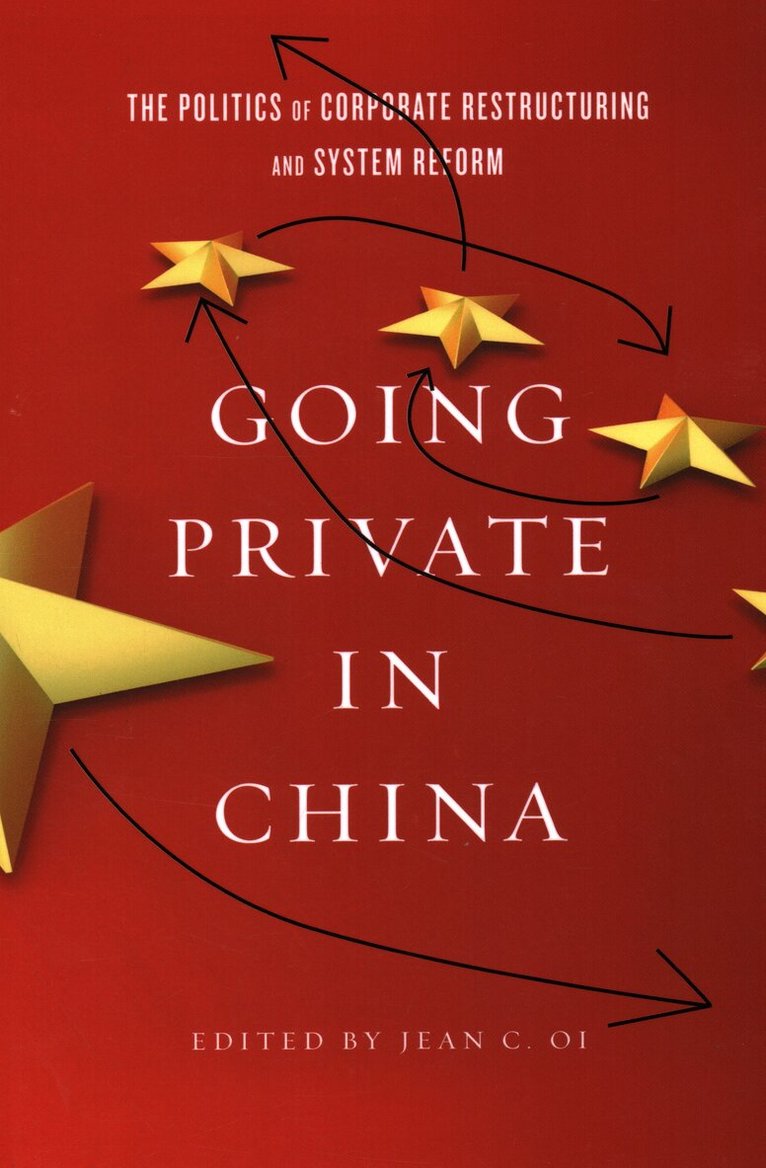
As the Chinese Communist Party (CCP) set about reforming its centrally planned economy, it faced the thorny policy question of how to reform its state-owned enterprises (SOEs). Should it support a shift from public to private ownership of the means of production? Such a shift would challenge not only the CCP's socialist ideology but also its very legitimacy. Mixing the business of corporate restructuring with the politics of socialism presented nothing short of a policy nightmare.With policy-relevant acuity, the contributors to this wide-ranging volume address the questions about reform programs that have plagued China—and East Asia more broadly—since the 1990s. While China, Japan, and South Korea have all been criticized for implementing reform too slowly or too selectively, this volume delves into the broader contexts underlying certain institutional decisions. The book seeks to show that seemingly different political economies actually share surprising similarities, and problems. While Going Private in China sheds new light on China's corporate restructuring, it also offers new perspectives on how we think about the process of institutional change.
346 kr
Skickas inom 7-10 vardagar
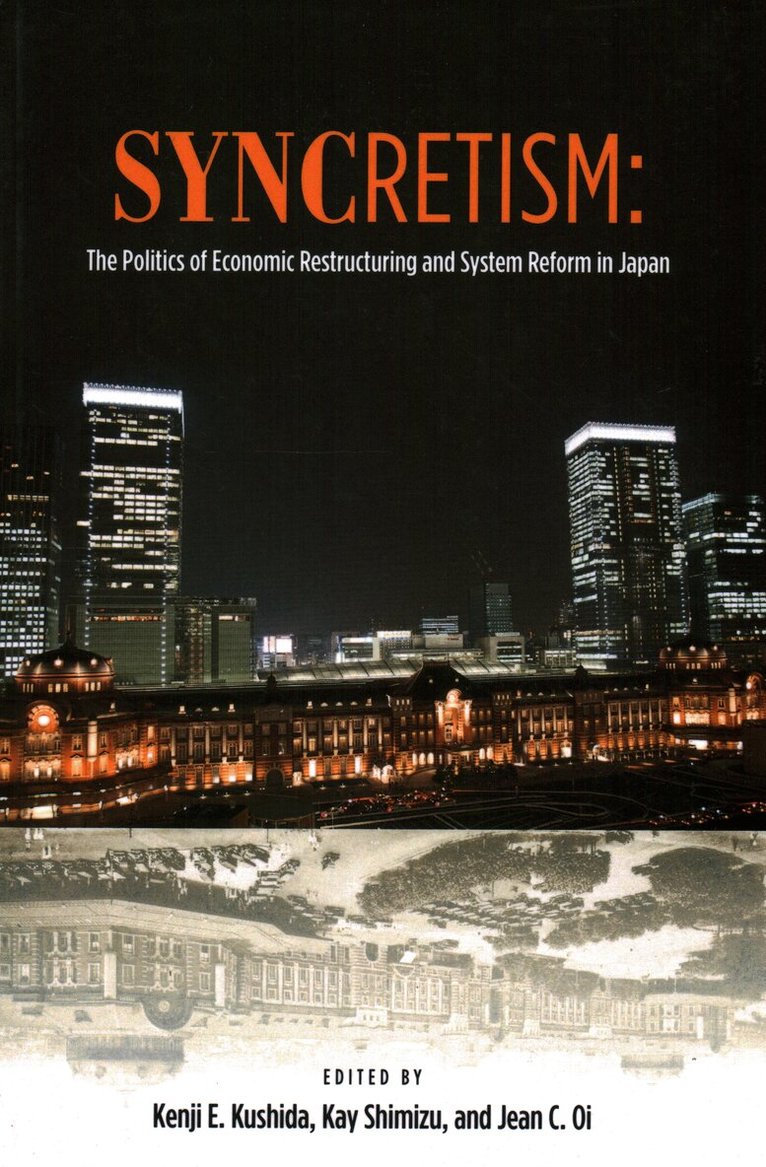
Japan's first decade of the twenty-first century was both disappointing and bewildering, producing wildly contrasting evaluations. Many have come to call this period the "second lost decade," characterized by policy paralysis and overall lackluster economic growth. For those studying Japan more closely, however, the same decades reveal nothing short of a broad transformation numerous core tenets of Japan's postwar political economy. How can we best capture this transformation?Each chapter in this volume examines a different aspect of Japan's political economy within a longer historical trajectory, from multiple angles, to depict a flexible but resilient system. We characterize Japan's process of change as syncretism—practices foreign, domestic, old and new were selectively adopted, mixed and matched, along the way creating a new and unique hybrid system.
257 kr
Skickas inom 7-10 vardagar
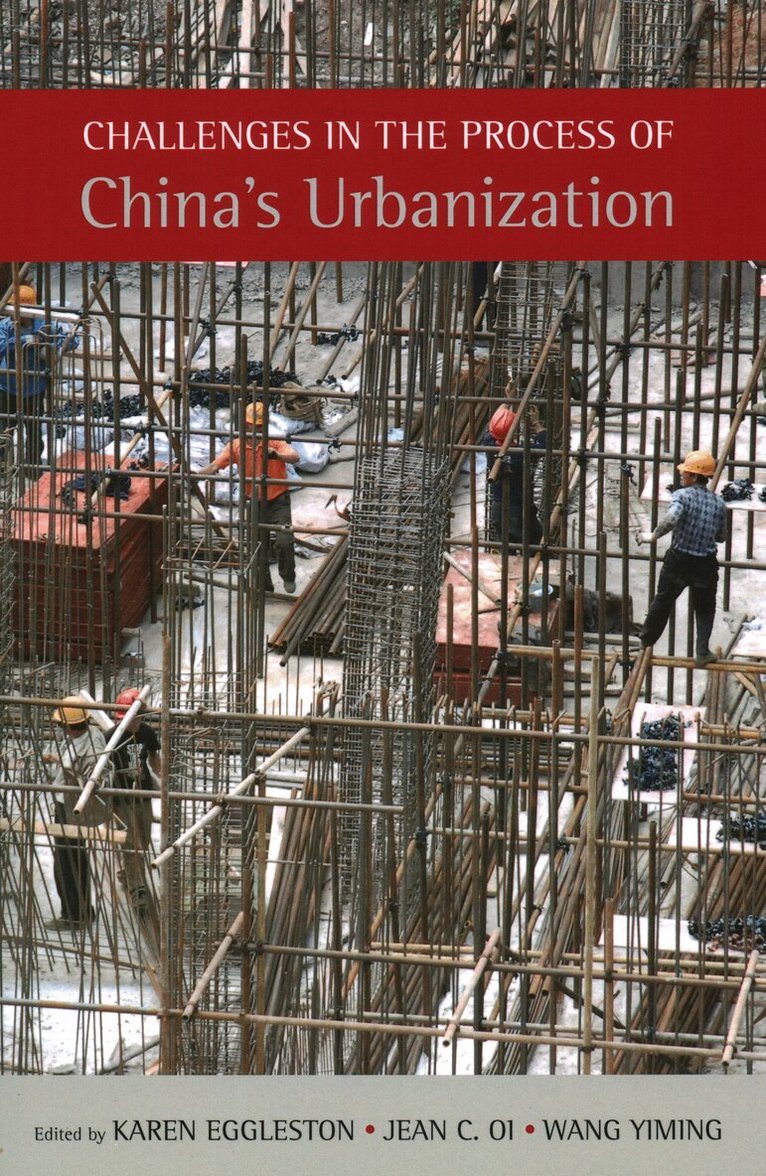
The same institutions that enabled China’s massive urbanization and spurred its economic growth now require further reform and innovation.To address the issues facing the next phase of the nation’s transformation, the National New Urbanization Plan (2014–20) set ambitious targets for sustainable, human-centered, and environmentally friendly urbanization. This volume explores the key institutional and governance challenges China will face in reaching those goals. Its policy-focused contributions from leading social scientists in the United States and China explore aspects of urbanization ranging from migration and labor markets to agglomeration economies, land finance, affordable housing, and education policy. Subjects covered in the eleven chapters include:·Institutional problems leading to fiscal pressures on local governments and unequal provision of social services to migrant families·The history of land financing and threats to its sustainability·The difficulty of sorting out property rights in rural China·How administrative redistricting has allowed the urbanization of geographical administrative places to outpace the urbanization of populations within those areas·How the hukou system may not be the sole, or even primary, mechanism restricting migrants from public goods, such as their childrens’ education ·Whether the nation’s food security is threatened by its ongoing urbanization·The current state of the provision of low-income housing, and future challenges
333 kr
Skickas inom 5-8 vardagar
In this incisive analysis of one of the most spectacular economic breakthroughs in the Deng era, Jean C. Oi shows how and why Chinese rural-based industry has become the fastest growing economic sector not just in China but in the world. Oi argues that decollectivization and fiscal decentralization provided party officials of the localities—counties, townships, and villages—with the incentives to act as entrepreneurs and to promote rural industrialization in many areas of the Chinese countryside. As a result, the corporatism practiced by local officials has become effective enough to challenge the centrality of the national state.