Byung Kook Kim - Böcker
Visar alla böcker från författaren Byung Kook Kim. Handla med fri frakt och snabb leverans.
4 produkter
4 produkter
Between Compliance and Conflict
East Asia, Latin America and the "New" Pax Americana
Inbunden, Engelska, 2005
2 222 kr
Skickas inom 10-15 vardagar
This book examines the responses to U.S. power in the two areas of the world where U.S. primacy was first successfully consolidated: East Asia and Latin America. The U.S. has faced no comparably powerful challengers to the exercise of its power in Latin America for much of the past century. It established its primacy over much of East Asia in the aftermath of WW II and extended its influence in the late 1970's and after the end of the Vietnam War through its entente with China to balance the Soviet Union. By contrast, the U.S. has always encountered rivals and challengers in Europe, has attempted unsuccessfully thus far to impose its primacy in the Middle East, and has paid only intermittent attention to South Asia and Africa. The essays in this volume will explore three important themes 1.) How do region-wide economic trends and arrangements sustain or modify U.S. influence in the region? 2.) How do rising powers in these regions (Japan, China, Brazil) reshape their policies to cope with the U.S. and 3.) How do new (South Korea) and old (Cuba) challengers to U.S. power shape their policies to account for the unrivaled exercise of U.S. power. This collection will place the United States at the hub of relations with countries in East Asia and Latin America and examine the new policies and new styles of engagement that are employed to address the prolonged U.S. interest in these areas-approaches from which the rest of the world might learn.
Between Compliance and Conflict
East Asia, Latin America and the "New" Pax Americana
Häftad, Engelska, 2005
719 kr
Skickas inom 10-15 vardagar
This book examines the responses to U.S. power in the two areas of the world where U.S. primacy was first successfully consolidated: East Asia and Latin America. The U.S. has faced no comparably powerful challengers to the exercise of its power in Latin America for much of the past century. It established its primacy over much of East Asia in the aftermath of WW II and extended its influence in the late 1970's and after the end of the Vietnam War through its entente with China to balance the Soviet Union. By contrast, the U.S. has always encountered rivals and challengers in Europe, has attempted unsuccessfully thus far to impose its primacy in the Middle East, and has paid only intermittent attention to South Asia and Africa. The essays in this volume will explore three important themes 1.) How do region-wide economic trends and arrangements sustain or modify U.S. influence in the region? 2.) How do rising powers in these regions (Japan, China, Brazil) reshape their policies to cope with the U.S. and 3.) How do new (South Korea) and old (Cuba) challengers to U.S. power shape their policies to account for the unrivaled exercise of U.S. power. This collection will place the United States at the hub of relations with countries in East Asia and Latin America and examine the new policies and new styles of engagement that are employed to address the prolonged U.S. interest in these areas-approaches from which the rest of the world might learn.
250 kr
Skickas inom 7-10 vardagar
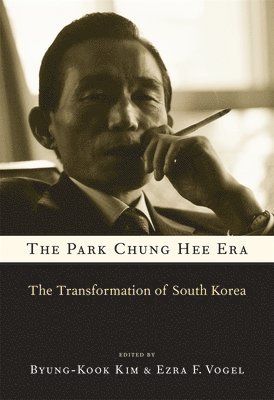
In 1961 South Korea was mired in poverty. By 1979 it had a powerful industrial economy and a vibrant civil society in the making, which would lead to a democratic breakthrough eight years later. The transformation took place during the years of Park Chung Hee's presidency. Park seized power in a coup in 1961 and ruled as a virtual dictator until his assassination in October 1979. He is credited with modernizing South Korea, but at a huge political and social cost.South Korea's political landscape under Park defies easy categorization. The state was predatory yet technocratic, reform-minded yet quick to crack down on dissidents in the name of political order. The nation was balanced uneasily between opposition forces calling for democratic reforms and the Park government's obsession with economic growth. The chaebol (a powerful conglomerate of multinationals based in South Korea) received massive government support to pioneer new growth industries, even as a nationwide campaign of economic shock therapy-interest hikes, devaluation, and wage cuts-met strong public resistance and caused considerable hardship.This landmark volume examines South Korea's era of development as a study in the complex politics of modernization. Drawing on an extraordinary range of sources in both English and Korean, these essays recover and contextualize many of the ambiguities in South Korea's trajectory from poverty to a sustainable high rate of economic growth.
Adapt, Fragment, Transform
Corporate Restructuring and System Reform in South Korea
Häftad, Engelska, 2012
296 kr
Skickas inom 7-10 vardagar
South Korea remains a puzzle for political economists. The country has experienced phenomenal economic growth since the 1960s, but its upward trajectory has been repeatedly diverted by serious systemic crises, followed by spectacular recoveries. The recoveries are often the result of vigorous structural reforms that nonetheless retain many of South Korea's traditional economic institutions. How, then, can South Korea suffer from persistent systemic instability and yet prove so resilient? What remains the same and what changes?The contributors to this volume consider the South Korean economy in its larger political context. Moving beyond the easy dichotomies—equilibrium vs. disequilibrium and stability vs. instability—they describe a complex and surprisingly robust economic and political system. Further, they argue that neither systemic challenges nor political pressures alone determine South Korea's stability and capacity for change. Instead, it is distinct patterns of interaction that shape this system's characteristics, development, and evolution.