John Searle - Böcker
Visar alla böcker från författaren John Searle. Handla med fri frakt och snabb leverans.
12 produkter
12 produkter
148 kr
Skickas
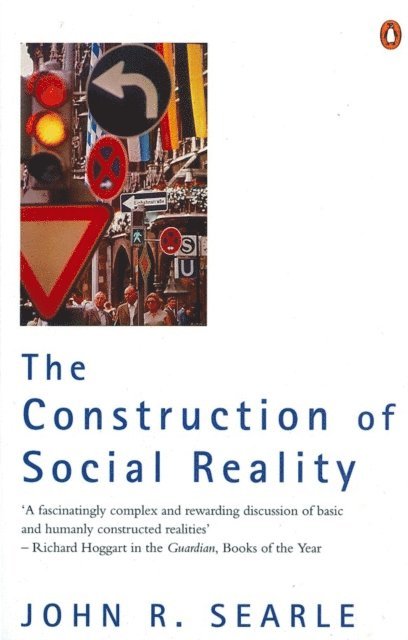
This short treatise looks at how we construct a social reality from our sense impressions; at how, for example, we construct a "five-pound note" with all that implies in terms of value and social meaning, from the printed piece of paper we see and touch.
533 kr
Skickas inom 3-6 vardagar
This book provides a comprehensive account of the intentionality of perceptual experience. With special emphasis on vision Searle explains how the raw phenomenology of perception sets the content and the conditions of satisfaction of experience. The central question concerns the relation between the subjective conscious perceptual field and the objective perceptual field. Everything in the objective field is either perceived or can be perceived. Nothing in the subjective field is perceived nor can be perceived precisely because the events in the subjective field consist of the perceivings , whether veridical or not, of the events in the objective field.Searle begins by criticizing the classical theories of perception and identifies a single fallacy, what he calls the Bad Argument, as the source of nearly all of the confusions in the history of the philosophy of perception. He next justifies the claim that perceptual experiences have presentational intentionality and shows how this justifies the direct realism of his account. In the central theoretical chapters, he shows how it is possible that the raw phenomenology must necessarily determine certain form of intentionality. Searle introduces, in detail, the distinction between different levels of perception from the basic level to the higher levels and shows the internal relation between the features of the experience and the states of affairs presented by the experience. The account applies not just to language possessing human beings but to infants and conscious animals. He also discusses how the account relates to certain traditional puzzles about spectrum inversion, color and size constancy and the brain-in-the-vat thought experiments. In the final chapters he explains and refutes Disjunctivist theories of perception, explains the role of unconscious perception, and concludes by discussing traditional problems of perception such as skepticism.
450 kr
Skickas inom 5-8 vardagar
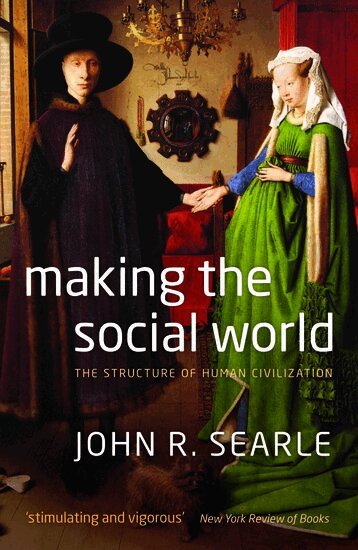
The renowned philosopher John Searle reveals the fundamental nature of social reality. What kinds of things are money, property, governments, nations, marriages, cocktail parties, and football games? Searle explains the key role played by language in the creation, constitution, and maintenance of social reality. We make statements about social facts that are completely objective, for example: Barack Obama is President of the United States, the piece of paper in my hand is a twenty-dollar bill, I got married in London, etc. And yet these facts only exist because we think they exist. How is it possible that we can have factual objective knowledge of a reality that is created by subjective opinions? This is part of a much larger question: How can we give an account of ourselves, with our peculiar human traits – mind, reason, freedom, society - in a world that we know independently consists of mindless, meaningless particles? How can we account for our social and mental existence in a realm of brute physical facts? In answering this question, Searle avoids postulating different realms of being, a mental and a physical, or worse yet, a mental, a physical, and a social. There is just one reality: Searle shows how the human reality fits into that one reality. Mind, language, and civilization are natural products of the basic facts of the physical world described by physics, chemistry and biology. Searle explains how language creates and maintains the elaborate structures of human social institutions. These institutions serve to create and distribute power relations that are pervasive and often invisible. These power relations motivate human actions in a way that provides the glue that holds human civilization together. Searle shows how this account illuminates human rationality, free will, political power, and human rights. Our social world is a world created and maintained by language.
133 kr
Skickas
The renowned philosopher John Searle reveals the fundamental nature of social reality. What kinds of things are money, property, governments, nations, marriages, cocktail parties, and football games? Searle explains the key role played by language in the creation, constitution, and maintenance of social reality. We make statements about social facts that are completely objective, for example: Barack Obama is President of the United States, the piece of paper in my hand is a twenty-dollar bill, I got married in London, etc. And yet these facts only exist because we think they exist. How is it possible that we can have factual objective knowledge of a reality that is created by subjective opinions? This is part of a much larger question: How can we give an account of ourselves, with our peculiar human traits DS mind, reason, freedom, society - in a world that we know independently consists of mindless, meaningless particles? How can we account for our social and mental existence in a realm of brute physical facts? In answering this question, Searle avoids postulating different realms of being, a mental and a physical, or worse yet, a mental, a physical, and a social. There is just one reality: Searle shows how the human reality fits into that one reality. Mind, language, and civilization are natural products of the basic facts of the physical world described by physics, chemistry and biology. Searle explains how language creates and maintains the elaborate structures of human social institutions. These institutions serve to create and distribute power relations that are pervasive and often invisible. These power relations motivate human actions in a way that provides the glue that holds human civilization together. Searle shows how this account illuminates human rationality, free will, political power, and human rights. Our social world is a world created and maintained by language.
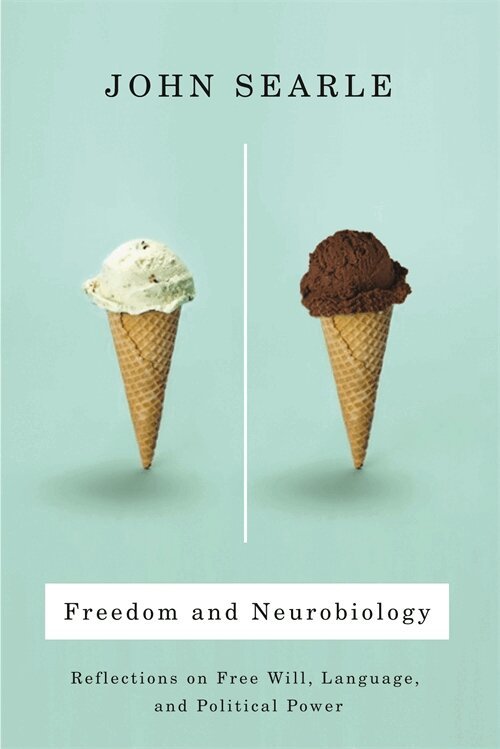
Freedom and Neurobiology
Reflections on Free Will, Language, and Political Power
Inbunden, Engelska, 2006
678 kr
Skickas inom 11-20 vardagar
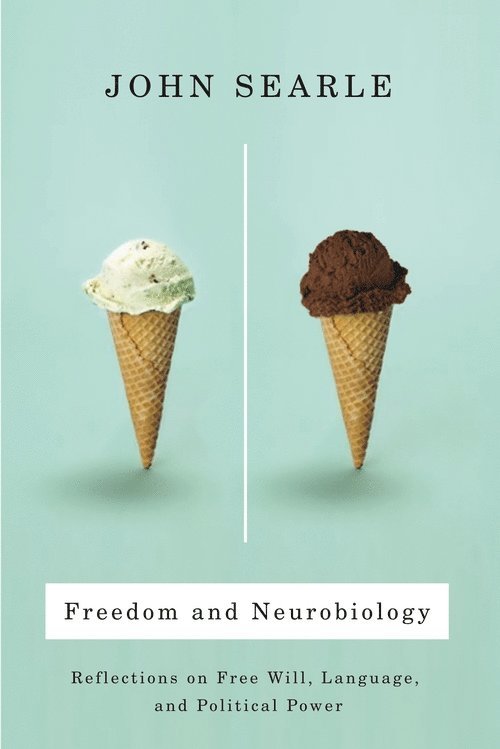
Our self-conception derives mostly from our own experience. We believe ourselves to be conscious, rational, social, ethical, language-using, political agents who possess free will. Yet we know we exist in a universe that consists of mindless, meaningless, unfree, nonrational, brute physical particles. How can we resolve the conflict between these two visions? In Freedom and Neurobiology, the philosopher John Searle discusses the possibility of free will within the context of contemporary neurobiology. He begins by explaining the relationship between human reality and the more fundamental reality as described by physics and chemistry. Then he proposes a neurobiological resolution to the problem by demonstrating how various conceptions of free will have different consequences for the neurobiology of consciousness. In the second half of the book, Searle applies his theory of social reality to the problem of political power, explaining the role of language in the formation of our political reality.The institutional structures that organize, empower, and regulate our lives-money, property, marriage, government-consist in the assignment and collective acceptance of certain statuses to objects and people. Whether it is the president of the United States, a twenty-dollar bill, or private property, these entities perform functions as determined by their status in our institutional reality. Searle focuses on the political powers that exist within these systems of status functions and the way in which language constitutes them. Searle argues that consciousness and rationality are crucial to our existence and that they are the result of the biological evolution of our species. He addresses the problem of free will within the context of a neurobiological conception of consciousness and rationality, and he addresses the problem of political power within the context of this analysis. A clear and concise contribution to the free-will debate and the study of cognition, Freedom and Neurobiology is essential reading for students and scholars of the philosophy of mind.
Freedom and Neurobiology
Reflections on Free Will, Language, and Political Power
Häftad, Engelska, 2008
164 kr
Skickas inom 7-10 vardagar
Our self-conception derives mostly from our own experience. We believe ourselves to be conscious, rational, social, ethical, language-using, political agents who possess free will. Yet we know we exist in a universe that consists of mindless, meaningless, unfree, nonrational, brute physical particles. How can we resolve the conflict between these two visions? In Freedom and Neurobiology, the philosopher John Searle discusses the possibility of free will within the context of contemporary neurobiology. He begins by explaining the relationship between human reality and the more fundamental reality as described by physics and chemistry. Then he proposes a neurobiological resolution to the problem by demonstrating how various conceptions of free will have different consequences for the neurobiology of consciousness. In the second half of the book, Searle applies his theory of social reality to the problem of political power, explaining the role of language in the formation of our political reality.The institutional structures that organize, empower, and regulate our lives-money, property, marriage, government-consist in the assignment and collective acceptance of certain statuses to objects and people. Whether it is the president of the United States, a twenty-dollar bill, or private property, these entities perform functions as determined by their status in our institutional reality. Searle focuses on the political powers that exist within these systems of status functions and the way in which language constitutes them. Searle argues that consciousness and rationality are crucial to our existence and that they are the result of the biological evolution of our species. He addresses the problem of free will within the context of a neurobiological conception of consciousness and rationality, and he addresses the problem of political power within the context of this analysis. A clear and concise contribution to the free-will debate and the study of cognition, Freedom and Neurobiology is essential reading for students and scholars of the philosophy of mind.
951 kr
Skickas inom 7-10 vardagar
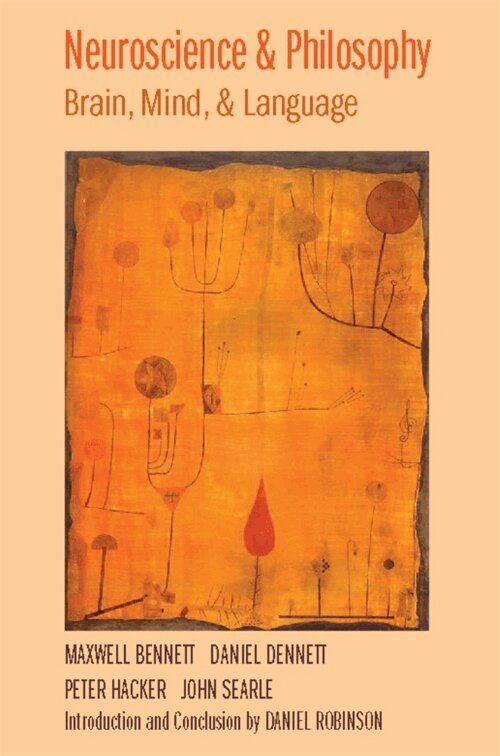
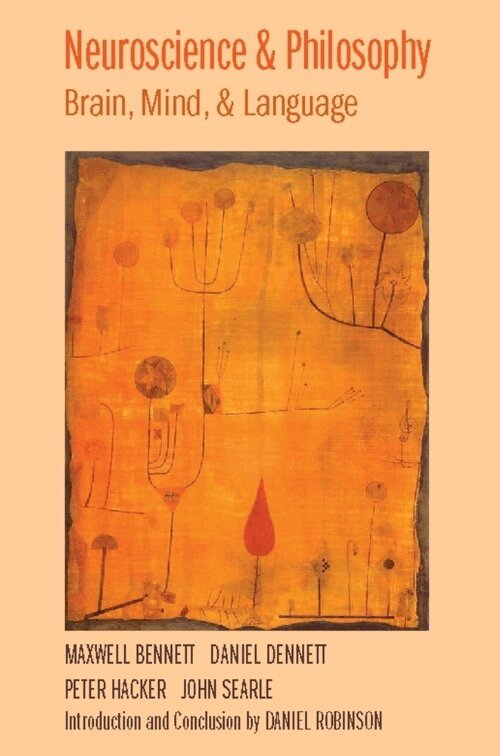
In Neuroscience and Philosophy three prominent philosophers and a leading neuroscientist clash over the conceptual presuppositions of cognitive neuroscience. The book begins with an excerpt from Maxwell Bennett and Peter Hacker's Philosophical Foundations of Neuroscience (Blackwell, 2003), which questions the conceptual commitments of cognitive neuroscientists. Their position is then criticized by Daniel Dennett and John Searle, two philosophers who have written extensively on the subject, and Bennett and Hacker in turn respond. Their impassioned debate encompasses a wide range of central themes: the nature of consciousness, the bearer and location of psychological attributes, the intelligibility of so-called brain maps and representations, the notion of qualia, the coherence of the notion of an intentional stance, and the relationships between mind, brain, and body.Clearly argued and thoroughly engaging, the authors present fundamentally different conceptions of philosophical method, cognitive-neuroscientific explanation, and human nature, and their exchange will appeal to anyone interested in the relation of mind to brain, of psychology to neuroscience, of causal to rational explanation, and of consciousness to self-consciousness. In his conclusion Daniel Robinson (member of the philosophy faculty at Oxford University and Distinguished Professor Emeritus at Georgetown University) explains why this confrontation is so crucial to the understanding of neuroscientific research. The project of cognitive neuroscience, he asserts, depends on the incorporation of human nature into the framework of science itself. In Robinson's estimation, Dennett and Searle fail to support this undertaking; Bennett and Hacker suggest that the project itself might be based on a conceptual mistake. Exciting and challenging, Neuroscience and Philosophy is an exceptional introduction to the philosophical problems raised by cognitive neuroscience.
243 kr
Skickas inom 7-10 vardagar
In Neuroscience and Philosophy three prominent philosophers and a leading neuroscientist clash over the conceptual presuppositions of cognitive neuroscience. The book begins with an excerpt from Maxwell Bennett and Peter Hacker's Philosophical Foundations of Neuroscience (Blackwell, 2003), which questions the conceptual commitments of cognitive neuroscientists. Their position is then criticized by Daniel Dennett and John Searle, two philosophers who have written extensively on the subject, and Bennett and Hacker in turn respond. Their impassioned debate encompasses a wide range of central themes: the nature of consciousness, the bearer and location of psychological attributes, the intelligibility of so-called brain maps and representations, the notion of qualia, the coherence of the notion of an intentional stance, and the relationships between mind, brain, and body.Clearly argued and thoroughly engaging, the authors present fundamentally different conceptions of philosophical method, cognitive-neuroscientific explanation, and human nature, and their exchange will appeal to anyone interested in the relation of mind to brain, of psychology to neuroscience, of causal to rational explanation, and of consciousness to self-consciousness. In his conclusion Daniel Robinson (member of the philosophy faculty at Oxford University and Distinguished Professor Emeritus at Georgetown University) explains why this confrontation is so crucial to the understanding of neuroscientific research. The project of cognitive neuroscience, he asserts, depends on the incorporation of human nature into the framework of science itself. In Robinson's estimation, Dennett and Searle fail to support this undertaking; Bennett and Hacker suggest that the project itself might be based on a conceptual mistake. Exciting and challenging, Neuroscience and Philosophy is an exceptional introduction to the philosophical problems raised by cognitive neuroscience.
New And Improved Mode Of Constructing Bee-houses And Bee-hives
And The Management Of The Same
Inbunden, Engelska, 2022
375 kr
Skickas inom 5-8 vardagar
New And Improved Mode Of Constructing Bee-houses And Bee-hives
And The Management Of The Same
Häftad, Engelska, 2022
188 kr
Skickas inom 5-8 vardagar
Del 10 - Studies in Linguistics and Philosophy
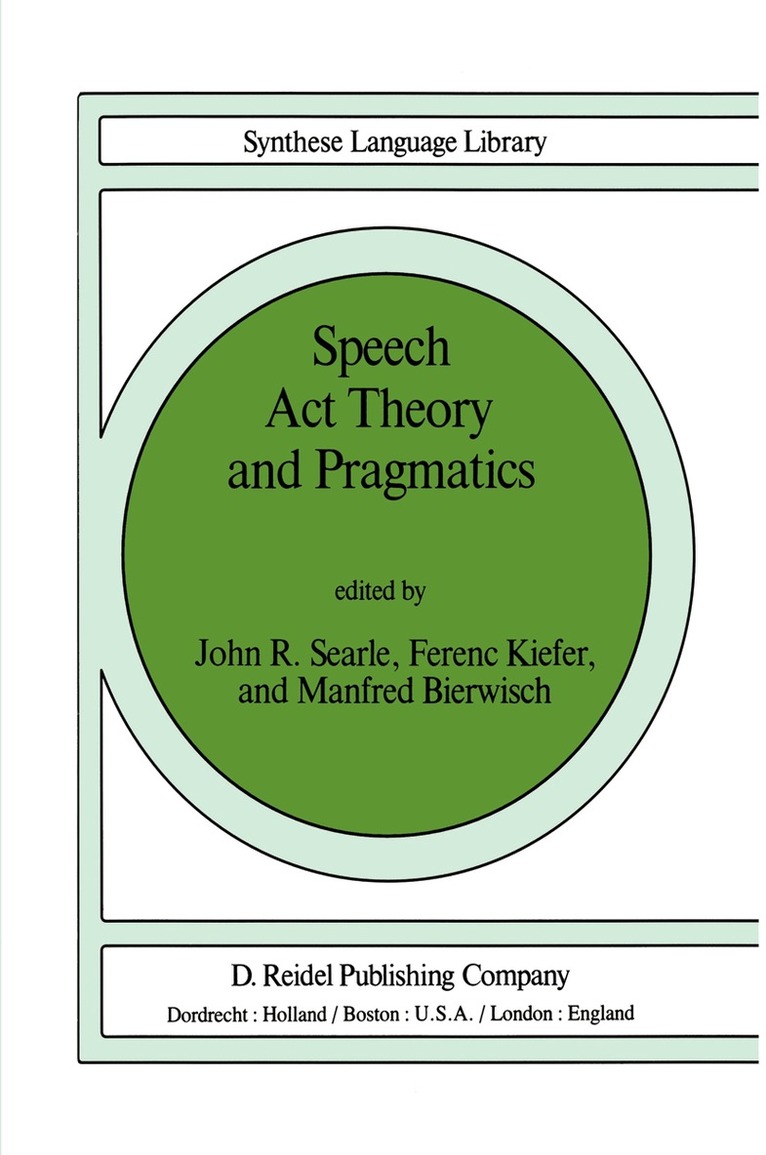
Speech Act Theory and Pragmatics
Inbunden, Engelska, 1980
2 380 kr
Skickas inom 10-15 vardagar
In the study of language, as in any other systematic study, there is no neutral terminology. Every technical term is an expression of the assumptions and theoretical presuppositions of its users; and in this introduction, we want to clarify some of the issues that have surrounded the assumptions behind the use of the two terms "speech acts" and "pragmatics". The notion of a speech act is fairly well understood. The theory of speech acts starts with the assumption that the minimal unit of human communica tion is not a sentence or other expression, but rather the performance of certain kinds of acts, such as making statements, asking questions, giving orders, describing, explaining, apologizing, thanking, congratulating, etc. Characteristically, a speaker performs one or more of these acts by uttering a sentence or sentences; but the act itself is not to be confused with a sentence or other expression uttered in its performance. Such types of acts as those exemplified above are called,following Austin, illocutionary acts, and they are standardly contrasted in the literature with certain other types of acts such as perlocutionary acts and propositional acts. Perlocutionary acts have to do with those effects which our utterances have on hearers which go beyond the hearer's understanding of the utterance. Such acts as convincing, persuading, annoying, amusing, and frightening are all cases of perlocutionary acts.
Del 10 - Studies in Linguistics and Philosophy
Speech Act Theory and Pragmatics
Häftad, Engelska, 1980
2 380 kr
Skickas inom 10-15 vardagar
In the study of language, as in any other systematic study, there is no neutral terminology. Every technical term is an expression of the assumptions and theoretical presuppositions of its users; and in this introduction, we want to clarify some of the issues that have surrounded the assumptions behind the use of the two terms "speech acts" and "pragmatics". The notion of a speech act is fairly well understood. The theory of speech acts starts with the assumption that the minimal unit of human communica tion is not a sentence or other expression, but rather the performance of certain kinds of acts, such as making statements, asking questions, giving orders, describing, explaining, apologizing, thanking, congratulating, etc. Characteristically, a speaker performs one or more of these acts by uttering a sentence or sentences; but the act itself is not to be confused with a sentence or other expression uttered in its performance. Such types of acts as those exemplified above are called,following Austin, illocutionary acts, and they are standardly contrasted in the literature with certain other types of acts such as perlocutionary acts and propositional acts. Perlocutionary acts have to do with those effects which our utterances have on hearers which go beyond the hearer's understanding of the utterance. Such acts as convincing, persuading, annoying, amusing, and frightening are all cases of perlocutionary acts.