Joshua O. Reno - Böcker
Visar alla böcker från författaren Joshua O. Reno. Handla med fri frakt och snabb leverans.
13 produkter
13 produkter
786 kr
Skickas inom 7-10 vardagar
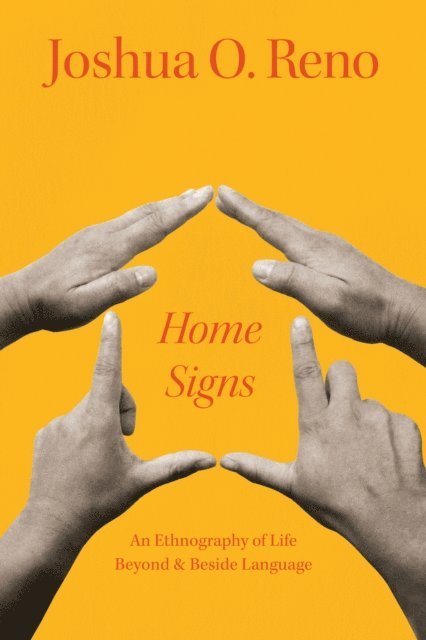
An intimate account of an anthropologist’s relationship with his non-verbal son and how it has shaped and transformed his understanding of closeness and communication.Home Signs grew out of the anthropologist Joshua Reno’s experience of caring for and trying to communicate with his teenage son, Charlie, who cannot speak. To manage interactions with others, Charlie uses what are known as “home signs,” gestures developed to meet his need for expression, ranging from the wiggle of a finger to a subtle sideways glance. Though he is nonverbal, he is far from silent: in fact, he is in constant communication with others. In this intimate reflection on language, disability, and togetherness, the author invites us into his and Charlie’s shared world. Combining portraits of family life and interviews with other caregivers, Reno upends several assumptions, especially the idea that people who seem not to be able to speak for themselves need others to speak on their behalf. With its broad exploration of nonverbal communication in both human and nonhuman contexts, Home Signs challenges us to think harder about what it means to lead a “normal” life and to connect with another person.
223 kr
Skickas inom 7-10 vardagar
An intimate account of an anthropologist’s relationship with his non-verbal son and how it has shaped and transformed his understanding of closeness and communication.Home Signs grew out of the anthropologist Joshua Reno’s experience of caring for and trying to communicate with his teenage son, Charlie, who cannot speak. To manage interactions with others, Charlie uses what are known as “home signs,” gestures developed to meet his need for expression, ranging from the wiggle of a finger to a subtle sideways glance. Though he is nonverbal, he is far from silent: in fact, he is in constant communication with others. In this intimate reflection on language, disability, and togetherness, the author invites us into his and Charlie’s shared world. Combining portraits of family life and interviews with other caregivers, Reno upends several assumptions, especially the idea that people who seem not to be able to speak for themselves need others to speak on their behalf. With its broad exploration of nonverbal communication in both human and nonhuman contexts, Home Signs challenges us to think harder about what it means to lead a “normal” life and to connect with another person.
1 469 kr
Skickas inom 3-6 vardagar
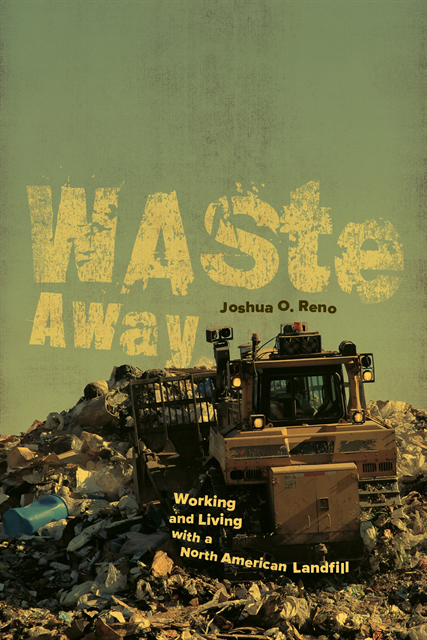
Though we are the most wasteful people in the history of the world, very few of us know what becomes of our waste. In Waste Away, Joshua O. Reno reveals how North Americans have been shaped by their preferred means of disposal: sanitary landfill. Based on the author's fieldwork as a common laborer at a large, transnational landfill on the outskirts of Detroit, the book argues that waste management helps our possessions and dwellings to last by removing the transient materials they shed and sending them elsewhere. Ethnography conducted with waste workers shows how they conceal and contain other people's wastes, all while negotiating the filth of their occupation, holding on to middle-class aspirations, and occasionally scavenging worthwhile stuff from the trash. Waste Away also traces the circumstances that led one community to host two landfills and made Michigan a leading importer of foreign waste. Focusing on local activists opposed to the transnational waste trade with Canada, the book's ethnography analyzes their attempts to politicize the removal of waste out of sight that many take for granted.Documenting these different ways of relating to the management of North American rubbish, Waste Away demonstrates how the landfills we create remake us in turn, often behind our backs and beneath our notice.
518 kr
Skickas inom 3-6 vardagar
Though we are the most wasteful people in the history of the world, very few of us know what becomes of our waste. In Waste Away, Joshua O. Reno reveals how North Americans have been shaped by their preferred means of disposal: sanitary landfill. Based on the author's fieldwork as a common laborer at a large, transnational landfill on the outskirts of Detroit, the book argues that waste management helps our possessions and dwellings to last by removing the transient materials they shed and sending them elsewhere. Ethnography conducted with waste workers shows how they conceal and contain other people's wastes, all while negotiating the filth of their occupation, holding on to middle-class aspirations, and occasionally scavenging worthwhile stuff from the trash. Waste Away also traces the circumstances that led one community to host two landfills and made Michigan a leading importer of foreign waste. Focusing on local activists opposed to the transnational waste trade with Canada, the book's ethnography analyzes their attempts to politicize the removal of waste out of sight that many take for granted.Documenting these different ways of relating to the management of North American rubbish, Waste Away demonstrates how the landfills we create remake us in turn, often behind our backs and beneath our notice.
1 469 kr
Skickas inom 3-6 vardagar
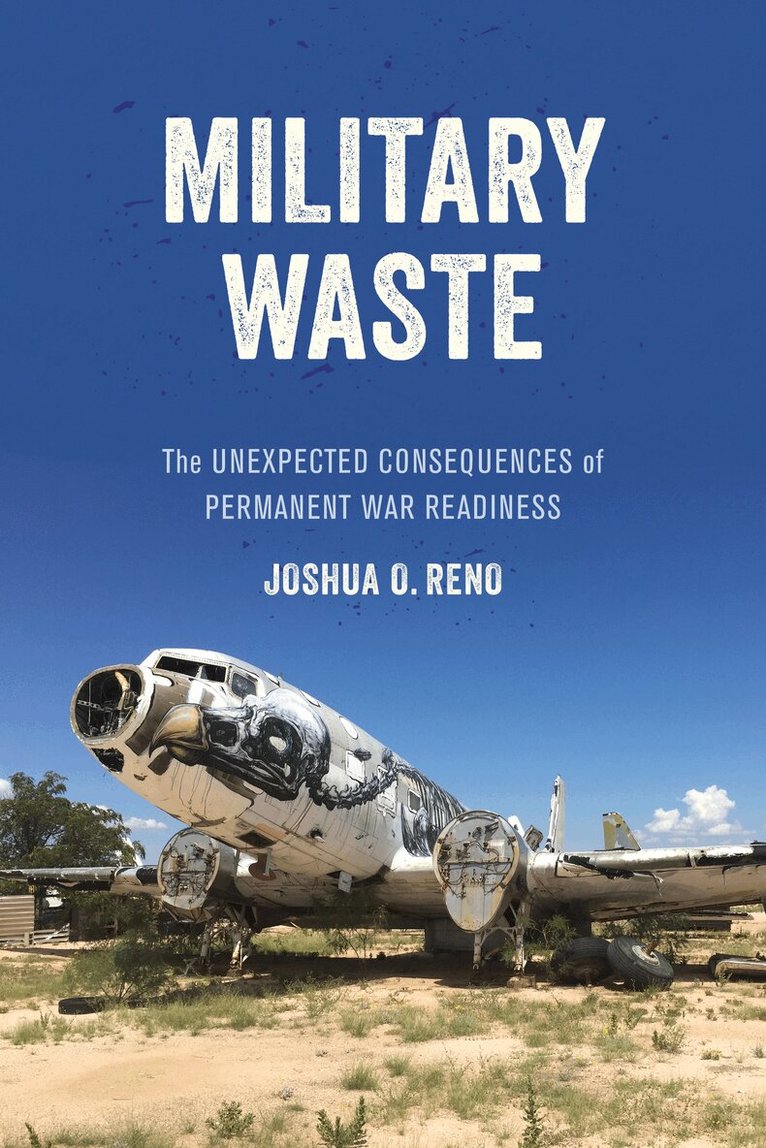
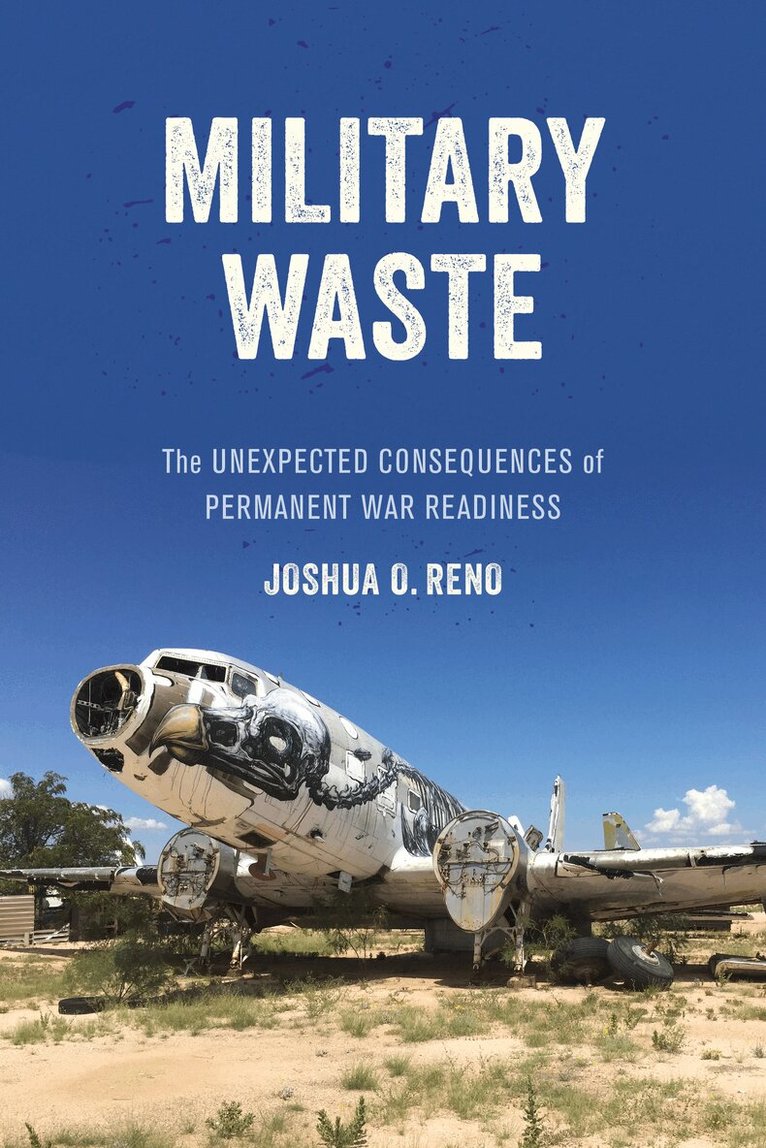
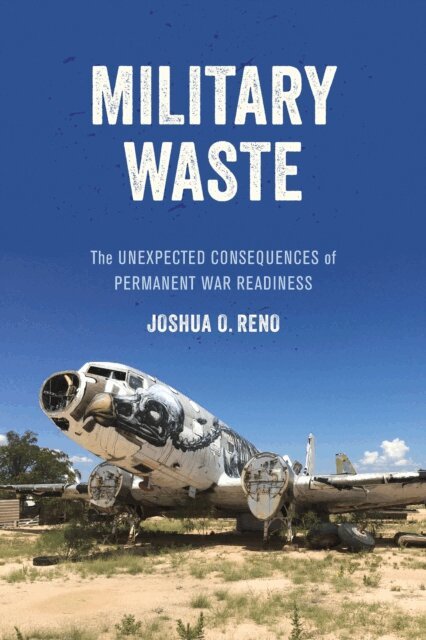
World War III has yet to happen, and yet material evidence of this conflict is strewn everywhere: resting at the bottom of the ocean, rusting in deserts, and floating in near-Earth orbit.In Military Waste, Joshua O. Reno offers a unique analysis of the costs of American war preparation through an examination of the lives and stories of American civilians confronted with what is left over and cast aside when a society is permanently ready for war. Using ethnographic and archival research, Reno demonstrates how obsolete military junk in its various incarnations affects people and places far from the battlegrounds that are ordinarily associated with warfare. Using a broad swath of examples—from excess planes, ships, and space debris that fall into civilian hands, to the dispossessed and polluted island territories once occupied by military bases, to the militarized masculinities of mass shooters—Military Waste reveals the unexpected and open-ended relationships that non-combatants on the home front form with a nation permanently ready for war.
282 kr
Skickas inom 7-10 vardagar
World War III has yet to happen, and yet material evidence of this conflict is strewn everywhere: resting at the bottom of the ocean, rusting in deserts, and floating in near-Earth orbit.In Military Waste, Joshua O. Reno offers a unique analysis of the costs of American war preparation through an examination of the lives and stories of American civilians confronted with what is left over and cast aside when a society is permanently ready for war. Using ethnographic and archival research, Reno demonstrates how obsolete military junk in its various incarnations affects people and places far from the battlegrounds that are ordinarily associated with warfare. Using a broad swath of examples—from excess planes, ships, and space debris that fall into civilian hands, to the dispossessed and polluted island territories once occupied by military bases, to the militarized masculinities of mass shooters—Military Waste reveals the unexpected and open-ended relationships that non-combatants on the home front form with a nation permanently ready for war.
777 kr
Skickas inom 7-10 vardagar
An overdue examination of the Midwest's long influence on nationalism and white supremacy.Though many associate racism with the regional legacy of the South, it is the Midwest that has upheld some of the nation’s most deep-seated convictions about the value of whiteness. From Jefferson’s noble farmer to The Wizard of Oz, imagining the Midwest has quietly gone hand-in-hand with imagining whiteness as desirable and virtuous. Since at least the U.S. Civil War, the imagined Midwest has served as a screen or canvas, projecting and absorbing tropes and values of virtuous whiteness and its opposite, white deplorability, with national and global significance. Imagining the Heartland provides a poignant and timely answer to how and why the Midwest has played this role in the American imagination. In Imagining the Heartland, anthropologists Britt Halvorson and Josh Reno argue that there is an unexamined affinity between whiteness, Midwestness, and Americanness, anchored in their shared ordinary and homogenized qualities. These seemingly unremarkable qualities of the Midwest take work; they do not happen by default. Instead, creating successful representations of ordinary Midwestness, in both positive and negative senses, has required cultural expression through media ranging from Henry Ford’s assembly line to Grant Wood’s famous “American Gothic.” Far from being just another region among others, the Midwest is a political and affective logic in racial projects of global white supremacy. Neglecting the Midwest means neglecting the production of white supremacist imaginings at their most banal and at their most influential, their most locally situated and their most globally dispersed.
250 kr
Skickas inom 7-10 vardagar
An overdue examination of the Midwest's long influence on nationalism and white supremacy.Though many associate racism with the regional legacy of the South, it is the Midwest that has upheld some of the nation’s most deep-seated convictions about the value of whiteness. From Jefferson’s noble farmer to The Wizard of Oz, imagining the Midwest has quietly gone hand-in-hand with imagining whiteness as desirable and virtuous. Since at least the U.S. Civil War, the imagined Midwest has served as a screen or canvas, projecting and absorbing tropes and values of virtuous whiteness and its opposite, white deplorability, with national and global significance. Imagining the Heartland provides a poignant and timely answer to how and why the Midwest has played this role in the American imagination. In Imagining the Heartland, anthropologists Britt Halvorson and Josh Reno argue that there is an unexamined affinity between whiteness, Midwestness, and Americanness, anchored in their shared ordinary and homogenized qualities. These seemingly unremarkable qualities of the Midwest take work; they do not happen by default. Instead, creating successful representations of ordinary Midwestness, in both positive and negative senses, has required cultural expression through media ranging from Henry Ford’s assembly line to Grant Wood’s famous “American Gothic.” Far from being just another region among others, the Midwest is a political and affective logic in racial projects of global white supremacy. Neglecting the Midwest means neglecting the production of white supremacist imaginings at their most banal and at their most influential, their most locally situated and their most globally dispersed.
246 kr
Skickas inom 7-10 vardagar
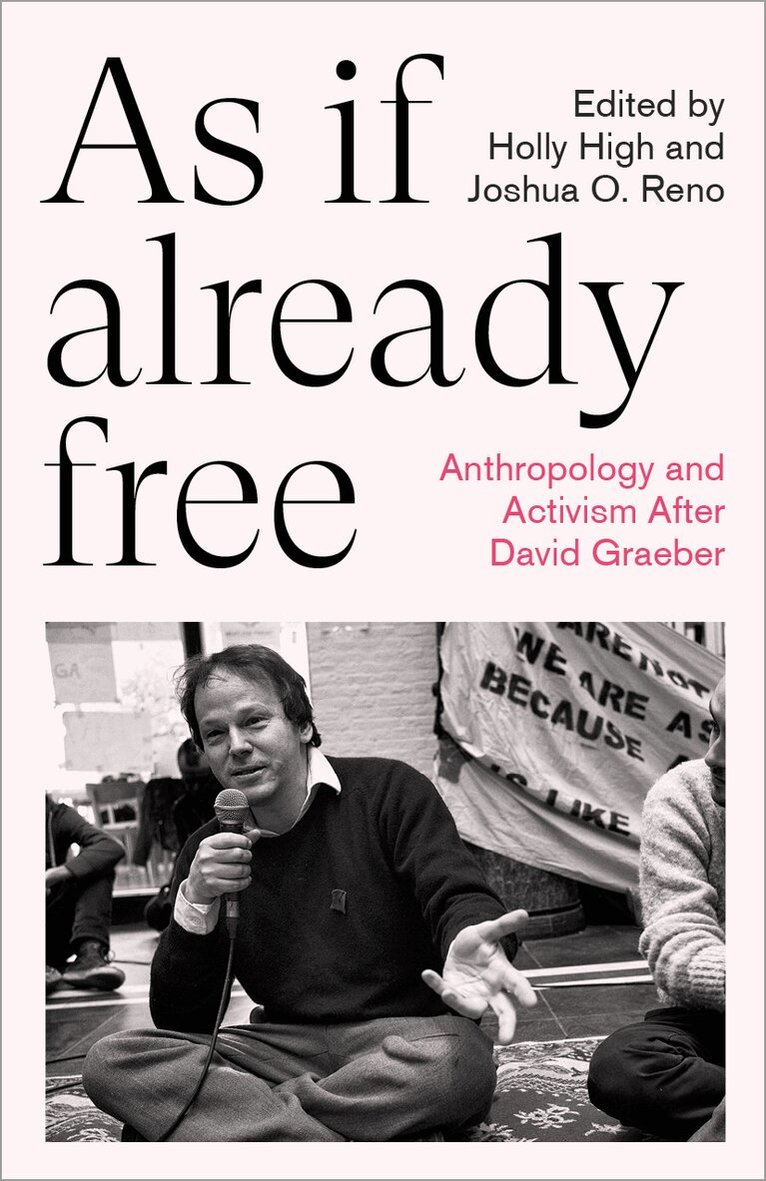
'A highly original thinker' - New York Times David Graeber (1961-2020) was an American anthropologist and anarchist activist who left us with new ways to understand humankind. His writings picked apart political power and social hierarchy to reveal what makes human society tick.As If Already Free collects his most important insights in one book, showing how his writing resonates today for activists looking to shake things up, and explaining how his powerful and accessible ideas can be applied to a wide range of topics, from birth to banking.In today's neoliberal world, we can turn to Graeber's legacy to provide a way for us to understand what went wrong, and how to fix it. This collection is both an introduction to his life and works, a guide to his key ideas, and an inspiring example of how anthropologists are continuing to use his work today.
2 088 kr
Skickas inom 10-15 vardagar
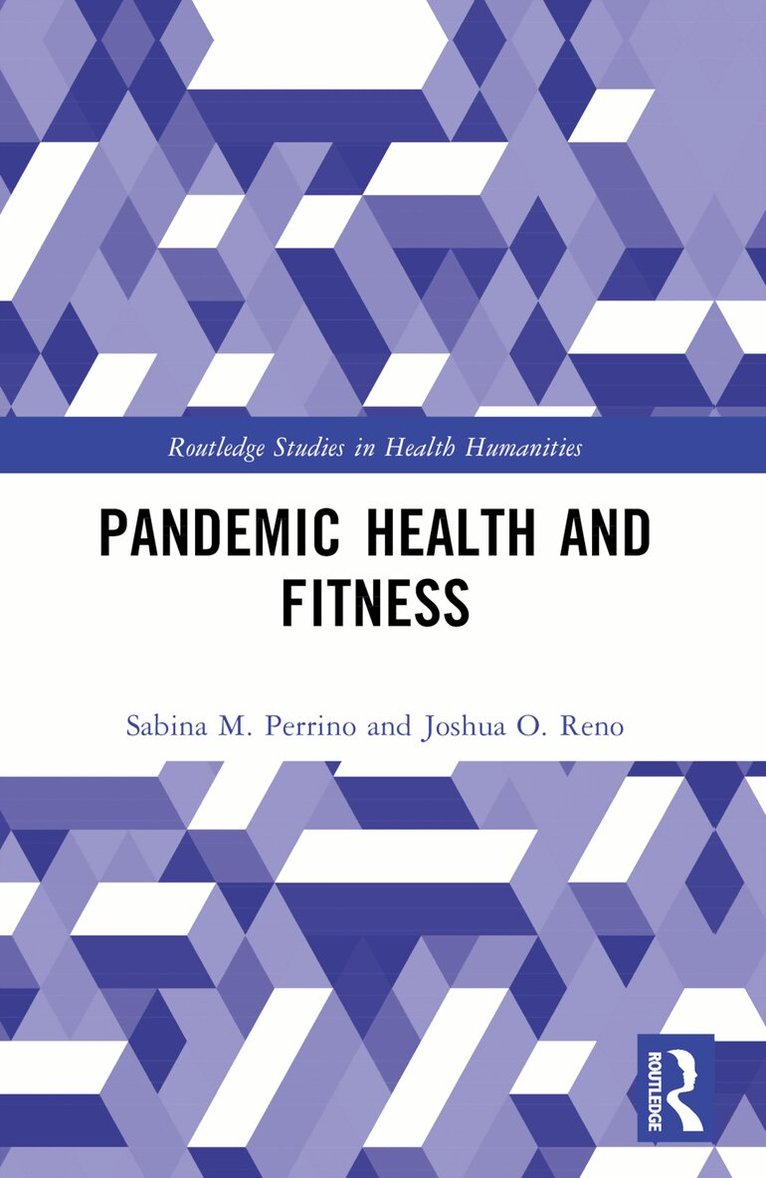
This book adopts an innovative approach in exploring the evolution of fitness practices among a community of gym goers amid a global pandemic, considering its impact on the interplay of the words, habits, and relationships gym goers use in realizing their aspirations of wellness and well-being.Perrino and Reno introduce a multilayered framework which combines insights from linguistic and sociocultural anthropology, integrating narrative analysis, discourse analysis, and ethnography, with autoethnography. This approach allows for a holistic portrait of the gym as a research site and of fitness as a fruitful area for dynamic cross-disciplinary study. The volume explores how the COVID-19 pandemic has shaped attitudes and practices around fitness, drawing on audio and video recordings and the authors’ lived experiences to analyze everything from workout choreography to micro-celebrity fitness culture to group classes. The book raises key questions around what it means to be well amid a pandemic, the practical dangers of realizing fitness goals in such times, the effects on the social relationships inherent to gym culture, and the impact on identity construction and self-reflection.This volume will appeal to scholars interested in the interdisciplinary study of fitness, in such areas as linguistic anthropology, sociocultural anthropology, health humanities, and sport studies.
630 kr
Skickas inom 10-15 vardagar
This book adopts an innovative approach in exploring the evolution of fitness practices among a community of gym goers amid a global pandemic, considering its impact on the interplay of the words, habits, and relationships gym goers use in realizing their aspirations of wellness and well-being.Perrino and Reno introduce a multilayered framework which combines insights from linguistic and sociocultural anthropology, integrating narrative analysis, discourse analysis, and ethnography, with autoethnography. This approach allows for a holistic portrait of the gym as a research site and of fitness as a fruitful area for dynamic cross-disciplinary study. The volume explores how the COVID-19 pandemic has shaped attitudes and practices around fitness, drawing on audio and video recordings and the authors’ lived experiences to analyze everything from workout choreography to micro-celebrity fitness culture to group classes. The book raises key questions around what it means to be well amid a pandemic, the practical dangers of realizing fitness goals in such times, the effects on the social relationships inherent to gym culture, and the impact on identity construction and self-reflection.This volume will appeal to scholars interested in the interdisciplinary study of fitness, in such areas as linguistic anthropology, sociocultural anthropology, health humanities, and sport studies.
1 423 kr
Skickas inom 10-15 vardagar
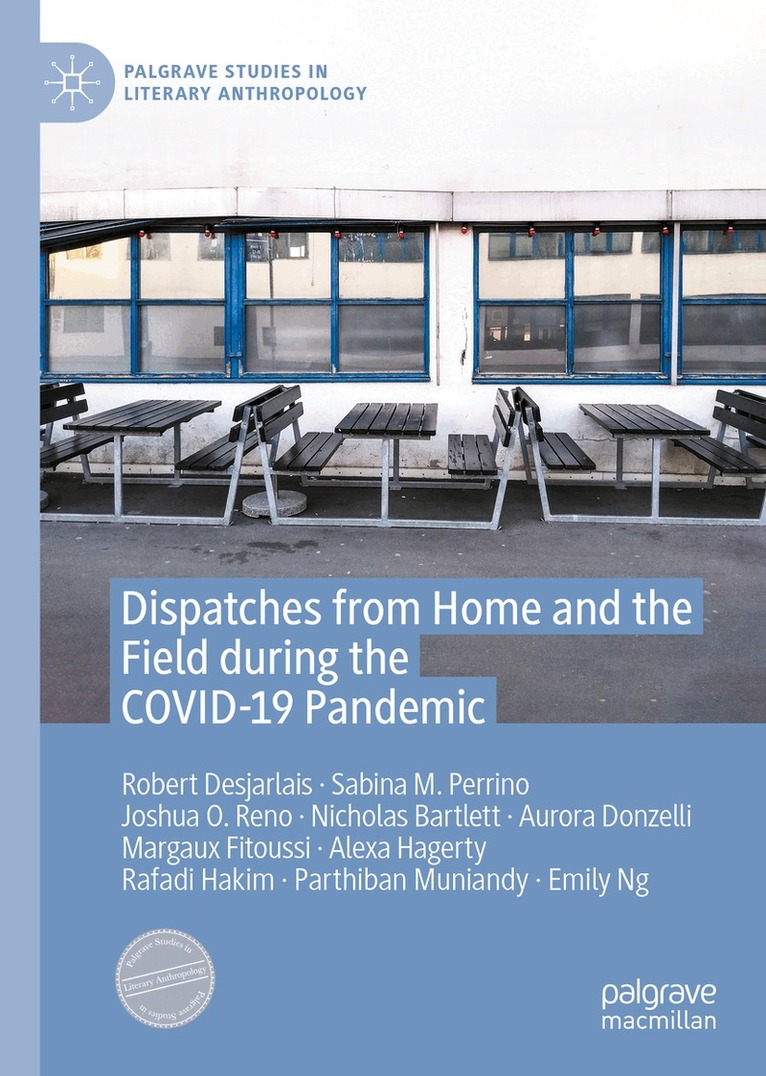
This volume, written in a readable and enticing style, is based on a simple premise, which was to have several exceptional ethnographers write about their experiences in an evocative way in real time during the COVID-19 pandemic. Rather than an edited volume with dedicated chapters, this book thus offers a new format wherein authors write several, distinct dispatches, each short and compact, allowing each writer's perspectives and stories to grow, in tandem with the pandemic itself, over the course of the book. Leaving behind the trope of the lonely anthropologist, these authors come together to form a collective of ethnographers to ask important questions, such as: What does it mean to live and write amid an unfolding and unstoppable global health and economic crisis? What are the intensities of the everyday? How do the isolated find connection in the face of catastrophe? Such first-person reflections touch on a plurality of themes brought on by the pandemic, forces and dynamics of pressing concern to many, such as contagion, safety, health inequalities, societal injustices, loss and separation, displacement, phantasmal imaginings and possibilities, the uncertain arts of calculating risk and protection, limits on movement and travel, and the biopolitical operations of sovereign powers. The various writings—spun from diverse situations and global locations—proceed within a temporal flow, starting in March 2020, with the first alerts and cases of viral infection, and then move on to various currents of caution, concern, infection, despair, hope, and connection that have unfolded since those early days. The writings then move into 2021, with events and moods associated with the global distribution of potentially effective vaccines and the promise and hope these immunizations bring. The written record of these multiform dispatches involves traces of a series of lives, as the authors of those lives tried to make do, and write, in trying times. A timely ethnography of an event that has changed all our lives, this book is critical reading for students and researchers of medical anthropology, sociocultural anthropology, contemporary anthropological theory, and ethnographic writing.
1 423 kr
Skickas inom 10-15 vardagar
This volume, written in a readable and enticing style, is based on a simple premise, which was to have several exceptional ethnographers write about their experiences in an evocative way in real time during the COVID-19 pandemic. Rather than an edited volume with dedicated chapters, this book thus offers a new format wherein authors write several, distinct dispatches, each short and compact, allowing each writer's perspectives and stories to grow, in tandem with the pandemic itself, over the course of the book. Leaving behind the trope of the lonely anthropologist, these authors come together to form a collective of ethnographers to ask important questions, such as: What does it mean to live and write amid an unfolding and unstoppable global health and economic crisis? What are the intensities of the everyday? How do the isolated find connection in the face of catastrophe? Such first-person reflections touch on a plurality of themes brought on by the pandemic, forces and dynamics of pressing concern to many, such as contagion, safety, health inequalities, societal injustices, loss and separation, displacement, phantasmal imaginings and possibilities, the uncertain arts of calculating risk and protection, limits on movement and travel, and the biopolitical operations of sovereign powers. The various writings—spun from diverse situations and global locations—proceed within a temporal flow, starting in March 2020, with the first alerts and cases of viral infection, and then move on to various currents of caution, concern, infection, despair, hope, and connection that have unfolded since those early days. The writings then move into 2021, with events and moods associated with the global distribution of potentially effective vaccines and the promise and hope these immunizations bring. The written record of these multiform dispatches involves traces of a series of lives, as the authors of those lives tried to make do, and write, in trying times. A timely ethnography of an event that has changed all our lives, this book is critical reading for students and researchers of medical anthropology, sociocultural anthropology, contemporary anthropological theory, and ethnographic writing.