Julian Young – författare
Visar alla böcker från författaren Julian Young. Handla med fri frakt och snabb leverans.
39 produkter
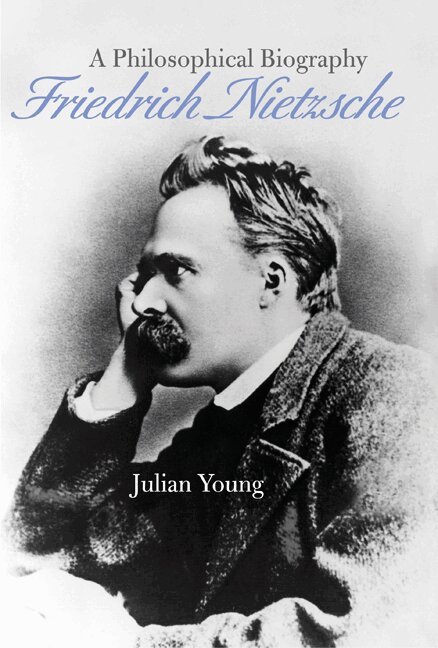
Friedrich Nietzsche
A Philosophical Biography
Av Julian Young
Inbunden, 2010
623 kr
Lägg i varukorg
In this beautifully written account, Julian Young provides the most comprehensive biography available today of the life and philosophy of the nineteenth-century German philosopher Friedrich Nietzsche. Young deals with the many puzzles created by the conjunction of Nietzsche's personal history and …
Schopenhauer
Av Julian Young
Häftad, 2005
388 kr
Lägg i varukorg
Arthur Schopenhauer (1788-1860) was one of the greatest writers and German philosophers of the nineteenth century. His work influenced figures as diverse as Wagner, Freud and Nietzsche. Best known as a pessimist, he was one of the few philosophers read and admired by Wittgenstein.In this …
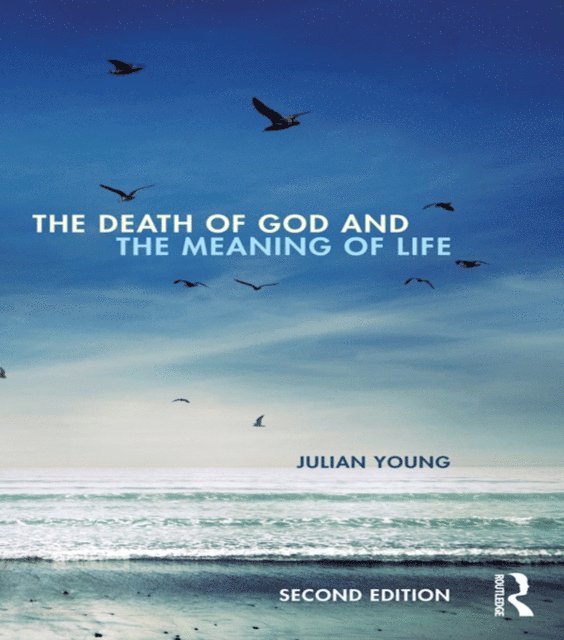
Death of God and the Meaning of Life
Av Julian Young
Häftad, 2014
769 kr
Lägg i varukorg
What is the meaning of life? In today's secular, post-religious scientific world, this question has become a serious preoccupation. But it also has a long history: many major philosophers have thought deeply about it, as Julian Young so vividly illustrates in this thought-provoking second edition …
German Philosophy in the Twentieth Century
Lukács to Strauss
Av Julian Young
Häftad, 2020
651 kr
Lägg i varukorg
The course of German philosophy in the twentieth century is one of the most exciting and controversial in the history of human thought. In this outstanding and engaging introduction, a companion volume to his German Philosophy in the Twentieth Century: Weber to Heidegger, Julian Young examines and …
German Philosophy in the Twentieth Century
Lukács to Strauss
Av Julian Young
Inbunden, 2020
2526 kr
Lägg i varukorg
The course of German philosophy in the twentieth century is one of the most exciting and controversial in the history of human thought. In this outstanding and engaging introduction, a companion volume to his German Philosophy in the Twentieth Century: Weber to Heidegger, Julian Young examines and …
Schopenhauer
Av Julian Young
Inbunden, 2005
2526 kr
Lägg i varukorg
Arthur Schopenhauer (1788-1860) was one of the greatest writers and German philosophers of the nineteenth century. His work influenced figures as diverse as Wagner, Freud and Nietzsche. Best known as a pessimist, he was one of the few philosophers read and admired by Wittgenstein.In this …
Death of God and the Meaning of Life
Av Julian Young
Inbunden, 2014
3083 kr
Lägg i varukorg
What is the meaning of life? In today's secular, post-religious scientific world, this question has become a serious preoccupation. But it also has a long history: many major philosophers have thought deeply about it, as Julian Young so vividly illustrates in this thought-provoking second edition …
Heidegger's Later Philosophy
Av Julian Young
Häftad, 2001
282 kr
Lägg i varukorg
Heidegger's later philosophy has often been regarded as a lapse into unintelligible mysticism. While not ignoring its deep and difficult complexities, Julian Young's book explains in simple and straightforward language just what it is all about. It examines Heidegger's identification of loss of …
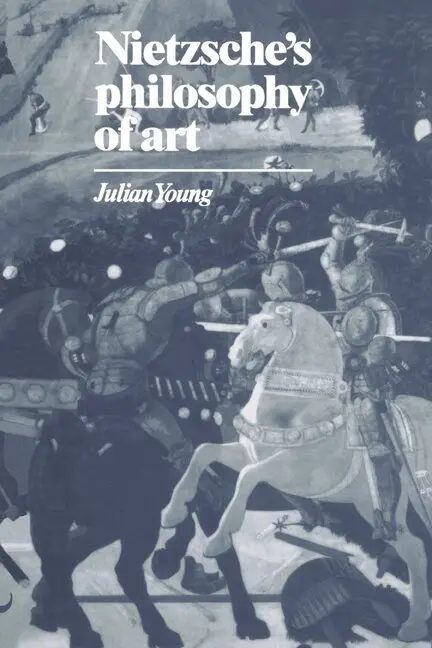
Nietzsche's Philosophy of Art
Av Julian Young
Häftad, 1994
732 kr
Lägg i varukorg
This is a clear and lucid account of Nietzsche's philosophy of art, combining exegesis, interpretation and criticism in a judicious balance. Julian Young argues that Nietzsche's thought about art can only be understood in the context of his wider philosophy. In particular, he discusses the dramatic …
Heidegger, Philosophy, Nazism
Av Julian Young
Inbunden, 1997
1563 kr
Lägg i varukorg
Since 1945, and particularly since the facts of the 'Heidegger case' became widely known in 1987, an enormous number of words have been devoted to establishing not only Heidegger's involvement with Nazism, but also that his philosophy is irredeemably discredited thereby. This book, while in no way …
Heidegger's Philosophy of Art
Av Julian Young
Häftad, 2004
389 kr
Lägg i varukorg
This book, the first comprehensive study in English of Heidegger's philosophy of art, starts in the mid-1930s with Heidegger's discussion of the Greek temple and his Hegelian declaration that a great artwork gathers together an entire culture in affirmative celebration of its foundational 'truth', …
Heidegger, Philosophy, Nazism
Av Julian Young
Häftad, 1998
716 kr
Lägg i varukorg
Since 1945, and particularly since the facts of the 'Heidegger case' became widely known in 1987, an enormous number of words have been devoted to establishing not only Heidegger's involvement with Nazism, but also that his philosophy is irredeemably discredited thereby. This book, while in no way …
Nietzsche's Philosophy of Religion
Av Julian Young
Häftad, 2006
732 kr
Lägg i varukorg
In his first book, The Birth of Tragedy, Nietzsche observes that Greek tragedy gathered people together as a community in the sight of their gods, and argues that modernity can be rescued from 'nihilism' only through the revival of such a festival. This is commonly thought to be a view which did …
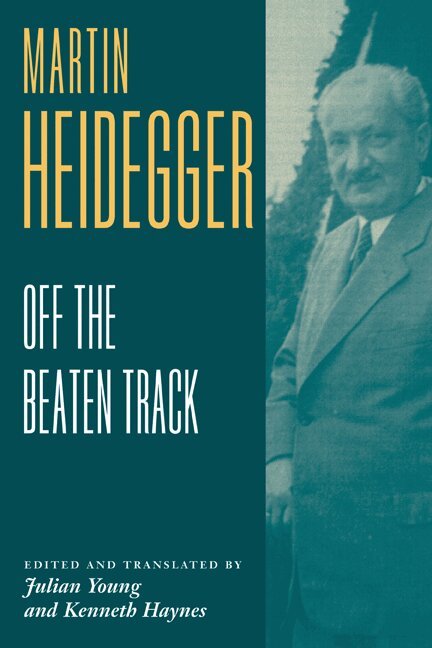
Heidegger: Off the Beaten Track
Av Martin Heidegger, Julian Young m. fl.
Häftad, 2002
436 kr
Lägg i varukorg
This collection of texts (originally published in German under the title Holzwege) is Heidegger's first post-war book and contains some of the major expositions of his later philosophy. Of particular note are 'The Origin of the Work of Art', perhaps the most discussed of all of Heidegger's essays, …
Heidegger's Later Philosophy
Av Julian Young
Inbunden, 2001
1563 kr
Lägg i varukorg
Heidegger's later philosophy has often been regarded as a lapse into unintelligible mysticism. While not ignoring its deep and difficult complexities, Julian Young's book explains in simple and straightforward language just what it is all about. It examines Heidegger's identification of loss of …
Nietzsche's Philosophy of Religion
Av Julian Young
Inbunden, 2006
976 kr
Lägg i varukorg
In his first book, The Birth of Tragedy, Nietzsche observes that Greek tragedy gathered people together as a community in the sight of their gods, and argues that modernity can be rescued from 'nihilism' only through the revival of such a festival. This is commonly thought to be a view which did …
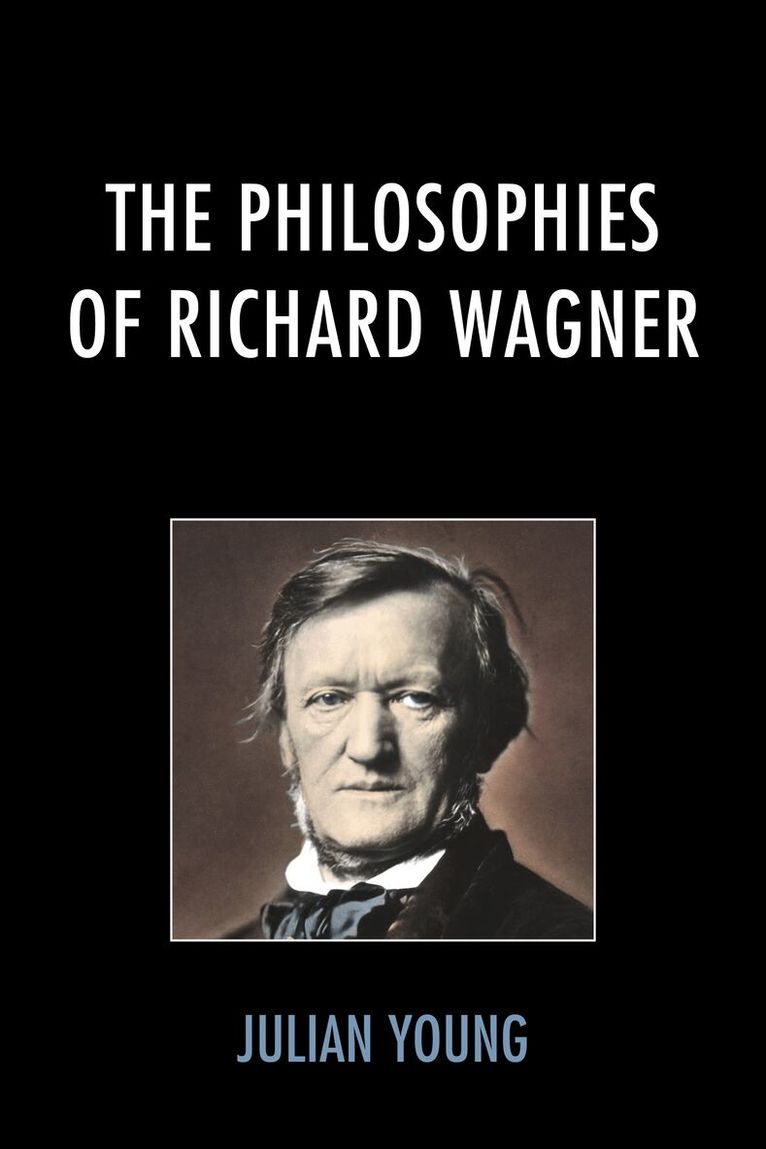
Philosophies of Richard Wagner
Av Julian Young
Inbunden, 2014
1357 kr
Lägg i varukorg
In addition to being a great composer, Richard Wagner was also an important philosopher. Julian Young begins by examining the philosophy of art and society Wagner constructs during his time as a revolutionary anarchist-communist. Modernity, Wagner argued, is to be rescued from its current anomie …
Philosophies of Richard Wagner
Av Julian Young
Häftad, 2016
618 kr
Lägg i varukorg
In addition to being a great composer, Richard Wagner was also an important philosopher. Julian Young begins by examining the philosophy of art and society Wagner constructs during his time as a revolutionary anarchist-communist. Modernity, Wagner argued, is to be rescued from its current anomie …
German Philosophy in the Twentieth Century
Lukács to Strauss
Av Julian Young
E-bok, 2020
762 kr
Lägg i varukorg
The course of German philosophy in the twentieth century is one of the most exciting and controversial in the history of human thought. In this outstanding and engaging introduction, a companion volume to his German Philosophy in the Twentieth Century: Weber to Heidegger , Julian Young examines and …
German Philosophy in the Twentieth Century
Lukács to Strauss
Av Julian Young
E-bok, 2020
738 kr
Lägg i varukorg
The course of German philosophy in the twentieth century is one of the most exciting and controversial in the history of human thought. In this outstanding and engaging introduction, a companion volume to his German Philosophy in the Twentieth Century: Weber to Heidegger , Julian Young examines and …
German Philosophy in the Twentieth Century
Dilthey to Honneth
Av Julian Young
E-bok, 2022
727 kr
Lägg i varukorg
The path taken by German philosophy in the twentieth century is one of the most exciting and controversial in the history of human thought, by turns radical and conservative and secular and religious. In this outstanding introduction, German Philosophy in the Twentieth Century: Dilthey to Honneth— …
German Philosophy in the Twentieth Century
Dilthey to Honneth
Av Julian Young
E-bok, 2022
727 kr
Lägg i varukorg
The path taken by German philosophy in the twentieth century is one of the most exciting and controversial in the history of human thought, by turns radical and conservative and secular and religious. In this outstanding introduction, German Philosophy in the Twentieth Century: Dilthey to Honneth— …
German Philosophy in the Twentieth Century
Dilthey to Honneth
Av Julian Young
Häftad, 2022
622 kr
Lägg i varukorg
The path taken by German philosophy in the twentieth century is one of the most exciting and controversial in the history of human thought, by turns radical and conservative and secular and religious. In this outstanding introduction, German Philosophy in the Twentieth Century: Dilthey to …
German Philosophy in the Twentieth Century
Dilthey to Honneth
Av Julian Young
Inbunden, 2022
2526 kr
Lägg i varukorg
The path taken by German philosophy in the twentieth century is one of the most exciting and controversial in the history of human thought, by turns radical and conservative and secular and religious. In this outstanding introduction, German Philosophy in the Twentieth Century: Dilthey to …
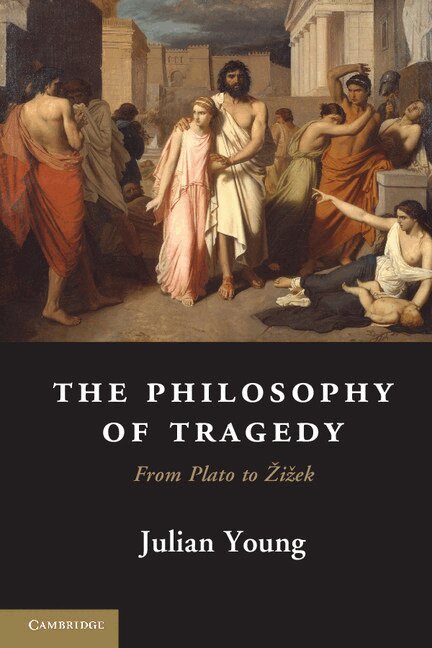
The Philosophy of Tragedy
From Plato to Žižek
Av Julian Young
Inbunden, 2013
1302 kr
Lägg i varukorg
This book is a full survey of the philosophy of tragedy from antiquity to the present. From Aristotle to Žižek the focal question has been: why, in spite of its distressing content, do we value tragic drama? What is the nature of the 'tragic effect'? Some philosophers point to a certain kind of …
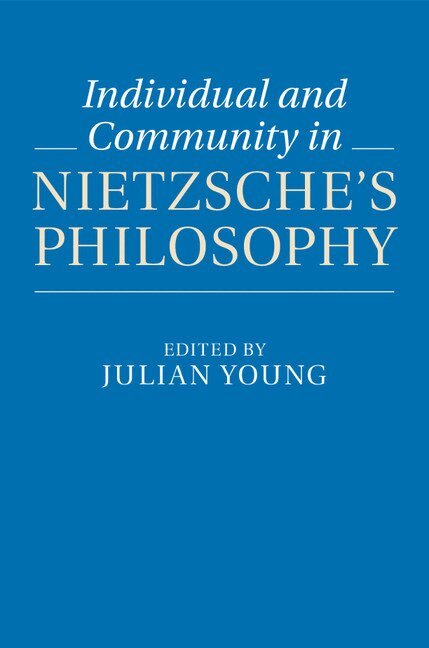
Individual and Community in Nietzsche's Philosophy
Av Julian Young
Inbunden, 2014
1593 kr
Lägg i varukorg
According to Bertrand Russell, Nietzsche's only value is the flourishing of the exceptional individual. The well-being of ordinary people is, in itself, without value. Yet there are passages in Nietzsche that appear to regard the flourishing of the community as a whole alongside, perhaps even …
The Philosophy of Tragedy
From Plato to Žižek
Av Julian Young
Häftad, 2013
477 kr
Lägg i varukorg
This book is a full survey of the philosophy of tragedy from antiquity to the present. From Aristotle to Žižek the focal question has been: why, in spite of its distressing content, do we value tragic drama? What is the nature of the 'tragic effect'? Some philosophers point to a certain kind of …
Schopenhauer
Av Julian Young
E-bok, 2013
399 kr
Lägg i varukorg
Arthur Schopenhauer (1788-1860) was one of the greatest writers and German philosophers of the nineteenth century. His work influenced figures as diverse as Wagner, Freud and Nietzsche. Best known as a pessimist, he was one of the few philosophers read and admired by Wittgenstein.In this …
Schopenhauer
Av Julian Young
E-bok, 2013
399 kr
Lägg i varukorg
Arthur Schopenhauer (1788-1860) was one of the greatest writers and German philosophers of the nineteenth century. His work influenced figures as diverse as Wagner, Freud and Nietzsche. Best known as a pessimist, he was one of the few philosophers read and admired by Wittgenstein.In this …
Death of God and the Meaning of Life
Av Julian Young
E-bok, 2014
881 kr
Lägg i varukorg
What is the meaning of life? In today''s secular, post-religious scientific world, this question has become a serious preoccupation. But it also has a long history: many major philosophers have thought deeply about it, as Julian Young so vividly illustrates in this thought-provoking second edition …