• Fri frakt över 249 kr
  • •
  • Snabba leveranser
  • •
  • Billiga böcker
Kundservice

Du är på sajten för privatpersoner.

Företag, bibliotek eller offentlig verksamhet?

Du handlar på classic.bokus.com, där alla dina funktioner finns intakta.
Till classic.bokus.com
Bokus logotyp. Gå till startsidan.
  • Erbjudanden
  • Nyheter
  • Student
  • Topplistor
  • Barn & ungdom
  • Bokus Play
  • E-böcker
  • Pocketböcker
  • Spel & pussel

Må bättre, för mindre! Upp till 50% rabatt på hälsoböcker

Sidfot

Mina sidor

    Hjälp

    • Kundservice
    • Vanliga frågor och svar
    • Frakt och leverans
    • Retur vid ångerrätt
    • Reklamera vara
    • Betalning
    • Köpvillkor
    • Allmänna villkor
    • Information om webbplatsens tillgänglighet

    Om Bokus

    • Om oss
    • Pressrum
    • För studenter
    • För företag
    • För bibliotek och offentlig verksamhet
    • För leverantörer
    • Hållbarhet

    Populärt

    • Aktuella erbjudanden
    • Presentkort
    • Studentlitteratur
    • Nya böcker
    • Topplistor
    • Signerade böcker
    • Engelska böcker

    Inspiration

    • Boktips
    • BookTok
    • Populära bokserier
    • Barnbokskaraktärer
    • Populära författare
    Logotyp för Bokus
    Följ oss på Facebook (extern länk)Följ oss på Instagram (extern länk)Följ oss på YouTube (extern länk)Följ oss på TikTok (extern länk)
    bokus @ CookiesAnpassa cookiesIntegritetspolicyKöpvillkor
    Till Citymail hemsida (extern länk)Till Budbee hemsida (extern länk)Till Postnord hemsida (extern länk)Till Schenker hemsida (extern länk)Till Early Bird hemsida (extern länk)Till Walleys hemsida (extern länk)
    1. Filosofi och religion
    2. Filosofi
    3. Filosofiska discipliner

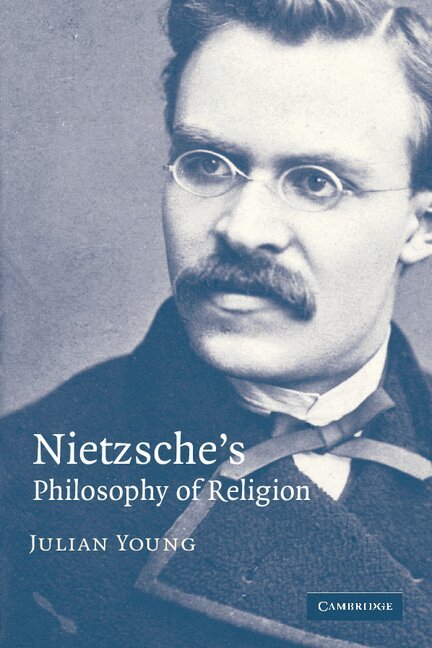
    Nietzsche's Philosophy of Religion

    AvJulian Young

    Häftad, Engelska, 2006

    597 kr

    Beställningsvara. Skickas inom 10-15 vardagar. Fri frakt över 249 kr.

    Fler format och utgåvor

    Inbunden

    798 kr

    Beskrivning

    In his first book, The Birth of Tragedy, Nietzsche observes that Greek tragedy gathered people together as a community in the sight of their gods, and argues that modernity can be rescued from 'nihilism' only through the revival of such a festival. This is commonly thought to be a view which did not survive the termination of Nietzsche's early Wagnerianism, but Julian Young argues, on the basis of an examination of all of Nietzsche's published works, that his religious communitarianism in fact persists through all his writings. What follows, it is argued, is that the mature Nietzsche is neither an 'atheist', an 'individualist', nor an 'immoralist': he is a German philosopher belonging to a German tradition of conservative communitarianism - though to claim him as a proto-Nazi is radically mistaken. This important reassessment will be of interest to all Nietzsche scholars and to a wide range of readers in German philosophy.

    Produktinformation

    • Utgivningsdatum:2006-04-06
    • Mått:152 x 229 x 13 mm
    • Vikt:330 g
    • Format:Häftad
    • Språk:Engelska
    • Antal sidor:244
    • Förlag:Cambridge University Press
    • ISBN:9780521681049

    Utforska kategorier

    • Filosofiska discipliner inom Filosofi och religion

    Mer om författaren

    Julian Young is Professor of Philosophy at the University of Auckland and Honorary Research Professor at the University of Tasmania. His many publications include Heidegger: Off the Beaten Track (2002) edited and translated with Kenneth Haynes, Heidegger's Later Philosophy (2001) and Heidegger's Philosophy of Art (2001, 2004).

    Recensioner i media

    'Julian Young offers a comprehensive, profound, yet consistently lively and engaging overview of Nietzsche's almost obsessive reflections on religion. Young's claim is that instead of rejecting all religion, Nietzsche tries to revive a richer, 'healthier' religious life that existed in earlier times, one that gives us a meaningful way of understanding community, commitment, devotion, the fact of death, and even the 'gods'.' Charles Guignon, University of South Florida

    Innehållsförteckning

    • Introduction; 1. Schopenhauer: on man's need for metaphysics; 2. The birth of tragedy; 3. Untimely meditations; 4. Human, all too human; 5. The gay science; 6. Zarathustra; 7. Beyond good and evil; 8. The genealogy of morals; 9. The Wagner case; 10. Twilight of the idols; 11. The antichrist; 12. Ecce homo; Epilogue: Nietzsche in history.