• Fri frakt över 249 kr
  • •
  • Snabba leveranser
  • •
  • Billiga böcker
Kundservice

Du är på sajten för privatpersoner.

Företag, bibliotek eller offentlig verksamhet?

Du handlar på classic.bokus.com, där alla dina funktioner finns intakta.
Till classic.bokus.com
Bokus logotyp. Gå till startsidan.
  • Erbjudanden
  • Nyheter
  • Student
  • Topplistor
  • Barn & ungdom
  • Bokus Play
  • E-böcker
  • Pocketböcker
  • Spel & pussel

10% rabatt på allt med kod: NYSTART10 →

Sidfot

Mina sidor

    Hjälp

    • Kundservice
    • Vanliga frågor och svar
    • Frakt och leverans
    • Retur vid ångerrätt
    • Reklamera vara
    • Betalning
    • Köpvillkor
    • Allmänna villkor
    • Information om webbplatsens tillgänglighet

    Om Bokus

    • Om oss
    • Pressrum
    • För studenter
    • För företag
    • För bibliotek och offentlig verksamhet
    • För leverantörer
    • Hållbarhet

    Populärt

    • Aktuella erbjudanden
    • Presentkort
    • Studentlitteratur
    • Nya böcker
    • Topplistor
    • Signerade böcker
    • Engelska böcker

    Inspiration

    • Boktips
    • BookTok
    • Populära bokserier
    • Barnbokskaraktärer
    • Populära författare
    Logotyp för Bokus
    Följ oss på Facebook (extern länk)Följ oss på Instagram (extern länk)Följ oss på YouTube (extern länk)Följ oss på TikTok (extern länk)
    bokus @ CookiesAnpassa cookiesIntegritetspolicyKöpvillkor
    Till Citymail hemsida (extern länk)Till Budbee hemsida (extern länk)Till Postnord hemsida (extern länk)Till Schenker hemsida (extern länk)Till Early Bird hemsida (extern länk)Till Walleys hemsida (extern länk)
    1. Kultur
    2. Musikböcker

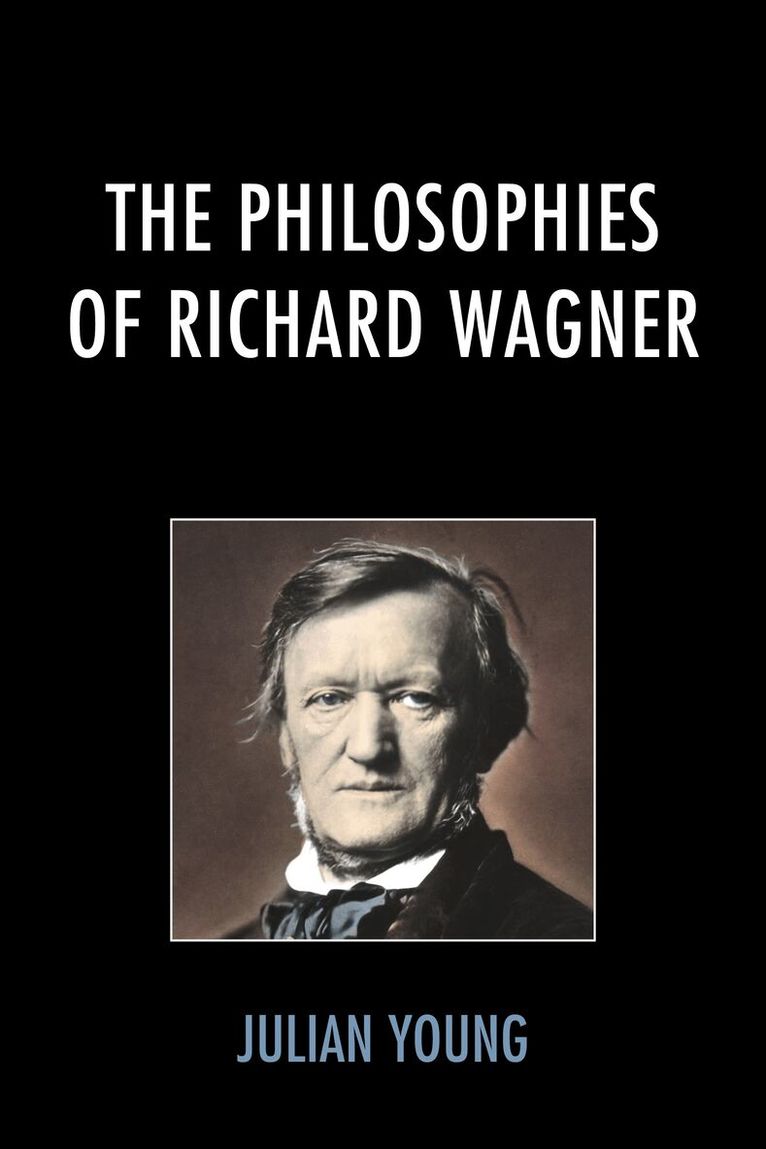
    Philosophies of Richard Wagner

    AvJulian Young

    Inbunden, Engelska, 2014

    1 325 kr

    Beställningsvara. Skickas inom 10-15 vardagar. Fri frakt över 249 kr.

    Fler format och utgåvor

    Häftad

    604 kr

    Beskrivning

    In addition to being a great composer, Richard Wagner was also an important philosopher. Julian Young begins by examining the philosophy of art and society Wagner constructs during his time as a revolutionary anarchist-communist. Modernity, Wagner argued, is to be rescued from its current anomie through the rebirth of Greek tragedy (the original Gesamtkunstwerk) in the form of the “artwork of the future," an artwork of which his own operas are the prototype. Young then examines the entirely different philosophy Wagner constructs after his 1854 conversion from Hegelian optimism to Schopenhauerian pessimism. “Redemption” now becomes, not a future utopia in this world, but rather “transfigured” existence in another world, attainable only through death. Viewing Wagner’s operas through the lens of his philosophy, the book offers often novel interpretations of Lohengrin, The Ring cycle, Tristan und Isolde, Die Meistersinger, and Parsifal.Finally, Young dresses the cause of Friedrich Nietzsche’s transformation from Wagner’s intimate friend and disciple into his most savage critic. Nietzsche’s fundamental accusation, it is argued, is one of betrayal: that Wagner betrayed his early, “life affirming” philosophy of art and life in favor of “life-denial." Nietzsche’s assertion and the final conclusion of the book is that our task, now, is to “become better Wagnerians than Wagner.”

    Produktinformation

    • Utgivningsdatum:2014-09-09
    • Mått:164 x 234 x 17 mm
    • Vikt:404 g
    • Format:Inbunden
    • Språk:Engelska
    • Antal sidor:170
    • Förlag:Bloomsbury Publishing Plc
    • ISBN:9780739199923

    Utforska kategorier

    • Musikböcker inom Kultur
    • Filosofiska discipliner inom Filosofi och religion

    Mer om författaren

    Julian Young is Kenan Professor of Humanities at Wake Forest University.

    Recensioner i media

    Young here presents the results of extensive research into Wagner's philosophical writings. Perhaps the most surprising thing one learns is that Wagner had a relatively clear and coherent philosophy. In fact, Wagner’s philosophy evolved over time, and he always saw himself as more than a composer of operas. Early on, Wagner, influenced by Hegel, maintained that art and music could play a key role in changing the world for the better. Later, his philosophical intuitions and artistic aims would be molded by Schopenhauer’s pessimistic but redemptive views of music. Today, Wagner would be saddened, though perhaps not surprised, to find that most of his operas are heard only by the affluent—a situation that is the antithesis of what he was trying to do. Young’s straightforward writing style is more than welcome in explaining 19th-century German philosophical concepts, which can get very complex very fast. This book is beautifully written, clear, and concise. Summing Up:Highly recommended. Upper-level undergraduates and above.

    Innehållsförteckning

    • Part I: Early WagnerChapter 1: The Way We are NowChapter 2: The Greek IdealChapter 3: The Death of ArtChapter 4: The Artwork of the Future: Exploratory QuestionsPart II Later WagnerChapter 5: SchopenhauerChapter 6: Wagner’s Appropriation of SchopenhauerChapter 7: Wagner’s Final ThoughtsEpilogue: Wagner and Nietzsche