Mason B. Williams - Böcker
Visar alla böcker från författaren Mason B. Williams. Handla med fri frakt och snabb leverans.
8 produkter
8 produkter
1 503 kr
Skickas inom 11-20 vardagar
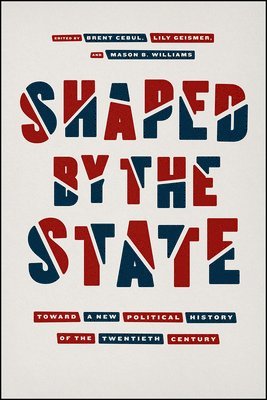
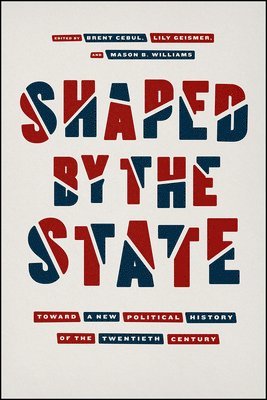
American political history has been built around narratives of crisis, in which what “counts” are the moments when seemingly stable political orders collapse and new ones rise from the ashes. No doubt the history of American politics is filled with such moments—the Great Depression and the New Deal; the rise of modern conservatism in the 1960s and ’70s; and, most recently, the 2016 election of Donald Trump. But while crisis-centered frameworks can make sense of certain dimensions of political culture, partisan change, and governance, they also often steal attention from the production of categories like race, gender, and citizenship status that transcend the usual breakpoints in American history.Brent Cebul, Lily Geismer, and Mason B. Williams have brought together first-rate scholars from a wide range of subfields who are making structures of state power—not moments of crisis or partisan realignment—integral to their analyses. All of the contributors see political history as defined less by elite subjects than by tensions between state and economy, state and society, and state and subject—tensions that reveal continuities as much as disjunctures. This broader definition incorporates analyses of the crosscurrents of power, race, and identity; the recent turns toward the history of capitalism and transnational history; and an evolving understanding of American political development that cuts across eras of seeming liberal, conservative, or neoliberal ascendance. The result is a rich revelation of what political history is today.
317 kr
Skickas inom 7-10 vardagar
American political history has been built around narratives of crisis, in which what “counts” are the moments when seemingly stable political orders collapse and new ones rise from the ashes. No doubt the history of American politics is filled with such moments—the Great Depression and the New Deal; the rise of modern conservatism in the 1960s and ’70s; and, most recently, the 2016 election of Donald Trump. But while crisis-centered frameworks can make sense of certain dimensions of political culture, partisan change, and governance, they also often steal attention from the production of categories like race, gender, and citizenship status that transcend the usual breakpoints in American history.Brent Cebul, Lily Geismer, and Mason B. Williams have brought together first-rate scholars from a wide range of subfields who are making structures of state power—not moments of crisis or partisan realignment—integral to their analyses. All of the contributors see political history as defined less by elite subjects than by tensions between state and economy, state and society, and state and subject—tensions that reveal continuities as much as disjunctures. This broader definition incorporates analyses of the crosscurrents of power, race, and identity; the recent turns toward the history of capitalism and transnational history; and an evolving understanding of American political development that cuts across eras of seeming liberal, conservative, or neoliberal ascendance. The result is a rich revelation of what political history is today.
259 kr
Skickas inom 7-10 vardagar
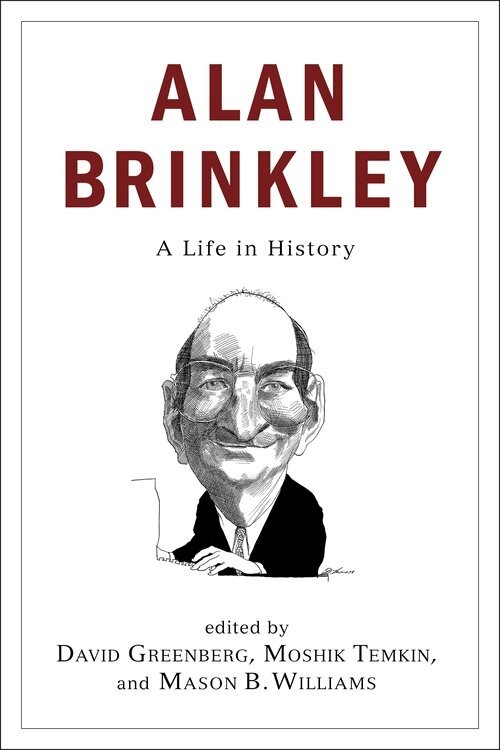
Few American historians of his generation have had as much influence in both the academic and popular realms as Alan Brinkley. His debut work, the National Book Award–winning Voices of Protest, launched a storied career that considered the full spectrum of American political life. His books give serious and original treatments of populist dissent, the role of mass media, the struggles of liberalism and conservatism, and the powers and limits of the presidency. A longtime professor at Harvard University and Columbia University, Brinkley has shaped the field of U.S. history for generations of students through his textbooks and his mentorship of some of today’s foremost historians.Alan Brinkley: A Life in History brings together essays on his major works and ideas, as well as personal reminiscences from leading historians and thinkers beyond the academy whom Brinkley collaborated with, befriended, and influenced. Among the luminaries in this volume are the critic Frank Rich, the journalists Jonathan Alter and Nicholas Lemann, the biographer A. Scott Berg, and the historians Eric Foner and Lizabeth Cohen. Together, the seventeen essays that form this book chronicle the life and thought of a working historian, the development of historical scholarship in our time, and the role that history plays in our public life. At a moment when Americans are pondering the plight of their democracy, this volume offers a timely overview of a consummate student—and teacher—of the American political tradition.
270 kr
Tillfälligt slut
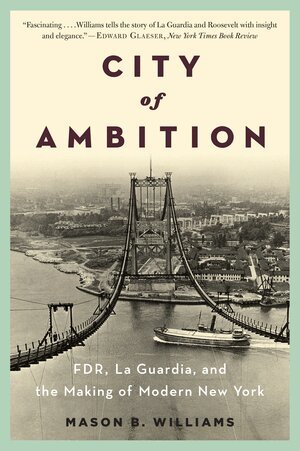
City of Ambition is a brilliant history of the New Deal and its role in the making of modern New York City. The story of a remarkable collaboration between Franklin Roosevelt and Fiorello La Guardia, this is a case study in creative political leadership in the midst of a devastating depression. Roosevelt and La Guardia were an odd couple: patrician president and immigrant mayor, fireside chat and tabloid cartoon, pragmatic Democrat and reform Republican. But together, as leaders of America’s two largest governments in the depths of the Great Depression, they fashioned a route to recovery for the nation and the master plan for a great city.Roosevelt and his “Brain Trust”—shrewd, energetic advisors such as Harold Ickes and Harry Hopkins—sought to fight the Depression by channeling federal resources through America’s cities and counties. La Guardia had replaced Tammany Hall cronies with policy experts, such as the imperious Robert Moses, who were committed to a strong public sector. The two leaders worked closely together. La Guardia had a direct line of communication with FDR and his staff, often visiting Washington carrying piles of blueprints. Roosevelt relied on the mayor as his link to the nation’s cities and their needs. The combination was potent. La Guardia’s Gotham became a laboratory for New Deal reform. Roosevelt’s New Deal transformed city initiatives into major programs such as the Works Progress Administration, which changed the physical face of the United States. Together they built parks, bridges, and schools; put the unemployed to work; and strengthened the Progressive vision of government as serving the public purpose.Today everyone knows the FDR Drive as a main route to La Guardia Airport. The intersection of steel and concrete speaks to a pair of dynamic leaders whose collaboration lifted a city and a nation. Here is their story.
396 kr
Kommande
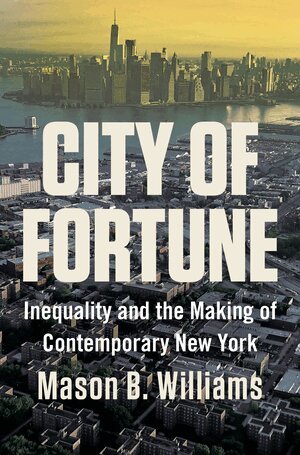
Postwar New York City famously expired in a 1970s tableau of burning Bronx tenements, subway graffiti, crushing debt, and the tabloid headline “Ford to City: Drop Dead.” From its ashes the city reemerged to reach new heights, whether in stock averages or the gleaming pencil towers punctuating Midtown. But at ground level the city’s basic institutions were cracking. The city was rebuilt on a foundation of deep inequality.This elegant history traces the making of contemporary New York over the half-century from the fiscal crisis of the 1970s to the Covid pandemic. The focus is on city life in three of its key dimensions: housing, schooling, and policing. With finance and real estate driving the city’s growth, each of these areas became more exclusive, less democratic. Affordable housing grew scarce, with the homeless population surging and working New Yorkers paying rents well above the 30 percent standard of affordability. Underfunded public schools were crowded out by better-resourced charter schools and academies, magnet schools, and gifted-and-talented programs. Policing was the most volatile flashpoint over this fifty-year period. Mayor Rudy Giuliani’s Broken Windows strategy of attacking crime by cracking down on minor offenses escalated into Michael Bloomberg’s stop-and-frisk policy, which targeted young Blacks and Latinos and yielded relatively few arrests. The city’s deepening inequality was heavily racialized, one of many connections between this New York story and those of cities across the country.The rich cast of characters ranges from mayors, governors, and headline public figures like Al Sharpton, to behind-the-scenes reformers like the progressive educator Deborah Meier, to the everyday New Yorkers who organized to support rent guidelines or local control of the schools. It is in a widespread civic engagement that the city’s progressive traditions continue to thrive.
385 kr
Skickas inom 5-8 vardagar
City of Ambition is a brilliant history of the New Deal and its role in the making of modern New York City. The story of a remarkable collaboration between Franklin Roosevelt and Fiorello La Guardia, this is a case study in creative political leadership in the midst of a devastating depression. Roosevelt and La Guardia were an odd couple: patrician president and immigrant mayor, fireside chat and tabloid cartoon, pragmatic Democrat and reform Republican. But together, as leaders of America’s two largest governments in the depths of the Great Depression, they fashioned a route to recovery for the nation and the master plan for a great city.Roosevelt and his “Brain Trust”—shrewd, energetic advisors such as Harold Ickes and Harry Hopkins—sought to fight the Depression by channeling federal resources through America’s cities and counties. La Guardia had replaced Tammany Hall cronies with policy experts, such as the imperious Robert Moses, who were committed to a strong public sector. The two leaders worked closely together. La Guardia had a direct line of communication with FDR and his staff, often visiting Washington carrying piles of blueprints. Roosevelt relied on the mayor as his link to the nation’s cities and their needs. The combination was potent. La Guardia’s Gotham became a laboratory for New Deal reform. Roosevelt’s New Deal transformed city initiatives into major programs such as the Works Progress Administration, which changed the physical face of the United States. Together they built parks, bridges, and schools; put the unemployed to work; and strengthened the Progressive vision of government as serving the public purpose.Today everyone knows the FDR Drive as a main route to La Guardia Airport. The intersection of steel and concrete speaks to a pair of dynamic leaders whose collaboration lifted a city and a nation. Here is their story.
1 574 kr
Kommande
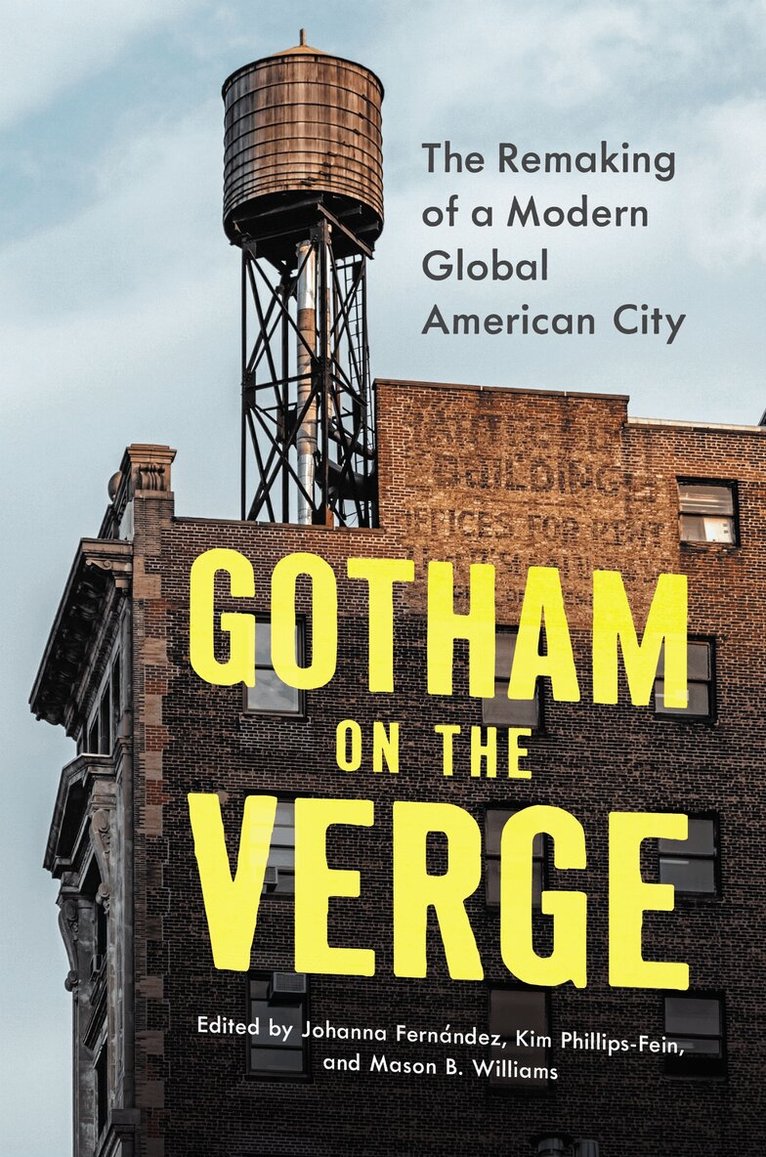
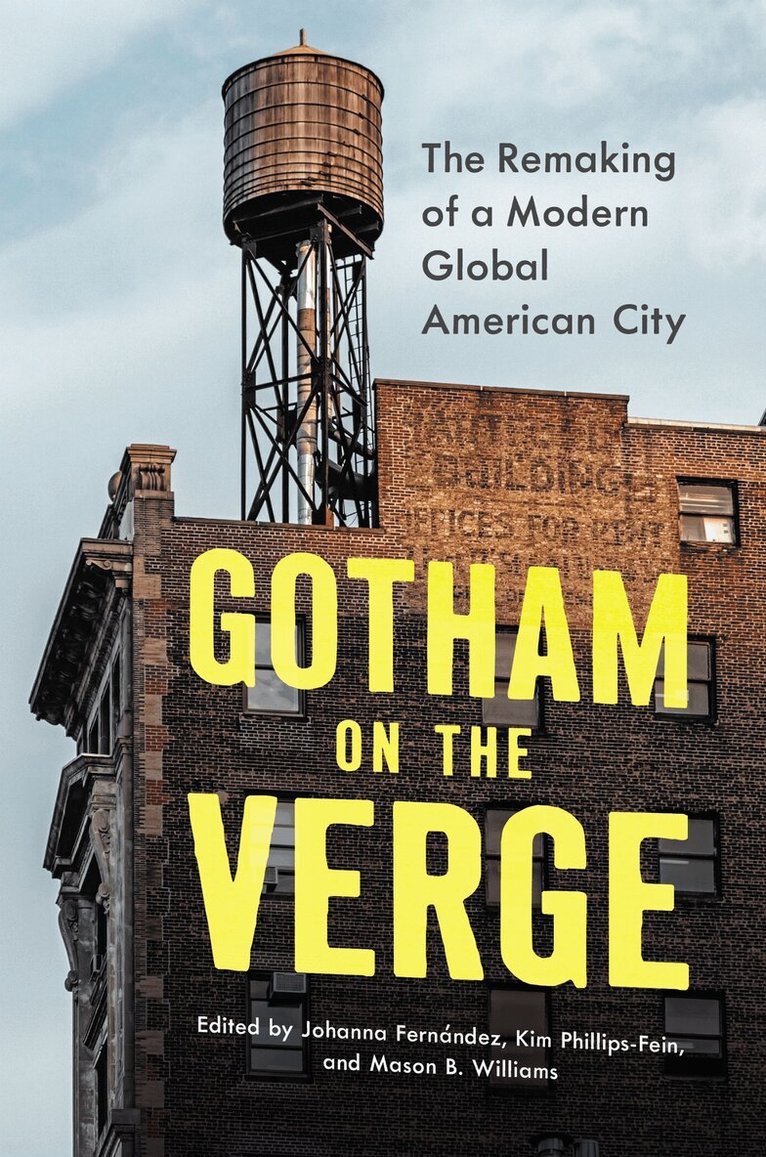
Post-1960s New York City is often imagined as exceptional—too big, too singular, too creative to fit prevailing trajectories of American history. Gotham on the Verge challenges that mythology. In seventeen essays, leading and emerging historians show late-twentieth-century New York not as an outlier but as a crucible for the forces that reshaped the nation. Covering the 1970s through the early 2000s, this volume examines the rise and consequences of post-industrialization, neoliberalism, and financialization during a transformative era in the city’s history. The essays explore deindustrialization, the rise of finance and real estate, the city’s response to the AIDS epidemic, police violence, labor organizing among new immigrants, and the birth of hip hop and experimental art. Writing from the street level up, the contributors center ordinary New Yorkers: residents who challenged stigmatizing media portrayals, Black women who organized against police brutality, and immigrant workers who built coalitions for fair wages. Neither a story of collapse nor comeback, this book traces a city on the verge—revealing how crisis, growth, diversity, and inequality converged to forge modern New York and America. Contributors are Bench Ansfield, Minju Bae, Andy Battle, Salonee Bhaman, Amanda T. Boston, Jim Downs, Ansley T. Erickson, Michael Glass, Dylan Gottlieb, LaShawn Harris, Benjamin Holtzman, Nick Juravich, Lauren Lefty, Sarah Miller, Brian Purnell, Pedro A. Regalado, and Alex S. Vitale.
597 kr
Kommande
Post-1960s New York City is often imagined as exceptional—too big, too singular, too creative to fit prevailing trajectories of American history. Gotham on the Verge challenges that mythology. In seventeen essays, leading and emerging historians show late-twentieth-century New York not as an outlier but as a crucible for the forces that reshaped the nation. Covering the 1970s through the early 2000s, this volume examines the rise and consequences of post-industrialization, neoliberalism, and financialization during a transformative era in the city’s history. The essays explore deindustrialization, the rise of finance and real estate, the city’s response to the AIDS epidemic, police violence, labor organizing among new immigrants, and the birth of hip hop and experimental art. Writing from the street level up, the contributors center ordinary New Yorkers: residents who challenged stigmatizing media portrayals, Black women who organized against police brutality, and immigrant workers who built coalitions for fair wages. Neither a story of collapse nor comeback, this book traces a city on the verge—revealing how crisis, growth, diversity, and inequality converged to forge modern New York and America. Contributors are Bench Ansfield, Minju Bae, Andy Battle, Salonee Bhaman, Amanda T. Boston, Jim Downs, Ansley T. Erickson, Michael Glass, Dylan Gottlieb, LaShawn Harris, Benjamin Holtzman, Nick Juravich, Lauren Lefty, Sarah Miller, Brian Purnell, Pedro A. Regalado, and Alex S. Vitale.