Murray J. Leaf – författare
Visar alla böcker från författaren Murray J. Leaf. Handla med fri frakt och snabb leverans.
10 produkter
10 produkter
402 kr
Skickas inom 7-10 vardagar
This is the first major study of a Sikh community in Central Punjab to appear in the modern anthropological literature. Perhaps because this historically and economically important people and region have been so long neglected, they present certain important contradictions or paradoxes in terms of commonly accepted generalization about Indian village life. Thus, the villagers describe their Sikh religion as Hindu, yet insist that it forbids observance of caste restrictions. They are sincere in their beliefs and scrupulous in their performance to ritual, yet retain caste identifications and in certain contexts use caste terms for address. They have a strong factional organization, but it cuts across both kin and caste lines; moreover, many villagers remain aloof from factions, and those sho do belong frequently "forget" their quarrels and cooperate. Finally, the villagers are intensely concerned with trade and profit-making, yet resort ot many practices in a labor-intensive system that scholars have termed characteristic of a "subsistence" or "traditional" economy as distinct from a "market" or a "traditional" one. Instead of attempting to resolve these contradictions or to attribute them to a process of social breakdown, Leaf takes the view that they represent a stable, pervasive condition of social life. He capitalizes on their clarity in a particular village to draw attention to two elements of social theory that he regards as of general importance. His overall strategy of analysis places each seemingly contradictory element in its proper context, and then ascertains how these contexts are related to one another and to the behavior of the villagers. The first of the theoretical concepts that he develops for this purpose is a modified version of the idea of a "message source," used in information theory, permitting observation and isolation of socially defined conventions that result from behavior and affect it in turn. The second concept is a view of behavior as individual actions that respond to such social constraints, obtain support, and ultimately feed back into the social system--a cyclical model of social communication on an individual level. Use of these two concepts sets aside "total system theory," which has attracted mounting criticism by social and cultural anthropologists, in favor of what may be termed a "multiple system theory." Two important practical results of this shift in perspective are general heightening of empirical accuracy of analysis and an enhance insights into the ways that dynamica change, cooperation, and competition inhere in all social organization. This title is part of UC Press's Voices Revived program, which commemorates University of California Press's mission to seek out and cultivate the brightest minds and give them voice, reach, and impact. Drawing on a backlist dating to 1893, Voices Revived makes high-quality, peer-reviewed scholarship accessible once again using print-on-demand technology. This title was originally published in 1972.
1 469 kr
Skickas inom 3-6 vardagar
This is the first major study of a Sikh community in Central Punjab to appear in the modern anthropological literature. Perhaps because this historically and economically important people and region have been so long neglected, they present certain important contradictions or paradoxes in terms of commonly accepted generalization about Indian village life. Thus, the villagers describe their Sikh religion as Hindu, yet insist that it forbids observance of caste restrictions. They are sincere in their beliefs and scrupulous in their performance to ritual, yet retain caste identifications and in certain contexts use caste terms for address. They have a strong factional organization, but it cuts across both kin and caste lines; moreover, many villagers remain aloof from factions, and those sho do belong frequently "forget" their quarrels and cooperate. Finally, the villagers are intensely concerned with trade and profit-making, yet resort ot many practices in a labor-intensive system that scholars have termed characteristic of a "subsistence" or "traditional" economy as distinct from a "market" or a "traditional" one. Instead of attempting to resolve these contradictions or to attribute them to a process of social breakdown, Leaf takes the view that they represent a stable, pervasive condition of social life. He capitalizes on their clarity in a particular village to draw attention to two elements of social theory that he regards as of general importance. His overall strategy of analysis places each seemingly contradictory element in its proper context, and then ascertains how these contexts are related to one another and to the behavior of the villagers. The first of the theoretical concepts that he develops for this purpose is a modified version of the idea of a "message source," used in information theory, permitting observation and isolation of socially defined conventions that result from behavior and affect it in turn. The second concept is a view of behavior as individual actions that respond to such social constraints, obtain support, and ultimately feed back into the social system--a cyclical model of social communication on an individual level. Use of these two concepts sets aside "total system theory," which has attracted mounting criticism by social and cultural anthropologists, in favor of what may be termed a "multiple system theory." Two important practical results of this shift in perspective are general heightening of empirical accuracy of analysis and an enhance insights into the ways that dynamica change, cooperation, and competition inhere in all social organization. This title is part of UC Press's Voices Revived program, which commemorates University of California Press's mission to seek out and cultivate the brightest minds and give them voice, reach, and impact. Drawing on a backlist dating to 1893, Voices Revived makes high-quality, peer-reviewed scholarship accessible once again using print-on-demand technology. This title was originally published in 1972.
581 kr
Skickas inom 10-15 vardagar
The world’s “great” religions depend on traditions of serious scholarship, dedicated to preserving their key texts but also to understanding them and, therefore, to debating what understanding itself is and how best to do it. They also have important public missions of many kinds, and their ideas and organizations influence many other important institutions, including government, law, education, and kinship. Anthropology of Eastern Religions: Ideas, Organizations, and Constituencies is a comparative survey of the world’s major religious traditions as professional enterprises and, often, as social movements. Documenting the principle ideas behind eastern religious traditions from an anthropological perspective, Murray J. Leaf demonstrates how these ideas have been used in building internal organizations that mobilize or fail to mobilize external support.
675 kr
Skickas inom 10-15 vardagar
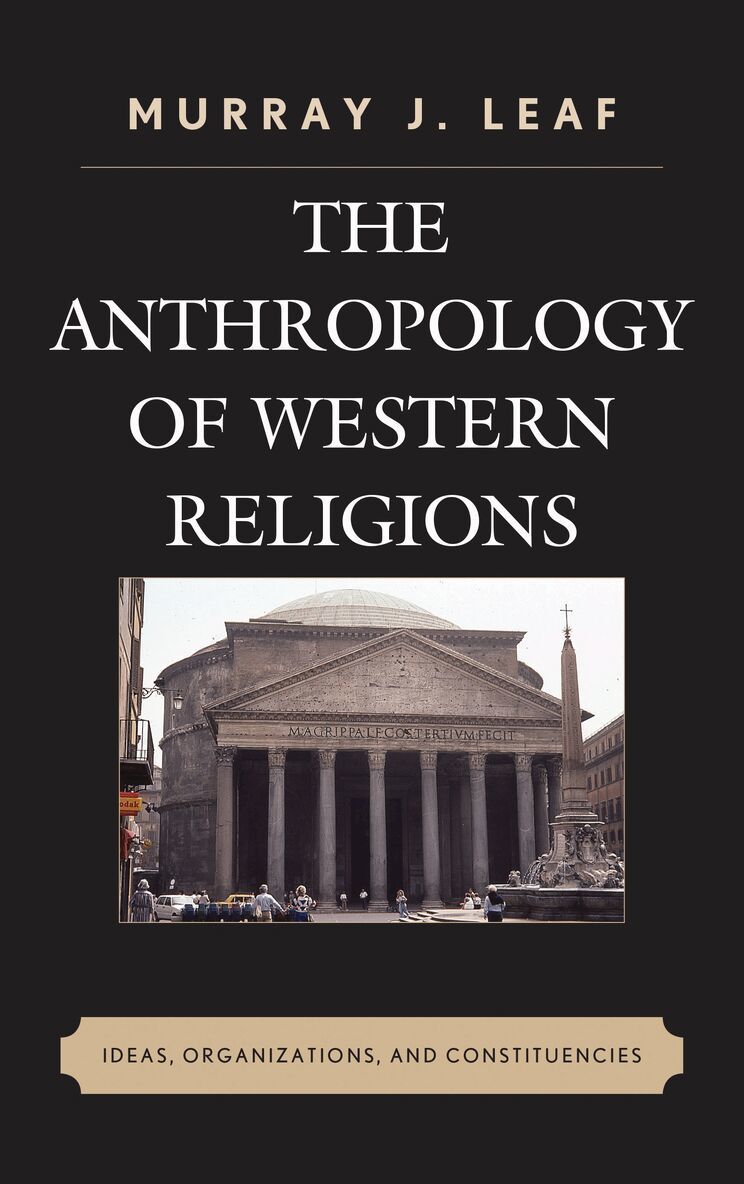
The world’s “great” religions depend on traditions of serious scholarship, dedicated to preserving their key texts but also to understanding them and, therefore, to debating what understanding itself is and how best to do it. They also have important public missions of many kinds, and their ideas and organizations influence many other important institutions, including government, law, education, and kinship. The Anthropology of Western Religions: Ideas, Organizations, and Constituencies is a comparative survey of the world’s major religious traditions as professional enterprises and, often, as social movements. Documenting the principle ideas behind Western religious traditions from an anthropological perspective, Murray J. Leaf demonstrates how these ideas have been used in building internal organizations that mobilize or fail to mobilize external support.
808 kr
Skickas inom 10-15 vardagar
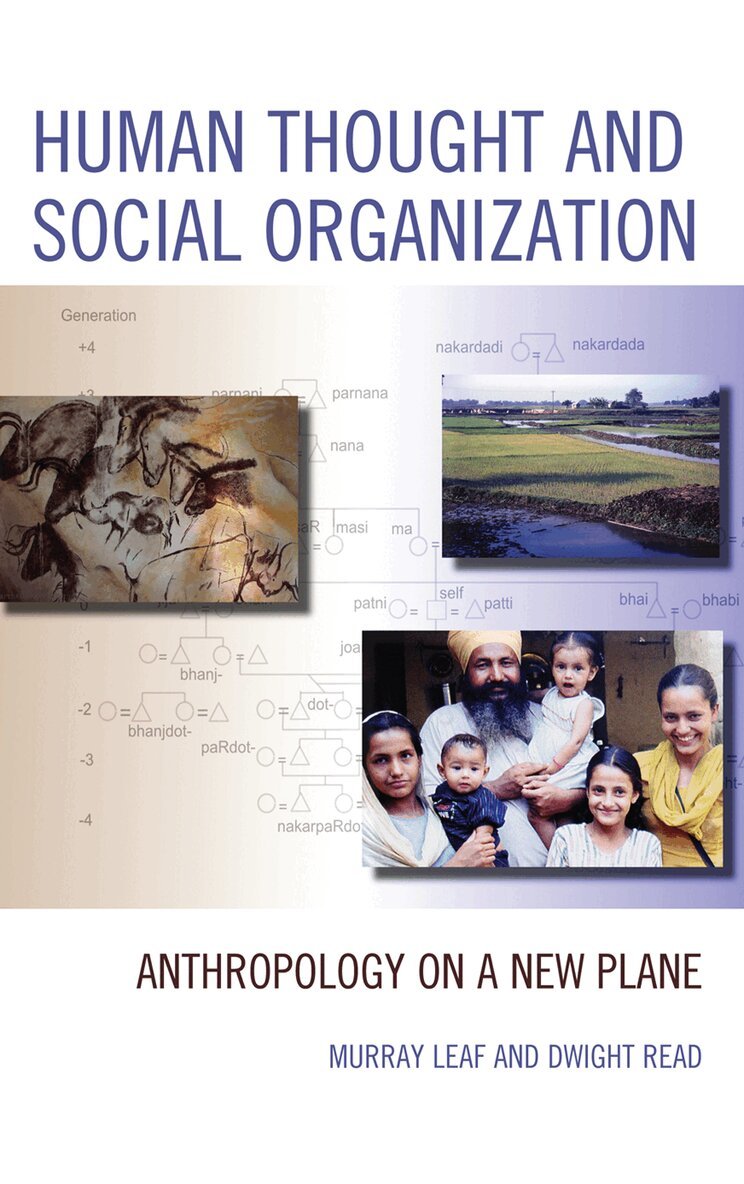
Human beings have two outstanding characteristics compared to all other species: the apparently enormous elaboration of our thought through language and symbolism and the elaboration of our forms of social organization. The view taken in Human Thought and Social Organization: Anthropology on a New Plane is that these are intimately interconnected. To understand this connection, the book compares the structure of the systems of thought that organizations are built upon with the organizational basis of human thinking as such. An experimental method is used, leading to a new science of the structure of human social organizations in two senses. First, it gives rise to a new kind of ethnology that has the combination of empirical solidity and formal analytical rigor associated with the “paradigmatic” sciences. Second, it makes evident that social organizations have distinctive properties and require distinctive explanations of a sort that cannot be reduced to the explanations drawn from, or grounded in, these other sciences.Human social organizations are created by people using systems of ideas with very specific logical properties. This book describes what these idea-systems are with an unbroken chain of analysis that begins with field elicitation, and continues by working out their most fundamental, logico-mathematical generative elements. This enables us to see precisely how these idea systems are used to generate organizations that give pattern to ongoing behavior. The book shows how organizations are objectified by community members through symbolic representations that provide them with shared conceptions of organizations, roles, or relations that they see each other as participating in. The case for this constructive process being pan-Homo sapiens is described, spanning all human communities from the Upper Paleolithic to today, and from the most seemingly primitive Australian tribes to modern-day America and India. While focusing primarily on kinship, Human Thought and Social Organization shows how the analysis applies with equal precision to other social areas ranging from farming to political factionalism.
617 kr
Kommande
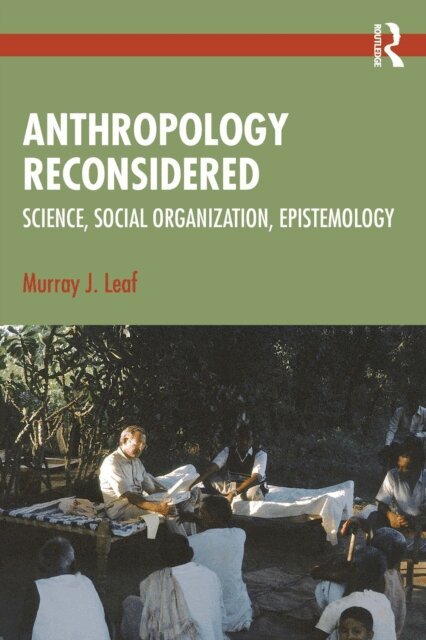
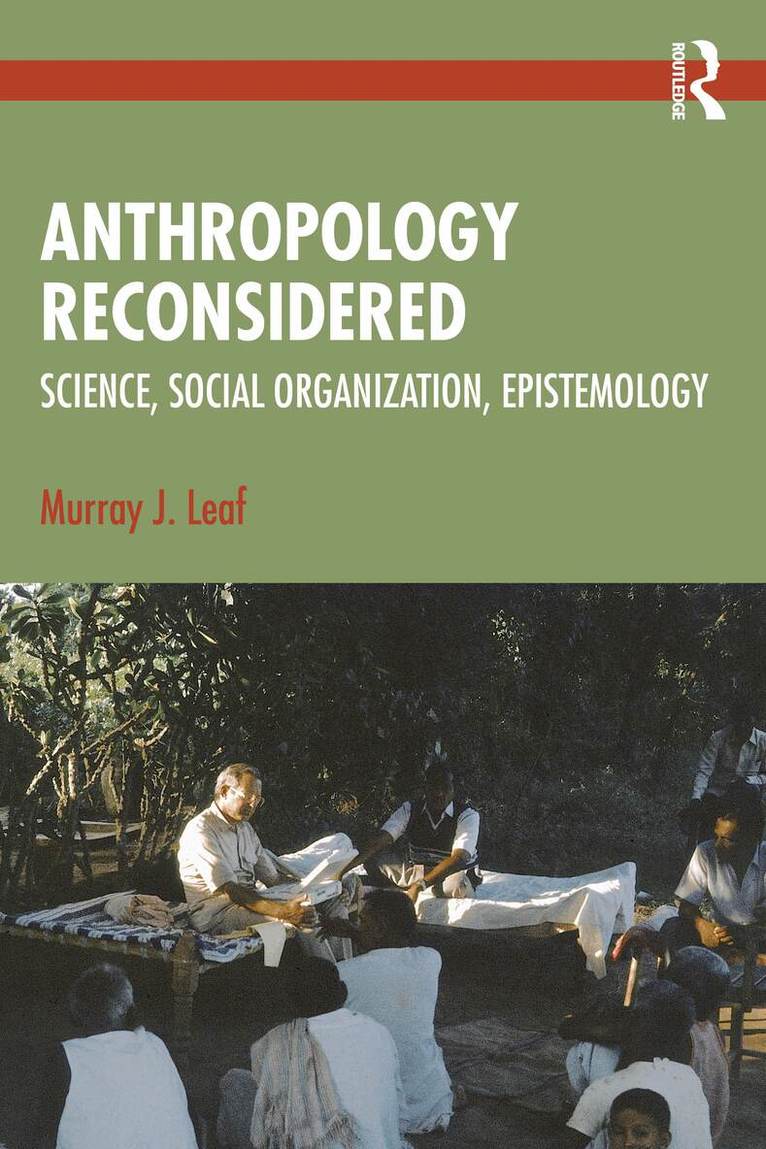
Anthropology Reconsidered argues that anthropology can and should be considered a genuine science of humanity. The work traces the evolution of anthropological thought from its 18th-century origins through contemporary debates, analyzing how competing epistemological traditions—empirical/skeptical versus dogmatic—have shaped theoretical approaches to social organization and kinship studies.The book provides a comprehensive historical framework that includes the development of empirical theories of social organization, extensive ethnology of ethnology itself, philosophy of science perspectives, crucial political history including the New Deal and Vietnam War, and a detailed introduction to epistemology as the essential link between empirical ethnology and psychology. The central argument demonstrates that ethnology now possesses a complete empirical theory of social organization based on experimental methods for analyzing the idea-systems that construct social organizations, effectively placing anthropology "on a new plane" with findings on the same empirical footing as the physical sciences.The primary audience includes student and professional anthropologists, particularly ethnologists, along with historians of ethnology, social psychologists, sociologists, philosophers of science, and intellectual historians, written to be accessible while maintaining scholarly rigor and international relevance.
2 258 kr
Kommande
Anthropology Reconsidered argues that anthropology can and should be considered a genuine science of humanity. The work traces the evolution of anthropological thought from its 18th-century origins through contemporary debates, analyzing how competing epistemological traditions—empirical/skeptical versus dogmatic—have shaped theoretical approaches to social organization and kinship studies.The book provides a comprehensive historical framework that includes the development of empirical theories of social organization, extensive ethnology of ethnology itself, philosophy of science perspectives, crucial political history including the New Deal and Vietnam War, and a detailed introduction to epistemology as the essential link between empirical ethnology and psychology. The central argument demonstrates that ethnology now possesses a complete empirical theory of social organization based on experimental methods for analyzing the idea-systems that construct social organizations, effectively placing anthropology "on a new plane" with findings on the same empirical footing as the physical sciences.The primary audience includes student and professional anthropologists, particularly ethnologists, along with historians of ethnology, social psychologists, sociologists, philosophers of science, and intellectual historians, written to be accessible while maintaining scholarly rigor and international relevance.
1 435 kr
Skickas inom 10-15 vardagar
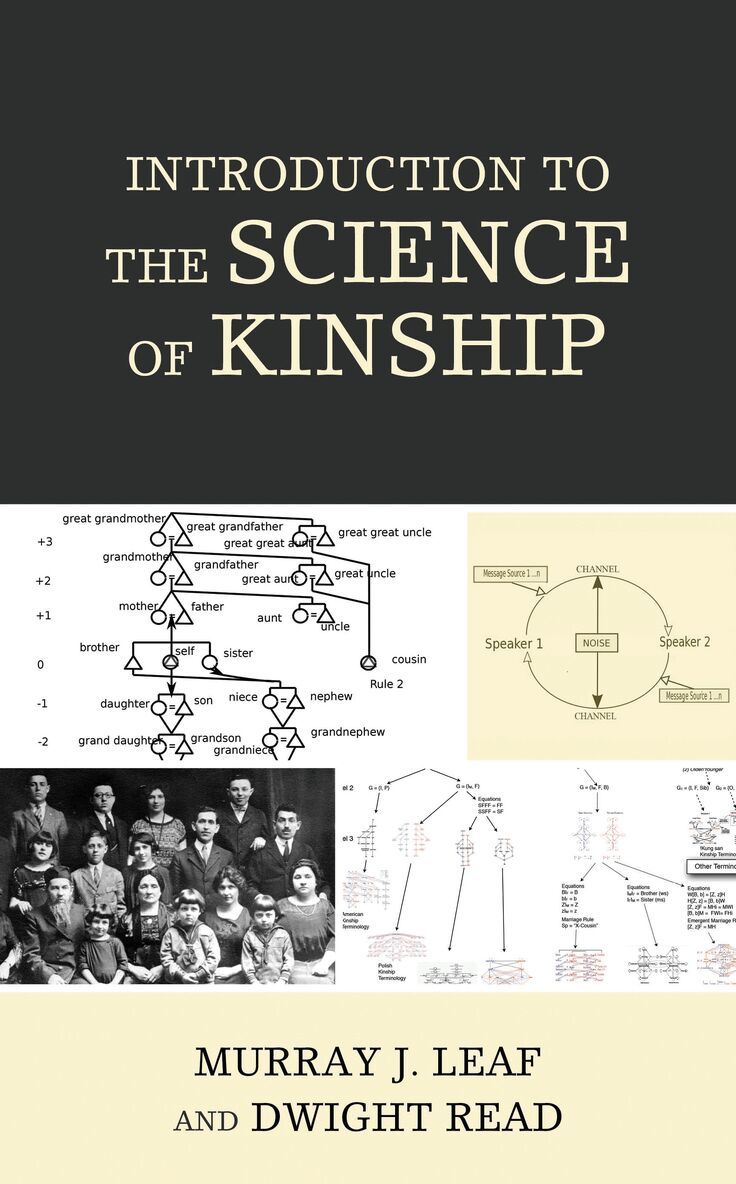
In Introduction to the Science of Kinship, Murray J. Leaf and Dwight Read show how humans use specific systems of social ideas to organize their kinship relations and illustrate what this implies for the science of human social organization. Leaf and Read explain that every human society has multiple social organizations, each of which is associated with a distinct vocabulary. This vocabulary is associated with interrelated definitions of social roles and relations. These roles and relations have four specific logical properties: reciprocity, transitivity, boundedness, and imaginary spatial dimensionality. These properties allow individuals to use them in communication to create ongoing, agreed-upon, organizations. This book is recommended for scholars of anthropology, sociology, linguistics, and mathematics.
Anthropology of Academic Governance and Institutional Democracy
The Community of Scholars in America
Häftad, Engelska, 2018
827 kr
Skickas inom 10-15 vardagar
This anthropological study of university governance organizations has four main purposes. It aims to describe the principles of effective faculty governance organizations and shared governance; to help mobilize opposition to a large and extremely well-funded system of political attacks aimed at destroying faculty governance organizations;
Anthropology of Academic Governance and Institutional Democracy
The Community of Scholars in America
Inbunden, Engelska, 2018
827 kr
Skickas inom 10-15 vardagar
This anthropological study of university governance organizations has four main purposes. It aims to describe the principles of effective faculty governance organizations and shared governance; to help mobilize opposition to a large and extremely well-funded system of political attacks aimed at destroying faculty governance organizations;