Dwight Read – författare
Visar alla böcker från författaren Dwight Read. Handla med fri frakt och snabb leverans.
2 produkter
2 produkter
808 kr
Skickas inom 10-15 vardagar
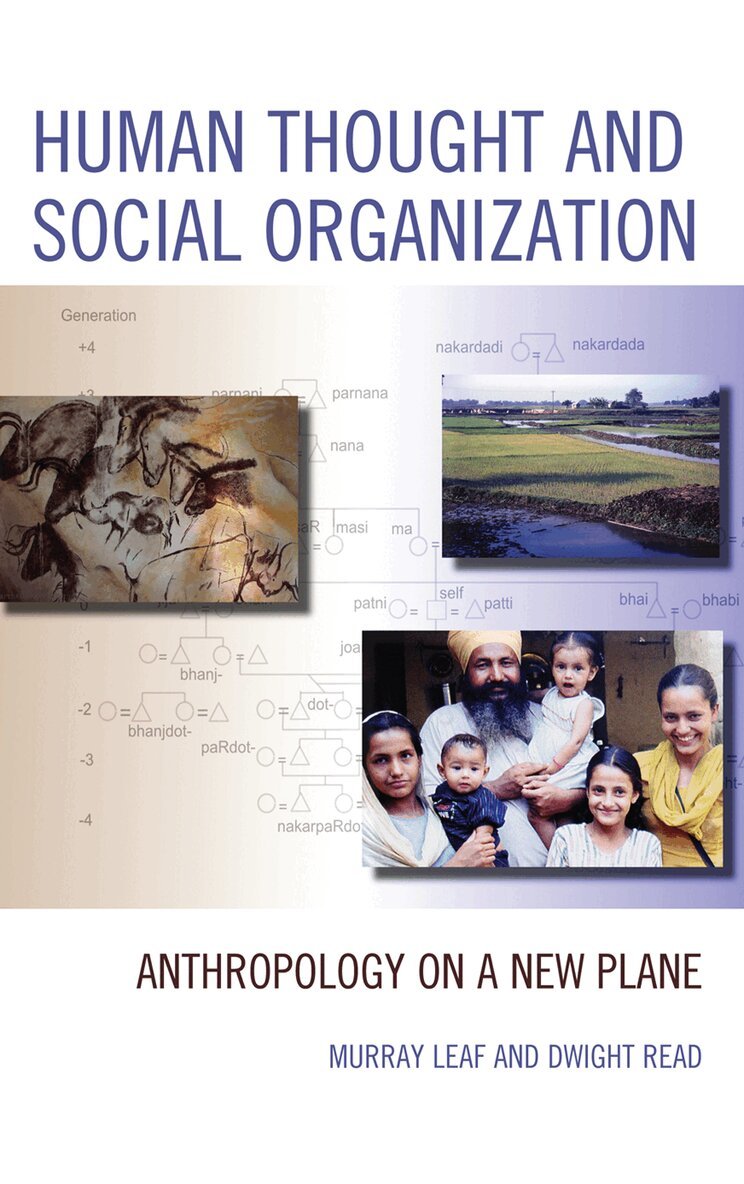
Human beings have two outstanding characteristics compared to all other species: the apparently enormous elaboration of our thought through language and symbolism and the elaboration of our forms of social organization. The view taken in Human Thought and Social Organization: Anthropology on a New Plane is that these are intimately interconnected. To understand this connection, the book compares the structure of the systems of thought that organizations are built upon with the organizational basis of human thinking as such. An experimental method is used, leading to a new science of the structure of human social organizations in two senses. First, it gives rise to a new kind of ethnology that has the combination of empirical solidity and formal analytical rigor associated with the “paradigmatic” sciences. Second, it makes evident that social organizations have distinctive properties and require distinctive explanations of a sort that cannot be reduced to the explanations drawn from, or grounded in, these other sciences.Human social organizations are created by people using systems of ideas with very specific logical properties. This book describes what these idea-systems are with an unbroken chain of analysis that begins with field elicitation, and continues by working out their most fundamental, logico-mathematical generative elements. This enables us to see precisely how these idea systems are used to generate organizations that give pattern to ongoing behavior. The book shows how organizations are objectified by community members through symbolic representations that provide them with shared conceptions of organizations, roles, or relations that they see each other as participating in. The case for this constructive process being pan-Homo sapiens is described, spanning all human communities from the Upper Paleolithic to today, and from the most seemingly primitive Australian tribes to modern-day America and India. While focusing primarily on kinship, Human Thought and Social Organization shows how the analysis applies with equal precision to other social areas ranging from farming to political factionalism.
1 435 kr
Skickas inom 10-15 vardagar
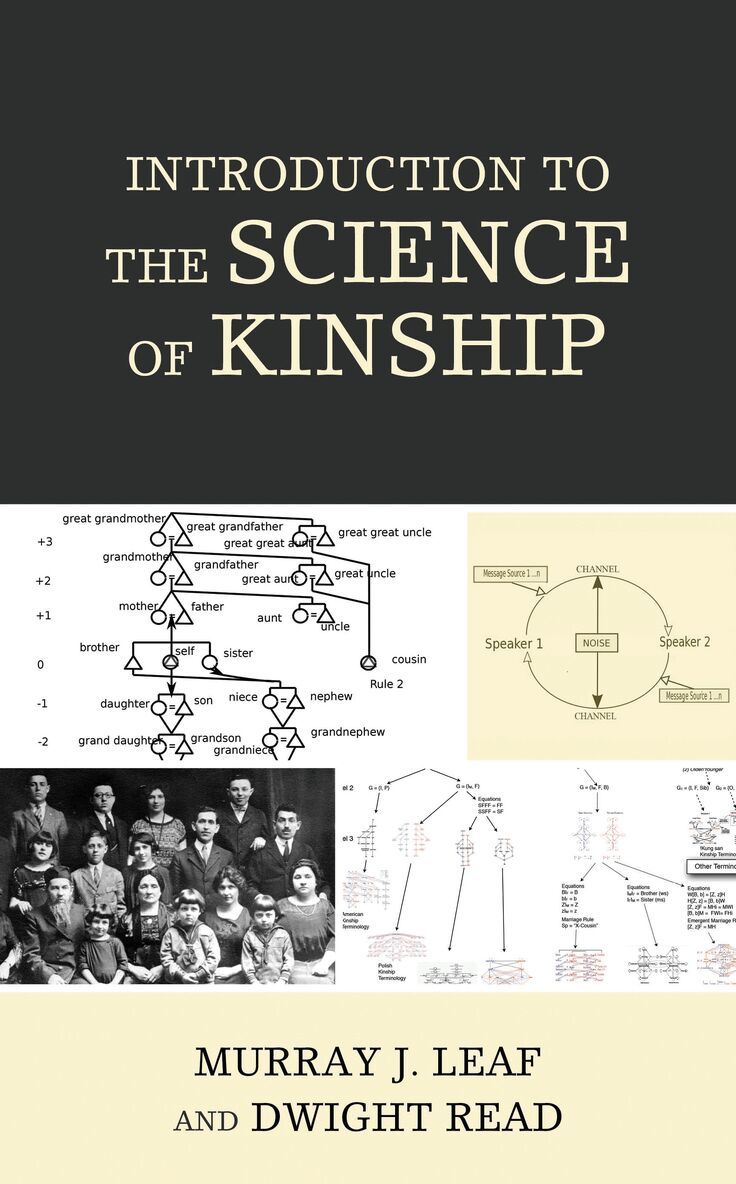
In Introduction to the Science of Kinship, Murray J. Leaf and Dwight Read show how humans use specific systems of social ideas to organize their kinship relations and illustrate what this implies for the science of human social organization. Leaf and Read explain that every human society has multiple social organizations, each of which is associated with a distinct vocabulary. This vocabulary is associated with interrelated definitions of social roles and relations. These roles and relations have four specific logical properties: reciprocity, transitivity, boundedness, and imaginary spatial dimensionality. These properties allow individuals to use them in communication to create ongoing, agreed-upon, organizations. This book is recommended for scholars of anthropology, sociology, linguistics, and mathematics.