• Fri frakt över 249 kr
  • •
  • Snabba leveranser
  • •
  • Billiga böcker
Kundservice

Du är på sajten för privatpersoner.

Företag, bibliotek eller offentlig verksamhet?

Du handlar på classic.bokus.com, där alla dina funktioner finns intakta.
Till classic.bokus.com
Bokus logotyp. Gå till startsidan.
  • Erbjudanden
  • Nyheter
  • Student
  • Topplistor
  • Barn & ungdom
  • Bokus Play
  • E-böcker
  • Pocketböcker
  • Spel & pussel

Må bättre, för mindre! Upp till 50% rabatt på hälsoböcker

Sidfot

Mina sidor

    Hjälp

    • Kundservice
    • Vanliga frågor och svar
    • Frakt och leverans
    • Retur vid ångerrätt
    • Reklamera vara
    • Betalning
    • Köpvillkor
    • Allmänna villkor
    • Information om webbplatsens tillgänglighet

    Om Bokus

    • Om oss
    • Pressrum
    • För studenter
    • För företag
    • För bibliotek och offentlig verksamhet
    • För leverantörer
    • Hållbarhet

    Populärt

    • Aktuella erbjudanden
    • Presentkort
    • Studentlitteratur
    • Nya böcker
    • Topplistor
    • Signerade böcker
    • Engelska böcker

    Inspiration

    • Boktips
    • BookTok
    • Populära bokserier
    • Barnbokskaraktärer
    • Populära författare
    Logotyp för Bokus
    Följ oss på Facebook (extern länk)Följ oss på Instagram (extern länk)Följ oss på YouTube (extern länk)Följ oss på TikTok (extern länk)
    bokus @ CookiesAnpassa cookiesIntegritetspolicyKöpvillkor
    Till Citymail hemsida (extern länk)Till Budbee hemsida (extern länk)Till Postnord hemsida (extern länk)Till Schenker hemsida (extern länk)Till Early Bird hemsida (extern länk)Till Walleys hemsida (extern länk)
    1. Samhälle och politik
    2. Sociologi och antropologi
    3. Antropologi

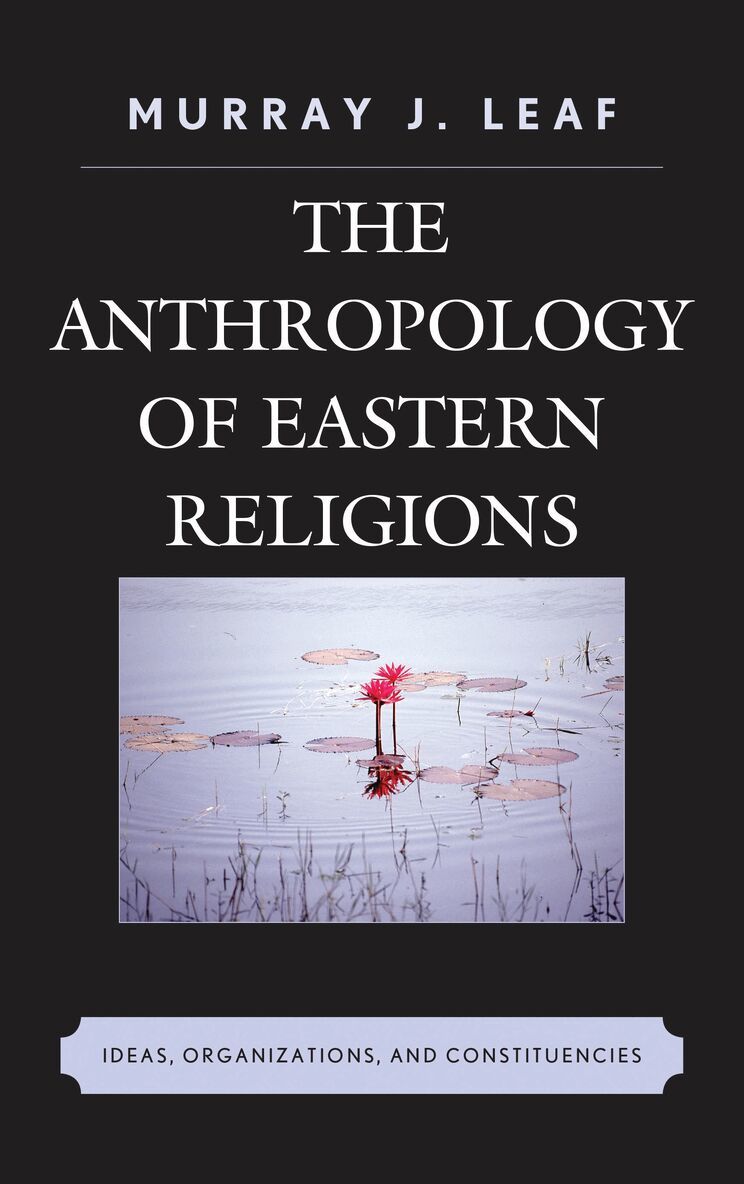
    Anthropology of Eastern Religions

    Ideas, Organizations, and Constituencies

    AvMurray J. Leaf

    Häftad, Engelska, 2016

    604 kr

    Beställningsvara. Skickas inom 10-15 vardagar. Fri frakt över 249 kr.

    Beskrivning

    The world’s “great” religions depend on traditions of serious scholarship, dedicated to preserving their key texts but also to understanding them and, therefore, to debating what understanding itself is and how best to do it. They also have important public missions of many kinds, and their ideas and organizations influence many other important institutions, including government, law, education, and kinship. Anthropology of Eastern Religions: Ideas, Organizations, and Constituencies is a comparative survey of the world’s major religious traditions as professional enterprises and, often, as social movements. Documenting the principle ideas behind eastern religious traditions from an anthropological perspective, Murray J. Leaf demonstrates how these ideas have been used in building internal organizations that mobilize or fail to mobilize external support.

    Produktinformation

    • Utgivningsdatum:2016-03-03
    • Mått:149 x 230 x 14 mm
    • Vikt:299 g
    • Format:Häftad
    • Språk:Engelska
    • Antal sidor:194
    • Förlag:Bloomsbury Publishing Plc
    • ISBN:9780739194904

    Utforska kategorier

    • Antropologi inom Samhälle och politik
    • Sociala grupper och identitet inom Samhälle och politik
    • Andra religioner och trosföreställningar inom Filosofi och religion

    Mer om författaren

    Murray J. Leaf is professor of anthropology and political economy at the University of Texas at Dallas.

    Recensioner i media

    Leaf offers a careful, useful, and balanced study of the anthropology of Eastern and Western religions. Rather than focusing on the philosophy or theology of religion, these volumes discuss religious traditions' ideas about organized human life; the institutions, strategies, and organizations they create to facilitate community; and their constituencies. One volume treats early Vedantic, Jain, Buddhist, Hindu, Chinese, and Japanese traditions and practices. The other volume investigates what generally are considered Western religious traditions because of their widespread influence in Europe and the Americas. Arctic, African, and American Indian cultures are omitted. Leaf economically sets up each volume with introductory chapters that have similar structures but tailor specific content to the volume at hand. Both volumes offer literature reviews rather than anthropological field observations. Eastern Religions begins with a reflection on Vedantan thinking: what 'all experience manifests, and that cannot in any way be shaped or injured by experience.' Next, Leaf offers a philosophical discussion of the Four Noble Truths, right knowledge, rebirth, and organizations before taking up the Buddhist traditions that flowed from Siddhartha's experiences. The discussion of Hinduism focuses on sociological/anthropological concerns, including the Laws of Manu, caste, and property rights, before turning to the gods and bhakti (the guru-disciple relationship). Leaf discusses violence in connection with the Mahabharata and the Bhagavad-Gita. He identifies Sikhism (the Indian religion he knows best) as the most vital of the Indian religions; discusses Sikh organizations, gurdwaras, and institutions; and describes Sikh ceremonies. The discussion of Taoism is confined to beliefs, and Buddhism is treated only briefly. Chinese legalism is subsumed under law, control, and legitimacy. The equally ambitious volume on Western religions describes the backgrounds to medieval and modern Western culture, then moves on to Judaism (from the Bible to the present), early Christianity, Islam, and later Christianity. . . .Leaf writes for a general university-type audience, and does not presuppose knowledge of the history of any of the Western religions. His discussion of African American churches reveals his in-depth knowledge of socioeconomic issues. Both volumes include photographs, some by the author. Summing Up: Recommended. Lower-level undergraduates through graduate students; general readers.

    Innehållsförteckning

    • PrefaceAcknowledgmentsList of IllustrationsChapter 1: IntroductionChapter 2: Vedas and Vedanta Chapter 3: Jain and Buddhist TraditionsChapter 4: Hindu TraditionsChapter 5: China’s Main ReligionsChapter 6: Japan’s Religions TraditionsChapter 7: ConclusionBibliographyIndex