Nancy McGuire Roche - Böcker
Visar alla böcker från författaren Nancy McGuire Roche. Handla med fri frakt och snabb leverans.
4 produkter
4 produkter
1 355 kr
Skickas inom 10-15 vardagar
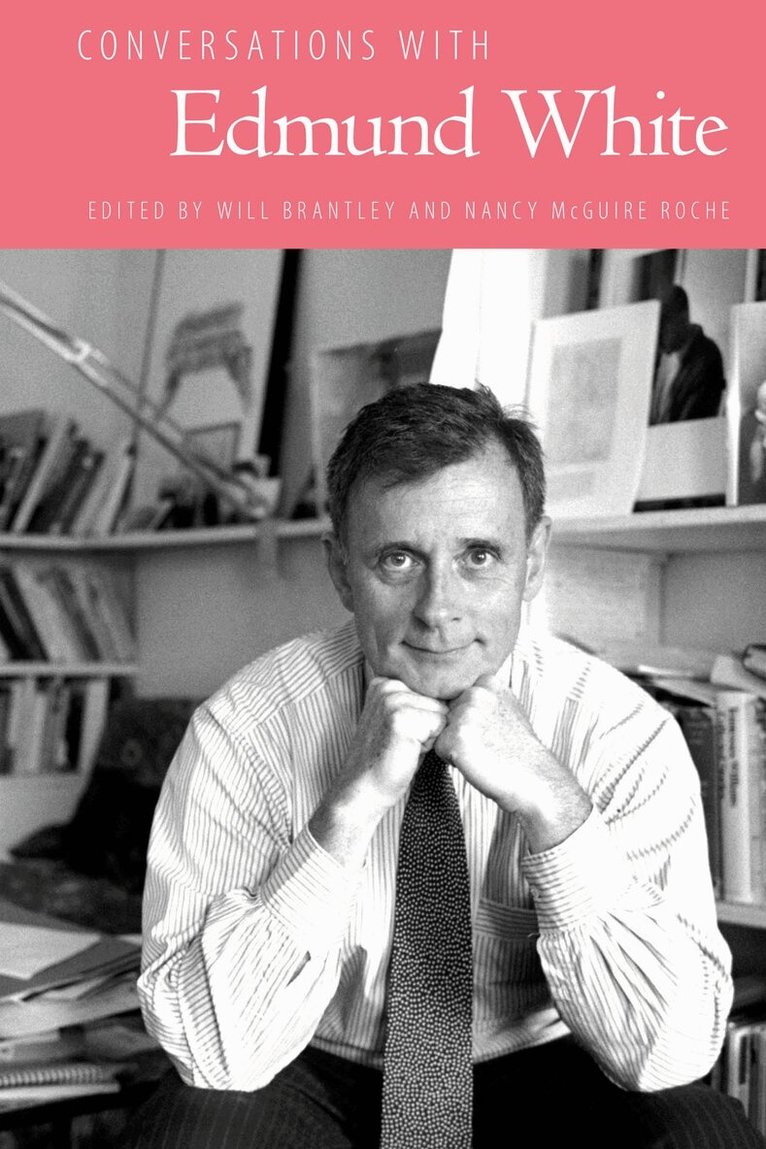
Conversations with Edmund White brings together twenty-one interviews with an author known for chronicling gay culture. Ranging from a 1982 discussion of his early works to a new and unpublished interview conducted in 2016, these interviews highlight White’s predilections, his major achievements, and the pivotal moments of his long, varied career.Since the 1973 publication of his first novel, Forgetting Elena, Edmund White (b. 1940) has become a major figure in literature and gay culture. White is, however, more than just a celebrated gay writer. He is an international man of letters, and his work crosses several genres. White’s fiction includes an autobiographical trilogy—A Boy’s Own Story, The Beautiful Room Is Empty, and The Farewell Symphony—along with more recent novels such as Jack Holmes and His Friend and Our Young Man. White’s love of French literature and culture is evident in biographies of Jean Genet, Marcel Proust, and Arthur Rimbaud, and his antipathy to American Puritanism suffuses his collected essays and memoirs and is on full display in two early nonfiction works that helped define the era of gay liberation: The Joy of Gay Sex, coauthored with Charles Silverstein, and States of Desire: Travels in Gay America.A professor of creative writing at Princeton University, White has earned many distinctions, including the National Book Critics Circle Award and the Lambda Literary Foundation’s Pioneer Award. White has been a generous interviewer, sharing his time and insights not only with major publications such as the Paris Review, but also with smaller online publications for more limited audiences. A lively commentator, White has never been afraid to speak his mind, even when the result has been public feuds with literary peers on both sides of the Atlantic.
360 kr
Skickas inom 10-15 vardagar
Conversations with Edmund White brings together twenty-one interviews with an author known for chronicling gay culture. Ranging from a 1982 discussion of his early works to a new and unpublished interview conducted in 2016, these interviews highlight White’s predilections, his major achievements, and the pivotal moments of his long, varied career.Since the 1973 publication of his first novel, Forgetting Elena, Edmund White (b. 1940) has become a major figure in literature and gay culture. White is, however, more than just a celebrated gay writer. He is an international man of letters, and his work crosses several genres. White’s fiction includes an autobiographical trilogy—A Boy’s Own Story, The Beautiful Room Is Empty, and The Farewell Symphony—along with more recent novels such as Jack Holmes and His Friend and Our Young Man. White’s love of French literature and culture is evident in biographies of Jean Genet, Marcel Proust, and Arthur Rimbaud, and his antipathy to American Puritanism suffuses his collected essays and memoirs and is on full display in two early nonfiction works that helped define the era of gay liberation: The Joy of Gay Sex, coauthored with Charles Silverstein, and States of Desire: Travels in Gay America.A professor of creative writing at Princeton University, White has earned many distinctions, including the National Book Critics Circle Award and the Lambda Literary Foundation’s Pioneer Award. White has been a generous interviewer, sharing his time and insights not only with major publications such as the Paris Review, but also with smaller online publications for more limited audiences. A lively commentator, White has never been afraid to speak his mind, even when the result has been public feuds with literary peers on both sides of the Atlantic.
1 078 kr
Kommande
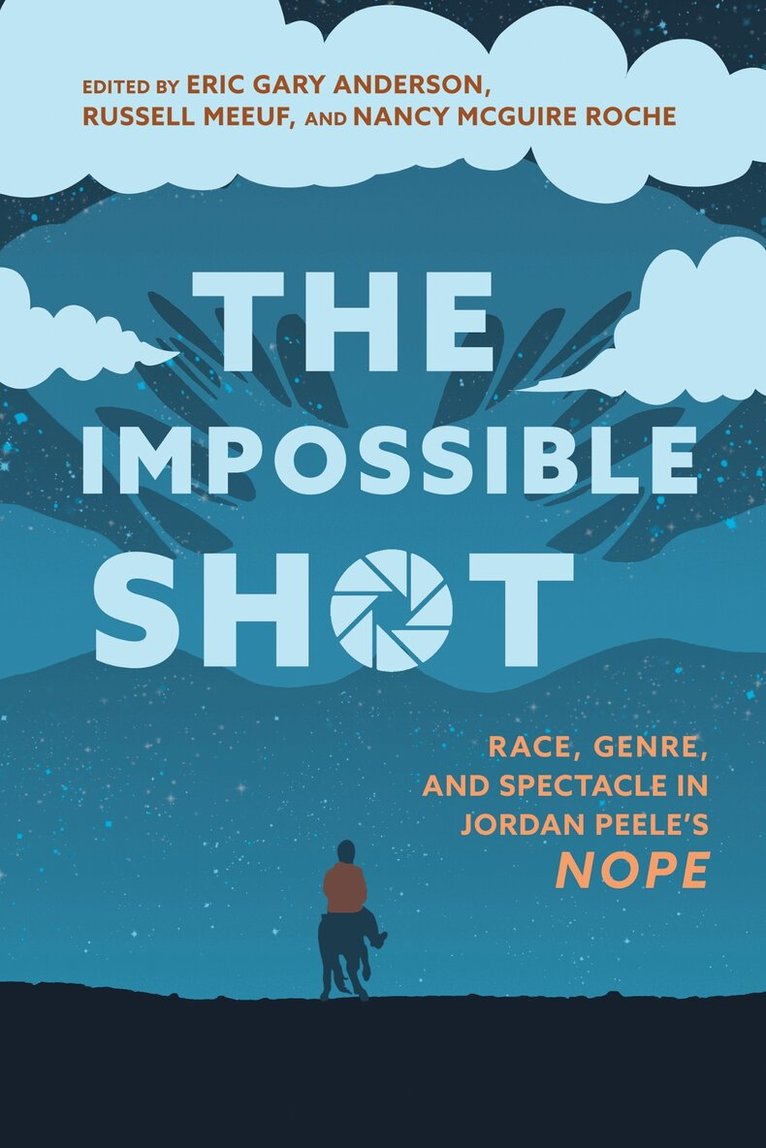
Contributions by Eric Gary Anderson, Hatice Bay, Thomas Britt, Robert Burgoyne, Emily Diane Burkett, Jack Finucane, Adam Hebert, Noemí Fernández Labarga, Russell Meeuf, Wade Newhouse, Isaiah Frost Rivera, Nancy McGuire Roche, Laurent Shervington, Amira Shokr, James Steck, Christy Tidwell, and Lauren Tocci After the commercial and critical success of 2017’s Get Out, Jordan Peele quickly established himself as an exciting and innovative auteur with a knack for reinventing Hollywood’s genres through the lens of contemporary race relations. With a focus on horror, his films invert the racial preoccupations of an industry that, especially since the mid-2000s, has been fixated on white fears and anxieties. A highly anticipated cinematic event, the release of Nope (2022), Peele’s newest meditation on race, filmmaking, and media spectacle, did not disappoint. The Impossible Shot: Race, Genre, and Spectacle in Jordan Peele’s "Nope" explores the director's latest film from a variety of perspectives and situates Nope within his larger work, alongside the growing body of scholarship on Peele and the political turn in post-Trump US horror. His third film offered a sprawling, epic, sci-fi, Western, family melodrama focused on those at the margins of Hollywood image making. This collection offers groups of essays organized around three interconnected themes: Nope’s interrogation of media spectacle and the politics of gazing in the social media era; its expansive intertextuality and layers of pop culture referents; and its investment in positioning animals and ecology into a narrative about media and consumption. By teasing out the nuances and complexity of Peele’s work, this volume will appeal to film and media scholars; teachers and students exploring issues of race, media, genre, or Peele as a director; and fans of horror in general.
297 kr
Kommande
Contributions by Eric Gary Anderson, Hatice Bay, Thomas Britt, Robert Burgoyne, Emily Diane Burkett, Jack Finucane, Adam Hebert, Noemí Fernández Labarga, Russell Meeuf, Wade Newhouse, Isaiah Frost Rivera, Nancy McGuire Roche, Laurent Shervington, Amira Shokr, James Steck, Christy Tidwell, and Lauren Tocci After the commercial and critical success of 2017’s Get Out, Jordan Peele quickly established himself as an exciting and innovative auteur with a knack for reinventing Hollywood’s genres through the lens of contemporary race relations. With a focus on horror, his films invert the racial preoccupations of an industry that, especially since the mid-2000s, has been fixated on white fears and anxieties. A highly anticipated cinematic event, the release of Nope (2022), Peele’s newest meditation on race, filmmaking, and media spectacle, did not disappoint. The Impossible Shot: Race, Genre, and Spectacle in Jordan Peele’s "Nope" explores the director's latest film from a variety of perspectives and situates Nope within his larger work, alongside the growing body of scholarship on Peele and the political turn in post-Trump US horror. His third film offered a sprawling, epic, sci-fi, Western, family melodrama focused on those at the margins of Hollywood image making. This collection offers groups of essays organized around three interconnected themes: Nope’s interrogation of media spectacle and the politics of gazing in the social media era; its expansive intertextuality and layers of pop culture referents; and its investment in positioning animals and ecology into a narrative about media and consumption. By teasing out the nuances and complexity of Peele’s work, this volume will appeal to film and media scholars; teachers and students exploring issues of race, media, genre, or Peele as a director; and fans of horror in general.