Nick Malherbe - Böcker
Visar alla böcker från författaren Nick Malherbe. Handla med fri frakt och snabb leverans.
7 produkter
7 produkter
469 kr
Skickas inom 10-15 vardagar
Psychoanalytic Liberation Psychology challenges conventional psychological paradigms by developing a radical approach where psychoanalysis meets liberation psychology. Drawing from his psycho-political work in South Africa, Nick Malherbe articulates how this approach functions as a powerful counterforce to capitalism's psychological grip on society and individuals. Rather than presenting a definitive framework, this book offers theoretical insights alongside concrete case reflections that illuminate both the generative potential and inherent challenges of this work. Malherbe invites readers to participate in an ongoing dialogue about what psychoanalytic liberation psychology could become.Psychoanalytic Liberation Psychology creates space for critical discourse about the role of both psychoanalysis and liberation psychology in anti-capitalist social movements. It will be essential reading for psychoanalysts, psychologists, and scholars across disciplines and will provide valuable insights for academics in psychoanalytic studies and psycho-political fields, while remaining accessible to practitioners seeking to integrate liberatory approaches into their work.
2 045 kr
Skickas inom 10-15 vardagar
Psychoanalytic Liberation Psychology challenges conventional psychological paradigms by developing a radical approach where psychoanalysis meets liberation psychology. Drawing from his psycho-political work in South Africa, Nick Malherbe articulates how this approach functions as a powerful counterforce to capitalism's psychological grip on society and individuals. Rather than presenting a definitive framework, this book offers theoretical insights alongside concrete case reflections that illuminate both the generative potential and inherent challenges of this work. Malherbe invites readers to participate in an ongoing dialogue about what psychoanalytic liberation psychology could become.Psychoanalytic Liberation Psychology creates space for critical discourse about the role of both psychoanalysis and liberation psychology in anti-capitalist social movements. It will be essential reading for psychoanalysts, psychologists, and scholars across disciplines and will provide valuable insights for academics in psychoanalytic studies and psycho-political fields, while remaining accessible to practitioners seeking to integrate liberatory approaches into their work.
Liberation Psychology and Refusal
Confronting Capitalist Alienation, Ideology, and Nature
Häftad, Engelska, 2026
605 kr
Kommande
To refuse is to assume a stance against that which is. We take up refusal when we push back, disinvest, ignore, and move away from. Although we tend to acknowledge the political character of refusal, the psychological character of our struggles to refuse is often not given requisite attention. Neglecting to grapple with refusal’s psychological components can, however, have fracturing, detrimental effects on our political struggles. This book considers what it might mean to wield psychology for purposes of refusal – a rather complicated task when we consider that most of psychology has sought to pathologise, manage, or individualise refusal.The book grapples with three anti-capitalist refusals that have been advanced in the liberation psychology tradition, namely: de-alienation, de-ideologisation, and de-naturalisation. Each of these refusals is fleshed out with a reflection on a practical example from the author’s community-engaged work in South Africa. Thus, the book seeks to demonstrate how we might put refusal’s conceptual components into practice. In this, readers are offered a set of praxis-oriented modalities through which to honour refusal within the liberation psychology paradigm.The book is intended for academics, educators, psychological practitioners, and students interested in drawing from critical, anti-capitalist traditions within psychology and perhaps, also, outside of psychology.
Liberation Psychology and Refusal
Confronting Capitalist Alienation, Ideology, and Nature
Inbunden, Engelska, 2026
2 176 kr
Kommande
To refuse is to assume a stance against that which is. We take up refusal when we push back, disinvest, ignore, and move away from. Although we tend to acknowledge the political character of refusal, the psychological character of our struggles to refuse is often not given requisite attention. Neglecting to grapple with refusal’s psychological components can, however, have fracturing, detrimental effects on our political struggles. This book considers what it might mean to wield psychology for purposes of refusal – a rather complicated task when we consider that most of psychology has sought to pathologise, manage, or individualise refusal.The book grapples with three anti-capitalist refusals that have been advanced in the liberation psychology tradition, namely: de-alienation, de-ideologisation, and de-naturalisation. Each of these refusals is fleshed out with a reflection on a practical example from the author’s community-engaged work in South Africa. Thus, the book seeks to demonstrate how we might put refusal’s conceptual components into practice. In this, readers are offered a set of praxis-oriented modalities through which to honour refusal within the liberation psychology paradigm.The book is intended for academics, educators, psychological practitioners, and students interested in drawing from critical, anti-capitalist traditions within psychology and perhaps, also, outside of psychology.
1 134 kr
Skickas inom 10-15 vardagar
Anti-capitalist political struggle is a site of struggling psychologies. The book also offers several theoretical contributions that grapple with how an anti-capitalist psychology of community can remain attentive to the psychological elements of anti-capitalist struggle;
1 134 kr
Skickas inom 10-15 vardagar
Anti-capitalist political struggle is a site of struggling psychologies. The book also offers several theoretical contributions that grapple with how an anti-capitalist psychology of community can remain attentive to the psychological elements of anti-capitalist struggle;
3 390 kr
Skickas inom 10-15 vardagar
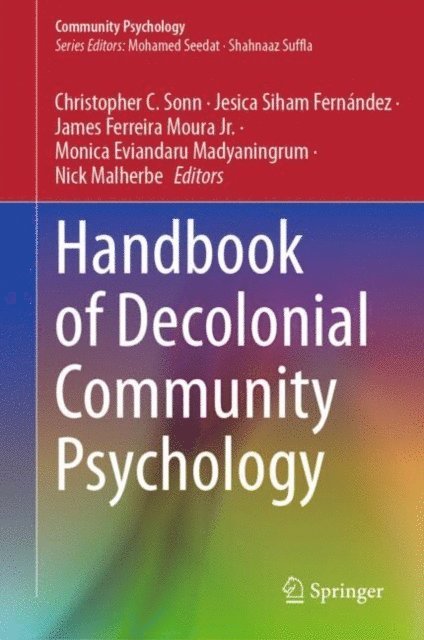
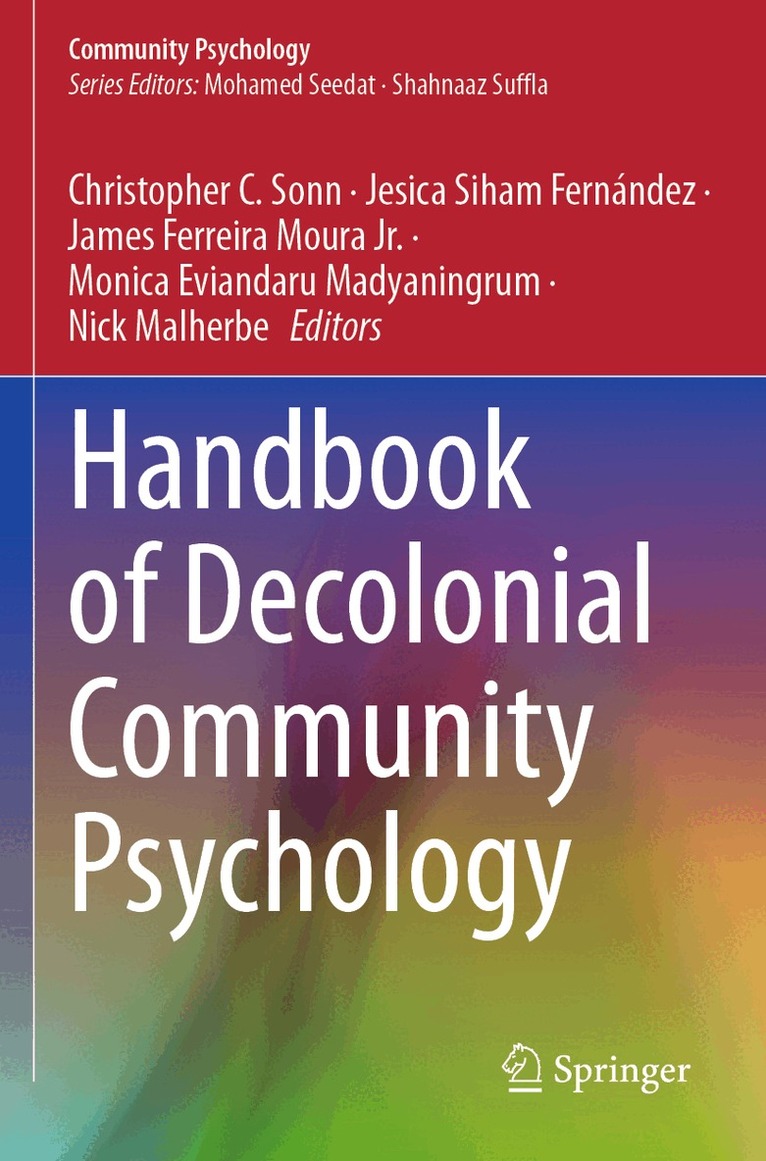
This handbook offers refined interpretations of decolonial thought, methodologies, and practices in community psychology. As a representative mapping of the broad range of decolonial cosmovisions, experiences, and praxes in community psychology and allied disciplines around the globe, it brings together contributions from North America, Latin America, Europe, Oceania, Africa, and Asia. It offers an overview of community psychology with a decolonial focus and from a transnational perspective, transcending intellectual, geographical, and cultural borders, and constraining identities, affirming and celebrating the unique identities, experiences, and positions of its contributors within the global landscape of knowledge and politics.The handbook illuminates the dynamic intersections between resistance and colonial legacies, foregrounding the enduring struggles against settler colonialism and racial capitalism across diverse geographies, temporalities, and histories. Underscoring the urgency of addressing inter-connected local and global challenges, such as land rights, livelihoods, and dignified existence, it offers hopeful yet critical perspectives on radical social justice struggles around the globe.The volume brings together contributions from scholars, academics, educators, researchers, practitioners, activists, and community collaborators, and its chapters range in style and format. Some are more aligned with academic writing, while others - in the spirit of decolonizing disciplinary logics - are structured through more undisciplined, less constrained writing forms. Each author was invited to question the coloniality of power in and beyond community psychology. As such, the handbook contains productions that trouble the manifestations of coloniality both in the past and in the present, as well as in the different territories of the Majority World, particularly within settler colonial nation-states.As a seminal work, the Handbook of Decolonial Community Psychology will further define and shape the contours of knowledge in decolonial community psychology, and inspire new generations of scholars, practitioners, students, and community organizers to advance the field with innovative ideas and transformative practices.