Philip Britts - Böcker
Visar alla böcker från författaren Philip Britts. Handla med fri frakt och snabb leverans.
4 produkter
4 produkter
99 kr
Tillfälligt slut
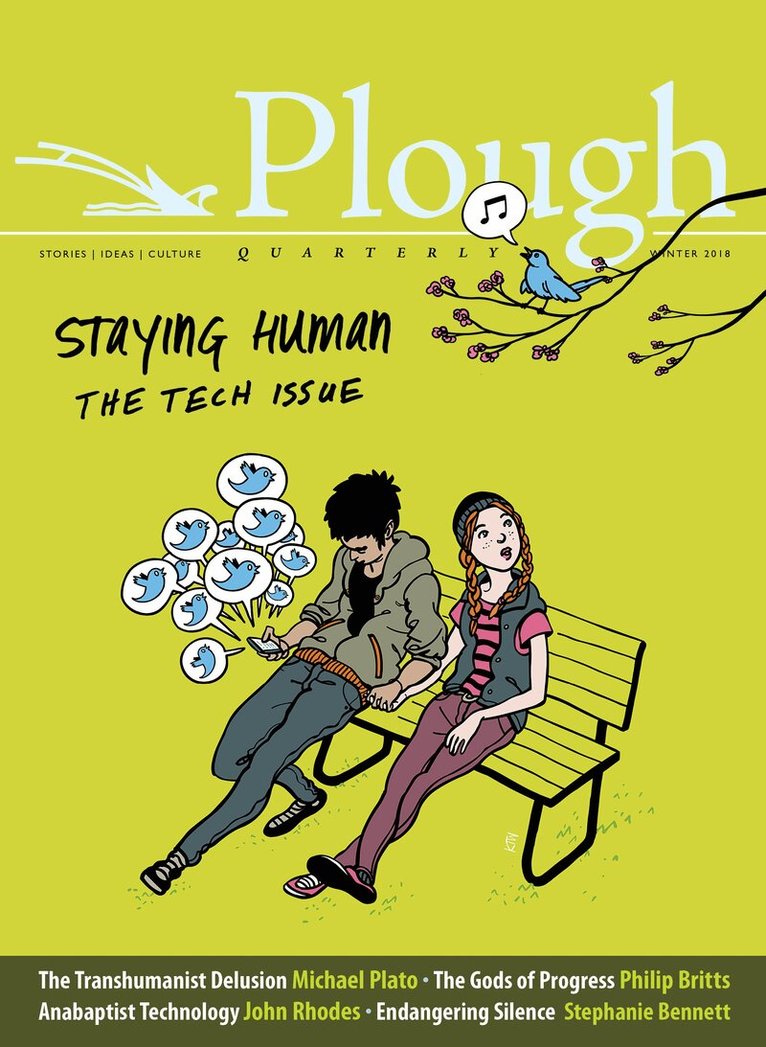
This issue of Plough Quarterly explores the effects of technology on human flourishing.Whether its artificial intelligence, genome editing, Big Tech monopolies, or social media–induced depression, we live in a world that is being reshaped by technology from the ground up. How do we stay human?This issue of Plough Quarterly addresses challenges ranging from the lure of transhumanism to the erosion of silence by the smartphone. Technophobia is no answer, our contributors agree, but neither is a refusal to tackle real dangers. They ask: Why not try living without a computer or a television? Why give tablets to children when Steve Jobs refused to give them to his kids? Why write using a keyboard when you could wield a fountain pen?Technological asceticism of this kind won’t solve society-wide dilemmas. But it can help us maintain the spiritual independence needed to respond to them rightly.Also in this issue: original poetry by Jacob Stratman; reviews of new books by Ian Johnson, Steve Roud, and Markus Rathey; insights from Wendell Berry, Viktor Frankl, Ivan Illich, Carl Sandburg, C. S. Lewis, Alfred Delp, and Christoph Blumhardt; and art by Pieter Bruegel the Elder, Jack Baumgartner, Nicholas Roerich, Rachel Newling, Kay Polk, Suellen McCrary, Stephen Scott Young, Jie Wei Zhou, Kiéra Malone, Torkel Pettersson, Mari Rast, Albrecht Dürer, René Magritte, and Kyle T. Webster.Plough Quarterly features stories, ideas, and culture for people eager to put their faith into action. Each issue brings you in-depth articles, interviews, poetry, book reviews, and art to help you put Jesus’ message into practice and find common cause with others.
156 kr
Skickas inom 5-8 vardagar
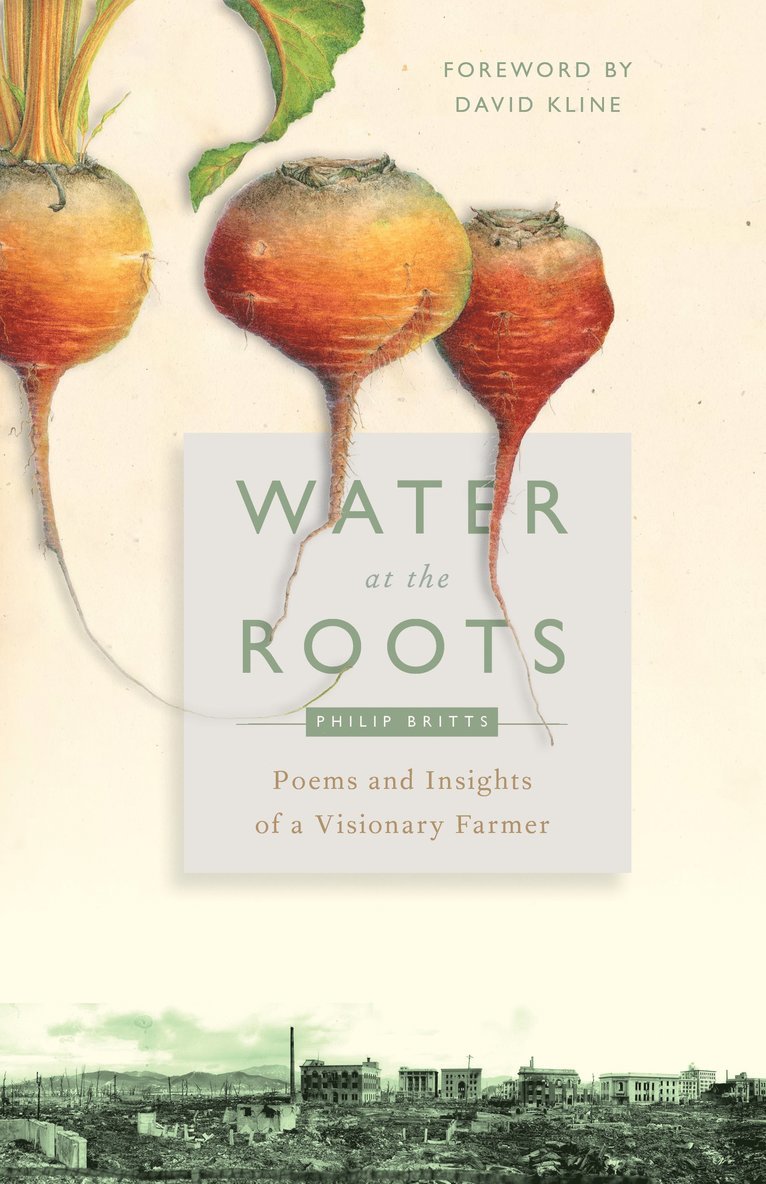
In a society uprooted by two world wars, industrialization, and dehumanizing technology, a revolutionary farmer turns to poetry to reconnect his people to the land and one another.A farmer, poet, activist, pastor, and mystic, Britts (1917–1949) has been called a British Wendell Berry. His story is no romantic agrarian elegy, but a life lived in the thick of history. As his country plunged headlong into World War II, he joined an international pacifist community, the Bruderhof, and was soon forced to leave Europe for South America.Amidst these great upheavals, his response – to root himself in faith, to dedicate himself to building community, to restore the land he farmed, and to use his gift with words to turn people from their madness – speaks forcefully into our time. In an age still wracked by racism, nationalism, materialism, and ecological devastation, the life he chose and the poetry he composed remain a prophetic challenge.
100 kr
Skickas inom 5-8 vardagar
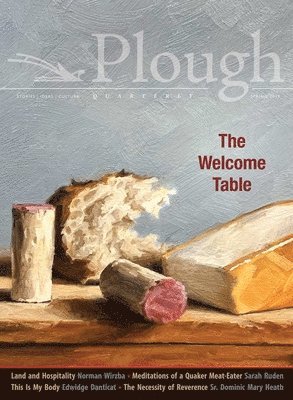
Food – how it’s grown, how it’s shared – makes us who we are. This issue traces the connections between farm and food, between humus and human. According to the first book of the Bible, tending the earth was humankind’s first task: “The Lord God planted a garden in Eden, in the east; and there he put the man whom he had formed” (Gen. 2:8). The desire to get one’s hands dirty raising one’s own food, then, doesn’t just come from modern romanticism, but is built into human nature.The title, “The Welcome Table,” comes from a spiritual first sung by enslaved African-Americans. The song refers to the Bible’s closing scene, the wedding feast of the Lamb described in the Book of Revelation, to which every race, tribe, and tongue are invited – a divine pledge of a day of freedom and freely shared plenty, of earth renewed and humanity restored. In the case of food, the symbol is the substance. Every meal, if shared generously and with radical hospitality, is already now a taste of the feast to come.Also in this issue: poetry by Luci Shaw; reviews of books by Julia Child, Robert Farrar Capon, Peter Mayle, Albert Woodfox, and Maria von Trapp; and art by Michael Naples, Sieger Köder, Carl Juste, André Chung, Ángel Bracho, Winslow Homer, Raymond Logan, Sybil Andrews, Cameron Davidson, and Jason Landsel.Plough Quarterly features stories, ideas, and culture for people eager to put their faith into action. Each issue brings you in-depth articles, interviews, poetry, book reviews, and art to help you put Jesus’ message into practice and find common cause with others.
100 kr
Tillfälligt slut
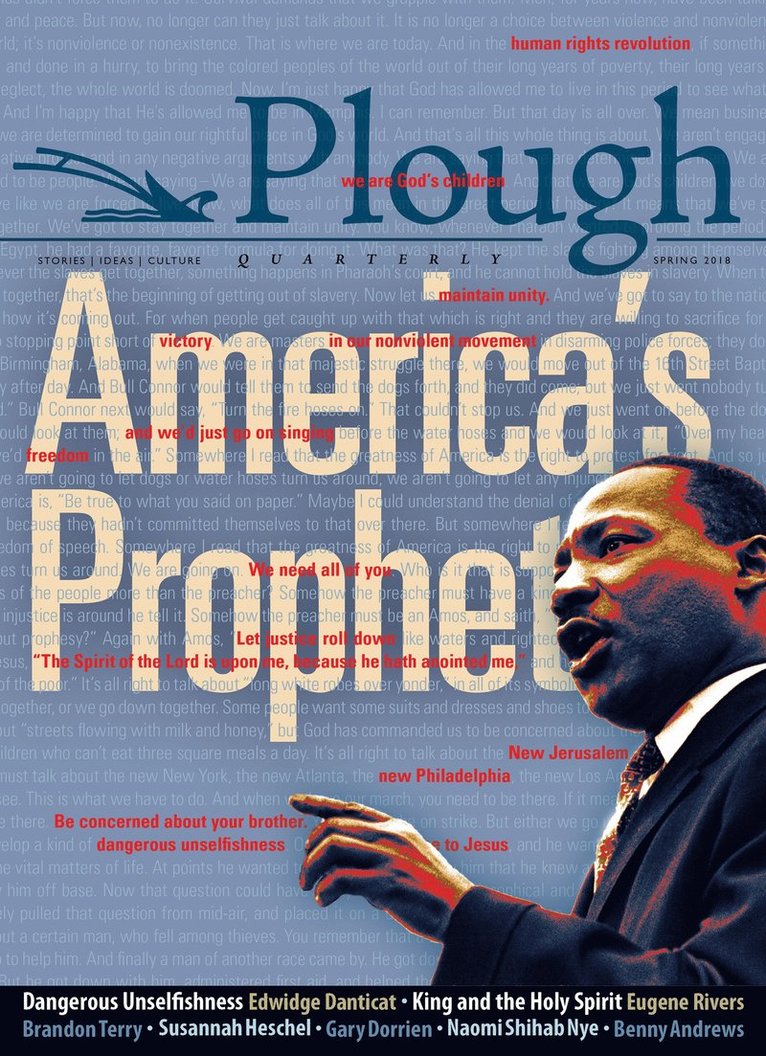
What if Martin Luther King Jr., this name-branded, oft-sanitized preacher from Atlanta, is a prophet whose message America has yet to fully reckon with?Ten days before Martin Luther King Jr.’s assassination, Rabbi Abraham Joshua Heschel said, “Where in America today do we hear a voice like the voice of the prophets of Israel? Martin Luther King is a sign that God has not forsaken the United States of America. God has sent him to us.” What if Heschel’s words about King are true? What if this name-branded, oft-sanitized, Super-Bowl-ad-commercialized, National-Mall-memorialized preacher from Atlanta . . . is a prophet whose message America has yet to fully reckon with? This issue of Plough Quarterly looks at King’s unfinished struggle against the three evils of racism, materialism, and militarism. Perspectives from Edwidge Danticat, Gary Dorrien, Brandon M. Terry, D. L. Mayfield, Eugene Rivers, and Susannah Heschel explore the ways King’s message of nonviolence, justice, and love of neighbor still matters today: to refugees and immigrants, soldiers and veterans, preachers and prisoners, black lives matter activists and the white working class.Also in this issue: original poetry by Naomi Shihab Nye; reviews of new books by James Forman Jr., Steve Krivák, Jim Forest, and Christopher de Hamel; and art by Yvan Lamothe, Roberson Joseph, Barry Moser, Benny Andrews, Zoe Cromwell, Julian Peters, Asuka Hishiki, Mark Smith, Mary Kang, Marc Chagall,John Partipilo, Yuri Kozyrev, Vinicius Barajas, Iain Stewart, Giovanni Bellini.Plough Quarterly features stories, ideas, and culture for people eager to put their faith into action. Each issue brings you in-depth articles, interviews, poetry, book reviews, and art to help you put Jesus’ message into practice and find common cause with others.