Rachel Falconer - Böcker
Visar alla böcker från författaren Rachel Falconer. Handla med fri frakt och snabb leverans.
12 produkter
12 produkter
2 401 kr
Skickas inom 10-15 vardagar
A Quest for Remembrance: The Underworld in Classical and Modern literature brings together a range of arguments exploring connections between the descent into the underworld, also known as katabasis, and various forms of memory. Its chapters investigate the uses of the descent topos both in antiquity and in the reception of classical literature in the nineteenth to twenty-first centuries. In the process, the volume explores how the hero’s quest into the underworld engages with the theme of recovering memories from the past. At the same time, we aim to foreground how the narrative format itself is concerned with forms of commemoration ranging from trans-cultural memory, remembering the literary and intellectual canon, to commemorating important historical events that might otherwise be forgotten. Through highlighting this duality this collection aims to introduce the descent narrative as its own literary genre, a ‘memorious genre’ related to but distinct from the quest narrative.
803 kr
Skickas inom 10-15 vardagar
"Highly recommended" by ChoiceWhile crossover books such as Rowling's Harry Potter series have enjoyed enormous sales and media attention, critical analysis of crossover fiction has not kept pace with the growing popularity of this new category of writing and reading. Falconer remedies this lack with close readings of six major British works of crossover fiction, and a wide-ranging analysis of the social and cultural implications of the global crossover phenomenon. A uniquely in-depth study of the crossover novel, Falconer engages with a ground-breaking range of sources, from primary texts, to child and adult reader responses, to cultural and critical theory.
2 478 kr
Skickas inom 10-15 vardagar
"Highly recommended" by ChoiceWhile crossover books such as Rowling's Harry Potter series have enjoyed enormous sales and media attention, critical analysis of crossover fiction has not kept pace with the growing popularity of this new category of writing and reading. Falconer remedies this lack with close readings of six major British works of crossover fiction, and a wide-ranging analysis of the social and cultural implications of the global crossover phenomenon. A uniquely in-depth study of the crossover novel, Falconer engages with a ground-breaking range of sources, from primary texts, to child and adult reader responses, to cultural and critical theory.
1 672 kr
Skickas inom 7-10 vardagar
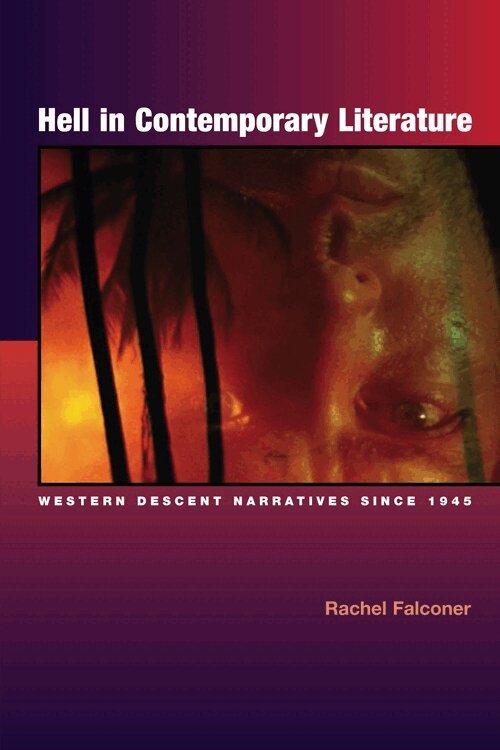
What does it mean when people use the word 'Hell' to convey the horror of an actual, personal or historical experience? Now available in paperback, this book explores the idea that modern, Western secular cultures have retained a belief in the concept of Hell as an event or experience of endless or unjust suffering. In the contemporary period, the descent to Hell has come to represent the means of recovering - or discovering - selfhood. In exploring these ideas, this book discusses descent journeys in Holocaust testimony and fiction, memoirs of mental illness, and feminist, postmodern and postcolonial narratives written after 1945. A wide range of texts are discussed, including writing by Primo Levi, W.G. Sebald, Anne Michaels, Alasdair Gray, and Salman Rushdie, and films such as Coppola’s Apocalypse Now and the Matrix trilogy. Drawing on theoretical writing by Bakhtin, Levinas, Derrida, Judith Butler, David Harvey and Paul Ricoeur, the book addresses such broader theoretical issues as: narration and identity; the ethics of the subject; trauma and memory; descent as sexual or political dissent; the interrelation of realism and fantasy; and Occidentalism and Orientalism.Key Features*Defines and discusses what constitutes Hell in contemporary secular Western cultures*Relates ideas from psychoanalysis to literary traditions ranging from Virgil and Dante to the present*Explores the concept of Hell in relation to crises in Western thought and identity. e.g. distortions of global capitalism, mental illness, war trauma and incarceration*Explains the significance of this narrative tradition of a 'descent to hell' in the immediate political context of 9/11 and its aftermath
456 kr
Tillfälligt slut
What does it mean when people use the word 'Hell' to convey the horror of an actual, personal or historical experience? Now available in paperback, this book explores the idea that modern, Western secular cultures have retained a belief in the concept of Hell as an event or experience of endless or unjust suffering. In the contemporary period, the descent to Hell has come to represent the means of recovering - or discovering - selfhood. In exploring these ideas, this book discusses descent journeys in Holocaust testimony and fiction, memoirs of mental illness, and feminist, postmodern and postcolonial narratives written after 1945. A wide range of texts are discussed, including writing by Primo Levi, W.G. Sebald, Anne Michaels, Alasdair Gray, and Salman Rushdie, and films such as Coppola’s Apocalypse Now and the Matrix trilogy. Drawing on theoretical writing by Bakhtin, Levinas, Derrida, Judith Butler, David Harvey and Paul Ricoeur, the book addresses such broader theoretical issues as: narration and identity; the ethics of the subject; trauma and memory; descent as sexual or political dissent; the interrelation of realism and fantasy; and Occidentalism and Orientalism.Key Features*Defines and discusses what constitutes Hell in contemporary secular Western cultures*Relates ideas from psychoanalysis to literary traditions ranging from Virgil and Dante to the present*Explores the concept of Hell in relation to crises in Western thought and identity. e.g. distortions of global capitalism, mental illness, war trauma and incarceration*Explains the significance of this narrative tradition of a 'descent to hell' in the immediate political context of 9/11 and its aftermath
725 kr
Skickas inom 10-15 vardagar
A Quest for Remembrance: The Underworld in Classical and Modern literature brings together a range of arguments exploring connections between the descent into the underworld, also known as katabasis, and various forms of memory. Its chapters investigate the uses of the descent topos both in antiquity and in the reception of classical literature in the nineteenth to twenty-first centuries. In the process, the volume explores how the hero’s quest into the underworld engages with the theme of recovering memories from the past. At the same time, we aim to foreground how the narrative format itself is concerned with forms of commemoration ranging from trans-cultural memory, remembering the literary and intellectual canon, to commemorating important historical events that might otherwise be forgotten. Through highlighting this duality this collection aims to introduce the descent narrative as its own literary genre, a ‘memorious genre’ related to but distinct from the quest narrative.
1 711 kr
Kommande
Examining the relationship between these fields for the first time, this book explores a series of surprising affinities between symbolic logic, literature, and AI, from the late-nineteenth century to the present.Shedding light on the relationship between the sciences and the arts, this book examines how writers such as Lewis Carroll, T. S. Eliot, Laura (Riding) Jackson, Samuel Beckett, Italo Calvino, Jorge Luis Borges and Susan Howe both respond to and react against logic. It proposes a new framework to account for this agonistic relationship, arguing that the mathematisation of logic in the mid-nineteenth century created a productive tension between logic and literature, spurring modernist and postmodernist innovations, and catalysing the development of AI.Covering topics such as developments in computing from Ada Lovelace to AI; the cross-fertilisation of logic and literature from Lewis Carroll to Susan Howe; and recent advances in digital texts and neural nets, this book also speaks eloquently to contemporary concerns about artificial intelligence and the fate of the humanities.
635 kr
Skickas inom 3-6 vardagar
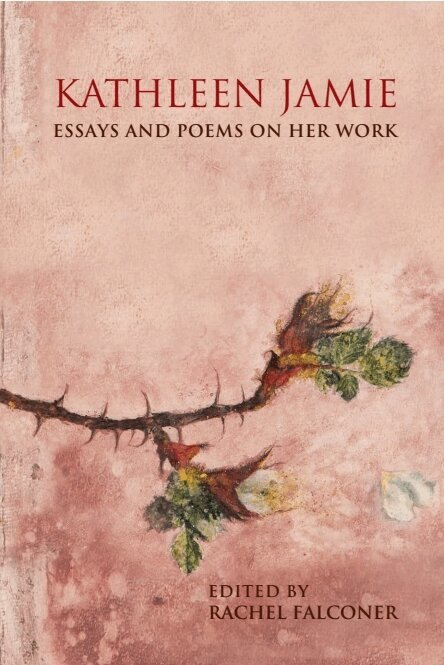
The first collection of critical essays on the writing of Kathleen Jamie, one of the most outstanding poets of our timesKathleen Jamie’s works are classics. No one can read Kathleen Jamie and remain indifferent or unchanged. Nationally acclaimed since her first major publications in the 1980s, Jamie stands out from other contemporary poets in her exceptional musicality, her strikingly unusual perspectives, her wry humour, translucent imagery and hard-edged economy of expression. These 16 newly commissioned critical essays and 7 previously unpublished poems by leading poets make up the first full-length study of Kathleen Jamie’s writing. The essays discuss all of her poetry collections, including The Queen of Sheba (1994), Jizzen (1999), Mr and Mrs Scotland Are Dead: Poems 1980–94 (2002), The Tree House (2004) and The Overhaul (2012), as well as her travel writing, including Among Muslims (2002), her nature writing, Findings (2005) and Sightlines (2012) and her collaborative work, including Frissure (2013), with artist Brigid Collins. Whether engaging with national politics, with gender, with landscape and place, or with humanity’s relation to the natural environment, this volume demonstrates that Kathleen Jamie’s verse teaches us new ways of listening, of seeing and of living in the contemporary world. Readers will have access to 14 audio recordings of Kathleen Jamie reading from works discussed in the volume.www.euppublishing.com/page/kathleenjamie/audioRachel Falconer is Professor of Modern English Literature at the University of Lausanne.
2 329 kr
Skickas inom 3-6 vardagar
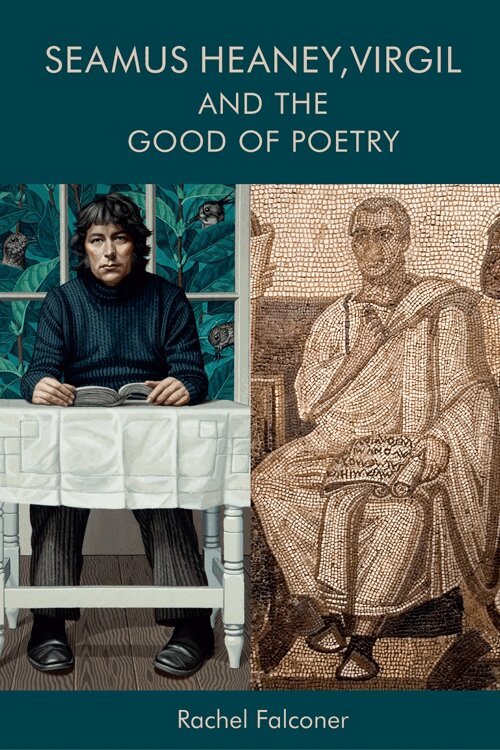
This book demonstrates the ways in which Virgil’s are poems that Heaney ‘lived with long and dreamily’, especially the descent into the underworld in Aeneid VI. It shows that in his original English poems as well as his translations from Latin, Heaney conjures and transforms familiar Virgilian motifs. The rhythm, pace and musicality of Virgil’s hexameters can be heard in Heaney’s pastoral eclogues and sonnet sequences. And Virgil’s life and times, as well as his poetry, contribute to the shaping of Heaney’s prose poetics. In dialogue with Virgil, as well as other classical and modern poets, Heaney develops his notion of the redress of poetry: the counterbalance that poetry can offer against historical tragedy, suffering and loss. The book explores Heaney’s intensely productive, thirty-year dialogue with Virgil, beginning with his translation of ‘The Golden Bough’ in the 1980s and extending through several major volumes, including Seeing Things, The Midnight Verdict, Electric Light, District and Circle, The Riverbank Field, Human Chain, and the posthumously published translation of Aeneid Book VI.
369 kr
Skickas
The first book-length study of Heaney's dialogue with Virgil, one of Seamus Heaney's major literary exemplarsOffers a close reading of Heaney's engagement in Virgil, with particular focus on the latter part of his career, from the mid-1980s onwardExplores Heaney's dialogue with Virgil in relation to his reading of other writers, ancient, medieval and modernConsiders the full corpus of Heaney's writing including translations, original poems, prose writing and radio interviewsThis book demonstrates the ways in which Virgil's are poems that Heaney 'lived with long and dreamily', especially the descent into the underworld in Aeneid VI. It shows that in his original English poems as well as his translations from Latin, Heaney conjures and transforms familiar Virgilian motifs. The rhythm, pace and musicality of Virgil's hexameters can be heard in Heaney's pastoral eclogues and sonnet sequences. And Virgil's life and times, as well as his poetry, contribute to the shaping of Heaney's prose poetics. In dialogue with Virgil, as well as other classical and modern poets, Heaney develops his notion of the redress of poetry: the counterbalance that poetry can offer against historical tragedy, suffering and loss.The book explores Heaney's intensely productive, thirty-year dialogue with Virgil, beginning with his translation of 'The Golden Bough' in the 1980s and extending through several major volumes, including Seeing Things, The Midnight Verdict, Electric Light, District and Circle, The Riverbank Field, Human Chain, and the posthumously published translation of Aeneid Book VI.
2 558 kr
Skickas inom 10-15 vardagar
This is the first monograph-length study of the importance of Orpheus in Milton's conception of himself as an agonistic poet. It is one of the first monographs on Milton to make sustained use of Bakhtinian theory, specifically its concepts of author, hero and answerability. Without excluding a range of important classical sources, such as Statius's Birthday Ode to Lucan, this study argues-singularly in recent criticism-for the significant influence of Virgil. In Milton's writing (from prose to poetry), Orpheus functions as one of a number of heroes (masks, personae) by whom Milton creates an identity for himself as author. Orpheus in particular offers Milton a model (reflection) of the poet who fails, and yet turns that failure into a sign of his own identity as the faithful singer, the civilizer of men.
2 558 kr
Skickas inom 10-15 vardagar
So far, in the West, the dissemination of Bakhtinian thought has proceeded with little or no awareness of contemporary approaches to Bakhtin in his homeland. This collection offers unprecedented access to leading Russian research in juxtaposition with important Western scholarship on Bakhtin. Taking its cue from Bakhtin as founder of dialogical criticism, Face to Face aims to stimulate dialogue across disciplines and national boundaries.