• Fri frakt över 249 kr
  • •
  • Snabba leveranser
  • •
  • Billiga böcker
Kundservice

Du är på sajten för privatpersoner.

Företag, bibliotek eller offentlig verksamhet?

Du handlar på classic.bokus.com, där alla dina funktioner finns intakta.
Till classic.bokus.com
Bokus logotyp. Gå till startsidan.
  • Erbjudanden
  • Student
  • Topplistor
  • Barn & ungdom
  • Bokus Play
  • E-böcker
  • Ljudböcker
  • Pocketböcker
  • Spel och pussel

5% studentrabatt – använd koden KURSBOK27 →

Sidfot

Mina sidor

    Hjälp

    • Kundservice
    • Vanliga frågor och svar
    • Frakt och leverans
    • Retur vid ångerrätt
    • Reklamera vara
    • Betalning
    • Köpvillkor
    • Allmänna villkor
    • Information om webbplatsens tillgänglighet

    Om Bokus

    • Om oss
    • Pressrum
    • För studenter
    • För företag
    • För bibliotek och offentlig verksamhet
    • För leverantörer
    • Hållbarhet

    Populärt

    • Aktuella erbjudanden
    • Presentkort
    • Studentlitteratur
    • Nya böcker
    • Topplistor
    • Signerade böcker
    • Engelska böcker

    Inspiration

    • Boktips
    • BookTok
    • Barnbokskaraktärer
    • Populära författare
    Logotyp för Bokus
    Följ oss på Facebook (extern länk)Följ oss på Instagram (extern länk)Följ oss på YouTube (extern länk)Följ oss på TikTok (extern länk)
    bokus @ CookiesAnpassa cookiesIntegritetspolicyKöpvillkor
    Till Citymail hemsida (extern länk)Till Budbee hemsida (extern länk)Till Postnord hemsida (extern länk)Till Schenker hemsida (extern länk)Till Early Bird hemsida (extern länk)Till Walleys hemsida (extern länk)
    1. Skönlitteratur
    2. Litteraturvetenskap
    3. Litteraturvetenskap

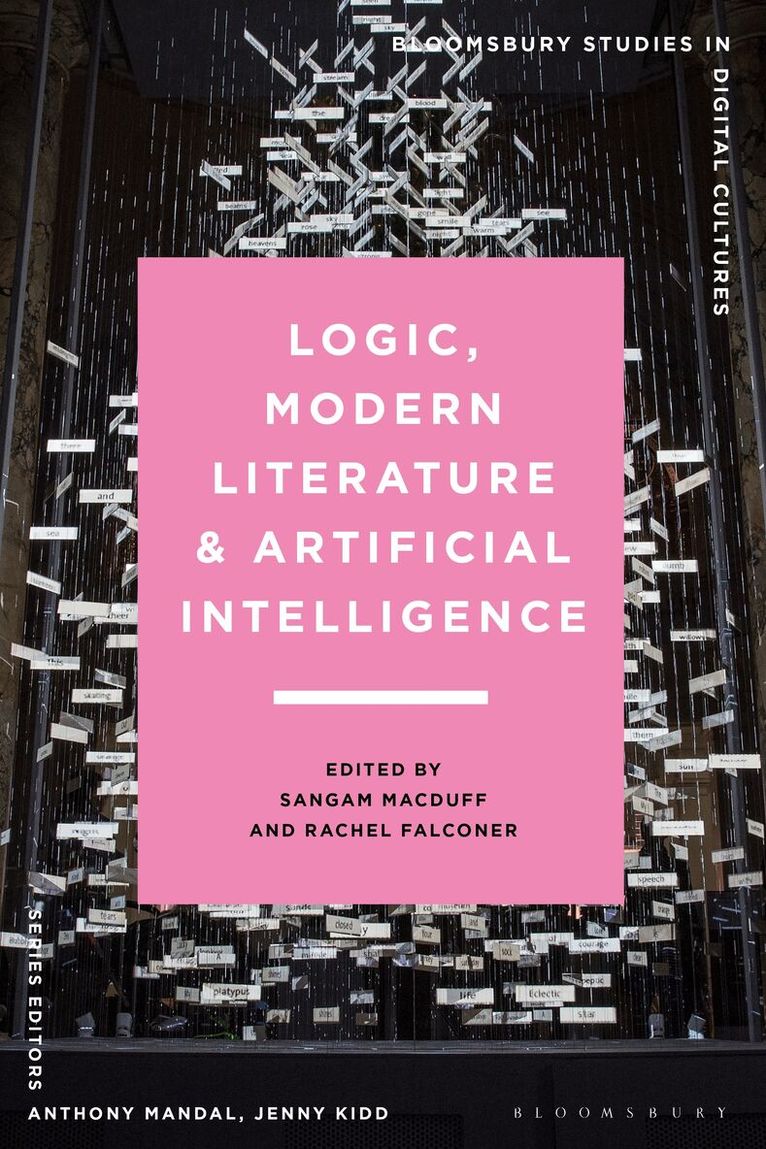
    Logic, Modern Literature and Artificial Intelligence

    AvSangam MacDuff,Rachel Falconer

    Inbunden, Engelska, 2026

    Del i serien Bloomsbury Studies in Digital Cultures

    1 743 kr

    Kommande

    Beskrivning

    Examining the relationship between these fields for the first time, this book explores a series of surprising affinities between symbolic logic, literature, and AI, from the late-nineteenth century to the present.Shedding light on the relationship between the sciences and the arts, this book examines how writers such as Lewis Carroll, T. S. Eliot, Laura (Riding) Jackson, Samuel Beckett, Italo Calvino, Jorge Luis Borges and Susan Howe both respond to and react against logic. It proposes a new framework to account for this agonistic relationship, arguing that the mathematisation of logic in the mid-nineteenth century created a productive tension between logic and literature, spurring modernist and postmodernist innovations, and catalysing the development of AI.Covering topics such as developments in computing from Ada Lovelace to AI; the cross-fertilisation of logic and literature from Lewis Carroll to Susan Howe; and recent advances in digital texts and neural nets, this book also speaks eloquently to contemporary concerns about artificial intelligence and the fate of the humanities.

    Produktinformation

    • Utgivningsdatum:2026-12-10
    • Mått:156 x 234 x 14 mm
    • Vikt:387 g
    • Format:Inbunden
    • Språk:Engelska
    • Serie:Bloomsbury Studies in Digital Cultures
    • Antal sidor:272
    • Förlag:Bloomsbury Publishing PLC
    • ISBN:9781350585034

    Utforska kategorier

    • Litteraturvetenskap inom Skönlitteratur

    Mer om författaren

    Sangam MacDuff is a Lecturer at the University of Lausanne, Switzerland.Rachel Falconer is Professor and Chair of Modern English Literature at the University of Lausanne, Switzerland.

    Recensioner i media

    Taking its cue from what Sangam MacDuff's illuminating introduction describes as the longstanding connections between logic, literature, and modernity, this wide-ranging volume demonstrates the central role of the humanities in contemporary debates about artificial intelligence and in understanding our technological present.

    Innehållsförteckning

    • IntroductionSangam MacDuff (University of Lausanne, Switzerland)Part I: Victorian and Modernist Logic1. Victorian Equations:The Logic of Exchange in Nineteenth-Century EnglandAndrea Kelly Henderson (UC Irvine, USA)2. Not as a Logician: Victoria Welby and Susan Howe read C.S. PeirceHelen Thaventhiran (University of Cambridge, UK)3. On Not Being Made of Literature: Franz Kafka and the Logical Priority of LifePatrick Jones (University of Geneva, Switzerland)4. ‘that flame… that flame… that burns away filthy logic’: Samuel Beckett and the Aporias of DigitalityBalazs Rapcsak (University of Basel, Switzerland)5. Logic and its Other in the Modernist Architectural ManifestoDavid Spurr (University of Geneva, Switzerland)Part II: Postmodern Developments6. I.A. Richards and CyberneticsSimon Swift (University of Geneva, Switzerland)7. Entrenchment Versus Indeterminacy: Disposing of gavagai, quaddition and grueIan MacKenzie (University of Geneva, Switzerland)8. Logic and Life: On Robert Besson’s L’ArgentRobert B. Pippin (University of Chicago, USA)9. The Illogic of Fiction: Speculative Reflections on Abduction, Naturalization, and Signification in NarrativeSimona Bartolotta (University of Oxford, UK)10. The Logic of the Clinamen in Italo Calvino’s Invisible Cities: Swerving across Light Materiality, Utopia, and Queer PoeticsAlberto Tondello (University of Edinburgh, UK)Part III: Artificial Intelligence and Posthumanism11. How a Picture No-Longer Held us Captive: Playful Logics and Creativity Across MediaDorothy Butchard and Niall Gallen (University of Birmingham, UK)12. Talking Machines, Missing Secretaries, and Bad ReadersRebecca Roach (University of Birmingham, UK)13. Reading Ishiguro’s Klara and the Sun with AI: What Does ChatGPT Think Makes Humans Unique?Megan Quigley (Villanova University, USA)14. The Interplay Between the Anthropomorphism of Automata and the Mechanisation of Humanity as Represented in Contemporary CinemaJannik Küchen (University of Tübingen, Germany) and Diogo Sasdelli (Danube University. Austria)Index