Shlomo Weber - Böcker
Visar alla böcker från författaren Shlomo Weber. Handla med fri frakt och snabb leverans.
3 produkter
3 produkter
2 411 kr
Skickas inom 5-8 vardagar
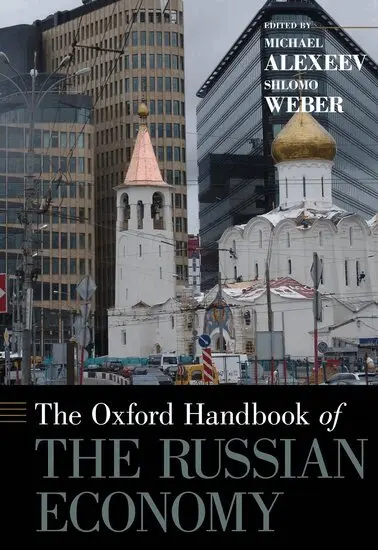
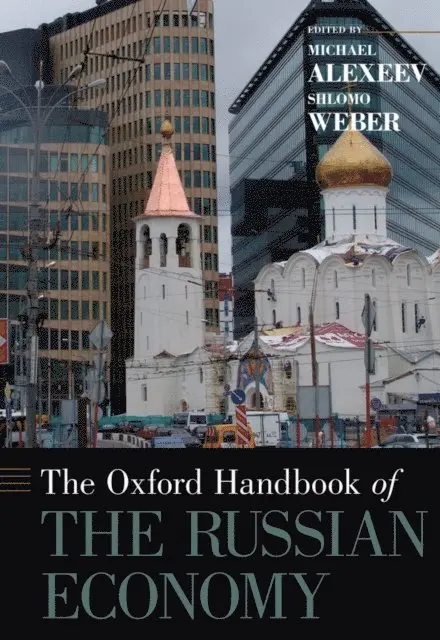
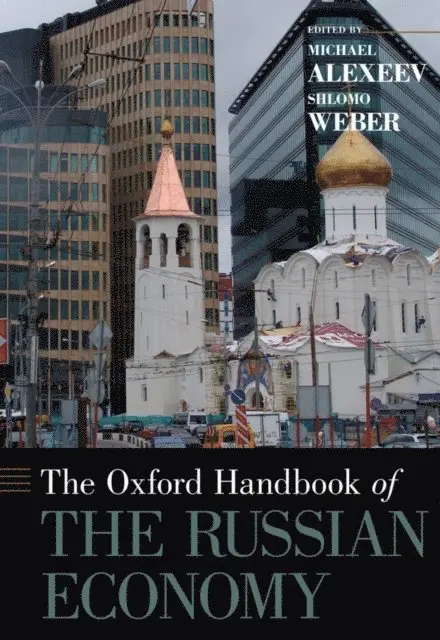
By 1999, Russia's economy was growing at almost 7% per year, and by 2008 reached 11th place in the world GDP rankings. Russia is now the world's second largest producer and exporter of oil, the largest producer and exporter of natural gas, and as a result has the third largest stock of foreign exchange reserves in the world, behind only China and Japan. But while this impressive economic growth has raised the average standard of living and put a number of wealthy Russians on the Forbes billionaires list, it has failed to solve the country's deep economic and social problems inherited from the Soviet times. Russia continues to suffer from a distorted economic structure, with its low labor productivity, heavy reliance on natural resource extraction, low life expectancy, high income inequality, and weak institutions. While a voluminous amount of literature has studied various individual aspects of the Russian economy, in the West there has been no comprehensive and systematic analysis of the socialist legacies, the current state, and future prospects of the Russian economy gathered in one book.The Oxford Handbook of the Russian Economy fills this gap by offering a broad range of topics written by the best Western and Russian scholars of the Russian economy. While the book's focus is the current state of the Russian economy, the first part of the book also addresses the legacy of the Soviet command economy and offers an analysis of institutional aspects of Russia's economic development over the last decade. The second part covers the most important sectors of the economy. The third part examines the economic challenges created by the gigantic magnitude of regional, geographic, ethnic, religious and linguistic diversity of Russia. The fourth part covers various social issues, including health, education, and demographic challenges. It will also examine broad policy challenges, including the tax system, rule of law, as well as corruption and the underground economy. Michael Alexeev and Shlomo Weber provide for the first time in one volume a complete, well-rounded, and essential look at the complex, emerging Russian economy.
463 kr
Skickas inom 7-10 vardagar
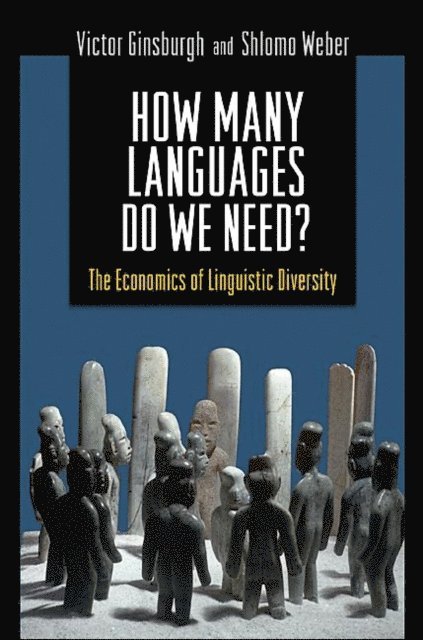
In the global economy, linguistic diversity influences economic and political development as well as public policies in positive and negative ways. It leads to financial costs, communication barriers, divisions in national unity, and, in some extreme cases, conflicts and war--but it also produces benefits related to group and individual identity. What are the specific advantages and disadvantages of linguistic diversity and how does it influence social and economic progress? This book examines linguistic diversity as a global social phenomenon and considers what degree of linguistic variety might result in the greatest economic good. Victor Ginsburgh and Shlomo Weber look at linguistic proximity between groups and between languages. They describe and use simple economic, linguistic, and statistical tools to measure diversity's impact on growth, development, trade, the quality of institutions, translation issues, voting patterns in multinational competitions, and the likelihood and intensity of civil conflicts.They address the choosing of core languages in a multilingual community, such as the European Union, and argue that although too many official languages might harm cohesiveness, efficiency, and communication, reducing their number brings about alienation and disenfranchisement of groups. Demonstrating that the value and drawbacks of linguistic diversity are universal, How Many Languages Do We Need? suggests ways for designing appropriate linguistic policies for today's multilingual world.
3 027 kr
Skickas inom 10-15 vardagar
This revised and updated handbook brings together methodological, theoretical, and empirical studies in the economics of language. With contributions from leading researchers, it examines the impact of linguistic diversity on economic outcomes and public policies. The interdependence of language and culture is highlighted through an analysis of the evolution of different languages and the economic consequences of linguistic diversity, as well as the impact of language on consumer behavior and the creation of gendered economic structures. Particularly attention is given to the impact of languages on macroeconomics, including the relationship between language and trade, and language and migrations. The challenge of globalization to minority languages and the growth of multilingual societies is also discussed, alongside the specific dynamics between economics and language at a regional level. It also addresses new developments in LLM (large language models). This book offers a detailed and original look at the role language plays within international and local economic systems. It will be of interest to students and researchers interested in the economics of language.