• Fri frakt över 249 kr
  • •
  • Snabba leveranser
  • •
  • Billiga böcker
Kundservice

Du är på sajten för privatpersoner.

Företag, bibliotek eller offentlig verksamhet?

Du handlar på classic.bokus.com, där alla dina funktioner finns intakta.
Till classic.bokus.com
Bokus logotyp. Gå till startsidan.
  • Erbjudanden
  • Student
  • Topplistor
  • Barn & ungdom
  • Bokus Play
  • E-böcker
  • Ljudböcker
  • Pocketböcker
  • Spel & pussel

10% rabatt på allt med kod NYSTART10 →

Sidfot

Mina sidor

    Hjälp

    • Kundservice
    • Vanliga frågor och svar
    • Frakt och leverans
    • Retur vid ångerrätt
    • Reklamera vara
    • Betalning
    • Köpvillkor
    • Allmänna villkor
    • Information om webbplatsens tillgänglighet

    Om Bokus

    • Om oss
    • Pressrum
    • För studenter
    • För företag
    • För bibliotek och offentlig verksamhet
    • För leverantörer
    • Hållbarhet

    Populärt

    • Aktuella erbjudanden
    • Presentkort
    • Studentlitteratur
    • Nya böcker
    • Topplistor
    • Signerade böcker
    • Engelska böcker

    Inspiration

    • Boktips
    • BookTok
    • Populära bokserier
    • Barnbokskaraktärer
    • Populära författare
    Logotyp för Bokus
    Följ oss på Facebook (extern länk)Följ oss på Instagram (extern länk)Följ oss på YouTube (extern länk)Följ oss på TikTok (extern länk)
    bokus @ CookiesAnpassa cookiesIntegritetspolicyKöpvillkor
    Till Citymail hemsida (extern länk)Till Budbee hemsida (extern länk)Till Postnord hemsida (extern länk)Till Schenker hemsida (extern länk)Till Early Bird hemsida (extern länk)Till Walleys hemsida (extern länk)
    1. Ekonomi och Ledarskap
    2. Nationalekonomi

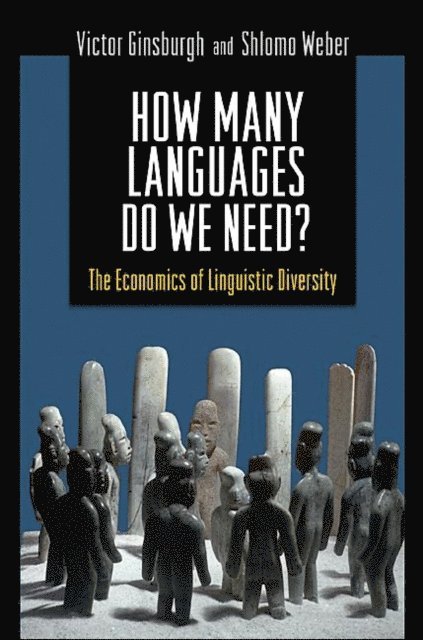
    How Many Languages Do We Need?

    The Economics of Linguistic Diversity

    AvVictor Ginsburgh,Shlomo Weber

    Inbunden, Engelska, 2011

    504 kr

    Beställningsvara. Skickas inom 5-8 vardagar. Fri frakt över 249 kr.

    Beskrivning

    In the global economy, linguistic diversity influences economic and political development as well as public policies in positive and negative ways. It leads to financial costs, communication barriers, divisions in national unity, and, in some extreme cases, conflicts and war--but it also produces benefits related to group and individual identity. What are the specific advantages and disadvantages of linguistic diversity and how does it influence social and economic progress? This book examines linguistic diversity as a global social phenomenon and considers what degree of linguistic variety might result in the greatest economic good. Victor Ginsburgh and Shlomo Weber look at linguistic proximity between groups and between languages. They describe and use simple economic, linguistic, and statistical tools to measure diversity's impact on growth, development, trade, the quality of institutions, translation issues, voting patterns in multinational competitions, and the likelihood and intensity of civil conflicts.They address the choosing of core languages in a multilingual community, such as the European Union, and argue that although too many official languages might harm cohesiveness, efficiency, and communication, reducing their number brings about alienation and disenfranchisement of groups. Demonstrating that the value and drawbacks of linguistic diversity are universal, How Many Languages Do We Need? suggests ways for designing appropriate linguistic policies for today's multilingual world.

    Produktinformation

    • Utgivningsdatum:2011-04-24
    • Mått:152 x 235 x 21 mm
    • Vikt:476 g
    • Format:Inbunden
    • Språk:Engelska
    • Antal sidor:256
    • Förlag:Princeton University Press
    • ISBN:9780691136899

    Utforska kategorier

    • Nationalekonomi inom Ekonomi och Ledarskap
    • Referensverk och tvärvetenskap inom Samhälle och politik
    • Språkvetenskap och lingvistik inom Språk och ordböcker

    Mer om författaren

    Victor Ginsburgh is professor of economics emeritus, member of the European Center for Advanced Research in Economics and Statistics, Brussels, and member of the Center of Operations Research and Econometrics, Louvain-la-Neuve, Belgium. Shlomo Weber is the Robert H. and Nancy Dedman Trustee Professor of Economics at Southern Methodist University and professor of economics at the New Economic School, Moscow.

    Recensioner i media

    "In their intriguing book How Many Languages Do We Need?, Victor Ginsburgh and Shlomo Weber illuminate how language diversity affects growth, trade and economic development."--David Throsby, Times Literary Supplement "This is a good book--clear, comprehensive, and easy to read. Ginsburgh and Weber cover several topics, including linguistic policies, diversity and standardization, economic costs and benefits, and multilingualism as a source of conflict and sometimes war."--Choice "[V]ery few books have been written on the economics of linguistic diversity, and this book takes a valuable step towards remedying this situation. It offers a nice nontechnical overview of the field, and has something interesting to offer to economists, sociologists, and linguists interested in linguistic diversity, language policy, and their implications."--Isabelle Sin, Journal of Economic History "In sum, their book is a fascinating, thought-provoking introduction to a large body of work at the frontier of a new, exciting area of economic research, which includes not only the economics of linguistic diversity, but, more generally, the economics of culture and institutions."--Enrico Spolaore, Journal of Regional Science "[T]his book makes a welcome contribution by providing a simple and succinct presentation of an otherwise complex interdisciplinary problem. In comparison to much of the Economics literature, it provides a far more nuanced picture of linguistic diversity and the associated policy challenges."--Vikas Kumar, Journal of Economic Issues "This is an essential book for all the policymakers, linguists, and language ideologues who will not understand the mathematics of the economists' calculations."--Anthony Pym, European Legacy

    Innehållsförteckning

    • Acknowledgments ix Introduction 1 Chapter 1: My Language IsMy Homeland 7 Chapter 2: Linguistic Policies, Disenfranchisement, and Standardization 16 1. Linguistic Diversity: A Brief Look at the Past 16 2. Linguistic Standardization: Roots, Benefits, and Some Examples 18 3. Some Painful Aspects of Standardization 21 4. HowMany Languages: IsMore theMerrier, or Is Small Beautiful? 26 5. Summary 28 Chapter 3: Linguistic, Genetic, and Cultural Distances: How Far Is Nostratic? 29 1. Languages and Dialects 30 2. Distances between Languages 33 3. Distances between Groups 48 4. Summary 55 Chapter 4: DistancesMatter 56 1. International Trade 57 2. Migrations 63 3. Literary Translations 65 4. The Eurovision Song Contest: Is Voting Political or Cultural? 74 5. Summary 82 Chapter 5: Individual Communicative Benefits 84 1. Modeling Language Learning 86 2. Demand Functions for Languages 93 3. Private Returns on Languages 98 4. Summary 107 Chapter 6: Diversity and Disenfranchisement Indices 108 1. Fractionalization and Polarization Indices 110 2. Disenfranchisement Indices 126 3. Links between Fractionalization, Disenfranchisement, and Communication Indices 137 4. Summary 139 5. Appendix: Numerical Calculation of the Various Disenfranchisement Indices 140 Chapter 7: Diversity and Disenfranchisement: Applications 142 1. Fractionalization and Polarization Indices 143 2. Disenfranchisement Indices: The Example of the EU 151 3. Summary 160 Chapter 8: Multilingualism in the European Union: A Case Study in Linguistic Policy 162 1. Twenty-three Languages, and More to Come 162 2. Possible Solutions 177 3. Summary 199 Conclusions 201 Bibliography 205 Index 223