Victor Ginsburgh - Böcker
Visar alla böcker från författaren Victor Ginsburgh. Handla med fri frakt och snabb leverans.
7 produkter
7 produkter
192 kr
Tillfälligt slut
Del 260 - Contributions to Economic Analysis
Economics of Art and Culture
Invited Papers at the 12th International Conference of the Association of Cultural Economics International
Inbunden, Engelska, 2003
1 296 kr
Skickas inom 7-10 vardagar
This volume contains a large selection of the invited papers given at the Twelfth Conference of the Association of Cultural Economics International held in Rotterdam in 2002. Two sessions were devoted to what came to be called the cultural industries (movies, television, media, etc.). Two dealt with the history of art and music markets. The last two were more policy oriented. One was devoted to the management of built heritage which becomes larger every year, and will be in need of more and more public funding. The invited speakers in the last session had spent, or are still spending, some or most of their time in the "real world," and try to discuss how cultural economists can contribute to alleviate the hard life of those who have to manage culture. Choices necessarily meant that many fields in which active research is alive were not dealt with, in particular, the contemporary functioning of art markets, artists' labor markets, museums and their management, aesthetic choices and tastes, the meaning of quality in the arts, etc. In this volume, the papers given in the six sessions are reshuffled and grouped into three parts: the cultural industries, historical aspects, and policy issues including the management heritage.
Del 224 - Contributions to Economic Analysis
European Economic Integration
a Challenge in a Changing World
Inbunden, Engelska, 1994
2 222 kr
Skickas inom 5-8 vardagar
The effects and challenges of European integration are analysed in this book, using a wide variety of research methods Topics covered include macroeconometric and applied general equilibrium modelling, international trade and applied econometric analysis. Various contributions focus on Europe itself and are concerned with macroeconomic management, price convergence, industrial restructuring and the environment. Extra developments in the European Community are also discussed, in relation with European integration, including world trade, regional integration and the East-European transition to a West-European style market economy. The book is dedicated to the long and prolific career of Jean Waelbroeck. It will be of great interest to both academic researchers and policymakers.
463 kr
Skickas inom 7-10 vardagar
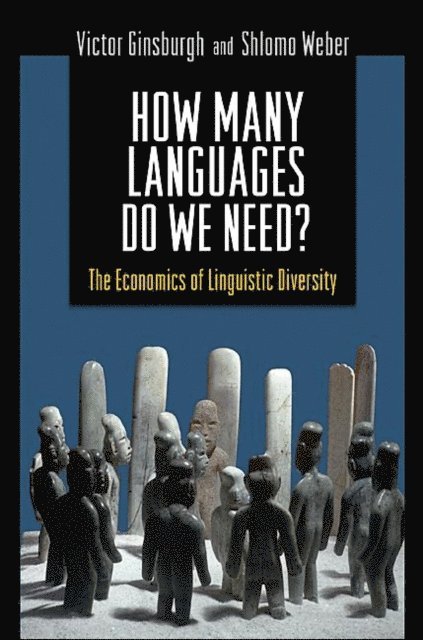
In the global economy, linguistic diversity influences economic and political development as well as public policies in positive and negative ways. It leads to financial costs, communication barriers, divisions in national unity, and, in some extreme cases, conflicts and war--but it also produces benefits related to group and individual identity. What are the specific advantages and disadvantages of linguistic diversity and how does it influence social and economic progress? This book examines linguistic diversity as a global social phenomenon and considers what degree of linguistic variety might result in the greatest economic good. Victor Ginsburgh and Shlomo Weber look at linguistic proximity between groups and between languages. They describe and use simple economic, linguistic, and statistical tools to measure diversity's impact on growth, development, trade, the quality of institutions, translation issues, voting patterns in multinational competitions, and the likelihood and intensity of civil conflicts.They address the choosing of core languages in a multilingual community, such as the European Union, and argue that although too many official languages might harm cohesiveness, efficiency, and communication, reducing their number brings about alienation and disenfranchisement of groups. Demonstrating that the value and drawbacks of linguistic diversity are universal, How Many Languages Do We Need? suggests ways for designing appropriate linguistic policies for today's multilingual world.
3 025 kr
Skickas inom 10-15 vardagar
This revised and updated handbook brings together methodological, theoretical, and empirical studies in the economics of language. With contributions from leading researchers, it examines the impact of linguistic diversity on economic outcomes and public policies. The interdependence of language and culture is highlighted through an analysis of the evolution of different languages and the economic consequences of linguistic diversity, as well as the impact of language on consumer behavior and the creation of gendered economic structures. Particularly attention is given to the impact of languages on macroeconomics, including the relationship between language and trade, and language and migrations. The challenge of globalization to minority languages and the growth of multilingual societies is also discussed, alongside the specific dynamics between economics and language at a regional level. It also addresses new developments in LLM (large language models). This book offers a detailed and original look at the role language plays within international and local economic systems. It will be of interest to students and researchers interested in the economics of language.
1 624 kr
Skickas inom 10-15 vardagar
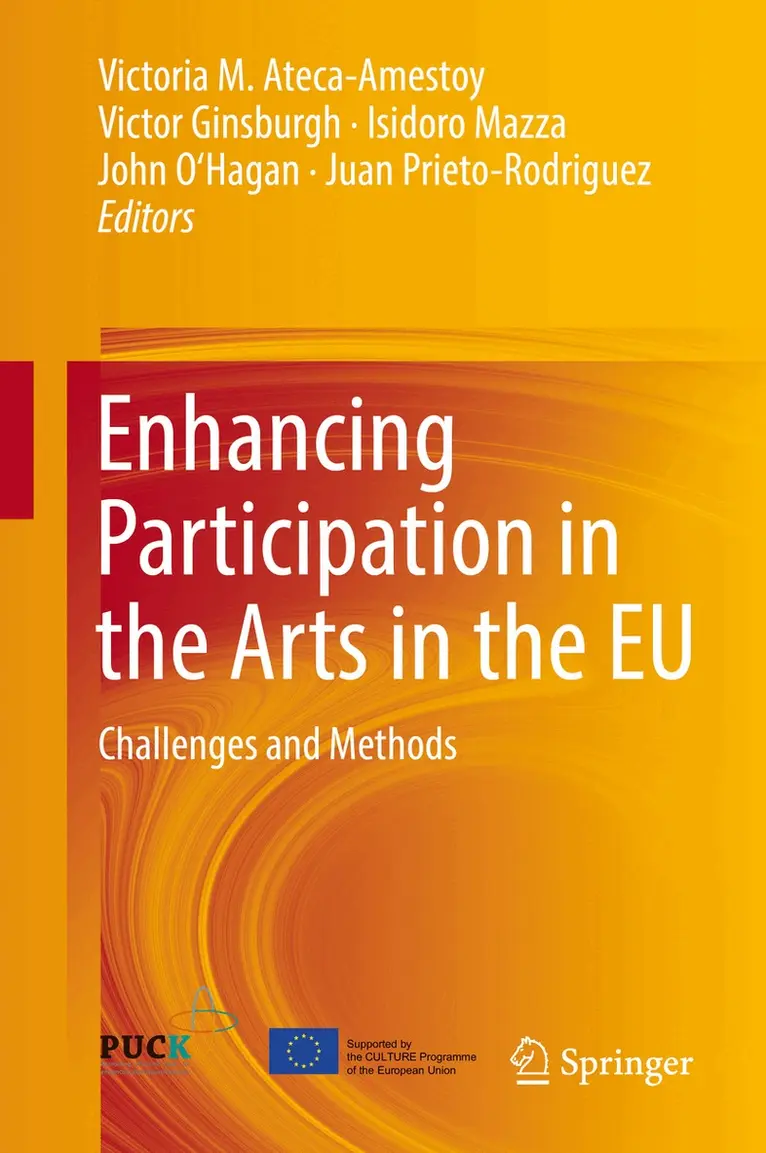
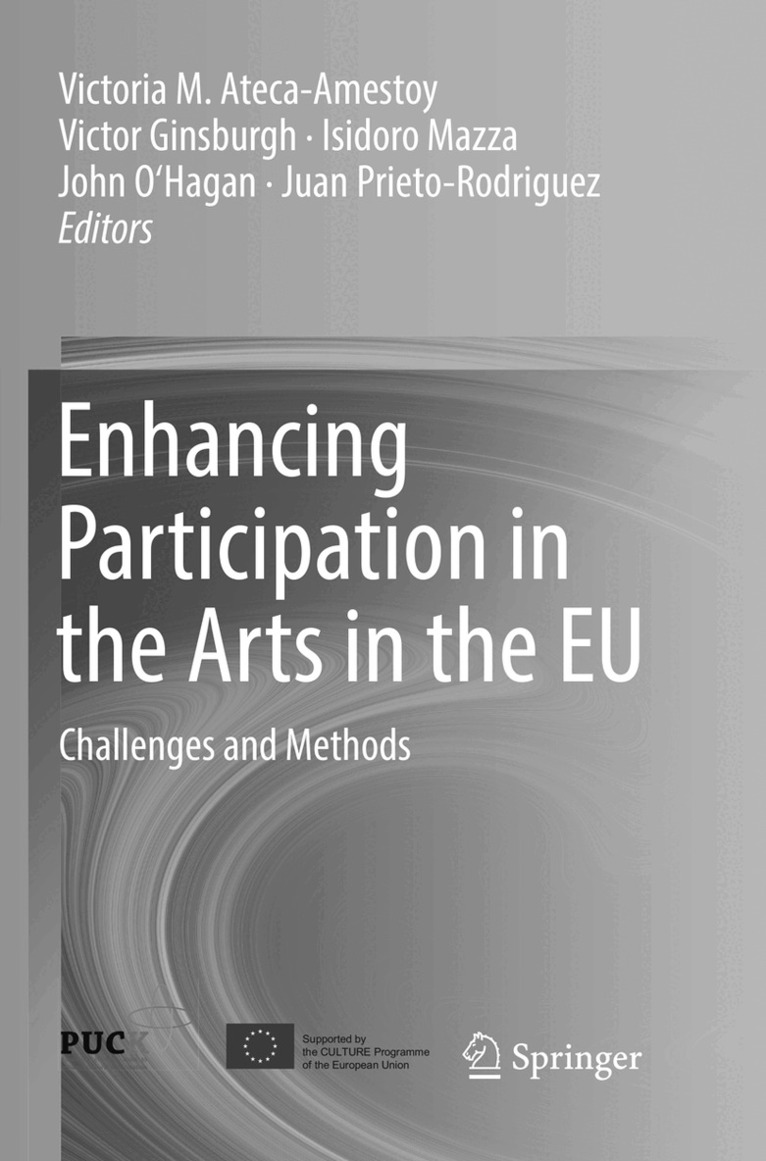
In this book, participation in the arts is analyzed as a substantial contributory factor to European citizenship, and also as a tool for improving individual and societal wellbeing through educational and inclusive policies. It offers an up-to-date overview of ongoing research on the measurement and analysis of, and prospects for, traditional and new forms of cultural engagement in Europe. It describes and assesses available methods and participation in the arts and seeks to determine how and to what extent the various drivers, policies and barriers matter. This publication is the final output of the work done by the members of the EU Project “Assessing effective tools to enhance cultural participation,” which brought together social scientists and cultural practitioners in joint projects, conferences and seminars, to reflect on the current situation and the challenges faced by managers of cultural and arts institutions and cultural policy makers.
1 624 kr
Skickas inom 10-15 vardagar
In this book, participation in the arts is analyzed as a substantial contributory factor to European citizenship, and also as a tool for improving individual and societal wellbeing through educational and inclusive policies. It offers an up-to-date overview of ongoing research on the measurement and analysis of, and prospects for, traditional and new forms of cultural engagement in Europe. It describes and assesses available methods and participation in the arts and seeks to determine how and to what extent the various drivers, policies and barriers matter. This publication is the final output of the work done by the members of the EU Project “Assessing effective tools to enhance cultural participation,” which brought together social scientists and cultural practitioners in joint projects, conferences and seminars, to reflect on the current situation and the challenges faced by managers of cultural and arts institutions and cultural policy makers.