Stephen P. Hubbell – författare
Visar alla böcker från författaren Stephen P. Hubbell. Handla med fri frakt och snabb leverans.
6 produkter
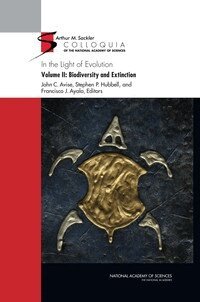
In the Light of Evolution
Volume II: Biodiversity and Extinction
Av National Academy of Sciences, John C. Avise m. fl.
E-bok, 2008
788 kr
Lägg i varukorg
The current extinction crisis is of human making, and any favorable resolution of that biodiversity crisis—among the most dire in the 4-billion-year history of Earth—will have to be initiated by mankind. Little time remains for the public, corporations, and governments to awaken to the magnitude of …
In the Light of Evolution
Volume II: Biodiversity and Extinction
Av National Academy of Sciences, John C. Avise m. fl.
E-bok, 2008
1101 kr
Lägg i varukorg
The current extinction crisis is of human making, and any favorable resolution of that biodiversity crisis—among the most dire in the 4-billion-year history of Earth—will have to be initiated by mankind. Little time remains for the public, corporations, and governments to awaken to the magnitude of …
Vascular Epiphytes
General Biology and Related Biota
Av David H. Benzing, Peter S. Ashton m. fl.
Inbunden, 1990
2508 kr
Lägg i varukorg
Epiphytes (plants which grow on other plants, not parasitically but for support), comprise more than one-third of the total vascular flora in some tropical forests. Growing within tropical forest canopies, epiphytes are subject to severe environmental constraints, and their diverse adaptations make …
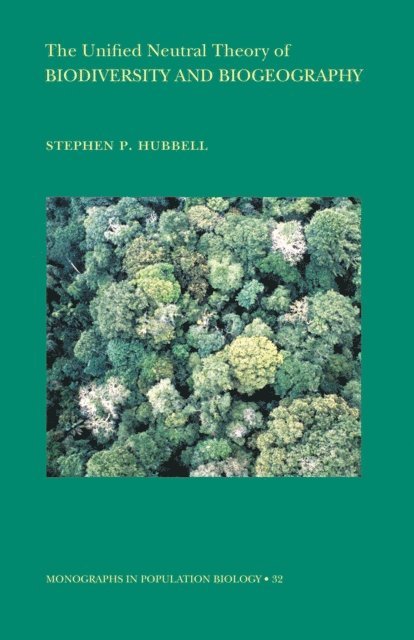
Unified Neutral Theory of Biodiversity and Biogeography
Häftad, 2001
1682 kr
Lägg i varukorg
Despite its supreme importance and the threat of its global crash, biodiversity remains poorly understood both empirically and theoretically. This ambitious book presents a new, general neutral theory to explain the origin, maintenance, and loss of biodiversity in a biogeographic context. Until now …
Unified Neutral Theory of Biodiversity and Biogeography
E-bok, 2011
1274 kr
Lägg i varukorg
Despite its supreme importance and the threat of its global crash, biodiversity remains poorly understood both empirically and theoretically. This ambitious book presents a new, general neutral theory to explain the origin, maintenance, and loss of biodiversity in a biogeographic context. Until now …
In the Light of Evolution
Volume II: Biodiversity and Extinction
Av National Academy of Sciences, Francisco J. Ayala m. fl.
Inbunden, 2008
985 kr
Tillfälligt slut
The current extinction crisis is of human making, and any favorable resolution of that biodiversity crisis--among the most dire in the 4-billion-year history of Earth--will have to be initiated by mankind. Little time remains for the public, corporations, and governments to awaken to the magnitude …