Timothy D. Kanold – författare
418 kr
Läs direkt efter köp
369 kr
Läs direkt efter köp
320 kr
Läs direkt efter köp
Copublished with the National Council of Teachers of Mathematics, this book focuses on individuals involved in K–12 mathematics education who seek to help children achieve success. The authors tackle popular misconceptions and misguided discourse about mathematics education and draw on peer-reviewed research about instruction that can significantly improve students’ conceptual understanding.
Benefits
Explore reasons why expectations for mathematics teaching and learning must be raised.Study the history of the progression, changes, and disputes in K–12 mathematics education.Discover insights about mathematics education in an era of mathematics reform.Define mathematical literacy and what elements are part of effective mathematics instruction.Learn the steps that must be taken to support the teaching and learning of mathematics so all students can be college and career ready.
Contents
Introduction
Why Mathematics Education Needs to ImproveA Brief History of Mathematics Education: Lessons to LearnThe Equilibrium Position and Effective Mathematics InstructionHow to Help Your Child Learn MathematicsConclusion and Action Steps for Educators and ParentsEpilogue: Conclusion and Action Steps for Educators and Parents
Appendix: Additional Resources for Parents
421 kr
Läs direkt efter köp
418 kr
Läs direkt efter köp
369 kr
Läs direkt efter köp
376 kr
Läs direkt efter köp
Part of the Every Student Can Learn Mathematics series
Build a mathematics teaching community that promotes learning for K-12 educators and students. This user-friendly resource is divided into two parts, each covering actionable team strategies in teaching mathematics in a PLC at Work™. First you''ll discover how to coach highly effective mathematics teams within your professional learning community. Then you''ll learn how to utilize collaboration and lesson-design elements within your math curriculum for teacher team reflection, assessment data analysis, and action.
Learn to lead math teacher teams and foster effective collaborative teaching strategies:
Build a collaborative math learning culture that engages and promotes learning for students and staff members.Optimize coaching and foster equity and belonging, to encourage collaboration on instruction and math assessment.Engage in mathematics lesson study, to help teams learn from one another and reflect on effective strategies in teaching mathematics.Develop norms, SMART goals for teachers, agendas, and a plan for working effectively as a collaborative team in a PLC at Work™.Address all parts of your math curriculum, from math instruction to math interventions.Contents:PrefaceIntroductionPart 1: Develop PLC Structures for Effective Teacher Team Engagement, Transparency, and ActionChapter 1: Five Inspirational PLC Leadership PracticesChapter 2: Five Leadership Strategies for Effective Collaboration in MathematicsPart 2: Use Common Assessments and Lesson-Design Elements for Teacher Team Reflection, Data Analysis, and Subsequent ActionChapter 3: How to Create and Nurture a Culture of Change, Growth, Reflection, and Improvement in Your Mathematics ProgramChapter 4: How to Lead a Culture of Transparency and Learning with Mathematics AssessmentsChapter 5: How to Lead in a Culture of Transparency and Learning with Mathematics InstructionChapter 6: How to Lead a Culture of Collective ResponsibilityEpilogueAppendix AReferences and Resources
Books in the Every Student Can Learn Mathematics series:
Mathematics Assessment and Intervention in a PLC at Work™Mathematics Instruction and Tasks in a PLC at Work™Mathematics Homework and Grading in a PLC at Work™Mathematics Coaching and Collaboration in a PLC at Work™332 kr
Läs direkt efter köp
Part of the Every Student Can Learn Mathematics series
Boost K-12 student achievement and math skills by enhancing your approach to mathematics homework and grading. This user-friendly resource is divided into two parts, each covering a key team action for mathematics in a PLC at Work™. First, you''ll learn how to develop common independent practice assignments or math homework for formative student learning within a professional learning community (PLC). Then, discover how to work collaboratively to create quality equitable grading practices to help you evaluate independent practice effectiveness. The book features teacher team tools and activities to inspire student achievement and enhance grading routines as part of a formative student learning process.
Learn collaborative homework and grading practices to grow your students'' math skills:
Discover how you and your colleagues can design and use mathematics homework and grading practices to produce significant improvement in student learning.Learn the value of common scoring agreements among educators.Understand and find solutions to common grading errors to ensure equity among all students.Implement effective grading practices that provide meaningful and actionable formative feedback to students.Support student engagement and ensure students persevere in their learning of mathematics problem solving.Contents:Preface Introduction
Part 1: Team Action 5--Develop and Use High-Quality Common Independent Practice Assignments for Formative Student LearningChapter 1: The Purpose of High-Quality Common Independent Practice AssignmentsChapter 2: Sample Independent Practice AssignmentsChapter 3: Formative Routines for Improved Student LearningChapter 4: Common Scoring and Grading Agreements for Homework Assignments
Part 2: Team Action 6--Develop and Use High-Quality Common Grading Components and Formative Grading RoutinesChapter 5: The Purpose and Nature of Grading in MathematicsChapter 6: How to Create an Evaluate Quality Grading ComponentsChapter 7: Formative Grading RoutinesChapter 8: Traditional Report Card Grades and Standards-Based Scoring Routines
EpilogueAppendixReferences and ResourcesIndex
Books in the Every Student Can Learn Mathematics series:
Mathematics Assessment and Intervention in a PLC at Work™Mathematics Instruction and Tasks in a PLC at Work™Mathematics Homework and Grading in a PLC at Work™Mathematics Coaching and Collaboration in a PLC at Work™418 kr
Skickas inom 3-6 vardagar
434 kr
Läs direkt efter köp
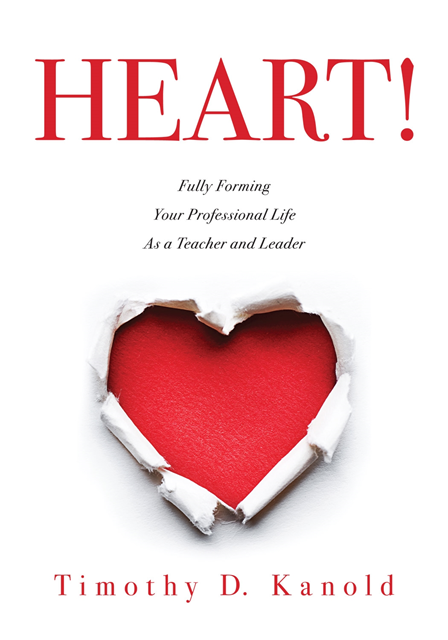
This inspiring book presents the concept of a heartprint -- the distinctive impression that an educator''s heart leaves on students and colleagues during his or her professional career. For teachers, understand how teacher motivation, teacher-student relationships, and collaborative teaching all affect your self-efficacy, career, and professional development. For school leaders and administrators, discover your impact on staff, students, and school culture as you progress in your career and gain perspective on creating sustainable change.
Examine the 5 HEART aspects of your professional life: Happiness: a passion for teaching, a purpose, and a desire to positively impact educationEngagement: teacher motivation, energy, and effort necessary to impact student learningAlliances: relationships, collaborative teaching, and teacher supportRisk: vision-focused risk taking to create sustainable change in schoolsThought: the knowledge and professional development integral to advancing your career
Discover Your Answer to the Question "Why Teach" and Advance Your Career in Education:
Reflect on your journey and the personal and professional qualities of the teacher or leader you want to be.Discover your distinctive heartprint on your students and colleagues, and decide what the qualities of a good teacher are for you.Gain personal development plan ideas and inspirational insights from Dr. Kanold as well as dozens of thought leaders and researchers.Connect your professional life to each chapter and reconnect to the emotion, passion, energy, growth, and collaborative intimacy expected when joining the teaching profession.Build collective teacher efficacy and academic optimism by using the resource as a book study for professional development.Contents:
Part 1: H Is for HappinessChapter 1: The Happiness DilemmaChapter 2: The Happiness-Passion ConnectionChapter 3: What''s Love Got to Do With It?Chapter 4: Got Compassion? Check!Chapter 5: Wanted--Persons of Positive Character and HopeChapter 6: The Joy-Gratitude-Stability ConnectionChapter 7: Why Should We Weep?Final Thoughts: The World Happiness Report
Part 2: E Is for EngagementChapter 8: Gallup Says--Full Engagement Not AheadChapter 9: Getting Engaged!Chapter 10: It''s Energy, Not TimeChapter 11: Name That Energy QuadrantChapter 12: Avoid the Quadrant III DriftChapter 13: Quadrant II Time RequiredChapter 14: Grit--Deliberate Daily PracticeFinal Thoughts: The MTXE Perspective
Part 3: A Is for AlliancesChapter 15: The Primary Purposes of CollaborationChapter 16: PLCs--Serving the Greater GoodChapter 17: Oh, the Inequity Places We''ll Go!Chapter 18: Reduce Our Professional NoiseChapter 19: Relational Intelligence RequiredChapter 20: What Are Those Black Boxes?Chapter 21: Celebration--Making Above and Beyond the Norm the NormFinal Thoughts: Why Helping Others Drives Our Success
Part 4: R Is for RiskChapter 22: What''s in a Goal?Chapter 23: Shared Purpose--Each and Every Child Can LearnChapter 24: Results or Persons?Chapter 25: The Risk-Vision DependencyChapter 26: Build Trust the Millennial WayChapter 27: Fixed or Growth Mindset?Chapter 28: Warning--Entropy Ahead!Final Thoughts: A Sense of Urgency
Part 5: T Is for ThoughtChapter 29: Your Great Adventure!Chapter 30: Your Voice of WisdomChapter 31: Clean Up the ClimateChapter 32: Become a Feedback FanaticChapter 33: Yours, Mine, and OursFinal Thoughts: Hold the Mayo!
356 kr
Läs direkt efter köp
Part of the Every Student Can Learn Mathematics series
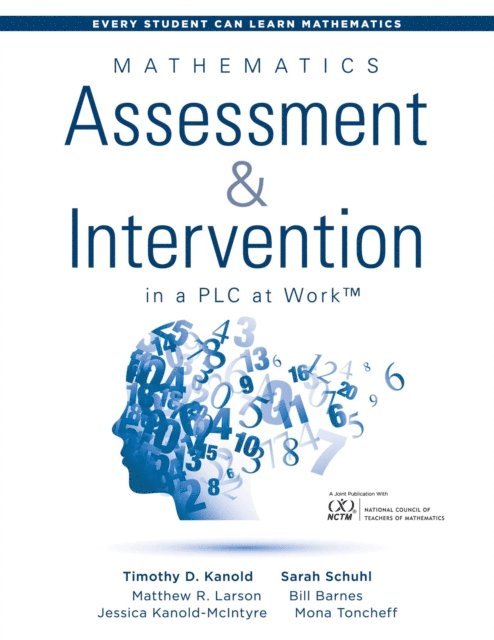
Harness the power of formative assessment processes within an RTI model (MTSS) to inspire student learning in mathematics. This user-friendly resource is divided into two parts, each covering a key team action for mathematics in a PLC at Work™. First you''ll learn how to develop high-quality common assessments. Then discover how to use the mathematics assessments for formative student learning and intervention. The book features unit samples for learning standards, sample unit exams, student performance trackers, and more.
Improve your math assessment methods using RTI Tier 2 interventions and PLC processes as a guide:
Explore an assessment model for writing quality common assessments.Utilize RTI Tier 2 intervention strategies for effectively responding to student learning.Make sense of the grade-level content standards and corresponding tasks.Learn how to write quality common unit assessments and score them accurately.Determine how students can reflect and set performance goals using common unit assessment results.Develop a Tier 2 RTI math intervention program to support student learning.Contents:PrefaceIntroduction
Part 1: Team Action 1 -- Develop High-Quality Common Assessments for the Agreed-On Essential Learning StandardsChapter 1: The Purpose and Benefit of Common Mathematics AssessmentsChapter 2: Quality Common Mathematics Unit AssessmentsChapter 3: Sample Common Mathematics Unit Assessments and Collaborative Scoring Agreements
Part 2: Team Action 2 -- Use Common Unit Assessments for Formative Student Learning and InterventionChapter 4: Quality of Mathematics Assessment Feedback Processes Chapter 5: Team Response to Student Learning Using Tier 2 Mathematics Intervention CriteriaChapter 6: Student Action on Assessment Feedback During the Unit
EpilogueReferences and ResourcesIndexBooks in the Every Student Can Learn Mathematics series:
Mathematics Assessment and Intervention in a PLC at Work™Mathematics Instruction and Tasks in a PLC at Work™Mathematics Homework and Grading in a PLC at Work™Mathematics Coaching and Collaboration in a PLC at Work™365 kr
Läs direkt efter köp
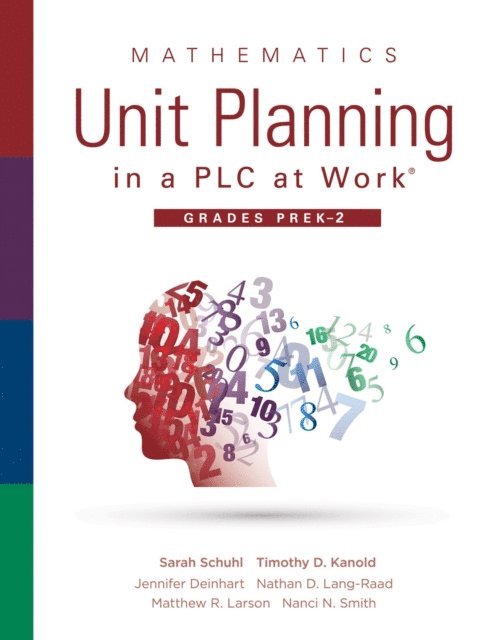
Bring a laser-like focus to the mathematics content your students need to learn throughout the year. Written by trusted mathematics experts, this resource helps PreK-2 teachers fully answer PLC critical question one: what do we want all students to know and be able to do? Read the book as a team to acquire detailed model mathematics units, learn how to perform seven collaborative tasks, and more.
Use this resource to increase mathematics achievement and provide students with a more equitable learning experience:
Understand how to collaboratively plan curriculum units in grades preK-2.Study the seven unit-planning elements and learn how to incorporate each in unit designs for early childhood education.Review the role of the PLC at Work®️ process in enhancing student learning and teacher collaboration.Observe four model units related to the foundations of addition and subtraction, one for each grade level.Receive tools and templates for effective unit planning in a professional learning community (PLC).Contents:Introduction by Timothy D. KanoldPart 1: Mathematics Unit Planning and Design ElementsChapter 1: Planning for Student Learning of Mathematics in Grades PreK-2Chapter 2: Unit Planning as a Collaborative Mathematics TeamPart 2: Foundations of Addition and Subtraction Unit Examples, Grades PreK-2Chapter 3: PreK Unit: Counting and CardinalityChapter 4: Kindergarten Unit: Addition and Subtraction to 10Chapter 5: Grade 1 Unit: Addition and Subtraction to 20Chapter 6: Grade 2 Unit: Multidigit Addition and SubtractionEpilogue: Mathematics Team OrganizationAppendix A: Create a Proficiency MapAppendix B: Team Checklist and Questions for Mathematics Unit PlanningReferences and ResourcesIndex
365 kr
Läs direkt efter köp
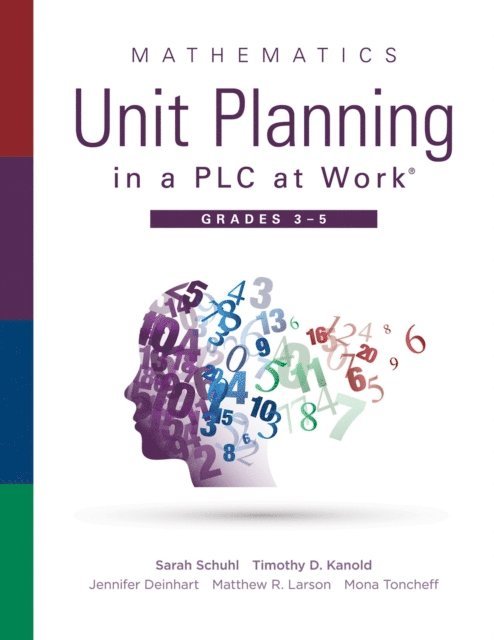
Build collaborative teacher teams committed to fostering student self-efficacy and increasing achievement in mathematics. Part of the Every Student Can Learn Mathematics series, this practical resource provides a framework for collectively planning a unit of study in grades 3–5. Grade-level teams will learn how to work together to perform key tasks—from unwrapping standards and creating team unit calendars to determining academic vocabulary and designing robust fraction units.
Help your team identify what students need to know by the end of each unit and build student self-efficacy:
Understand how to collaboratively plan thematic units in grades 3-5.Study the seven unit-planning elements and learn how to incorporate each in essential unit design.Review the role of the PLC at Work® process in enhancing collaborative student learning and teacher collaboration.Observe three model fraction units, one for each grade level.Receive tools and templates for effective unit planning.Contents:Introduction by Timothy D. KanoldPart 1: Mathematics Unit Planning and Design Elements Chapter 1: Planning for Student Learning of Mathematics in Grades 3–5 Chapter 2: Unit Planning as a Collaborative Mathematics TeamPart 2: Fraction Unit Examples, Grades 3–5 Chapter 3: Grade 3 Unit—Fraction Understanding Chapter 4: Grade 4 Unit—Fraction Equivalence, Addition, and Subtraction Chapter 5: Grade 5 Unit—Fraction Addition and SubtractionEpilogue: Mathematics Team OrganizationAppendix A: Create a Proficiency MapAppendix B: Checklist and Questions for Mathematics Unit PlanningReferences and Resources
365 kr
Läs direkt efter köp
What exactly do your students need to know by the end of each unit of mathematics study throughout the school year? This practical resource empowers teacher teams to collectively plan for and deliver highly effective units of study in grades 6-8. The authors clearly outline how to generate essential learning standards, create a team unit calendar, identify prior knowledge, and complete many other essential collaborative tasks.
Use this resource to provide intermediate grade-level students with a more equitable mathematics learning experience
Understand how to collaboratively plan mathematics units in grades 6-8 as a professional learning community (PLC).Study the seven unit-planning elements and learn how to incorporate each in essential unit design.Review the role of the PLC at Work® process in enhancing student learning and teacher collaboration.Observe three model units, one for each grade, for ratios and proportional reasoning.Receive tools and templates for effective unit planning.Contents:AcknowledgmentsTable of ContentsAbout the AuthorsIntroductionPart One: Mathematics Unit Planning and Design Elements Chapter 1: Planning for Student Learning of Mathematics in Grades 6–8 Chapter 2: Unit Planning as a Collaborative Mathematics TeamPart Two: Proportional Reasoning Unit Examples, Grades 6-8 Chapter 3: Grade 6 Unit--Ratios and Rates Chapter 4: Grade 7 Unit--Proportional Reasoning Chapter 5: Grade 8 Unit--Linear Functions and EquationsEpilogue: Mathematics Team OrganizationAppendix A: Create a Proficiency MapAppendix B: Team Checklist and Questions for Mathematics Unit PlanningReferences and ResourcesIndex
365 kr
Läs direkt efter köp
Champion student mastery of essential mathematics content in grades 9-12. Part of the Every Student Can Learn Mathematics series, this guidebook provides high school teachers with a framework for collectively planning units of study in a professional learning community (PLC). The authors share tools and protocols for unwrapping standards, generating unit calendars, developing rigorous lessons, and many other essential team actions.
Use this resource to discover practical insight into collaborative planning and inspiring detailed models of unit planning in action:
Understand how to collaboratively plan units for high school mathematics.Study the seven unit-planning elements, and learn how to incorporate each in unit designs.Review the role of the PLC at Work® process in enhancing student learning and teacher collaboration.Observe model units for Algebra 1, geometry, and Algebra 2.Receive tools and templates for effective unit planning.Contents:Introduction by Timothy D. KanoldPart 1: Mathematics Unit Planning and Design ElementsChapter 1: Planning for Student Learning of Mathematics in High SchoolChapter 2: Unit Planning as a Collaborative Mathematics TeamPart 2: Transformations on the Coordinate Plane Unit Examples for Algebra 1, Geometry, and Algebra 2Chapter 3: Algebra 1 Unit--Graphs of Quadratic FunctionsChapter 4: Geometry Unit--Transformations and CongruenceChapter 5: Algebra 2 Unit--Graphs of Trigonometric FunctionsEpilogue: Mathematics Team OperationsAppendix A: Create a Proficiency MapAppendix B: Checklist and Questions for Mathematics Unit Planning
434 kr
Läs direkt efter köp
A long-awaited companion to the wildly popular HEART!, SOUL! empowers educators to take another giant leap toward fulfilling their professional promise. Refreshing, uplifting, and research affirmed, this resource leads readers on a deeply rewarding journey toward discovering their soul story--the pursuit of their moral good--in order to create good in others. It also includes dozens of stories from real educators, as well as ample space for journaling and self-reflection.
Use this resource to examine and reflect with provided journaling spaces:
Become more confident, joyful, whole, healthy, and balanced in your professional life.Explore the four actions of SOUL--searching, overcoming, unifying, and living--that will help you sustain a fulfilling professional life.Learn the concept of a soul story, diving into what it is and why it is so important to your positive well-being and emotional health.Understand your own soul story, and reflect on how you can use it to create good in others.Learn how to overcome challenges and obstacles that hinder you from fulfilling your soul story.Discover how to create a positive, thriving school culture focused on meaningful relationships and collaboration.Follow the discussion of SOUL! on Twitter by using the hashtag #heartandsoul4Ed
Contents:Table of ContentsAbout the AuthorForewordA Note to ReadersIntroductionPart 1: Developing Your Soul Story--S is for SearchingChapter 1: The Soul Asks, "Now What?"Chapter 2: A Perfect Pair: Heart and SoulChapter 3: In Loco ParentisChapter 4: In the Name of Social JusticeChapter 5: The Second MountainChapter 6: No Compassion, No SoulChapter 7: The Soul Story WhisperersFinal Thoughts: The PLC Life is a Seeking-System LifePart 2: Developing Your SOUL Story--O is for OvercomingChapter 8: Lost and OverwhelmedChapter 9: The ShallowsChapter 10: SASHETChapter 11: Anger Never WinsChapter 12: Good Enough, For NowChapter 13: The Road Less HardenedChapter 14: A Season for ObstaclesFinal Thoughts: The PLC Life is a Corrosion-Free LifePart 3: Developing Your SOUL Story--U is for UnifyingChapter 15: E Pluribus Unum: Thriving in CommunityChapter 16: Beyond Bricks and Mortar: BelongingChapter 17: Beyond Collaboration: IntimacyChapter 18: Beyond Collegiality: VulnerabilityChapter 19: Beyond Tolerance: ValidationChapter 20: Beyond School: Community EngagementChapter 21: The Quietude QuestFinal Thoughts: The PLC Life Is a Balanced, Unified LifePart 4: Developing Your SOUL Story--L is for LivingChapter 22: The Date Always ArrivesChapter 23: Carpe DiemChapter 24: Mirror, MirrorChapter 25: Soul Story CourageChapter 26: Joy, Gratitude, and GraceChapter 27: One More Trip Around the SunFinal Thoughts: The PLC Life Is a Bene LifeEpilogueFinding Our Slack TideAcknowledgmentsNotes
407 kr
Skickas inom 3-6 vardagar
365 kr
Läs direkt efter köp
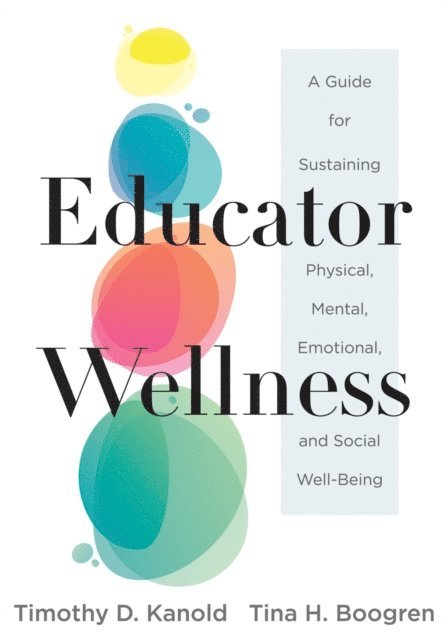
Educator and teacher wellness is a personal journey. And like all journeys, there are starts, stops, and bumps in the road. The question becomes, how do we bring our best selves to our students and colleagues each day? Designed as a reflective journal and guidebook, Educator Wellness by Timothy D. Kanold and Tina H. Boogren will take you on a deep exploration where you will uncover profound answers that ring true for you.
Rely on this book of ideas for self-care for educators and develop ongoing habits for wellness:
Use this resource on your own or as a book study to guide staff through a reflective, goal-setting process. Observe the importance of self-care for teachers and other educators and how a commitment to daily self-care and well-being leads to a more fulfilling, successful life in and outside of the school setting.Review the four dimensions of educator self-care and wellness--(1) physical, (2) mental, (3) emotional, and (4) social--and 12 corresponding routines.Explore self-care activities for teachers and educators to sustain well-being in the face of workplace overload and potential burnout.Use the My Wellness Action journaling spaces designed to encourage thoughtful reflection to wellness and self-care plans for teachers and educators.Learn how to monitor your self-care progress and design an actionable wellness plan for next steps.View videos that highlight the authors'' personal experiences with the four dimensions of educator or teacher well-being.Access the Educator Wellness--Rating, Reflecting, Planning, and Goal-Setting protocol.434 kr
Läs direkt efter köp
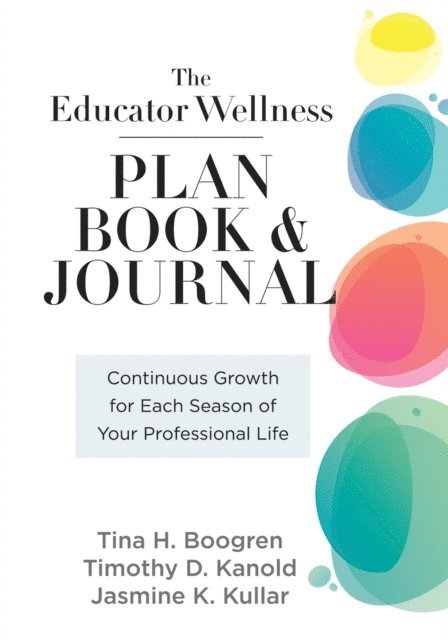
Educators’ daily stressors can easily accumulate without intentional wellness actions in place. Designed as both a plan book and journal, this companion resource to Educator Wellness: A Guide for Sustaining Physical, Mental, Emotional, and Social Well-Being offers inspirational, practical weekly routines and reflections for teachers committed to improving their wellness practices throughout the school year.
Use this plan book and journal to:Commit to practices that encourage well-being in each of the four dimensions: physical, mental, emotional, and socialOrganize your thoughts, collect data on your current habits, and reflect on areas to improve with 46 field-tested toolsMonitor your progress on each month’s wellness goal and set intentions to encourage long-term maintenance of positive habitsContents:Part 1: About This Plan Book and JournalPart 2: Summer—A Season of RenewalPart 3: Fall—A Season of OpportunityPart 4: Winter—A Season of PerseverancePart 5: Spring—A Season of TransitionAppendix: Journal ToolsReferences and ResourcesIndex376 kr
Läs direkt efter köp
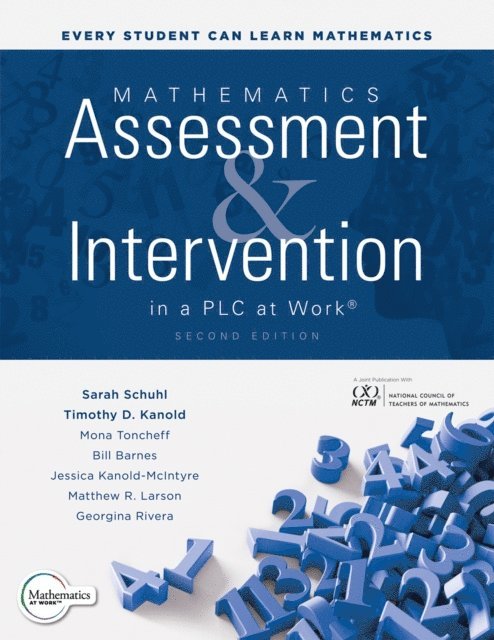
This second edition book from the Every Student Can Learn Mathematics series guides you and your collaborative teams in building student and collective teacher efficacy through the formative use of common assessments. Discover how you can work interdependently to design high-quality assessments, calibrate scoring of student work, and analyze data to enhance instructional practices and sustain effective Tier 2 learning experiences for students. New and enhanced protocols and examples provide practical tools and models for immediate implementation. Improve your mathematics collaborative team assessment processes using the four critical questions of a PLC at Work® along with an RTI or MTSS focus on effective Tier 2 interventions.
This book will help K–12 mathematics teachers and teacher teams: Learn the criteria for the formative use of all unit-by-unit common mathematics assessmentsIdentify essential learning standards as drivers for common assessments and student reflectionDesign and use high-quality common assessments and team scoring agreementsCalibrate the scoring of student work for consistent formative feedback to studentsEngage in data protocols that analyze student work to enhance instructional practices, identify students in need of targeted intervention or extension, and create effective intervention learning experiencesDetermine how students can reflect and set goals using the formative feedback process based on common unit-by-unit assessmentsDesign and implement an effective Tier 2 mathematics intervention program to support student learningContents:PrefaceIntroductionChapter 1: The Mathematics at Work Common Assessment ProcessChapter 2: Quality Common Mathematics AssessmentsChapter 3: Sample Common Mathematics Assessments and Calibration RoutinesChapter 4: Teacher Actions in the Formative Assessment ProcessChapter 5: Student Actions in the Formative Assessment ProcessChapter 6: Team Response to Student Learning Using Tier 2 Mathematics Intervention CriteriaSummaryEpilogueAppendixReferences and ResourcesIndex376 kr
Läs direkt efter köp
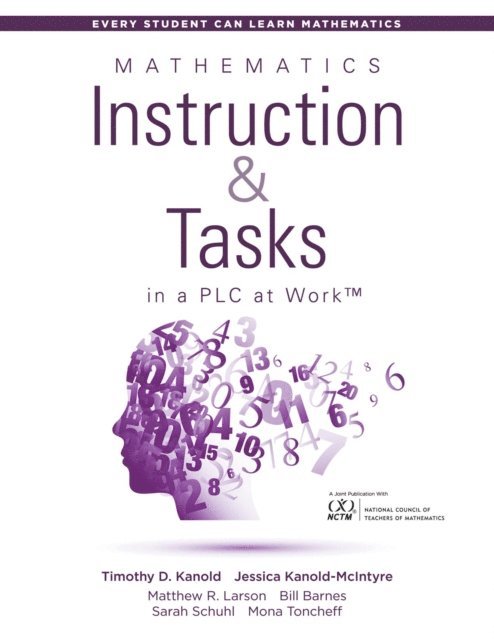
Build collective teacher efficacy and students’ mathematical thinking using the Mathematics in a PLC at Work™ lesson-design process. This second edition of the popular Mathematics Instruction and Tasks book guides preK–12 teacher teams in ensuring improved mathematics achievement. Gain new and enhanced understanding of research-affirmed instructional routines, and learn how to efficiently elicit high levels of student engagement and self-efficacy.Implement instructional strategies and methods of teaching mathematics in a professional learning community.
This book will help preK–12 mathematics teachers and teacher teams:Identify essential mathematics content standards students learn during a unit Understand the importance of communicating the why of the essential mathematics learning standards to students Plan for the use of balanced rigor and mathematical routines to teach each content standard during instruction Use a balance of appropriate mathematics activities and tasks needed to develop conceptual understanding, procedural fluency, and application of mathematical concepts and skillsImplement instructional math routines that ensure the formative learning of all students during lessonsContents:PrefaceIntroduction: The Mathematics at Work™ Lesson Design FrameworkChapter 1: Essential Learning Standards—The Why of the LessonChapter 2: Prior-Knowledge RoutinesChapter 3: Mathematics Language RoutinesChapter 4: A Balance of Mathematical TasksChapter 5: Mathematical Discourse RoutinesChapter 6: Lesson Closure RoutinesChapter 7: High-Quality Tier 1 Mathematics InterventionChapter 8: Analyzing the Effectiveness of Mathematics InstructionEpilogueAppendix AAppendix B: Cognitive-Demand-Level Task Analysis GuideAppendix C: Mathematics Instruction and Tasks in a PLC at Work Protocols and Tools