Valeria Carullo - Böcker
Visar alla böcker från författaren Valeria Carullo. Handla med fri frakt och snabb leverans.
4 produkter
4 produkter
374 kr
Skickas inom 5-8 vardagar
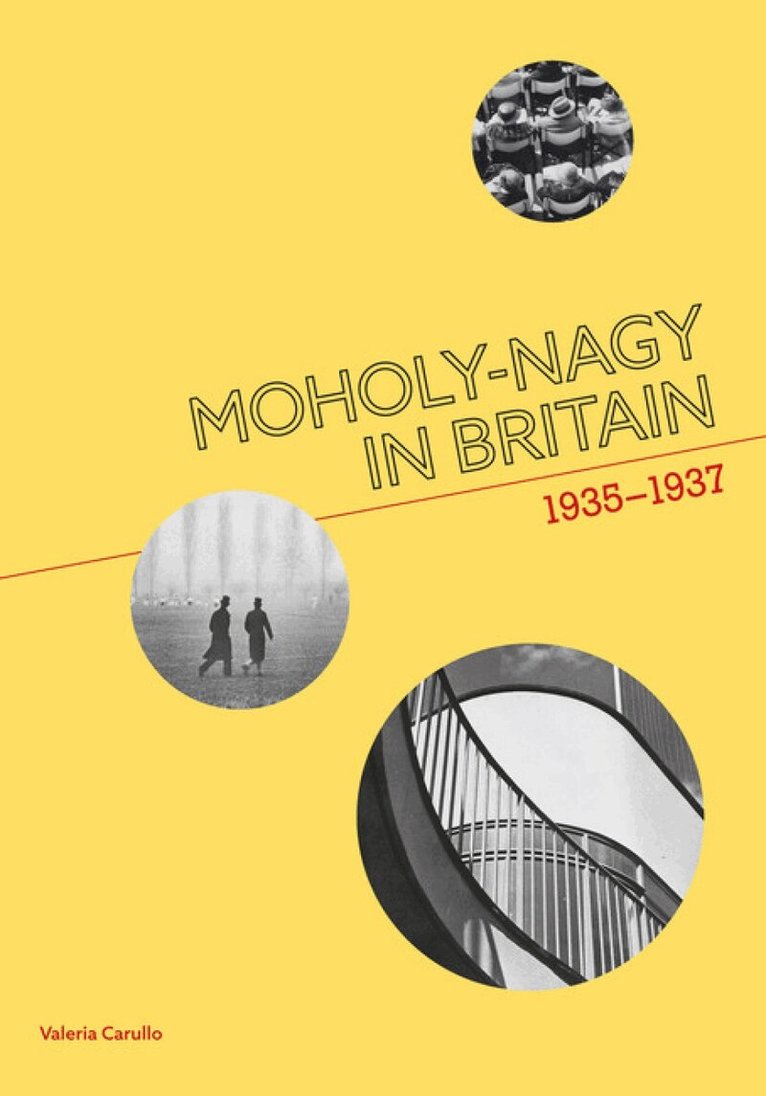
One of the most innovative artists and thinkers of the first half of the 20th century, László Moholy-Nagy (1895-1946) emigrated to Britain after the forced closure of the Bauhaus, following his colleague Walter Gropius. This book examines the two years he spent in Britain in the mid-1930s before moving on to the United States - two intense years filled with commissions, collaborations, opportunities, disappointments, artistic exchanges and friendship.Moholy-Nagy was especially known in the UK as a photographer, his photos having previously been published in the Architectural Review. Although brief, Moholy-Nagy's English period represented the peak of his photographic activity. In Britain, he also worked as a graphic designer on books, advertisements and on London Transport posters. He worked as an art advisor for Simpsons' menswear store and designed publicity for the Isokon Furniture Company. He made a couple of documentary films – Lobsters and New Architecture at London Zoo and worked as a designer on Things to Come for Alexander Korda. As well as the films and photographic essays for the AR, he was introduced by John Betjeman to publisher John Miles, who commissioned him to illustrate three books: The Street Markets of London, Eton Portrait and An Oxford University Chest. He also worked with Gropius and Maxwell Fry on various exhibition designs, gave lectures and wrote articles throughout his stay, and The London Gallery held an exhibition of his work in January 1937.This highly visual book weaves together rarely seen images, documents and narrative to create a fascinating picture of the man and the artist during this critical and highly productive phase of his life.
613 kr
Skickas inom 5-8 vardagar
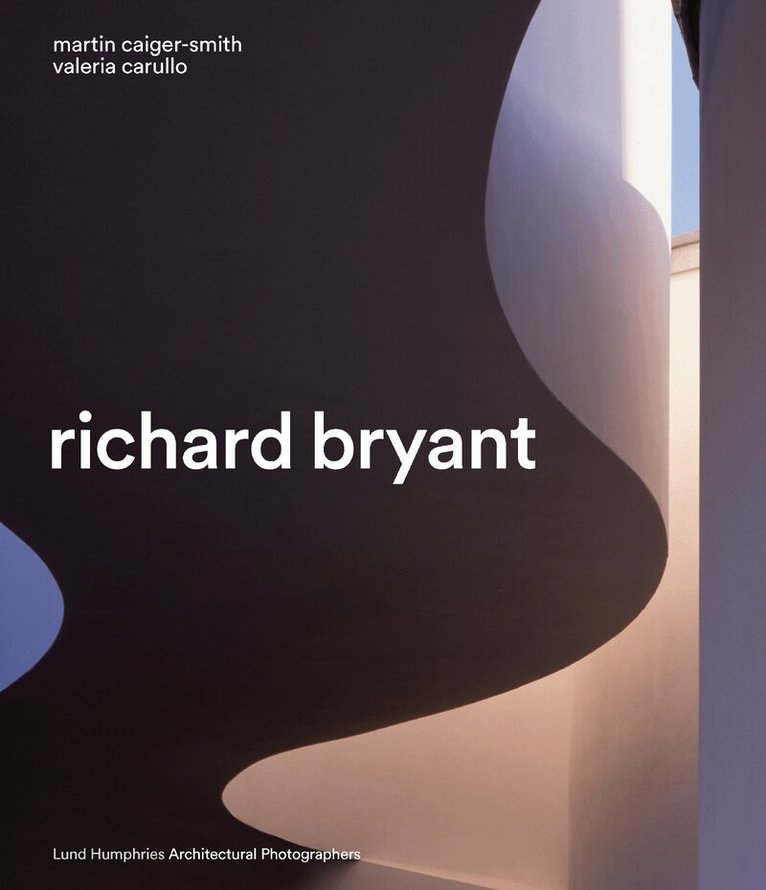
Beginning his career in the 1970s after studying architecture, Bryant quickly became one of the most sought-after photographers by the architectural press. This book reveals how, following the general shift from black-and-white to colour, his work went on to define the image of 1990s architecture. Drawing from the art of the 17th century Dutch painters he admires, Bryant brings to his images a unique sensitivity, especially in the use of natural light. At the same time, his lifelong interest in Modernism can be traced in the emphasis on geometry and engagement with abstraction featured in many of his compositions. As well as discussing his iconic photographs of Scarpa’s architecture, London, and the Sir John Soane's Museum, the book highlights Bryant’s collaborations with some of the giants of 20th-century architecture, including Tadao Ando, Geoffrey Bawa, Frank Gehry, Zaha Hadid, Hans Hollein, Richard Meier, James Stirling, Norman Foster and Richard Rogers. The authors examine his career and interests, set his work within a broader context, and provide insights into his methods and approaches. The book also shows the changes which have occurred in both the architectural profession and the medium of photography over the past five decades.
354 kr
Skickas inom 7-10 vardagar
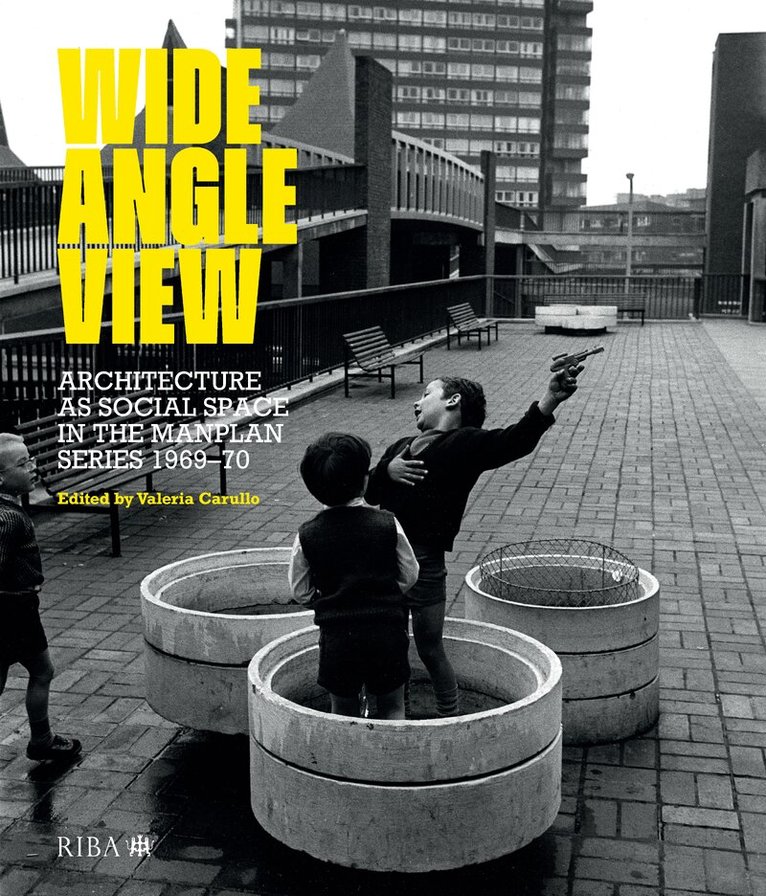
The companion exhibition catalogue to the RIBA’s photography exhibition: Wide Angle View: Architecture as social space in the Manplan series 1969-70.
420 kr
Skickas inom 3-6 vardagar
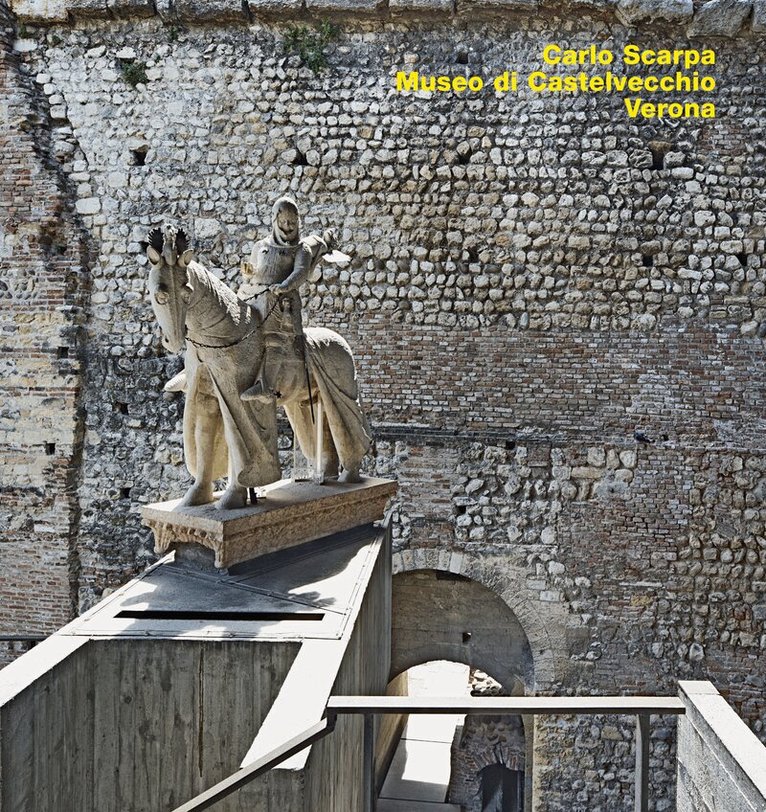
During the 1960s Italy's museum sector witnessed a fertile period of renewal. A generation of architects, working in partnership with the directors of museums, set about transforming into exhibition spaces a number of ancient monumental complexes located in the historic centres of some of the most important Italian cities. Among these was the brilliant and solitary Venetian architect Carlo Scarpa (19061978) who revitalised the discipline of museography by sagaciously combining it with restoration. His lucid intervention at Verona's Museo di Castelvecchio is emblematic of this approach: the medieval castle, the museum of ancient art, and modern architecture all harmoniously coexisting in a monument located at the heart of a city designated a UNESCO World Heritage Site. The far-sighted choice of Scarpa was owed to the then director of the museum, Licisco Magagnato, who tenaciously argued the case for the appointment of an architect specialising in this field to work on the city's principal museum of ancient art. The renovation work, which continued for more than a decade, took place in various phases (19581964, 1967 and 19681974) but in accordance with a remarkably consistent and coherent plan. In his work on Castelvecchio, carried out at a significant point in his career, Scarpa attained a remarkable balance between different aesthetic elements that is particularly evident in the sculpture gallery, where the renovations harmonise with the power of the 14th-century Veronese sculptures exhibited in this section of the museum. One of the most striking details is the location of the equestrian statue of Cangrande I della Scala. For the presentation of this work the architect conceived a backdrop of great poetry, drawing the visitor's attention to its historical stratifications and simultaneously creating an exemplary essay in modern architecture. This museum is the most perfectly resolved of Scarpa's works in terms of the complexity and coherence of its design, and today remains "outrageously" well preserved. It is therefore unsurprising that a photographer-artist such as Richard Bryant should have been attracted by the extraordinary compositional, spatial and luminous harmony of Castelvecchio. The book is introduced by an essay by Alba Di Lieto, the architect appointed to Verona City Council's Direzione Musei d'Arte e Monumenti, a scholar of Scarpa's drawings, and the author of monographs on his work. She describes the architect's renovation and locates it in the context of Italy's architectural panorama. She also offers insights into the cataloguing of Scarpa's graphic output in the context of the overall conservation of his work. The essay is followed by a brief history of the castle by Paola Marini, who was the director of Verona's civic museum network for 22 years. The essay is followed by a brief history of the castle by Paola Marini, who was the director of Verona's civic museum network for 22 years. In December 2015 she has taken on a new role as director of the Gallerie dell'Accademia in Venice the first of Scarpa's museum projects in 1949. Valeria Carullo writes in her postscript about her experience by assisting Richard Bryant in photographing the castle. She is curator of The Robert Elwall Photographs Collection in the RIBA British Architectural Library. Richard Bryant is one of the best-known architectural photographers, working all over the world. He and Hélène Binet are the only photographers with an honorary fellowship of the Royal Institute of British Architects.