
Visar resultat för..."Vdm Verlag"
19 produkter
19 produkter

Häftad, Engelska, 2008
668 kr
Skickas inom 3-6 vardagar
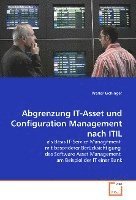
Häftad, Tyska, 2011
668 kr
Skickas inom 3-6 vardagar

Häftad, Tyska, 2006
557 kr
Skickas inom 3-6 vardagar
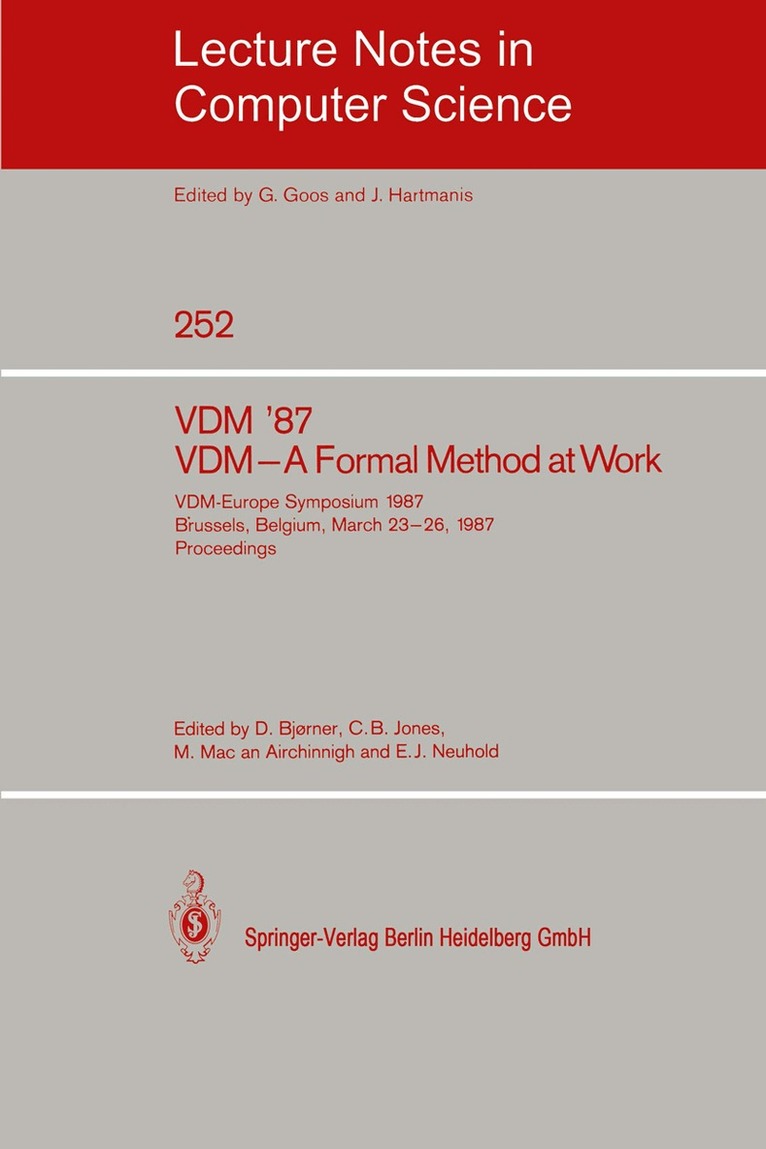
Häftad, Engelska, 1987
556 kr
Skickas inom 10-15 vardagar
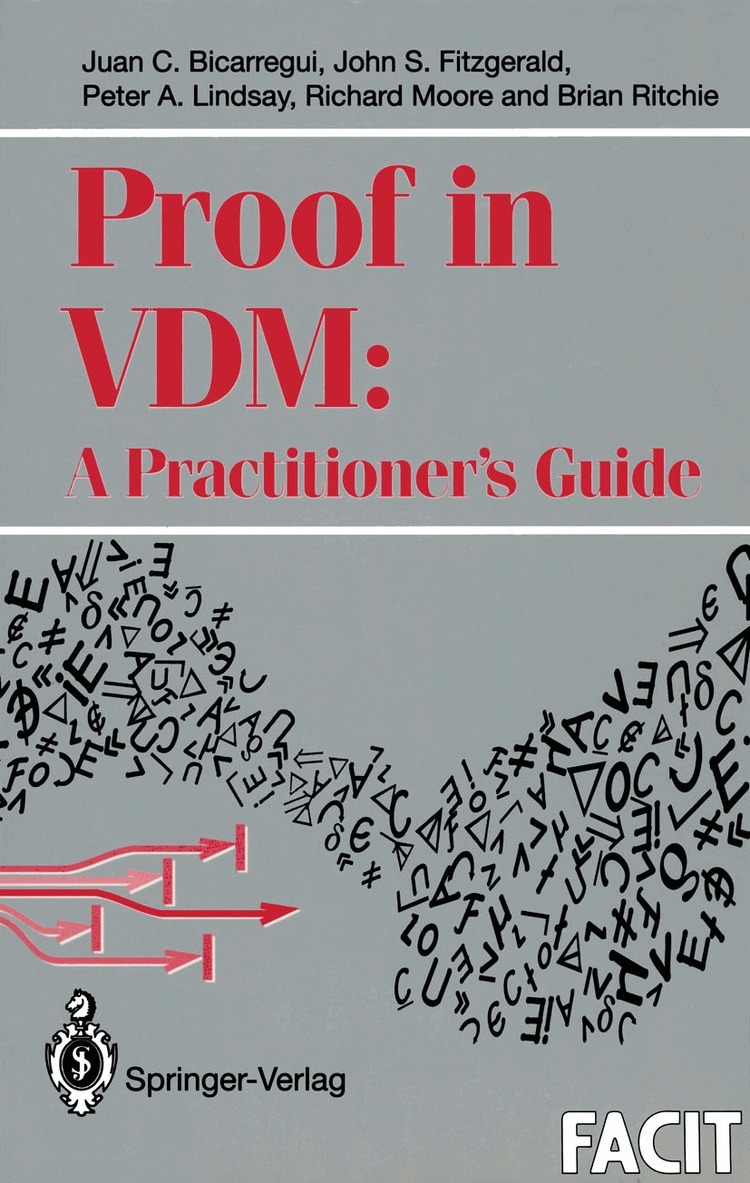
Häftad, Engelska, 1993
539 kr
Skickas inom 10-15 vardagar
This manual examines the practical aspects of using and constructing proofs in the specification and development of computing systems. The reader is guided through the elements of proof construction with the help of numerous worked examples. The techniques can be applied to specification and development in a range of formalisms, and are illustrated using the logic and the basic data types of the VDM specification language. The construction of theorems and proofs from actual specifications and refinements is also described, and a detailed case study, including several refinement steps, shows how formal proofs can be used in practice. In addition, the book contains a directory of axioms and formally proved theorems.
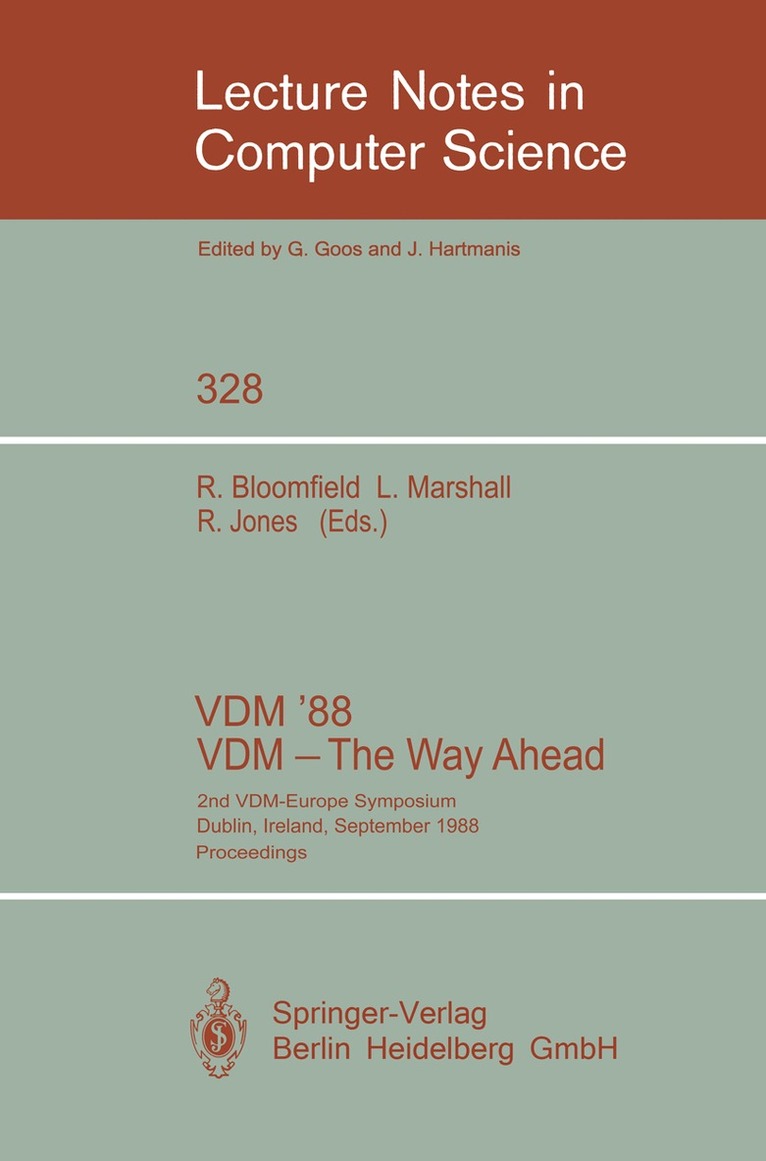
Häftad, Engelska, 1988
556 kr
Skickas inom 10-15 vardagar
This volume presents the proceedings of the 2nd VDM-Europe Symposium held in Dublin, Ireland, September 12-16, 1988. VDM, the Vienna Development Method, is a formal method for software engineering. It is being applied to an increasing number of projects by companies throughout Europe and there is an active international research programme supporting this process. "VDM - The Way Ahead" is the second of a series of symposia sponsored by the Commission of the European Communities (CEC) and organised by VDM-Europe. The term "formal method" refers to mathematically formal software specification and production methods. These methods aim to increase the quality of software in two related ways: by improving the specification and by making verification during the software production process more effective and easier to audit. The symposium proceedings focus on five areas of interest: education and technology transfer, experience and use of VDM, tools and support environments, method development and foundation at work, the standardisation of VDM. The proceedings are of interest to all those concerned with the application of more rigorous approaches to software development and the associated theoretical foundations.
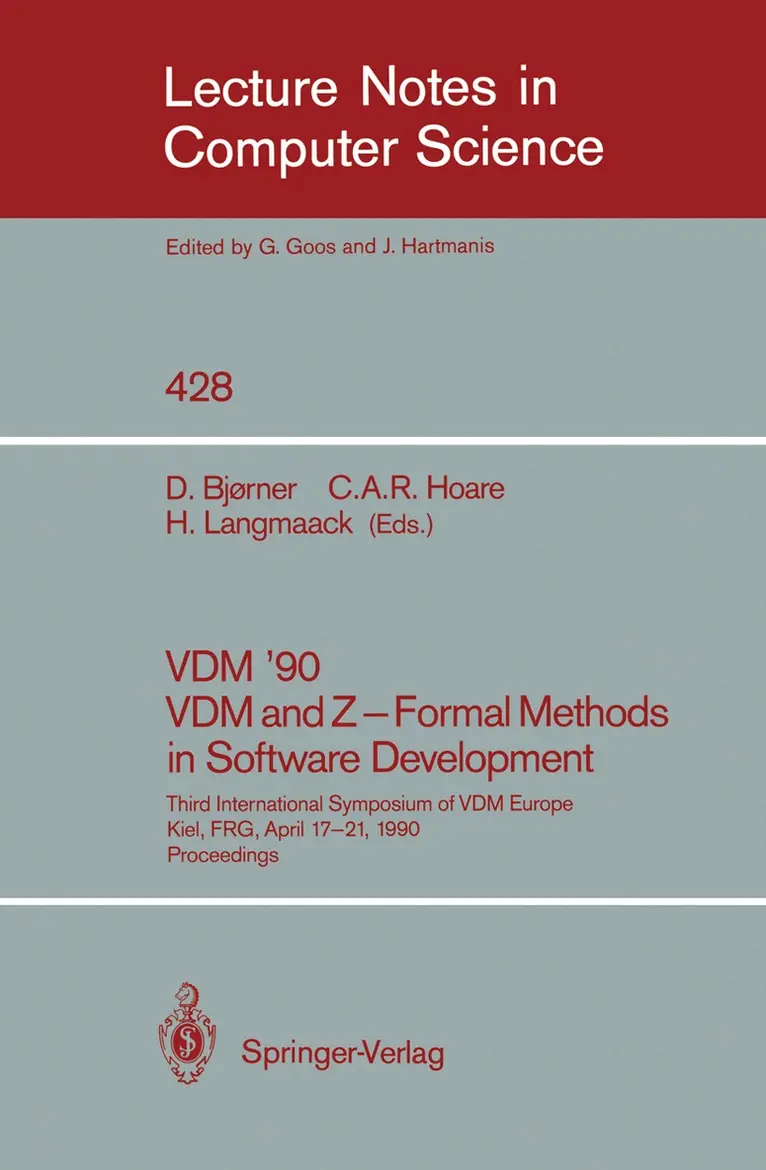
Häftad, Engelska, 1990
556 kr
Skickas inom 10-15 vardagar
The present volume is the third in a series of VDM Symposia Proceedings. VDM, the Vienna Development Method, is a formal method for software engineering, Z refers to Zermelo, a mathematician whose name is associated with set theory. Many computing science, programming and software engineering proceedings are published regularly. The ones by VDM Europe have the distinguished mark that they are concerned with bringing real theory to apply to real programming. In Europe, there is very much interest in methodology, semantics and techniques, that is, in understanding how we build and what it is that we are building. The papers of these proceedings basically fall into four major groups: Applications, Methodology, Formalisations, and Foundations. The Methodology group has been further subdivided into five areas: Specification Methodology, Design Methodology, Modularity, Object Orientedness, and Processes, Concurrency and Distributed Systems.
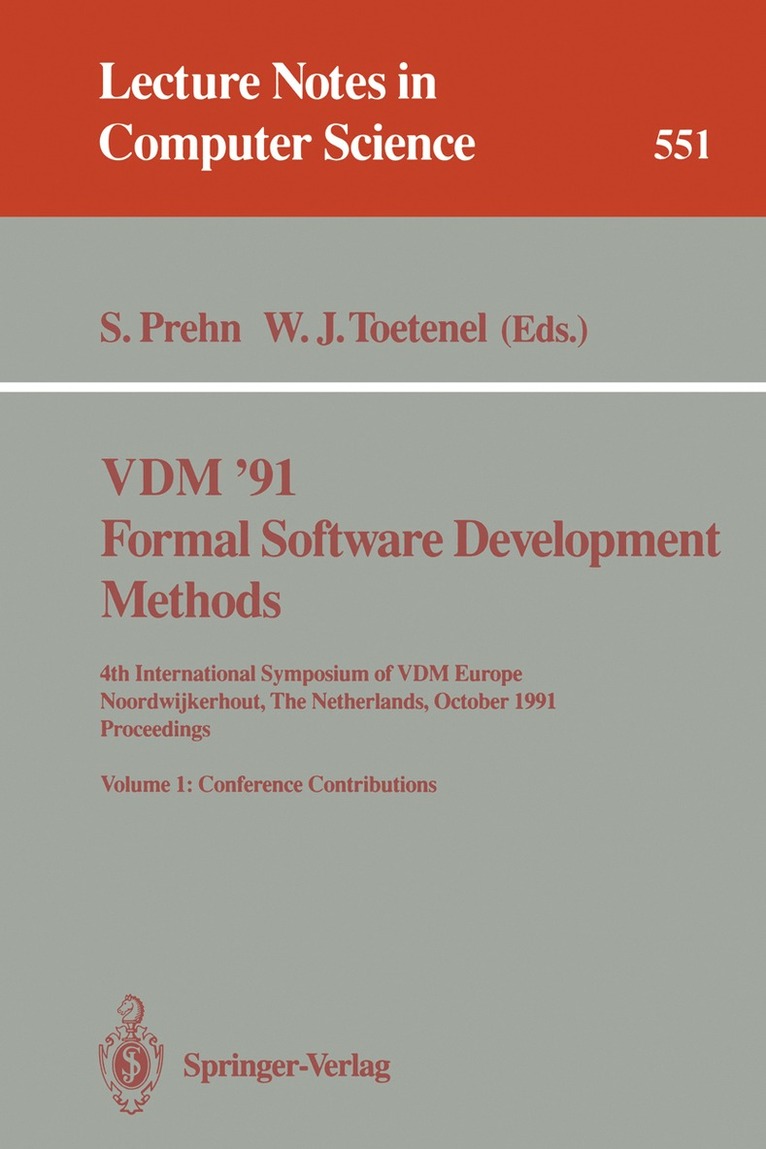
Häftad, Engelska, 1991
1 103 kr
Skickas inom 10-15 vardagar
The proceedings of the fourth Vienna Development MethodSymposium, VDM'91, are published here in two volumes...Previous VDM symposia were held in 1987 (LNCS 252), 1988(LNCS 328), and 1990 (LNCS 428)...The VDM symposia have been organized by VDM Europe, formedin 1985 as an advisory board sponsored by the Commission ofthe European Communities. The VDM Europe working groupconsisted of researchers, software engineers, andprogrammers, allinterested in promoting the industrialusage of formal methods for software development. The fourthVDM symposium presented not only VDM but also a large numberof other methods for formal software development...Volume 1 contains conference contributions. It has fourparts: contributions of invited speakers, papers, projectreports, and tools demonstration abstracts. The emphasis ison methods and calculi for development, verification andverification tools support, experiences from doingdevelopments, and the associated theoretical problems...Volume 2 contains four introductory tutorials (on LARCH,Refinement Calculus, VDM, and RAISE) and four advancedtutorials (on ABEL, PROSPECTRA, The B Method, and TheStack).They present a comprehensive account of the state oftheart.
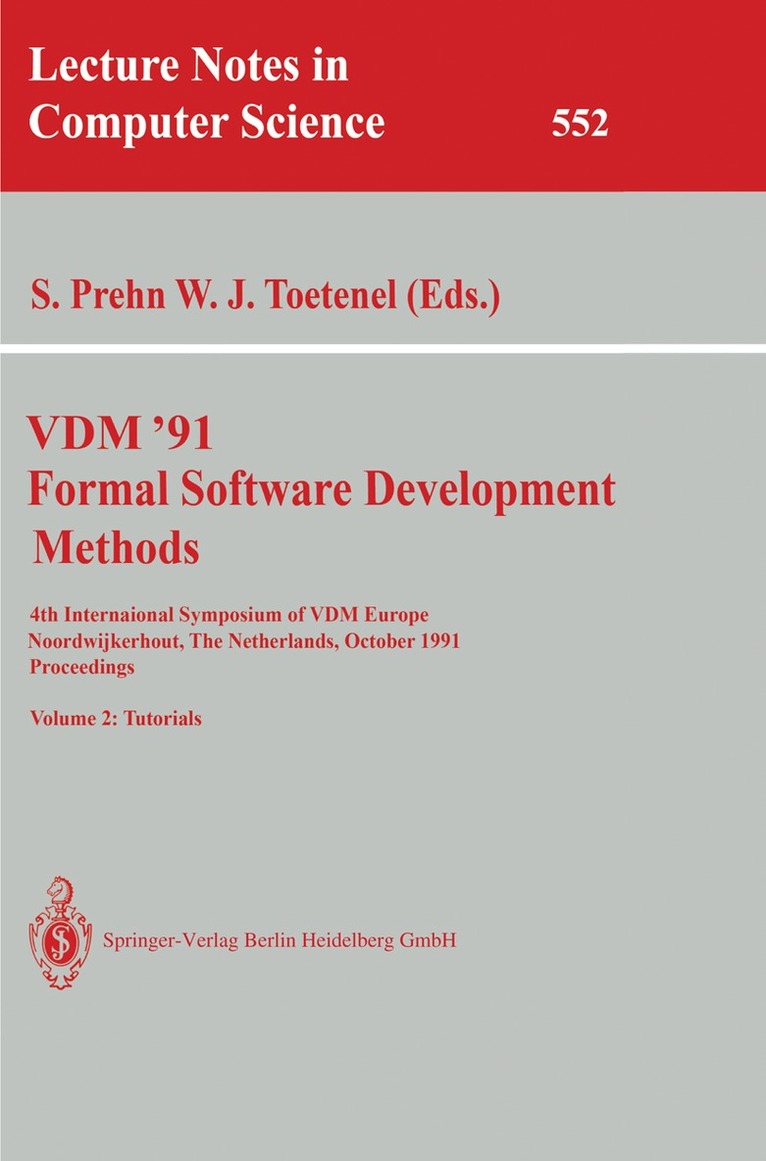
Häftad, Engelska, 1991
556 kr
Skickas inom 10-15 vardagar
The proceedings of the fourth Vienna Development MethodSymposium, VDM '91, are published here in two volumes...Previous VDM symposia were held in 1987 (LNCS 252), 1988(LNCS 328), and 1990 (LNCS 428)...The VDM symposia have been organized by the VDM Europe,formed in 1985 as an advisory board sponsored by theCommission of the European Communities. The VDM Europeworking group consisted of reasearchers, software engineers,and programmers, all interested in prommoting the industrialusage of formal methods for software development. The fourthVDM symposium presented not only VDM but also a large numberof other methods for formal software development...Volume 1 contains the conference contributions. It has fourparts: contributions of invited speakers, papers, projectreports, and tools demonstration abstracts. The emphasis ison methods and calculi for development, verification andverification tools support, experiences from doingdevelopments, and the associated theoretical problems...Volume2 contains four introductory tutorials (on LARCH,Refinement Calculus, VDM, and RAISE) and four advancedtutorials (on ABEL, PROSPECTRA, THE B Method, and TheStack).They present a comprehensive account of the state oftheart.
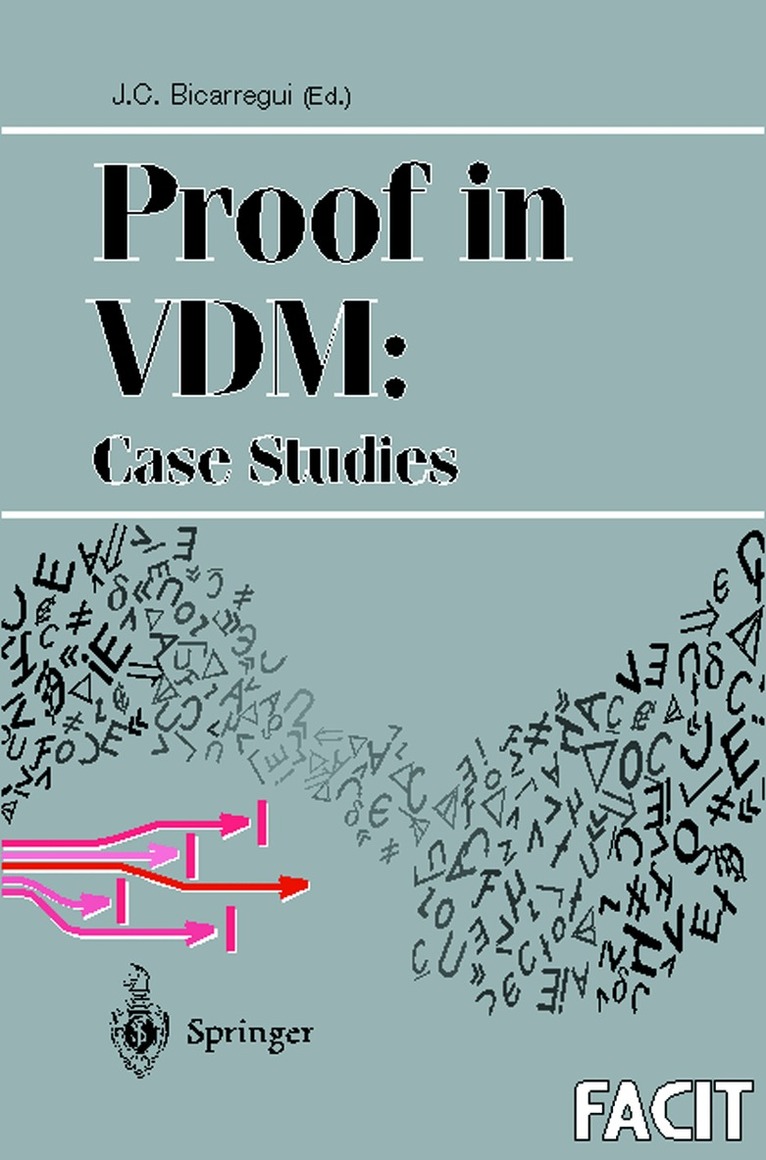
Häftad, Engelska, 1998
1 103 kr
Skickas inom 10-15 vardagar
This volume provides a companion to "Proof in VDM: a Practitioner's Guide". Using the proof theory presented in that volume, it examines a variety of realistic case studies which illustrate different aspects of the use of proof in formal development. Rather than concentrating on the construction of formal specifications, it devotes two chapters to validation using proof, describing how proofs in VDM can be constructed via installations of the PVS and Isabelle theorem provers. The book provides reference material for practitioners of formal methods who need to construct proofs, students requiring a detailed introduction to the practicalities of proof, and researchers interested in the role of theorem proving in formal development and relevant tool support.
Häftad, Engelska, 2012
539 kr
Skickas inom 10-15 vardagar
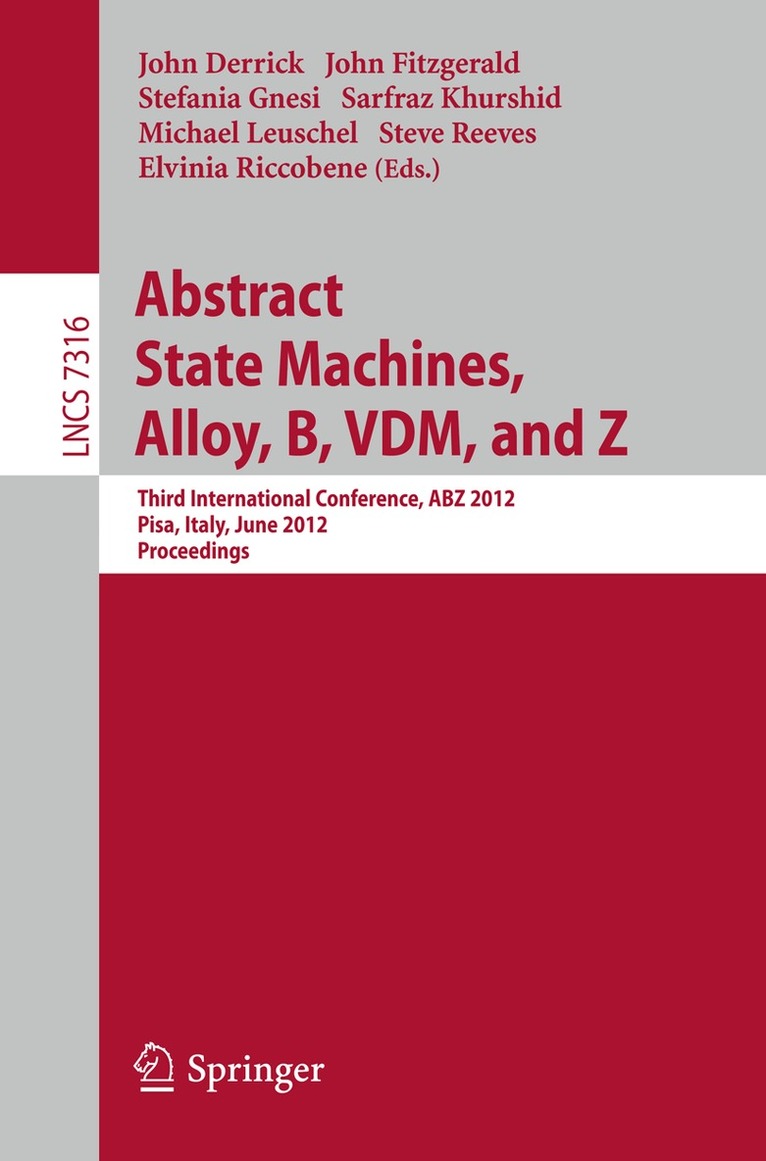
This book constitutes the proceedings of the Third International Conference on Abstract State Machines, B, VDM, and Z, which took place in Pisa, Italy, in June 2012. The 20 full papers presented together with 2 invited talks and 13 short papers were carefully reviewed and selected from 59 submissions. The ABZ conference series is dedicated to the cross-fertilization of five related state-based and machine-based formal methods: Abstract State Machines (ASM), Alloy, B, VDM, and Z. They share a common conceptual foundation and are widely used in both academia and industry for the design and analysis of hardware and software systems. The main goal of this conference series is to contribute to the integration of these formal methods, clarifying their commonalities and differences to better understand how to combine different approaches for accomplishing the various tasks in modeling, experimental validation and mathematical verification of reliable high-quality hardware/software systems.
Häftad, Engelska, 2014
555 kr
Skickas inom 10-15 vardagar
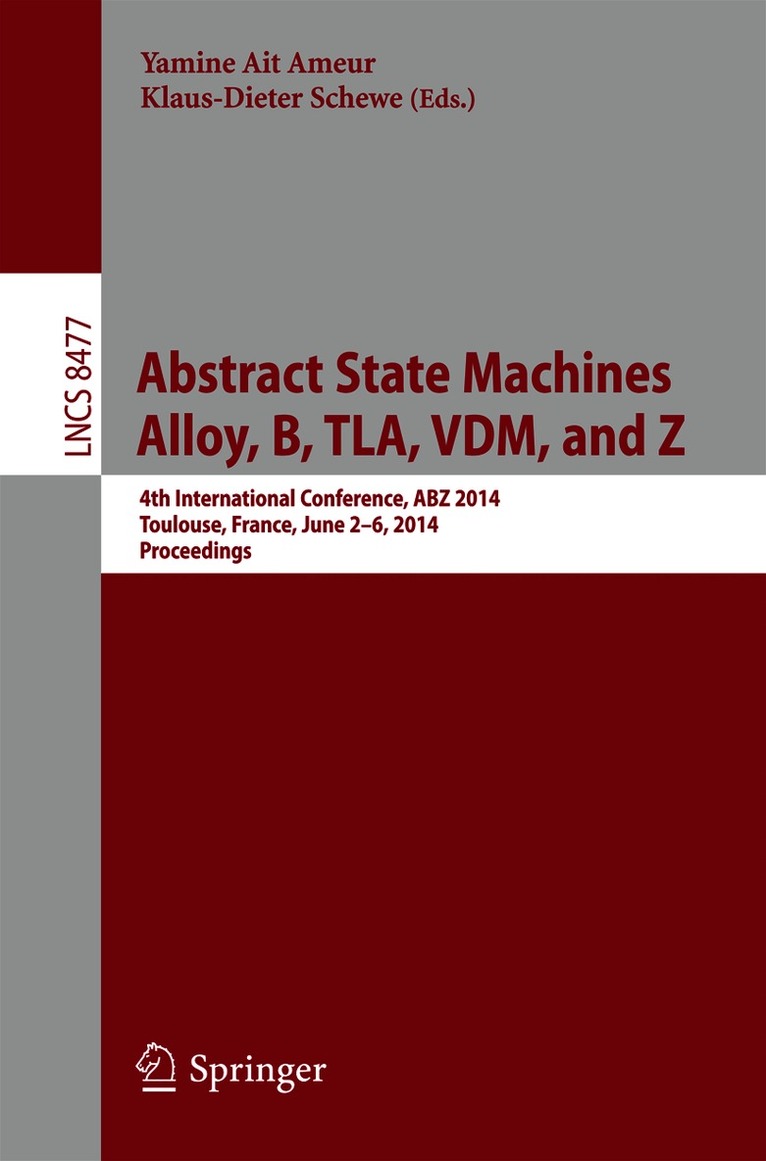
This book constitutes the thoroughly refereed proceedings of the 4th International Conference on Abstract State Machines, B, TLA, VDM and Z, which took place in Toulouse, France, in June 2014. The 13 full papers presented together with 3 invited talks and 19 short papers were carefully reviewed and selected from 81 submissions. The ABZ conference series is dedicated to the cross-fertilization of six related state-based and machine-based formal methods: Abstract State Machines (ASM), Alloy, B, TLA, VDM and Z. They share a common conceptual foundation and are widely used in both academia and industry for the design and analysis of hardware and software systems. The main goal of this conference series is to contribute to the integration of these formal methods, clarifying their commonalities and differences to better understand how to combine different approaches for accomplishing the various tasks in modeling, experimental validation and mathematical verification of reliable high-quality hardware/software systems.
Häftad, Engelska, 2010
741 kr
Skickas inom 10-15 vardagar
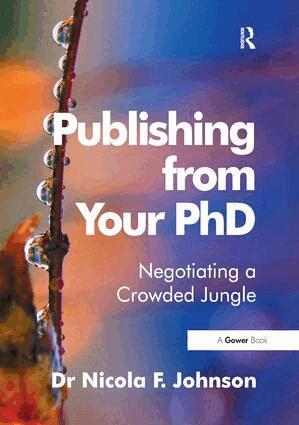
There is consistent pressure on all academics to publish, publish, publish. But not unless they have been awarded their PhD - considered by most to be the starting step of an academic career. So while the pressure is on to obtain the title, and then obtain a permanent position, and then publish journal articles, there is little support available to researchers in the nascent stage of their careers. Publishing from Your PhD precisely focuses on providing early career researchers with emotional and collegial support that is often not available in academe. It seeks to dispel nepotistic notions of superiority that places Professors and such on a pedestal. It specifically clarifies the difficulty in having written the PhD thesis and then rewriting it to suit the genre of journal articles. It does not deal with the 'how' of academic writing in general. This book endeavours to shed light on the path one must take to navigate the jungles of academia. This is an untrodden path which is unique to every researcher - especially those who employ abstract or critical theories in their research - and each journey through the jungle is different. However, because there is little literature about this embryonic journey, this book illuminates the processes and difficulties of publishing in journals and culling one's finely honed thesis into small chunks - a difficult task to which few admit.

Inbunden, Engelska, 2017
2 678 kr
Skickas inom 10-15 vardagar
Skills in learning and studying are vital to ensure success in higher education study, whether at undergraduate or postgraduate level, in university, college or in the workplace. Skills are needed in reflection, analysis, communication and recording information to produce good work, to engage effectively in a group, to carry out a project or perform well in exams; personal skills are needed to handle time and pressure and to relate to others on a course or in the workplace. This new guide builds on the hugely successful materials the authors have developed over the last 15 years. Along with highly practical guidance on traditional learning skills, The Guide to Learning and Study Skills provides direction for students on learning in a blended environment; the increased use of personal and professional development planning, continuing professional development and work-based learning.
Häftad, Engelska, 1993
1 103 kr
Skickas inom 10-15 vardagar
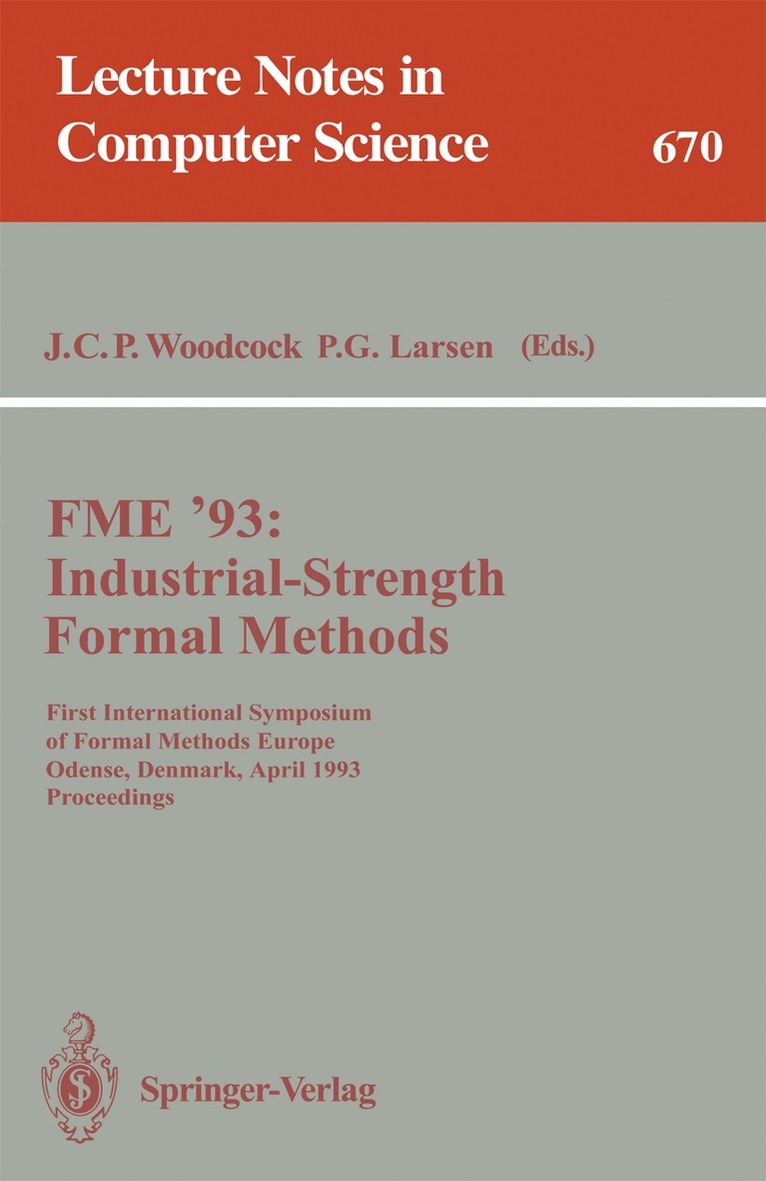
The last few years have borne witness to a remarkablediversity of formal methods, with applications to sequentialand concurrent software, to real-time and reactive systems,and to hardware design. In that time, many theoreticalproblems have been tackled and solved, and many continue tobe worked upon. Yet it is by the suitability of theirindustrial application and the extent of their usage thatformal methods will ultimately be judged. This volume presents the proceedings of the firstinternational symposium of Formal Methods Europe, FME'93. The symposium focuses on the application ofindustrial-strength formal methods. Authors address thedifficulties of scaling their techniques up toindustrial-sized problems, and their suitability in theworkplace, and discuss techniques that are formal (thatis, they have a mathematical basis) and that areindustrially applicable. The volume has four parts:- Invited lectures, containing a lecture by Cliff B. Jonesand a lecture by Antonio Cau and Willem-Paul de Roever;- Industrial usage reports, containing 6 reports;- Papers, containing 32 selected and refereedpapers;- Tool descriptions, containing 11 descriptions.
Häftad, Engelska, 1994
1 103 kr
Skickas inom 10-15 vardagar
This volume presents the proceedings of the Second International Symposium of Formal Methods Europe, held in Barcelona, Spain in October 1994.Besides two invited papers and seven industrial usage reports, there are 32 full papers selected from some 150 submissions. The industrial usage reports describe practical experiences in a variety of areas including security systems and railway signalling. The subjects of the research papers include refinement, proof, process modelling, specification of programming languages, model checking, real-time aspects, and the combination of formal and systematic methods; these contributions advance the foundations of formal methods and demonstrate their practical value.
Häftad, Engelska, 1996
1 103 kr
Skickas inom 10-15 vardagar
This book presents the refereed proceedings of the Third International Symposium of Formal Methods Europe, FME '96, held in Oxford, UK, in March 1996. FME '96 was co-sponsored by IFIP WG 14. 3 and devoted to "the application and demonstrated industrial benefit of formal methods, their new horizons and strengthened foundations". The 35 full revised papers included were selected from a total of 103 submissions; also included are three invited papers. The book addresses all relevant aspects of formal methods, from the point of view of the industrial R & D professional as well as from the academic viewpoint, and impressively documents the significant progress in the use of formal methods for the solution of real-world problems.
Inbunden, Engelska, 2014
556 kr
Skickas inom 10-15 vardagar
One of the most significant challenges in the development of embedded and cyber-physical systems is the gap between the disciplines of software and control engineering. In a marketplace, where rapid innovation is essential, engineers from both disciplines need to be able to explore system designs collaboratively, allocating responsibilities to software and physical elements, and analyzing trade-offs between them.To this end, this book presents a framework that allows the very different kinds of design models – discrete-event (DE) models of software and continuous time (CT) models of the physical environment – to be analyzed and simulated jointly, based on common scenarios. The individual chapters provide introductions to both sides of this co-simulation technology, and give a step-by-step guide to the methodology for designing and analyzing co-models. They are grouped into three parts: Part I introduces the technical basis for collaborative modeling and simulation with the Crescendo technology. Part II continues with different methodological guidelines for creating co-models and analyzing them in different ways using case studies. Part III then delves into more advanced topics and looks into the potential future of this technology in the area of cyber-physical systems. Finally various appendices provide summaries of the VDM and 20-sim technologies, a number of valuable design patterns applicable for co-models, and an acronym list along with indices and references to other literature. By combining descriptions of the underlying theory with records of real engineers’ experience in using the framework on a series of case studies the book appeals to scientists and practitioners alike. It is complemented by tools, examples, videos, and other material on www.crescendotool.org.Scientists/researchers and graduate students working in embedded and cyber-physical systems will learn the semantic foundations for collaborative modeling and simulation,as well as the current capabilities and limitations of methods and tools in this field. Practitioners will be able to develop an appreciation of the capabilities of the co-modeling techniques, to assess the benefits of more collaborative approaches to modeling and simulation, and will benefit from the included guidelines and modeling patterns.
Häftad, Engelska, 2016
555 kr
Skickas inom 10-15 vardagar
One of the most significant challenges in the development of embedded and cyber-physical systems is the gap between the disciplines of software and control engineering. In a marketplace, where rapid innovation is essential, engineers from both disciplines need to be able to explore system designs collaboratively, allocating responsibilities to software and physical elements, and analyzing trade-offs between them.To this end, this book presents a framework that allows the very different kinds of design models – discrete-event (DE) models of software and continuous time (CT) models of the physical environment – to be analyzed and simulated jointly, based on common scenarios. The individual chapters provide introductions to both sides of this co-simulation technology, and give a step-by-step guide to the methodology for designing and analyzing co-models. They are grouped into three parts: Part I introduces the technical basis for collaborative modeling and simulation with the Crescendo technology. Part II continues with different methodological guidelines for creating co-models and analyzing them in different ways using case studies. Part III then delves into more advanced topics and looks into the potential future of this technology in the area of cyber-physical systems. Finally various appendices provide summaries of the VDM and 20-sim technologies, a number of valuable design patterns applicable for co-models, and an acronym list along with indices and references to other literature. By combining descriptions of the underlying theory with records of real engineers’ experience in using the framework on a series of case studies the book appeals to scientists and practitioners alike. It is complemented by tools, examples, videos, and other material on www.crescendotool.org.Scientists/researchers and graduate students working in embedded and cyber-physical systems will learn the semantic foundations for collaborative modeling and simulation,as well as the current capabilities and limitations of methods and tools in this field. Practitioners will be able to develop an appreciation of the capabilities of the co-modeling techniques, to assess the benefits of more collaborative approaches to modeling and simulation, and will benefit from the included guidelines and modeling patterns.
Letar du efter digitala böcker?
E-böcker och ljudböcker handlar du än så länge på vår tidigare sajt.