Hagley Library Studies in Business, Technology, and Politics – serie
Visar alla böcker i serien Hagley Library Studies in Business, Technology, and Politics. Handla med fri frakt och snabb leverans.
14 produkter
14 produkter
642 kr
Skickas
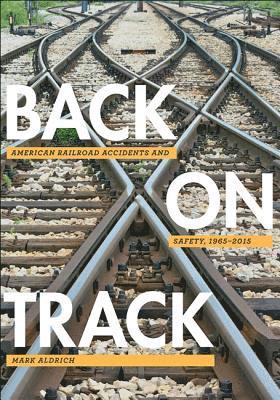
A fascinating account of one of America’s most important industries and its dangers.Throughout the early twentieth century, railroad safety steadily improved across the United States. But by the 1960s, American railroads had fallen apart, the result of a regulatory straightjacket that eroded profitability and undermined safety. Collisions, derailments, worker fatalities, and grade crossing mishaps skyrocketed, while hazmat disasters exploded into newspaper headlines. In Back on Track, his sequel to Death Rode the Rails, Mark Aldrich traces the history of railroad accidents beginning in 1965, when Congress responded to bankrupt and scandal-ridden carriers by enacting a new safety regime. Aldrich details the federalization of rail safety and the implementation of a massive grade crossing program. He touches on post-1976 economic deregulation, which provided critical financing that underwrote better public safety. He also explores how the National Transportation Safety Board acted as a public scold to shine bright lights on private failings, while Federal Railroad Administration regulations reinforced market incentives for better safety. Ultimately, Aldrich concludes, the past 50 years have seen great strides in restoring railroad safety while enhancing industry profitability. Arguing that it was not inadequate safety regulation but rather stifling economic regulation that initially caused an uptick in train accidents, Back on Track is both a paen to the return of more competitive railroading and the only comprehensive history of the safety of modern American railroads. Praise for Death Rode the Rails"A masterful study of the complex evolution of railroad safety."—American Historical Review"Students of rail safety, and today's Class I railroad managers, need to read this volume."—Trains"Aldrich has created a masterpiece. His research is extensive, drawing on a rich variety of obscure yet relevant sources."—Register of the Kentucky Historical Society"One of the first large-scale scholarly studies of railroad safety in America."—Railroad History"A thought-provoking and well-grounded contribution to the history of American economic development."—Journal of American History"Pioneering . . . A central message of Aldrich's book is that 'little accidents' played a crucial though until now largely hidden role in the gradual evolution of a risk society."—Technology and Culture"A work of merit . . . essential reading for historians of transport safety, business, and technology."—Journal of Transport History"Impressive and thoroughly researched . . . Demonstrates how railroad safety evolved from the intersection of market pressures, technology, and public sentiment."—Journal of Southern History
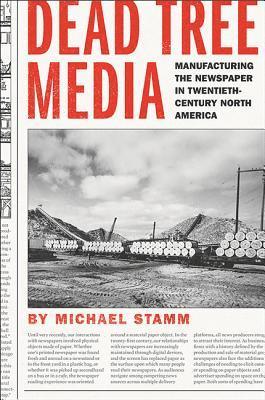
Dead Tree Media
Manufacturing the Newspaper in Twentieth-Century North America
Inbunden, Engelska, 2018
504 kr
Skickas
A deep and timely account of how American newspapers were produced and distributed on paper.Winner of the Best Book in Canadian Business History by the Canadian Business History AssociationPopular assessments of printed newspapers have become so grim that some have taken to calling them “dead tree media” as a way of invoking the medium’s imminent demise. There is a literal truth hidden in this dismissive expression: printed newspapers really are material goods made from trees. And, throughout the twentieth century, the overwhelming majority of trees cut down in the service of printing newspapers in the United States came from Canada. In Dead Tree Media, Michael Stamm reveals the international history of the commodity chains connecting Canadian trees and US readers. Drawing on newly available corporate documents and research in archives across North America, Stamm offers a sophisticated rethinking of the material history of the printed newspaper. Tracing its industrial production from the forest to the newsstand, he provides an account of the obscure and often hidden labor involved in this manufacturing process by showing how it was driven by not only publishers and journalists but also lumberjacks, paper mill workers, policymakers, chemists, and urban and regional planners. Stamm describes the 1911 shift in tariff policy that gave US publishers duty-free access to Canadian newsprint, providing a tremendous boost to Canadian paper manufacturers and a significant subsidy to American newspaper publishers. He also explains how Canada attracted massive American foreign investment in paper mills around the same time that US publishers were able to gain greater access to Canada’s vast spruce forests. Focusing particularly on the Chicago Tribune, Stamm provides a new history of the rise and fall of both the mass circulation printed newspaper and the particular kind of corporation in the newspaper business that had shaped many aspects of the cultural, political, and even physical landscape of North America. For those seeking to understand the travails of the contemporary newspaper business, Dead Tree Media is essential reading.
684 kr
Skickas inom 11-20 vardagar
The untold story of America's wholesale food business.In nineteenth-century America, municipal deregulation of the butcher trade and state-incorporated market companies gave rise to a flourishing wholesale trade. In Movable Markets, Helen Tangires describes the evolution of the American wholesale marketplace for fresh food, from its development as a bustling produce district in the heart of the city to its current indiscernible place in food industrial parks on the urban periphery.Tangires follows the middlemen, those intermediaries who became functional necessities as the railroads accelerated the process of delivering perishable food to the city. Tracing their rise and decline in the wake of a deregulated food economy, she asks: How did these people, who occupied such key roles as food distributors and suppliers to the retail trade, end up exiled to urban outskirts? Moving into the early twentieth century, she explains how progressive city planners and agricultural economists responded to anxieties about the high cost of living, traffic congestion, and disruptions in the food supply by questioning the centrality, aging infrastructure, and organizational structure of wholesale markets. Tangires combines economic and cultural history by analyzing popular literature, innovative scholarship, and USDA publications. Detailing the legal, physical, and organizational means behind the complex exodus of food wholesaling from the urban core, Tangires also reveals how the trade adjusted to life beyond the city limits as it created new channels of distribution, product lines, and markets. Readers interested in US history, city and regional planning history, food history, and public policy, as well as anyone curious about the disappearance of the central produce district as a major component of the city, will find Movable Markets a fascinating read.
724 kr
Skickas inom 7-10 vardagar
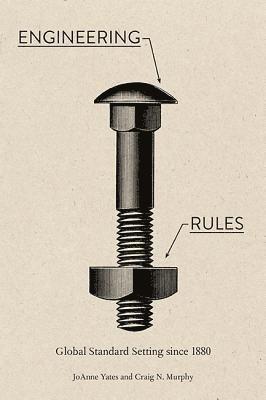
The first global history of voluntary consensus standard setting.Finalist, Hagley Prize in Business History, The Hagley Museum and Library / The Business History ConferencePrivate, voluntary standards shape almost everything we use, from screw threads to shipping containers to e-readers. They have been critical to every major change in the world economy for more than a century, including the rise of global manufacturing and the ubiquity of the internet. In Engineering Rules, JoAnne Yates and Craig N. Murphy trace the standard-setting system's evolution through time, revealing a process with an astonishingly pervasive, if rarely noticed, impact on all of our lives. This type of standard setting was established in the 1880s, when engineers aimed to prove their status as professionals by creating useful standards that would be widely adopted by manufacturers while satisfying corporate customers. Yates and Murphy explain how these engineers' processes provided a timely way to set desirable standards that would have taken much longer to emerge from the market and that governments were rarely willing to set. By the 1920s, the standardizers began to think of themselves as critical to global prosperity and world peace. After World War II, standardizers transcended Cold War divisions to create standards that made the global economy possible. Finally, Yates and Murphy reveal how, since 1990, a new generation of standardizers has focused on supporting the internet and web while applying the same standard-setting process to regulate the potential social and environmental harms of the increasingly global economy.Drawing on archival materials from three continents, Yates and Murphy describe the positive ideals that sparked the standardization movement, the ways its leaders tried to realize those ideals, and the challenges the movement faces today. Engineering Rules is a riveting global history of the people, processes, and organizations that created and maintain this nearly invisible infrastructure of today's economy, which is just as important as the state or the global market.
734 kr
Skickas
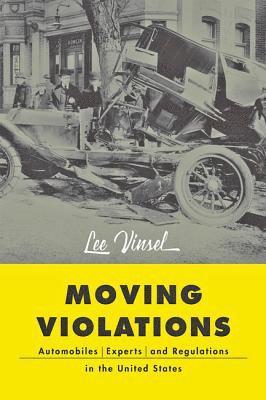
The first comprehensive history of auto regulation in the United States.Regulation has shaped the evolution of the automobile from the beginning. In Moving Violations, Lee Vinsel shows that, contrary to popular opinion, these restrictions have not hindered technological change. Rather, by drawing together communities of scientific and technical experts, auto regulations have actually fostered innovation.Vinsel tracks the history of American auto regulation from the era of horseless carriages and the first, faltering efforts to establish speed limits in cities to recent experiments with self-driving cars. He examines how the government has tried to address car-related problems, from accidents to air pollution, and demonstrates that automotive safety, emissions, and fuel economy have all improved massively over time. Touching on fuel economy standards, the rise of traffic laws, the birth of drivers' education classes, and the science of distraction, he also describes how the government's changing activities have reshaped the automobile and its drivers, as well as the country's entire system of roadways and supporting technologies, including traffic lights and gas pumps. Moving Violations examines how policymakers, elected officials, consumer advocates, environmentalists, and other interested parties wrestled to control the negative aspects of American car culture while attempting to preserve what they saw as its positive contributions to society. Written in a clear, approachable, and jargon-free voice, Moving Violations will appeal to makers and analysts of policy, historians of science, technology, business, and the environment, and any readers interested in the history of cars and government.
637 kr
Skickas inom 7-10 vardagar
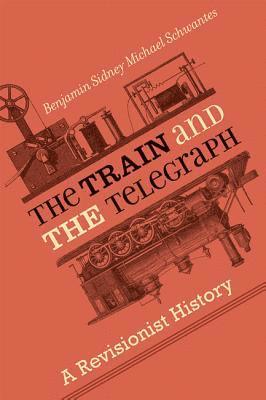
A challenge to the long-held notion of close ties between the railroad and telegraph industries of the nineteenth century.To many people in the nineteenth century, the railroad and the telegraph were powerful, transformative forces, ones that seemed to work closely together to shape the economy, society, and politics of the United States. However, the perception—both popular and scholarly—of the intrinsic connections between these two institutions has largely obscured a far more complex and contested relationship, one that created profound divisions between entrepreneurial telegraph promoters and warier railroad managers. In The Train and the Telegraph, Benjamin Sidney Michael Schwantes argues that uncertainty, mutual suspicion, and cautious experimentation more aptly describe how railroad officials and telegraph entrepreneurs hesitantly established a business and technical relationship. The two industries, Schwantes reveals, were drawn together gradually through external factors such as war, state and federal safety regulations, and financial necessity, rather than because of any perception that the two industries were naturally related or beneficial to each other. Complicating the existing scholarship by demonstrating that the railroad and telegraph in the United States were uneasy partners at best—and more often outright antagonists—throughout the nineteenth and early twentieth centuries, The Train and the Telegraph will appeal to scholars of communication, transportation, and American business history and political economy, as well as to enthusiasts of the nineteenth-century American railroad industry.
526 kr
Skickas inom 5-8 vardagar
The first global history of voluntary consensus standard setting.Finalist, Hagley Prize in Business History, The Hagley Museum and Library / The Business History ConferencePrivate, voluntary standards shape almost everything we use, from screw threads to shipping containers to e-readers. They have been critical to every major change in the world economy for more than a century, including the rise of global manufacturing and the ubiquity of the internet. In Engineering Rules, JoAnne Yates and Craig N. Murphy trace the standard-setting system's evolution through time, revealing a process with an astonishingly pervasive, if rarely noticed, impact on all of our lives. This type of standard setting was established in the 1880s, when engineers aimed to prove their status as professionals by creating useful standards that would be widely adopted by manufacturers while satisfying corporate customers. Yates and Murphy explain how these engineers' processes provided a timely way to set desirable standards that would have taken much longer to emerge from the market and that governments were rarely willing to set. By the 1920s, the standardizers began to think of themselves as critical to global prosperity and world peace. After World War II, standardizers transcended Cold War divisions to create standards that made the global economy possible. Finally, Yates and Murphy reveal how, since 1990, a new generation of standardizers has focused on supporting the internet and web while applying the same standard-setting process to regulate the potential social and environmental harms of the increasingly global economy.Drawing on archival materials from three continents, Yates and Murphy describe the positive ideals that sparked the standardization movement, the ways its leaders tried to realize those ideals, and the challenges the movement faces today. Engineering Rules is a riveting global history of the people, processes, and organizations that created and maintain this nearly invisible infrastructure of today's economy, which is just as important as the state or the global market.
724 kr
Skickas inom 7-10 vardagar
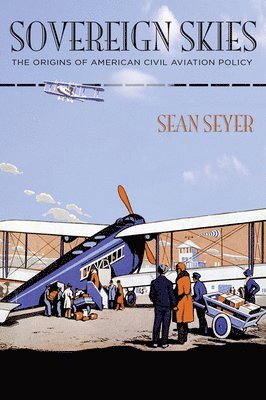
A pathbreaking history of the regulatory foundations of America's twentieth-century aerial preeminence.Winner of the 2026 Gardner-Lasser Aerospace History Literature Award by the American Institute of Aeronautics and AstronauticsToday, the federal government possesses unparalleled authority over the atmosphere of the United States. Yet when the Wright Brothers inaugurated the air age on December 17, 1903, the sky was an unregulated frontier. As increasing numbers of aircraft threatened public safety in subsequent decades and World War I accentuated national security concerns about aviation, the need for government intervention became increasingly apparent. But where did authority over the airplane reside within America's federalist system? And what should US policy look like for a device that could readily travel over physical barriers and political borders?In Sovereign Skies, Sean Seyer provides a radically new understanding of the origins of American aviation policy in the first decades of the twentieth century. Drawing on the concept of mental models from cognitive science, regime theory from political science, and extensive archival sources, Seyer situates the development, spread, and institutionalization of a distinct American regulatory idea within its proper international context. He illustrates how a relatively small group of bureaucrats, military officers, industry leaders, and engineers drew upon previous regulatory schemes and international principles in their struggle to define government's relationship to the airplane. In so doing, he challenges the current domestic-centered narrative within the literature and delineates the central role of the airplane in the reinterpretation of federal power under the commerce clause. By placing the origins of aviation policy within a broader transnational context, Sovereign Skies highlights the influence of global regimes on US policy and demonstrates the need for continued engagement in world affairs. Filling a major gap in the historiography of aviation, it will be of interest to readers of aviation, diplomatic, and legal history, as well as regulatory policy and American political development.
618 kr
Skickas inom 7-10 vardagar
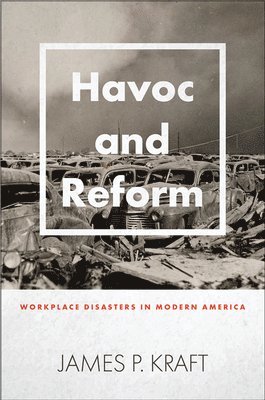
How disasters—that have wrecked work sites throughout American history, in all parts of the nation and all sectors of the economy—have also inspired policy reform.Workplace disasters have wreaked havoc on countless American workers and their families. They have resulted in widespread death and disability as well as the loss of property and savings. These tragic events have also inspired safety reforms that reshaped labor conditions in ways that partially compensated for death, suffering, and social dislocation. In Havoc and Reform, James P. Kraft encourages readers to think about such disastrous events in new ways. Placing the problem of workplace safety in historical context, Kraft focuses on five catastrophes that shocked the nation in the half century after World War II, a time when service-oriented industries became the nation's leading engines of job growth. Looking to growing areas of economic life in the Western Sunbelt, Kraft touches on the 1947 explosion of the Texas City Monsanto Chemical Company plant, the 1956 airliner collision over the Grand Canyon, the hospital collapses following the 1971 San Fernando earthquake, the 1980 fire at the Las Vegas MGM Grand, and the 1995 bombing of the Oklahoma City Federal Building. These incidents destroyed places of employment that seemed safe and affected a relatively wide range of working people, including highly trained, salaried professionals and blue- and white-collar groups. And each took a toll on the general public, increasing fears that anyone could be in danger of being killed or injured and putting pressure on public officials to prevent similar tragedies in the future.As Kraft considers how these tragedies transformed individual lives and specific work environments, he describes how employees, employers, and public leaders reacted to each event. Presented chronologically, his studies offer a unique and sobering outlook on the rise of a now vital and integral part of the national economy. They also underscore the ubiquity and persistence of workplace disasters in American history while building on and challenging literature about the impact of World War II in the American West. Within a broader frame, they speak to the double-edged nature of modern life.
615 kr
Skickas inom 7-10 vardagar
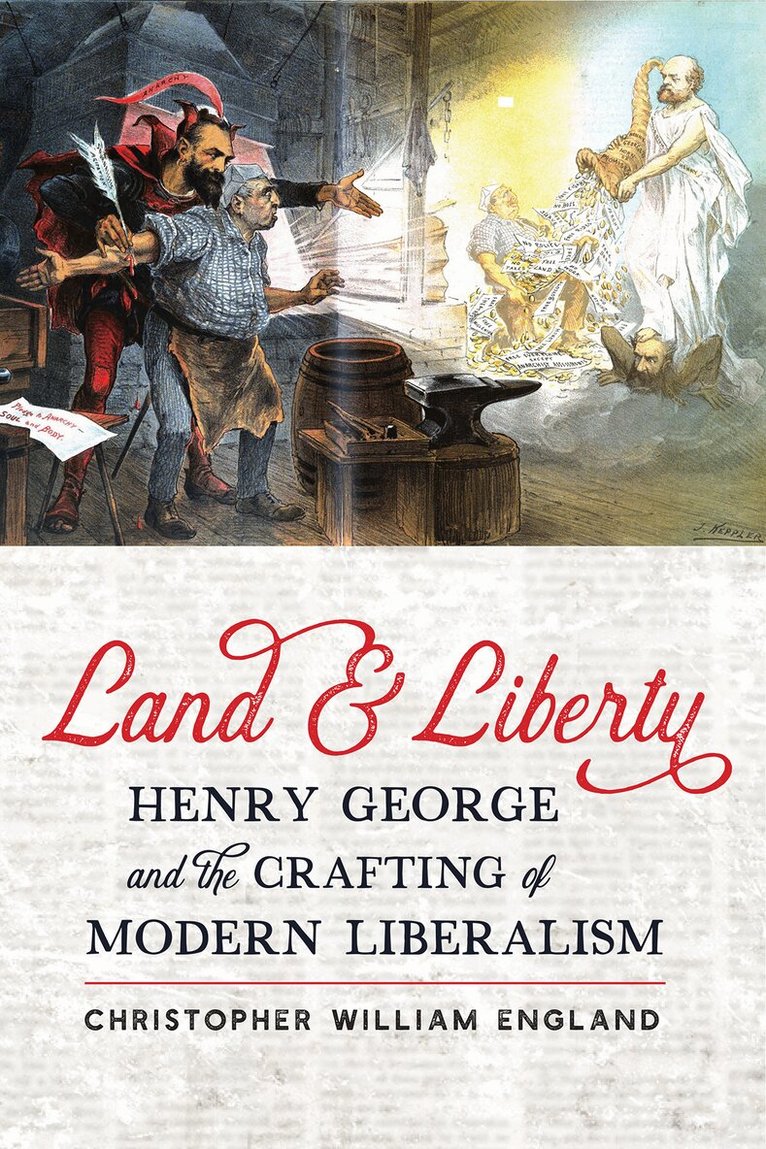
A comprehensive history of Henry George and the single tax movement.In 1912, Sun Yat-sen announced the birth of the Chinese Republic and promised that it would be devoted to the economic welfare of all its people. In shaping his plans for wealth redistribution, he looked to an American now largely forgotten in the United States: Henry George. In Land and Liberty, Christopher William England excavates the lost history of one of America's most influential radicals and explains why so many activists were once inspired by his proposal to tax landed wealth. Drawing on the private papers of a network of devoted believers, Land and Liberty represents the first comprehensive account of this important movement to nationalize land and expropriate rent. Beginning with concerns about rising rents in the 1870s and ending with the establishment of New Deal policies that extended public control over land, natural resources, and housing, "Georgism" served as a catalyst for reforms intended to make the nation more democratic. Many of these concerns remain relevant today, including the exploitation of natural resources, rising urban rent, and wealth inequality. At a time when class divisions sparked fears that capitalism and democracy were incompatible, hopes of building a social welfare state using the rents of idle landlords revitalized the middle class's conviction that democracy and liberty could be reconciled. Against steep odds, George made land nationalization vital to the politics of a nation dominated by small farmers and helped push liberalism leftward through his calls for collective rights to land and natural resources.
713 kr
Skickas inom 7-10 vardagar
A provocative history of how corporate titans in the 1920s used a massive public relations campaign to transform public opinion on big business.In the early twentieth century, as Americans erupted in righteous indignation over the flagrant abuses of big business, utility executives faced an existential crisis. With calls for strict regulation or outright government ownership of utilities, how could streetcar, electricity, and telephone executives thwart municipal ownership, rein in regulation, and secure huge profits? In Courteous Capitalism, Daniel Robert reveals how utility executives answered this question by launching the largest nongovernmental public relations campaign the nation had ever seen. In part, this campaign encouraged managers to compel their clerks to exude "courtesy," "sunshine," and "patience" toward customers. Rather than bribe the few, executives would convert the many using a combination of emotional labor and improved customer service. At the same time, executives organized the widespread manipulation of the press, schools, radio, and movies. At once a labor history of clerks and a social history of consumers, Courteous Capitalism offers an intriguing new argument for why a major reform goal of Progressives faded and why Americans changed their minds regarding corporate monopolies.
387 kr
Skickas inom 7-10 vardagar
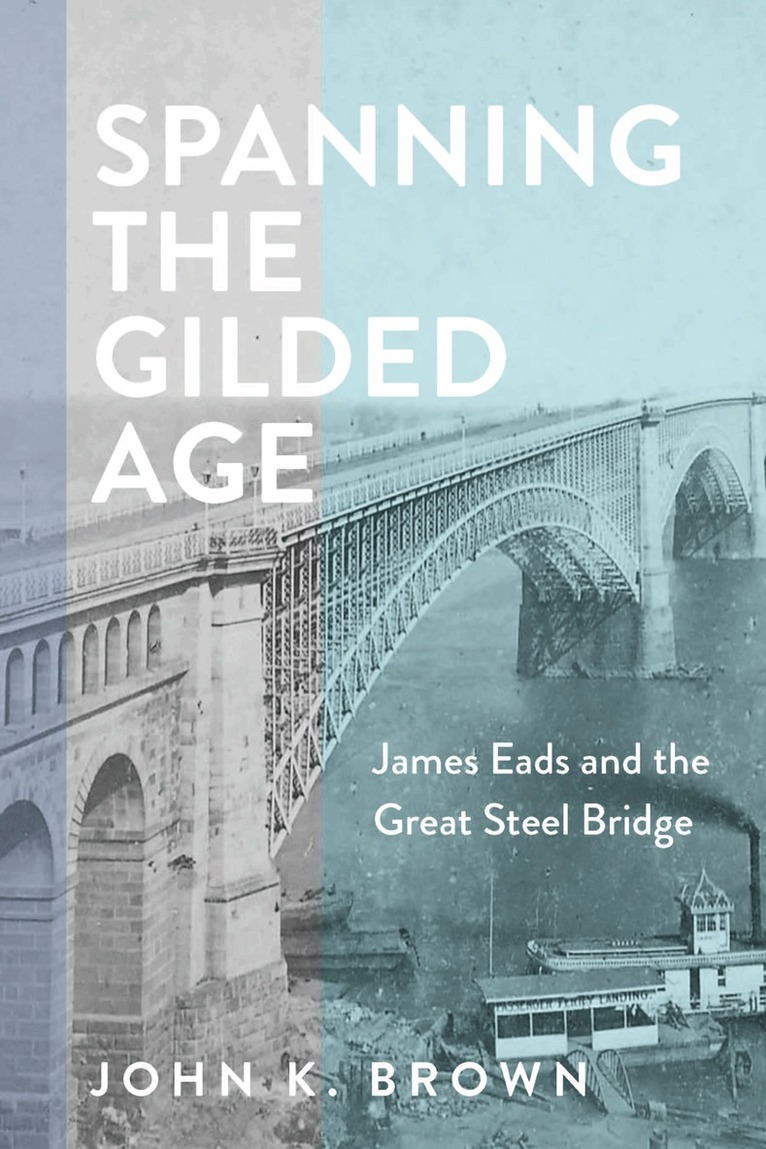
The fascinating history of the St. Louis Bridge, the first steel structure in the world.Winner of the 2025 Captain Donald T. Wright Award for Maritime Journalism and Literature by the Herman T. Pott National Inland Waterways LibraryIn Spanning the Gilded Age, John K. Brown tells the daring, improbable story of the construction of the St. Louis Bridge, known popularly as the Eads Bridge. Completed in 1874, it was the first structure of any kind—anywhere in the world—built of steel. This history details the origins, design, construction, and enduring impact of a unique feat of engineering, and it illustrates how Americans built their urban infrastructure during the nineteenth century. With three graceful arches spanning the Mississippi River, the Eads Bridge's twin decks carried a broad boulevard above a dual-track railroad. To place its stone piers on bedrock, engineer James Eads pioneered daring innovations that allowed excavators to work one hundred feet beneath the river. With construction scarcely begun, Eads circulated a prospectus—offering a 400 percent return on investment—that attracted wealthy investors, including J. Pierpont Morgan in New York and his father, Junius, in London. This record-breaking design, which employed a novel method to lay its foundations and an untried metal for its arches, was projected by a steamboat man who had never before designed a bridge. By detailing influential figures such as James Eads, the Morgans, Andrew Carnegie, and Jay Gould, Spanning the Gilded Age offers new perspectives on an era that saw profound changes in business, engineering, governance, and society. Beyond the bridge itself, Brown explores a broader story: how America became urban, industrial, and interconnected. This triumph of engineering reflects the Gilded Age's grand ambitions, and the bridge remains a vital transportation artery today.
Rise and Fall of King Coal
American Energy Transitions in an Age of Markets, 1800–1940
Inbunden, Engelska, 2025
813 kr
Skickas inom 5-8 vardagar
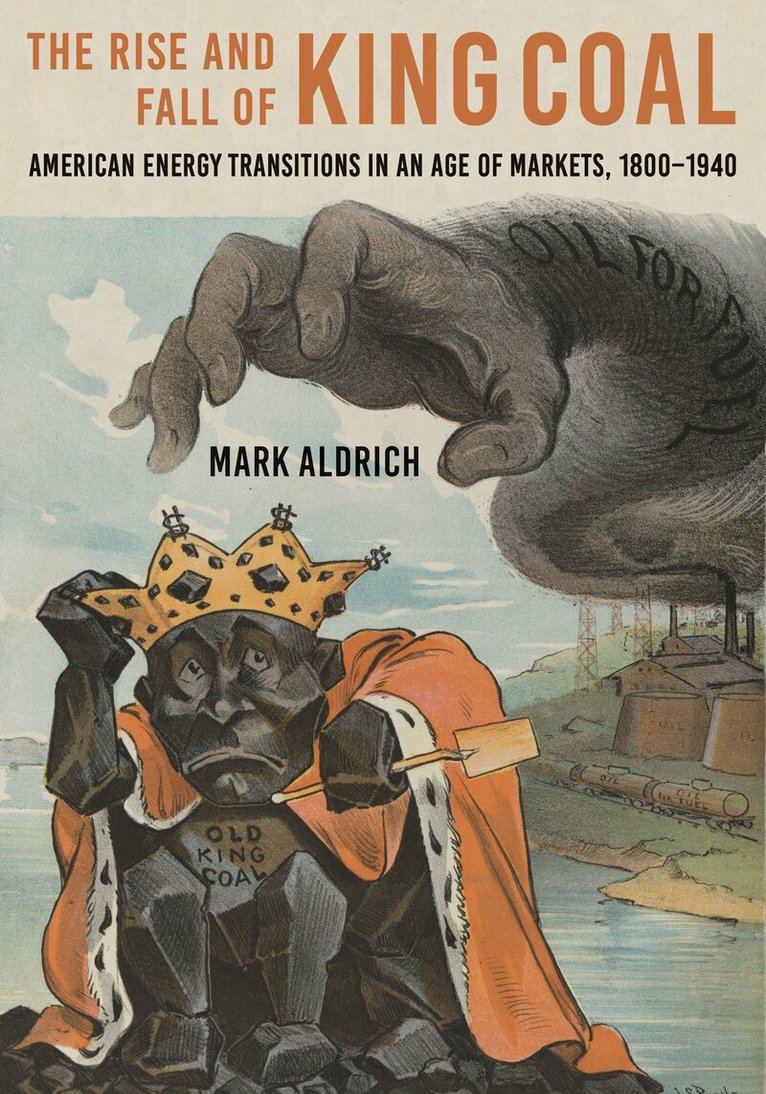
A history of the dynamic role of coal in the energy landscape of the United States during the nineteenth and twentieth centuries.In The Rise and Fall of King Coal, Mark Aldrich explores the pivotal role of coal in the historical energy landscape of the United States. Meticulously researched and clearly written, this analysis of the rise, dominance, and eventual decline of coal as a primary fuel source traces its evolution from the late eighteenth century to the mid-twentieth century. Aldrich explains the factors that contributed to coal's ascendancy and decline, including efficiency, marketing, and the technological advancements that facilitated both its widespread adoption and later languishing. A complex interplay among market forces, government policies, and societal attitudes profoundly shaped the coal industry's trajectory. Challenges and controversies have surrounded the production of coal since its inception, including labor issues, environmental concerns, and resource scarcity. Aldrich's comprehensive approach—which combines historical analysis, economic perspectives, and a deep appreciation for the technological and scientific advancements that transformed the energy landscape—also emphasizes the role of innovation and entrepreneurship in driving energy transitions. By providing a bottom-up history that underscores the pivotal role of individual choices and market dynamics, The Rise and Fall of King Coal offers valuable insights into the dynamic nature of energy transitions. In lively discussions of domestic cooking and heating, Aldrich emphasizes the importance of women in shaping households' energy choices, and he gives voice to individual women and men as they describe how these decisions raised their standard of living. This book represents a seminal contribution to the field of energy history and highlights the complex interplay of factors that have shaped the evolution of energy use in the United States.
705 kr
Kommande
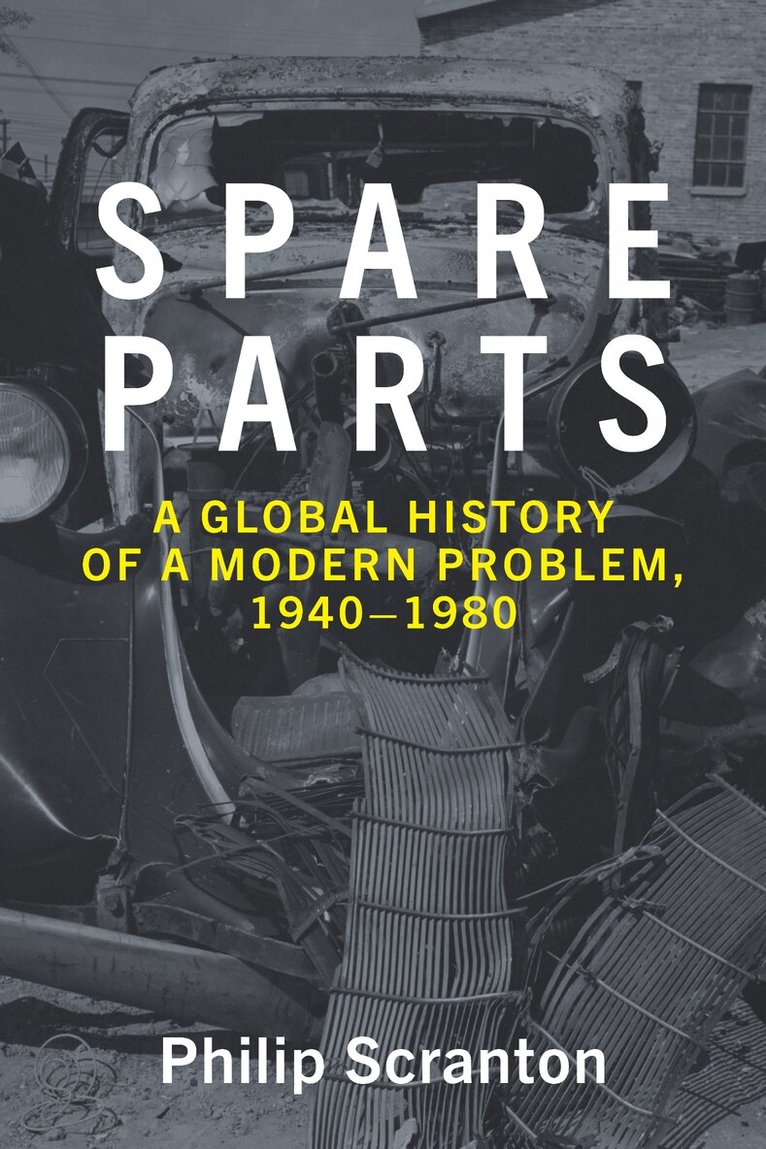
How repair components of machines reconstructed the distribution networks that connected production to consumption globally.When machines break, entire systems are exposed. Spare Parts tells the global history of replacement components and shows how their absence—or abundance—has shaped warfare, industry, and everyday life in the twentieth century. Philip Scranton traces the production, distribution, and use of spare parts across capitalist, socialist, and postcolonial economies from World War II through the Cold War. During WWII, parts proved as decisive as fuel or ammunition, determining whether tanks moved, aircraft flew, and factories functioned. In its aftermath, parts shortages became a chronic problem in centrally planned economies, while market societies faced different dilemmas created by rapid technological change, obsolescence, and corporate strategy. Focusing on vehicles, agricultural machinery, and radio and television technologies, Scranton reveals how repair practices differed across political systems. In socialist states, chronic shortages encouraged improvisation, scavenging, and informal exchange. In capitalist economies, parts became tools of profit, control, and planned abandonment, often pushing consumers toward replacement rather than repair. Scranton also follows spare parts beyond the superpowers, examining how postcolonial nations navigated inherited infrastructures and how parts functioned as instruments of geopolitical leverage. Charting the decline of repair culture in the late twentieth century, as durable vehicles and disposable electronics reshaped expectations about maintenance and longevity, Spare Parts reframes a familiar frustration as a central feature of modern history and offers new insight into technology, power, and the hidden systems that keep the world running.