Mark Aldrich - Böcker
Visar alla böcker från författaren Mark Aldrich. Handla med fri frakt och snabb leverans.
11 produkter
11 produkter
705 kr
Tillfälligt slut
For most of the 19th and much of the 20th centuries, railroads dominated American transportation. They transformed life and captured the imagination. Yet by 1907 railroads had also become the largest cause of violent death in the country, that year claiming the lives of nearly twelve thousand passengers, workers, and others. In Death Rode the Rails Mark Aldrich explores the evolution of railroad safety in the United States by examining a variety of incidents: spectacular train wrecks, smaller accidents in shops and yards that devastated the lives of workers and their families, and the deaths of thousands of women and children killed while walking on or crossing the street-grade tracks. The evolution of railroad safety, Aldrich argues, involved the interplay of market forces, science and technology, and legal and public pressures. He considers the railroad as a system in its entirety: operational realities, technical constraints, economic history, internal politics, and labor management. Aldrich shows that economics initially encouraged American carriers to build and operate cheap and dangerous lines.Only over time did the trade-off between safety and output-shaped by labor markets and public policy-motivate carriers to develop technological improvements that enhanced both productivity and safety. A fascinating account of one of America's most important industries and its dangers, Death Rode the Rails will appeal to scholars of economics and the history of transportation, technology, labor, regulation, safety, and business, as well as to railroad enthusiasts.
383 kr
Tillfälligt slut
For most of the 19th and much of the 20th centuries, railroads dominated American transportation. They transformed life and captured the imagination. Yet by 1907 railroads had also become the largest cause of violent death in the country, that year claiming the lives of nearly twelve thousand passengers, workers, and others. In Death Rode the Rails Mark Aldrich explores the evolution of railroad safety in the United States by examining a variety of incidents: spectacular train wrecks, smaller accidents in shops and yards that devastated the lives of workers and their families, and the deaths of thousands of women and children killed while walking on or crossing the street-grade tracks. The evolution of railroad safety, Aldrich argues, involved the interplay of market forces, science and technology, and legal and public pressures. He considers the railroad as a system in its entirety: operational realities, technical constraints, economic history, internal politics, and labor management. Aldrich shows that economics initially encouraged American carriers to build and operate cheap and dangerous lines.Only over time did the trade-off between safety and output-shaped by labor markets and public policy-motivate carriers to develop technological improvements that enhanced both productivity and safety. A fascinating account of one of America's most important industries and its dangers, Death Rode the Rails will appeal to scholars of economics and the history of transportation, technology, labor, regulation, safety, and business, as well as to railroad enthusiasts.
642 kr
Skickas
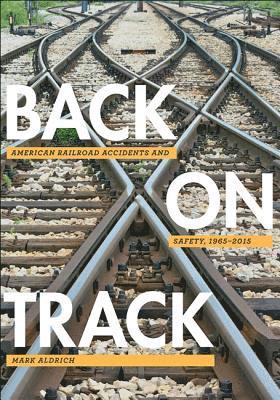
A fascinating account of one of America’s most important industries and its dangers.Throughout the early twentieth century, railroad safety steadily improved across the United States. But by the 1960s, American railroads had fallen apart, the result of a regulatory straightjacket that eroded profitability and undermined safety. Collisions, derailments, worker fatalities, and grade crossing mishaps skyrocketed, while hazmat disasters exploded into newspaper headlines. In Back on Track, his sequel to Death Rode the Rails, Mark Aldrich traces the history of railroad accidents beginning in 1965, when Congress responded to bankrupt and scandal-ridden carriers by enacting a new safety regime. Aldrich details the federalization of rail safety and the implementation of a massive grade crossing program. He touches on post-1976 economic deregulation, which provided critical financing that underwrote better public safety. He also explores how the National Transportation Safety Board acted as a public scold to shine bright lights on private failings, while Federal Railroad Administration regulations reinforced market incentives for better safety. Ultimately, Aldrich concludes, the past 50 years have seen great strides in restoring railroad safety while enhancing industry profitability. Arguing that it was not inadequate safety regulation but rather stifling economic regulation that initially caused an uptick in train accidents, Back on Track is both a paen to the return of more competitive railroading and the only comprehensive history of the safety of modern American railroads. Praise for Death Rode the Rails"A masterful study of the complex evolution of railroad safety."—American Historical Review"Students of rail safety, and today's Class I railroad managers, need to read this volume."—Trains"Aldrich has created a masterpiece. His research is extensive, drawing on a rich variety of obscure yet relevant sources."—Register of the Kentucky Historical Society"One of the first large-scale scholarly studies of railroad safety in America."—Railroad History"A thought-provoking and well-grounded contribution to the history of American economic development."—Journal of American History"Pioneering . . . A central message of Aldrich's book is that 'little accidents' played a crucial though until now largely hidden role in the gradual evolution of a risk society."—Technology and Culture"A work of merit . . . essential reading for historians of transport safety, business, and technology."—Journal of Transport History"Impressive and thoroughly researched . . . Demonstrates how railroad safety evolved from the intersection of market pressures, technology, and public sentiment."—Journal of Southern History
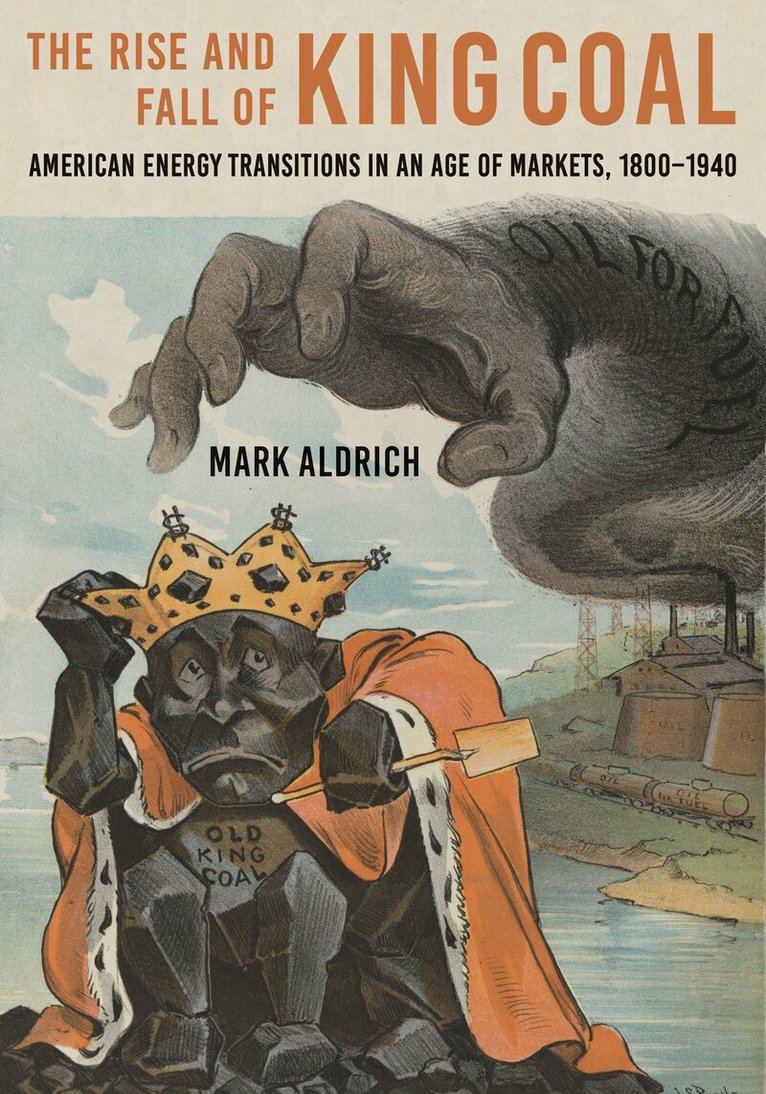
Rise and Fall of King Coal
American Energy Transitions in an Age of Markets, 1800–1940
Inbunden, Engelska, 2025
813 kr
Skickas inom 5-8 vardagar
A history of the dynamic role of coal in the energy landscape of the United States during the nineteenth and twentieth centuries.In The Rise and Fall of King Coal, Mark Aldrich explores the pivotal role of coal in the historical energy landscape of the United States. Meticulously researched and clearly written, this analysis of the rise, dominance, and eventual decline of coal as a primary fuel source traces its evolution from the late eighteenth century to the mid-twentieth century. Aldrich explains the factors that contributed to coal's ascendancy and decline, including efficiency, marketing, and the technological advancements that facilitated both its widespread adoption and later languishing. A complex interplay among market forces, government policies, and societal attitudes profoundly shaped the coal industry's trajectory. Challenges and controversies have surrounded the production of coal since its inception, including labor issues, environmental concerns, and resource scarcity. Aldrich's comprehensive approach—which combines historical analysis, economic perspectives, and a deep appreciation for the technological and scientific advancements that transformed the energy landscape—also emphasizes the role of innovation and entrepreneurship in driving energy transitions. By providing a bottom-up history that underscores the pivotal role of individual choices and market dynamics, The Rise and Fall of King Coal offers valuable insights into the dynamic nature of energy transitions. In lively discussions of domestic cooking and heating, Aldrich emphasizes the importance of women in shaping households' energy choices, and he gives voice to individual women and men as they describe how these decisions raised their standard of living. This book represents a seminal contribution to the field of energy history and highlights the complex interplay of factors that have shaped the evolution of energy use in the United States.
299 kr
Skickas inom 5-8 vardagar
277 kr
Skickas inom 5-8 vardagar
173 kr
Skickas inom 5-8 vardagar
192 kr
Skickas inom 5-8 vardagar
192 kr
Skickas inom 5-8 vardagar
197 kr
Skickas inom 5-8 vardagar
173 kr
Skickas inom 5-8 vardagar