Studies in Communication, Media, and Public Opinion (CHUP) – serie
Visar alla böcker i serien Studies in Communication, Media, and Public Opinion (CHUP). Handla med fri frakt och snabb leverans.
6 produkter
6 produkter
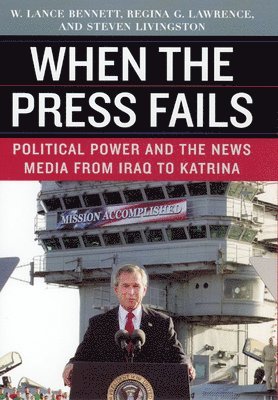
When the Press Fails – Political Power and the News Media from Iraq to Katrina
Inbunden, Engelska, 2007
227 kr
Skickas inom 7-10 vardagar
A sobering look at the intimate relationship between political power and the news media, "When the Press Fails" argues that the dependence of reporters on official sources disastrously thwarts coverage of dissenting voices from outside the Beltway.The result is both an indictment of official spin and an urgent call to action that questions why the mainstream press failed to challenge the Bush administration's arguments for an invasion of Iraq or to illuminate administration policies underlying the Abu Ghraib controversy. Drawing on revealing interviews with Washington insiders and analysis of content from major news outlets, the authors illustrate the media's unilateral surrender to White House spin whenever oppositional voices elsewhere in government fall silent. Contrasting these grave failures with the refreshingly critical reporting on Hurricane Katrina - a rare event that caught officials off guard, enabling journalists to enter a nospin zone - "When the Press Fails" concludes by proposing new practices to reduce reporters' dependence on power.
613 kr
Tillfälligt slut
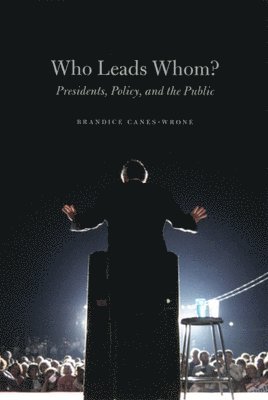
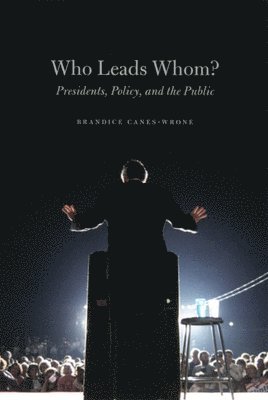
"Who Leads Whom?" is an ambitious study that addresses some of the most important questions in contemporary American politics: Do presidents pander to public opinion by backing popular policy measures that they believe would actually harm the country? Why do presidents "go public" with policy appeals? And do those appeals affect legislative outcomes? Analyzing the actions of modern presidents ranging from Eisenhower to Clinton, Brandice Canes-Wrone demonstrates that presidents' involvement of the mass public, by putting pressure on Congress, shifts policy in the direction of majority opinion. More important, she also shows that presidents rarely cater to the mass citizenry unless they already agree with the public's preferred course of action. With contemporary politics so connected to the pulse of the American people, "Who Leads Whom?" offers much-needed insight into how public opinion actually works in our democratic process. Integrating perspectives from presidential studies, legislative politics, public opinion, and rational choice theory, this theoretical and empirical inquiry will appeal to a wide range of scholars of American political processes.
244 kr
Skickas inom 7-10 vardagar
"Who Leads Whom?" is an ambitious study that addresses some of the most important questions in contemporary American politics: Do presidents pander to public opinion by backing popular policy measures that they believe would actually harm the country? Why do presidents "go public" with policy appeals? And do those appeals affect legislative outcomes? Analyzing the actions of modern presidents ranging from Eisenhower to Clinton, Brandice Canes-Wrone demonstrates that presidents' involvement of the mass public, by putting pressure on Congress, shifts policy in the direction of majority opinion. More important, she also shows that presidents rarely cater to the mass citizenry unless they already agree with the public's preferred course of action. With contemporary politics so connected to the pulse of the American people, "Who Leads Whom?" offers much-needed insight into how public opinion actually works in our democratic process. Integrating perspectives from presidential studies, legislative politics, public opinion, and rational choice theory, this theoretical and empirical inquiry will appeal to a wide range of scholars of American political processes.
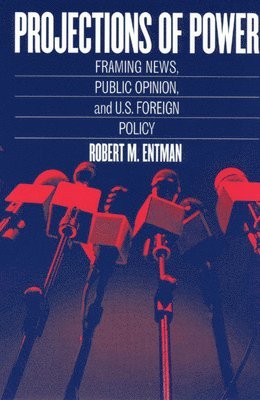
Projections of Power – Framing News, Public Opinion, and U.S. Foreign Policy
Inbunden, Engelska, 2003
790 kr
Skickas inom 7-10 vardagar
To succeed in foreign policy, U.S. presidents have to sell their versions or framings of political events to the news media and to the public. But since the end of the Cold War, journalists have increasingly resisted presidential views, even offering their own spin on events. What, then, determines whether the media will accept or reject the White House perspective? And what consequences does this new media environment have for policymaking and public opinion?To answer these questions, Robert M. Entman develops a powerful new model of how media framing works—a model that allows him to explain why the media cheered American victories over small-time dictators in Grenada and Panama but barely noticed the success of far more difficult missions in Haiti and Kosovo. Discussing the practical implications of his model, Entman also suggests ways to more effectively encourage the exchange of ideas between the government and the media and between the media and the public. His book will be an essential guide for political scientists, students of the media, and anyone interested in the increasingly influential role of the media in foreign policy.
244 kr
Skickas inom 7-10 vardagar
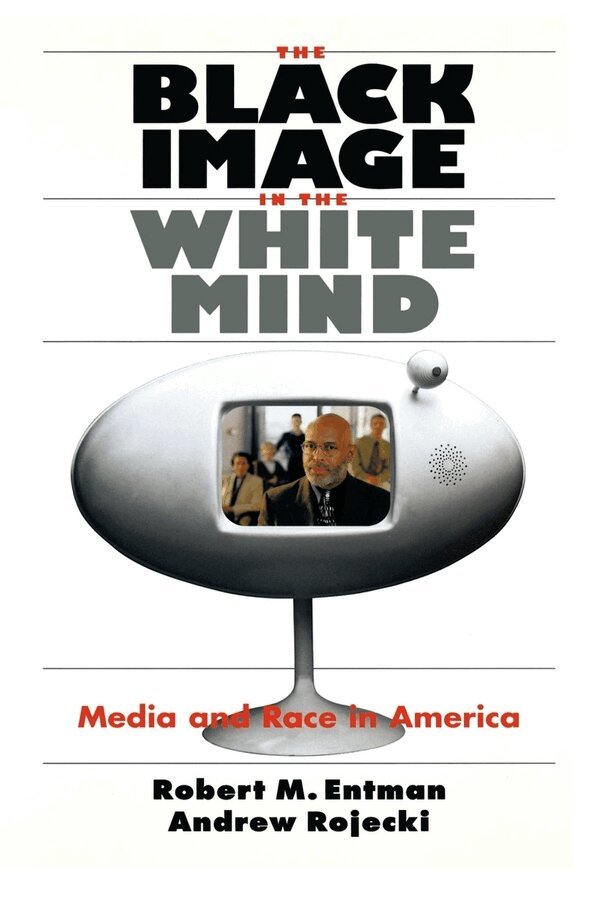
Living in a segregated society, white Americans learn about African Americans not through personal relationships but through the images the media show them. "The Black Image in the White Mind" offers the most comprehensive look at the intricate racial patterns in the mass media and how they shape the ambivalent attitudes of Whites towards Blacks. Using the media, and especially television, as barometers of race relations, Robert M. Entman and Andrew Rojecki explore but then go beyond the treatment of African Americans on network and local news to incisively uncover the messages sent about race by the entertainment industry - from prime-time dramas and sitcoms to commercials and Hollywood movies. While the authors find very little in the media that intentionally promotes racism, they find even less that advances racial harmony. They reveal instead a subtle pattern of images that, while making room for Blacks, implies a racial hierarchy with Whites on top and promotes a sense of difference and conflict. Commercials, for example, feature plenty of Black characters. But unlike Whites, they rarely speak to or touch one another.In prime time, the few Blacks who escape sitcom buffoonery rarely enjoy informal, friendly contact with White colleagues - perhaps reinforcing social distance in real life. Entman and Rojecki interweave such astute observations with candid interviews of White Americans that make clear how these images of racial differences insinuate themselves into Whites' thinking. Despite its disturbing readings of television and film, the book's cogent analyses and proposed policy guidelines offer hope that America's powerful mediated racial separation can be successfully bridged.
300 kr
Skickas inom 7-10 vardagar
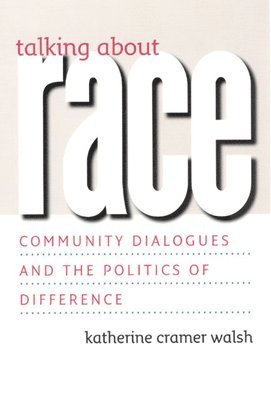
It is a perennial question: how should Americans deal with racial and ethnic diversity? More than 400 communities across the country have attempted to answer it by organizing discussions among diverse volunteers in an attempt to improve race relations. In "Talking about Race", Katherine Cramer Walsh takes an eye-opening look at this strategy to reveal the reasons behind the method and the effects it has in the cities and towns that undertake it. With extensive observations of community dialogues, interviews with the discussants, and sophisticated analysis of national data, Walsh shows that while meeting organizers usually aim to establish common ground, participants tend to leave their discussions with a heightened awareness of differences in perspective and experience. Drawing readers into these intense conversations between ordinary Americans working to deal with diversity and figure out the meaning of citizenship in our society, she challenges many preconceptions about intergroup relations and organized public talk.Disputing the conventional wisdom that unity is the only way forward, Walsh prescribes a practical politics of difference that compels us to reassess the place of face-to-face discussion in civic life and the critical role of conflict in deliberative democracy.