Regina G. Lawrence – författare
1 426 kr
Skickas inom 5-8 vardagar
367 kr
Skickas inom 5-8 vardagar
301 kr
Läs direkt efter köp
290 kr
Läs direkt efter köp
238 kr
Skickas inom 5-8 vardagar
157 kr
Skickas inom 5-8 vardagar
2 269 kr
Skickas inom 10-15 vardagar
327 kr
Skickas inom 10-15 vardagar
673 kr
Läs direkt efter köp
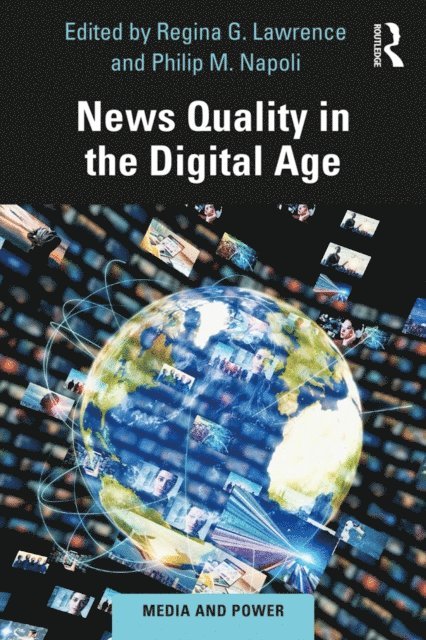
This book brings together a diverse, international array of contributors to explore the topics of news “quality” in the online age and the relationships between news organizations and enormously influential digital platforms such as Facebook, Google, and Twitter. Covering topics ranging from internet incivility, crowdsourcing, and YouTube politics to regulations, algorithms, and AI, this book draws the key distinction between the news that facilitates democracy and news that undermines it. For students and scholars as well as journalists, policymakers, and media commentators, this important work engages a wide range of methodological and theoretical perspectives to define the key concept of “quality” in the news media.
673 kr
Läs direkt efter köp
This book brings together a diverse, international array of contributors to explore the topics of news “quality” in the online age and the relationships between news organizations and enormously influential digital platforms such as Facebook, Google, and Twitter. Covering topics ranging from internet incivility, crowdsourcing, and YouTube politics to regulations, algorithms, and AI, this book draws the key distinction between the news that facilitates democracy and news that undermines it. For students and scholars as well as journalists, policymakers, and media commentators, this important work engages a wide range of methodological and theoretical perspectives to define the key concept of “quality” in the news media.
601 kr
Skickas inom 10-15 vardagar
2 438 kr
Skickas inom 10-15 vardagar
730 kr
Läs direkt efter köp
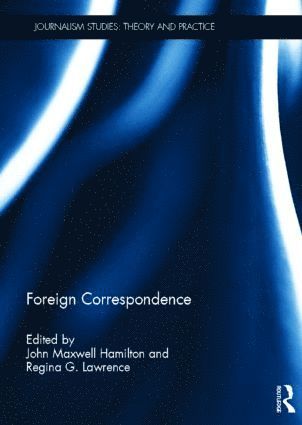
Despite the importance of foreign news, its history, transformation and indeed its future have not been much studied. The scholarly community often calls attention to journalism’s shortcomings covering the world, yet the topic has not been systematically examined across countries or over time. The need to redress this neglect and the desire to assess the impact of new media technologies on the future of journalism – including foreign correspondence – provide the motivation for this stimulating, exciting and thought-provoking book.
While the old economic models supporting news have crumbled in the wake of new media technologies, these changes have the potential to bring new and improved ways to inform people of foreign news. In an increasingly globalized era, journalism is being transformed by the effortlessly quick sharing of information across national boundaries. As such, we need to reconsider foreign correspondence and explore where such reporting is headed. This book discusses the current state and future prospects for foreign correspondence across the full range of media platforms, and assesses developments in the reporting of overseas news for audiences, governments and foreign policy in both contemporary and historical settings around the globe.
As Emmy Award and Pulitzer Prize-winning correspondent Serge Schmemann reminds us in this book, "quality journalism and unbiased reporting are as valid and necessary today as they ever were [...] one of the primary tasks of journalists and scholars as they follow the changes taking place must be to ensure that the ‘new international information order’ now imposed by the Internet remains true to the ideals and traditions that define our journalism."
This book was originally published as a special issue of Journalism Studies.
757 kr
Läs direkt efter köp
Despite the importance of foreign news, its history, transformation and indeed its future have not been much studied. The scholarly community often calls attention to journalism’s shortcomings covering the world, yet the topic has not been systematically examined across countries or over time. The need to redress this neglect and the desire to assess the impact of new media technologies on the future of journalism – including foreign correspondence – provide the motivation for this stimulating, exciting and thought-provoking book.
While the old economic models supporting news have crumbled in the wake of new media technologies, these changes have the potential to bring new and improved ways to inform people of foreign news. In an increasingly globalized era, journalism is being transformed by the effortlessly quick sharing of information across national boundaries. As such, we need to reconsider foreign correspondence and explore where such reporting is headed. This book discusses the current state and future prospects for foreign correspondence across the full range of media platforms, and assesses developments in the reporting of overseas news for audiences, governments and foreign policy in both contemporary and historical settings around the globe.
As Emmy Award and Pulitzer Prize-winning correspondent Serge Schmemann reminds us in this book, "quality journalism and unbiased reporting are as valid and necessary today as they ever were [...] one of the primary tasks of journalists and scholars as they follow the changes taking place must be to ensure that the ‘new international information order’ now imposed by the Internet remains true to the ideals and traditions that define our journalism."
This book was originally published as a special issue of Journalism Studies.
643 kr
Skickas inom 10-15 vardagar