Studies in Communication, Media, and Public Opinion – serie
Visar alla böcker i serien Studies in Communication, Media, and Public Opinion. Handla med fri frakt och snabb leverans.
22 produkter
22 produkter
Häftad, Engelska, 2006
276 kr
Skickas inom 5-8 vardagar
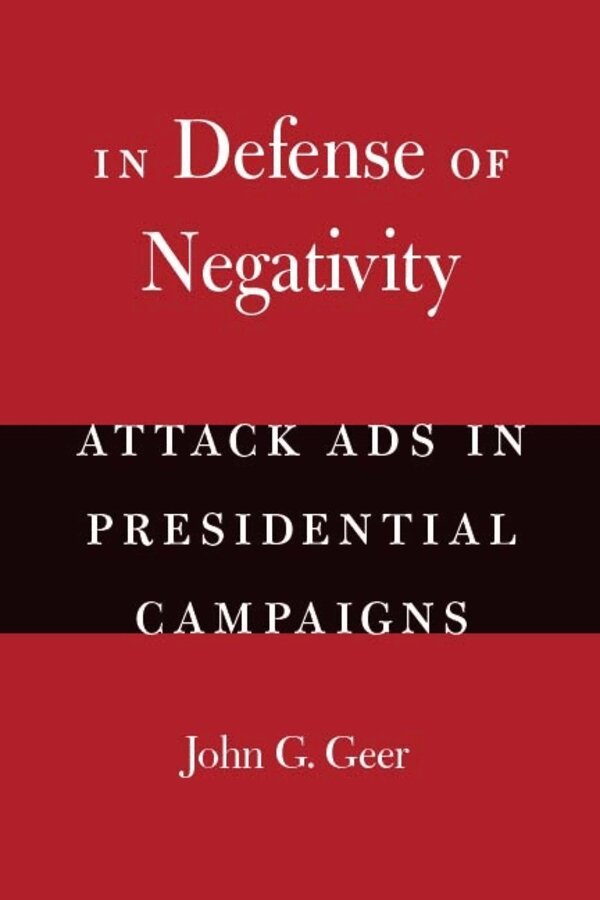
Americans tend to see negative campaign ads as just that: negative. Pundits, journalists, voters, and scholars frequently complain that such ads undermine elections and even democratic government itself. But John G. Geer here takes the opposite stance, arguing that when political candidates attack each other, raising doubts about each other's views and qualifications, voters - and the democratic process - benefit. "In Defense of Negativity", Geer's study of negative advertising in presidential campaigns from 1960 to 2004, asserts that the proliferating attack ads are far more likely than positive ads to focus on salient political issues, rather than politicians' personal characteristics. Accordingly, the ads enrich the democratic process, providing voters with relevant and substantial information before they head to the polls. An important and timely contribution to American political discourse, "In Defense of Negativity" concludes that if we want campaigns to grapple with relevant issues and address real problems, negative ads just might be the solution.
Häftad, Engelska, 2008
154 kr
Skickas inom 5-8 vardagar
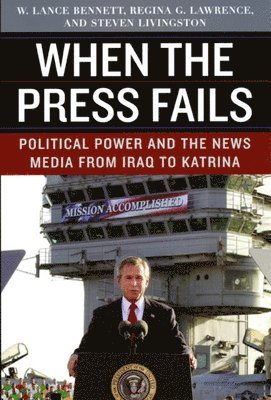
A sobering look at the intimate relationship between political power and the news media, "When the Press Fails" argues that the dependence of reporters on official sources disastrously thwarts coverage of dissenting voices from outside the Beltway.The result is both an indictment of official spin and an urgent call to action that questions why the mainstream press failed to challenge the Bush administration's arguments for an invasion of Iraq or to illuminate administration policies underlying the Abu Ghraib controversy. Drawing on revealing interviews with Washington insiders and analysis of content from major news outlets, the authors illustrate the media's unilateral surrender to White House spin whenever oppositional voices elsewhere in government fall silent. Contrasting these grave failures with the refreshingly critical reporting on Hurricane Katrina - a rare event that caught officials off guard, enabling journalists to enter a nospin zone - "When the Press Fails" concludes by proposing new practices to reduce reporters' dependence on power.
Häftad, Engelska, 2006
284 kr
Skickas inom 5-8 vardagar
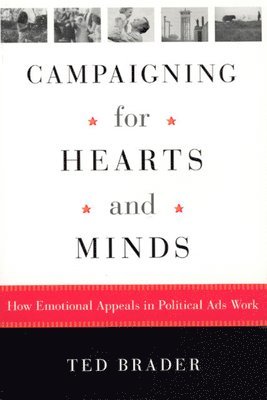
It is common knowledge that televised political ads are meant to appeal to voters' emotions, yet little is known about how or if these tactics actually work. Ted Brader's innovative book is the first scientific study to examine the effects that these emotional appeals in political advertising have on voter decision-making. At the heart of this book are ingenious experiments, conducted by Brader during an election, with truly eye-opening results that upset conventional wisdom. They show, for example, that simply changing the music or imagery of ads while retaining the same text provokes completely different responses. He reveals that politically informed citizens are more easily manipulated by emotional appeals than less-involved citizens and that positive "enthusiasm ads" are in fact more polarizing than negative "fear ads." Black-and-white video images are ten times more likely to signal an appeal to fear or anger than one to enthusiasm or pride, and the emotional appeal triumphs over the logical appeal in nearly three-quarters of all political ads. Brader backs up these surprising findings with an unprecedented survey of emotional appeals in contemporary political campaigns.Politicians do set out to campaign for the hearts and minds of voters, and, for better or for worse, it is primarily through hearts that minds are won. "Campaigning for Hearts and Minds" will be indispensable for anyone wishing to understand how American politics is influenced by advertising today.
Häftad, Engelska, 2007
252 kr
Skickas inom 5-8 vardagar
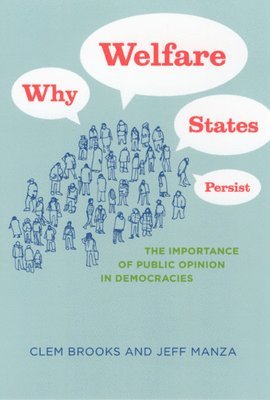
The world's richer democracies all provide such public benefits as pensions and health care, but why are some far more generous than others? And why, in the face of globalization and fiscal pressures, has the welfare state not been replaced by another model? Reconsidering the myriad issues raised by such pressing questions, Clem Brooks and Jeff Manza contend here that public opinion has been an important, yet neglected, factor in shaping welfare states in recent decades. Analyzing data on sixteen countries, Brooks and Manza find that the preferences of citizens profoundly influence the welfare policies of their governments and the behavior of politicians in office. Shaped by slow-moving forces such as social institutions and collective memories, these preferences have counteracted global pressures that many commentators assumed would lead to the welfare state's demise. Moreover, Brooks and Manza show that cross-national differences in popular support help explain why Scandinavian social democracies offer so much more than liberal democracies such as the United States and the United Kingdom.Significantly expanding our understanding of both public opinion and social policy in the world's most developed countries, this landmark study will be essential reading for scholars of political economy, public opinion, and democratic theory.
Häftad, Engelska, 2005
276 kr
Skickas inom 5-8 vardagar
The ideal of a neutral, objective press has proven in recent years to be just that - an ideal. In Governing with the News, Timothy E. Cook goes far beyond the single claim that the press is not impartial to argue that the news media are in fact a political institution integral to the day-to-day operations of our government. This updated edition includes a new afterword by the author that pays close attention to two key developments in the twenty-first century: the accelerating fragmentation of the mass media and the continuing decline of Americans' confidence in the press.
Häftad, Engelska, 2003
276 kr
Skickas inom 5-8 vardagar
To succeed in foreign policy, U.S. presidents have to sell their versions or framings of political events to the news media and to the public. But since the end of the Cold War, journalists have increasingly resisted presidential views, even offering their own spin on events. What, then, determines whether the media will accept or reject the White House perspective? And what consequences does this new media environment have for policymaking and public opinion?To answer these questions, Robert M. Entman develops a powerful new model of how media framing works—a model that allows him to explain why the media cheered American victories over small-time dictators in Grenada and Panama but barely noticed the success of far more difficult missions in Haiti and Kosovo. Discussing the practical implications of his model, Entman also suggests ways to more effectively encourage the exchange of ideas between the government and the media and between the media and the public. His book will be an essential guide for political scientists, students of the media, and anyone interested in the increasingly influential role of the media in foreign policy.
Häftad, Engelska, 2000
252 kr
Skickas inom 5-8 vardagar
Drawing on surveys of public attitudes and analyses of more than 40 years of television and newsmagazine stories on poverty, this book demonstrates how public opposition to welfare is fed by a potent combination of racial stereotypes and misinformation about the true nature of America's poor. But the answer isn't simply that white Americans oppose welfare because they think it benefits blacks; rather, they think it benefits "undeserving" blacks who would rather live off the government than work, a perception powerfully fuelled by the media's negative coverage of the black poor. Martin Gilens not only examines public opinion and public policy; he also explores the historical context that shaped these attitudes and the role the news media have played in "racializing" poverty and poverty programmes. The public's views on welfare, Gilens shows, are a complex mixture of cynicism and compassion; misinformed and racially charged, they nevertheless reflect both a distrust of welfare recipients and a desire to do more to help the deserving poor.
Häftad, Engelska, 2001
276 kr
Skickas inom 5-8 vardagar
How often do we hear that Americans are so ignorant about politics that their civic competence is impaired, and that the media are to blame because thay do a dismal job of informing the public? Integrating a broad range of research on how people learn, this text shows that televised presentations - at their best - actually excel at transmitting information and facilitating learning. The author critiques political offerings in terms of their compatibility with our learning capabilities and interests, and she considers the obstacles, both economic and political, that affect the content we receive on the air, on cable, or on the Internet.
Inbunden, Engelska, 1998
814 kr
Skickas inom 5-8 vardagar
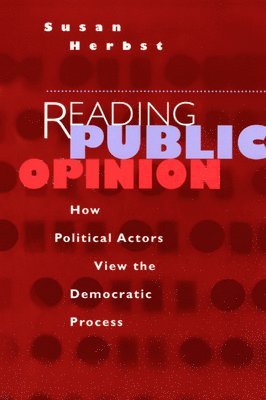
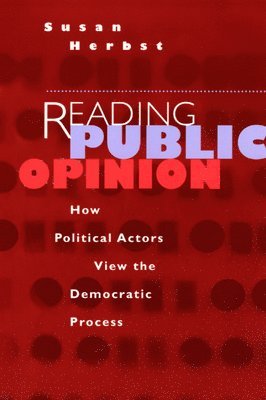
Drawing on ideas from political science, sociology and psychology this text explores how three sets of political participants - legislative staffers, political activists and journalists - actually evaluate and assess public opinion. The text gives one approach to understanding how public opinion fits into the empirical world of politics and finds that it has little to do with the mass public. Concluding that many political actors reject the "voice of the people" as uninformed and nebulous, relying instead on interest groups and the media for representations of public opinion.
Häftad, Engelska, 1998
309 kr
Skickas inom 5-8 vardagar
Drawing on ideas from political science, sociology and psychology this text explores how three sets of political participants - legislative staffers, political activists and journalists - actually evaluate and assess public opinion. The text gives one approach to understanding how public opinion fits into the empirical world of politics and finds that it has little to do with the mass public. Concluding that many political actors reject the "voice of the people" as uninformed and nebulous, relying instead on interest groups and the media for representations of public opinion.
Häftad, Engelska, 2000
252 kr
Skickas inom 5-8 vardagar
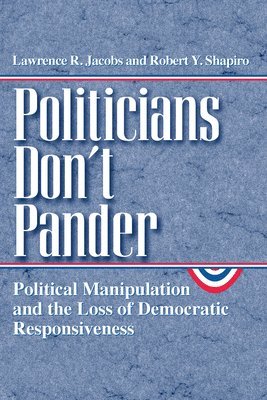
Public opinion polls are everywhere. Journalists report their results without hesitation, and political activists of all kinds spend millions of dollars on them, fuelling the widespread assumption that elected officials "pander" to public opinion -that they tailor their policy decisions to the results of polls. In this provocative and engagingly written book, the authors argue that the reality is quite the opposite. In fact, when not facing election, contemporary presidents and members of Congress routinely ignore the public's policy preferences and follow their own political philosophies, as well as those of their party's activists, their contributors and their interest group allies. Politicians devote substantial time, effort and money to tracking public opinion, not for the purposes of policymaking, but to change public opinion - to determine how to craft their public statements and actions to win support for the policies they and their supporters want.Taking two recent, dramtic episodes - President Clinton's failed health care reform campaign and Newt Gingrich's "Contract with America" - as examples, the authors show how both used public opinion research and the media to change the public's mind. Such orchestrated displays help explain the media's preoccupation with political conflict strategy and, the authors argue, have propelled levels of public distrust and fear of government to record highs. Revisiting the fundamental premises of representative democracy, this accessible book asks us to reexamine whether our government really responds to the broad public or to the narrower interests and values of certain groups. And with the 2000 campaign season heating up, "Politicians Don't Pander" could not be more timely.
Häftad, Engelska, 2002
309 kr
Skickas inom 5-8 vardagar
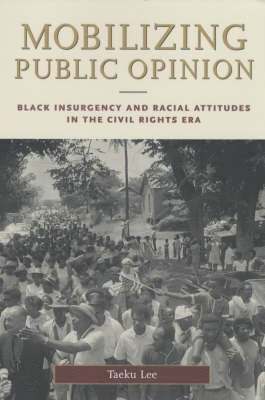
What motivates us to change our opinions during times of political protest and social unrest? To investigate this question, Taeku Lee's smartly argued book looks to the critical struggle over the moral principles, group interests, and racial animosities that defined public support for racial policies during the civil rights movement, from the late 1940s to the mid-1960s. Challenging the conventional view that public opinion is shaped by elites, Lee crafts an alternate account of the geographic, institutional, historical, and issue-specific contexts that form our political views. He finds that grassroots organizations and local protests of ordinary people pushed demands for social change into the consciousness of the general public. From there, Lee argues, these demands entered the policy agendas of political elites. Evidence from multiple sources including survey data, media coverage, historical accounts, and presidential archives animates his argument. Ultimately, Mobilizing Public Opinion is a timely, cautionary tale about how we view public opinion and a compelling testament to the potential power of ordinary citizens.
Häftad, Engelska, 2000
382 kr
Skickas inom 5-8 vardagar
Are Americans less prejudiced now than they were in the 1970s, or has racism simply gone "underground"? Is racism something that is learned as children, or is it a result of certain social groups striving to maintain their privileged positions in society? In this text, political scientists, sociologists and psychologists explore the late-1990s debate surrounding the sources of racism in America. The essays represent three major approaches to the topic. The social psychological approach maintains that prejudice socialized early in life feeds racial stereotypes, while the social structural viewpoint argues that behaviour is shaped by whites' fear of losing their privileged status. The third perspective looks to non-racially inspired ideology, including attitudes about the size and role of government, as the reason for opposition to policies such as affirmative action. This collection provides a state-of-the-field assessment of the issues and findings on the role of racism in mass politics and public opinion.
Häftad, Engelska, 2000
284 kr
Skickas inom 5-8 vardagar
Most people believe that large corporations wield enormous political power when they lobby for policies as a cohesive bloc. With this controversial book, Mark A. Smith sets conventional wisdom on its head. In a systematic analysis of postwar lawmaking, Smith reveals that business loses in legislative battles unless it has public backing. This surprising conclusion holds because the types of issues that lead businesses to band together—such as tax rates, air pollution, and product liability—also receive the most media attention. The ensuing debates give citizens the information they need to hold their representatives accountable and make elections a choice between contrasting policy programs. Rather than succumbing to corporate America, Smith argues, representatives paradoxically become more responsive to their constituents when facing a united corporate front. Corporations gain the most influence over legislation when they work with organizations such as think tanks to shape Americans' beliefs about what government should and should not do.
Inbunden, Engelska, 2003
814 kr
Skickas inom 5-8 vardagar
Whether at parties, around the dinner table, or at the office, people talk about politics all the time. Yet while such conversations are a common part of everyday life, political scientists know very little about how they actually work. In Talking about Politics, Katherine Cramer Walsh provides an innovative, intimate study of how ordinary people use informal group discussions to make sense of politics. Walsh examines how people rely on social identities—their ideas of who "we" are—to come to terms with current events. In Talking about Politics, she shows how political conversation, friendship, and identity evolve together, creating stronger communities and stronger social ties. Political scientists, sociologists, and anyone interested in how politics really works need to read this book.
Häftad, Engelska, 2003
268 kr
Skickas inom 5-8 vardagar
Whether at parties, around the dinner table, or at the office, people talk about politics all the time. Yet while such conversations are a common part of everyday life, political scientists know very little about how they actually work. In Talking about Politics, Katherine Cramer Walsh provides an innovative, intimate study of how ordinary people use informal group discussions to make sense of politics. Walsh examines how people rely on social identities—their ideas of who "we" are—to come to terms with current events. In Talking about Politics, she shows how political conversation, friendship, and identity evolve together, creating stronger communities and stronger social ties. Political scientists, sociologists, and anyone interested in how politics really works need to read this book.
Häftad, Engelska, 2008
252 kr
Skickas inom 5-8 vardagar
In addition to their obvious roles in American politics, race and gender also work in hidden ways to profoundly influence the way we think - and vote - about a vast array of issues that don't seem related to either category. As Nicholas J. G. Winter reveals in "Dangerous Frames", politicians and leaders often frame these seemingly unrelated issues in ways that prime audiences to respond not to the policy at hand but instead to the way its presentation resonates with their deeply held beliefs about race and gender.Winter shows, for example, how official rhetoric about welfare and Social Security has tapped into white Americans' racial biases to shape their opinions on both issues for the past two decades. Similarly, the way politicians presented health care reform in the 1990s divided Americans along the lines of their attitudes toward gender. Combining cognitive and political psychology with innovative empirical research, "Dangerous Frames" ultimately illuminates the emotional underpinnings of American politics.
Inbunden, Engelska, 2005
711 kr
Tillfälligt slut
The ideal of a neutral, objective press has proven in recent years to be just that - an ideal. In Governing with the News, Timothy E. Cook goes far beyond the single claim that the press is not impartial to argue that the news media are in fact a political institution integral to the day-to-day operations of our government. This updated edition includes a new afterword by the author that pays close attention to two key developments in the twenty-first century: the accelerating fragmentation of the mass media and the continuing decline of Americans' confidence in the press.
Inbunden, Engelska, 2001
711 kr
Tillfälligt slut
How often do we hear that Americans are so ignorant about politics that their civic competence is impaired, and that the media are to blame because thay do a dismal job of informing the public? Integrating a broad range of research on how people learn, this text shows that televised presentations - at their best - actually excel at transmitting information and facilitating learning. The author critiques political offerings in terms of their compatibility with our learning capabilities and interests, and she considers the obstacles, both economic and political, that affect the content we receive on the air, on cable, or on the Internet.
Inbunden, Engelska, 2000
665 kr
Tillfälligt slut
Most people believe that large corporations wield enormous political power when they lobby for policies as a cohesive bloc. With this controversial book, Mark A. Smith sets conventional wisdom on its head. In a systematic analysis of postwar lawmaking, Smith reveals that business loses in legislative battles unless it has public backing. This surprising conclusion holds because the types of issues that lead businesses to band together—such as tax rates, air pollution, and product liability—also receive the most media attention. The ensuing debates give citizens the information they need to hold their representatives accountable and make elections a choice between contrasting policy programs. Rather than succumbing to corporate America, Smith argues, representatives paradoxically become more responsive to their constituents when facing a united corporate front. Corporations gain the most influence over legislation when they work with organizations such as think tanks to shape Americans' beliefs about what government should and should not do.
Inbunden, Engelska, 2007
802 kr
Tillfälligt slut
It is a perennial question: how should Americans deal with racial and ethnic diversity? More than 400 communities across the country have attempted to answer it by organizing discussions among diverse volunteers in an attempt to improve race relations. In "Talking about Race", Katherine Cramer Walsh takes an eye-opening look at this strategy to reveal the reasons behind the method and the effects it has in the cities and towns that undertake it. With extensive observations of community dialogues, interviews with the discussants, and sophisticated analysis of national data, Walsh shows that while meeting organizers usually aim to establish common ground, participants tend to leave their discussions with a heightened awareness of differences in perspective and experience. Drawing readers into these intense conversations between ordinary Americans working to deal with diversity and figure out the meaning of citizenship in our society, she challenges many preconceptions about intergroup relations and organized public talk.Disputing the conventional wisdom that unity is the only way forward, Walsh prescribes a practical politics of difference that compels us to reassess the place of face-to-face discussion in civic life and the critical role of conflict in deliberative democracy.
Inbunden, Engelska, 2008
587 kr
Tillfälligt slut
In addition to their obvious roles in American politics, race and gender also work in hidden ways to profoundly influence the way we think - and vote - about a vast array of issues that don't seem related to either category. As Nicholas J. G. Winter reveals in "Dangerous Frames", politicians and leaders often frame these seemingly unrelated issues in ways that prime audiences to respond not to the policy at hand but instead to the way its presentation resonates with their deeply held beliefs about race and gender.Winter shows, for example, how official rhetoric about welfare and Social Security has tapped into white Americans' racial biases to shape their opinions on both issues for the past two decades. Similarly, the way politicians presented health care reform in the 1990s divided Americans along the lines of their attitudes toward gender. Combining cognitive and political psychology with innovative empirical research, "Dangerous Frames" ultimately illuminates the emotional underpinnings of American politics.