John G. Geer - Böcker
Visar alla böcker från författaren John G. Geer. Handla med fri frakt och snabb leverans.
2 produkter
2 produkter
266 kr
Skickas inom 7-10 vardagar
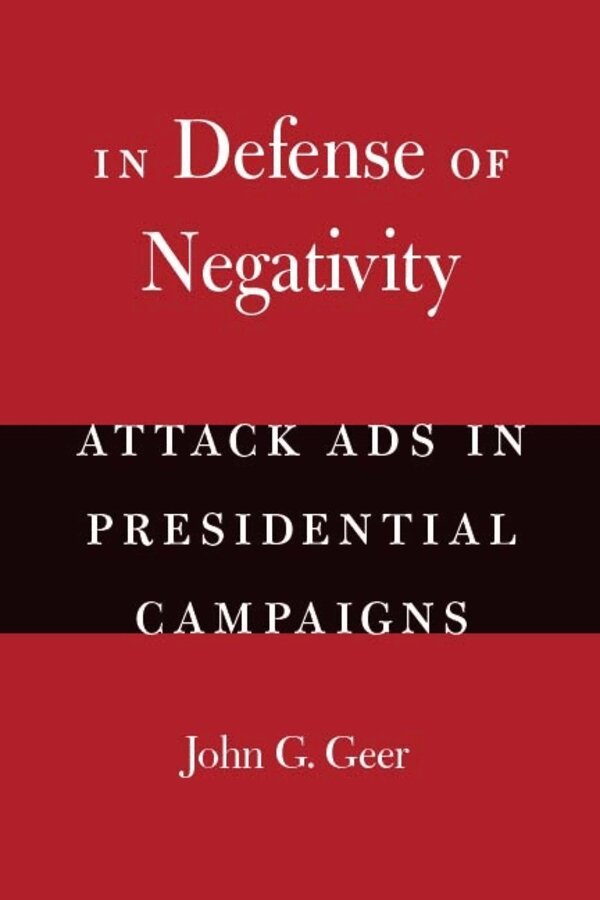
Americans tend to see negative campaign ads as just that: negative. Pundits, journalists, voters, and scholars frequently complain that such ads undermine elections and even democratic government itself. But John G. Geer here takes the opposite stance, arguing that when political candidates attack each other, raising doubts about each other's views and qualifications, voters - and the democratic process - benefit. "In Defense of Negativity", Geer's study of negative advertising in presidential campaigns from 1960 to 2004, asserts that the proliferating attack ads are far more likely than positive ads to focus on salient political issues, rather than politicians' personal characteristics. Accordingly, the ads enrich the democratic process, providing voters with relevant and substantial information before they head to the polls. An important and timely contribution to American political discourse, "In Defense of Negativity" concludes that if we want campaigns to grapple with relevant issues and address real problems, negative ads just might be the solution.
809 kr
Skickas inom 10-15 vardagar
To the ongoing assessment of our current procedures for nominating presidential candidates, John Geer brings historical perspective, a careful evaluation of the accumulating evidence,and much good sense. The result is a book that challenges widely held beliefs and that will instruct all those with an interest in presidential nominations, whether as reporters, candidates, students, or citizens. Stanley Kelley, Jr., Princeton University In a clearly written and wide-ranging study [Geer] presents a wealth of data and conclusions. Using often original criteria, Geer concludes that voters in primaries are not very unrepresentative of appropriate control groups and that they base their votes on the personal characteristics of the candidates. Moreover, he demonstrates the conditions under which participation rates and information levels will be high. In the last part of the book, Geer discusses the role of the media and how the rules tend to undermine the ability of voters to cast meaningful votes. The author concludes with a call for regional primaries, for a greater role for party leaders, and for some ballot reforms. . . . Geer has produced a useful reference work that can stimulate undergraduate discussions. ChoiceAre voters in presidential primaries truly qualified to choose the nominees? Although in recent years many concerned citizens, scholars, and writers have posed this question and much attention has been focussed on the subject, until Nominating Presidents there has not been an in-depth treatment of the qualifications of voters in presidential primaries. This groundbreaking study presents and systematically examines a formidable array of data on voters in primaries, including evidence from the 1988 presidential nomination. Geer examines survey research, aggregate data and more. To aid in the interpretation of these data, Geer develops a set of standards for assessing the qualifications of voters in presidential primaries. His findings suggest that although voters are more qualified than previous studies have shown, there are still problems using voters to nominate candidates. He therefore proposes a new system of selection that should overcome these problems. The real significance of this study, however, is not the proposed system of presidential nominations, but the detailed assessment of voters in presidential primaries.The text is enhanced by more than twenty tables that present graphic information on subjects ranging from the influence of presidential primaries from 1912 to 1988; the ideological composition of voters in presidential primaries; causes and percent of turnout in presidential primaries; and various aspects of news media coverage, among others. Three helpful appendices define turnout variables, describe survey questions, and review the coding of open ended comments. Nominating Presidents will be of particular interest to those in the fields of political science and American political history as well as to students and teachers of courses in electoral behavior, campaigns and elections, and American political parties.