Hoover Studies in Politics, Economics, and Society – serie
Visar alla böcker i serien Hoover Studies in Politics, Economics, and Society. Handla med fri frakt och snabb leverans.
7 produkter
7 produkter
207 kr
Skickas inom 10-15 vardagar
Since September 11, 2001 much has been written about 'Islamist terrorism,' arguing that it is a perversion that has 'hijacked Islam' in the service of social, political and economic grievances. However, such accounts cannot explain why other people that can lay claim to similar or more serious grievances have not developed such devastating religious terrorist ideologies. Moreover, many of the terrorists themselves have attested to their own religious motivation and their belief that they acted in accordance with the precepts of Islam. In Warrant for Terror Shmuel Bar examines fatwas—legal opinions declaring whether a given act under Islam is obligatory, permitted, or forbidden. Fatwas serve as a major instrument by which religious leaders impel believers to engage in acts of jihad. Bar argues that fatwas, particularly those that come from the Arab world, should not be dismissed as a cynical use of religious terminology in political propaganda. Many terrorists testify that they were motivated to act by them. Indeed, this book shows that Islamic law plays a central role in determining for believers the practical meaning of the duty to jihad. Bar examines the underlying religious, legal, and moral logic of fatwas and the depth of their influence, particularly in contrast to alternative moderate Islamic interpretations. He explores the wide scope of issues that fatwas deal with, covering almost all facets of Islamic 'law of war': the justification for declaring jihad; the territory in which the jihad should be fought; whether women and children may participate in jihad; the legality of killing women, children and other non-combatants; the justification for killing hostages and mutilating their bodies; and the permissibility of diverse tactics and weapons, including suicide attacks and even nuclear weapons and other weapons of mass destruction. Warrant for Terror also delves into the contradictions between the radical and the mainstream narratives and the sources of the weakness of the latter in the face of the former. In the conclusion, the author raises a number of provocative questions relating to the 'religious policy' of the West in the face of the threat of Islamic extremism. This book is published in cooperation with the Hoover Institution
234 kr
Skickas inom 10-15 vardagar
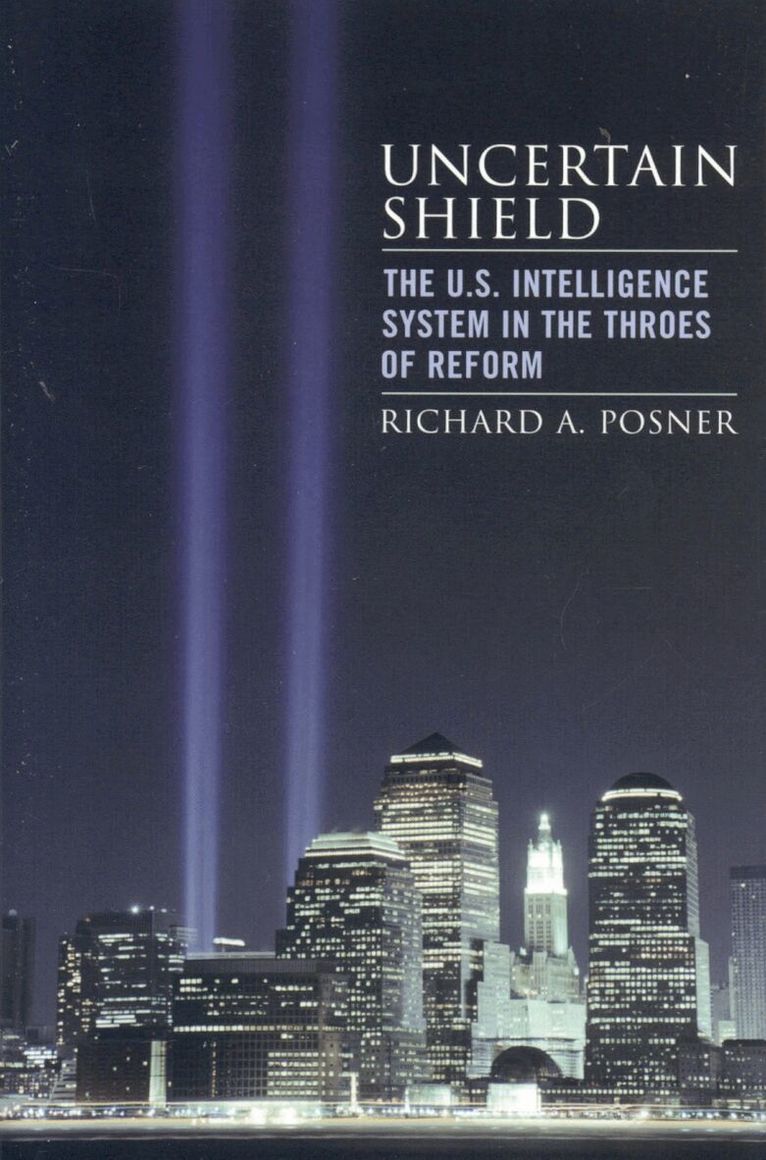
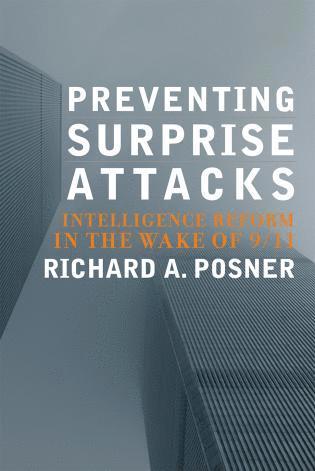
Ever since the publication in 2004 of the 9/11 Commission Report, the U.S. intelligence community has been in the throes of a convulsive movement for reform. In Preventing Surprise Attacks (2005), Richard A. Posner carried the story of the reform movement up to the enactment of the Intelligence Reform and Terrorism Prevention Act of 2004, which produced a defective plan for reorganizing the intelligence system, partly as result of the failure of the 9/11 Commission and Congress to bring historical, comparative, and scholarly perspectives to bear issues. At that time, however, the new structure had not yet been built. Posner's new book brings the story up to date. He argues that the decisions about structure that the Administration has made in implementation of the Act are creating too top-heavy, too centralized, an intelligence system. The book * exposes fallacies in criticisms of the performance of the U.S. intelligence services; * analyzes structures and priorities for directing and coordinating U.S. intelligence in the era of global terrorism; * presents new evidence for the need to create a domestic intelligence agency separate from the FBI, and a detailed blueprint for such an agency;* incorporates a wealth of material based on developments since the first book, including the report of the presidential commission on weapons of mass destruction and the botched response to Hurricane Katrina;* exposes the inadequacy of the national security computer networks;* critically examines Congress's performance in the intelligence field, and raises constitutional issues concerning the respective powers of Congress and the President;* emphasizes the importance of reforms that do not require questionable organizational changes.The book is published in cooperation with the Hoover Institution
191 kr
Skickas inom 10-15 vardagar
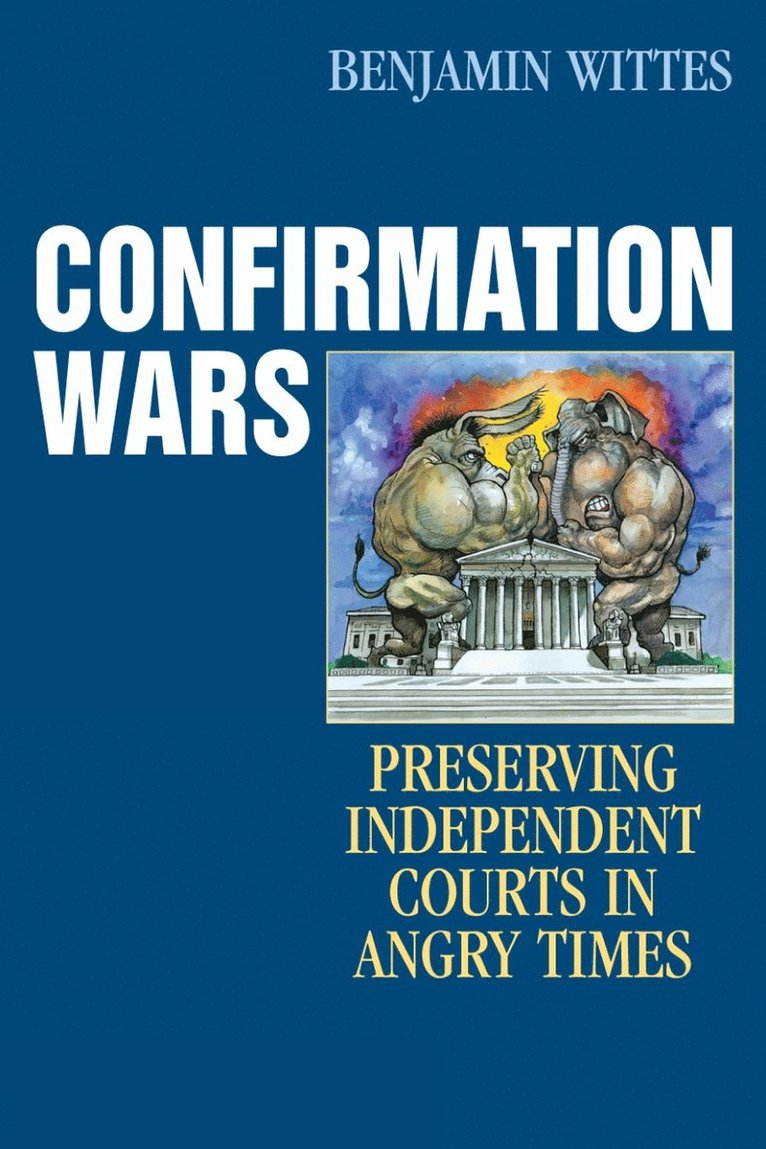
In Confirmation Wars, Benjamin Wittes rejects the parodies offered by both the Right and Left of the decline of the process by which the United States Senate confirms—or rejects—the president’s nominees to the federal judiciary. He draws on original reporting and new historical research to provide a more accurate understanding of the current climate. He argues that the transformations the process has undergone should not be understood principally in partisan terms but as an institutional response on the part of the legislative branch to the growth of judicial power in the past five decades. While some change may have been inevitable, the increasing aggressiveness of the Senate’s conception of its function poses significant challenges for maintaining independent courts over the long term. The problem, Wittes argues, lies both in the extortionate quality of modern confirmations, in which senators make their votes contingent on reassurance by the nominees about substantive areas of concern, and in the possibility that the breakdown of the confirmation process represents a far larger effort by the Senate to rein in judicial power. Wittes offers several strategies for managing the political conflict surrounding nominations, strategies that seek to protect the independence of the courts and the prerogative of the president to choose judges while maximizing the utility to democratic government of a Senate that takes its advice and consent role seriously. Most importantly, Wittes argues for ending the relatively new practice of having nominees testify before the Senate Judiciary Committee.Published in cooperation with the Hoover Institution.
675 kr
Skickas inom 10-15 vardagar
Black Americans continue to lag behind on many measures of social and economic well-being. Conventional wisdom holds that these inequalities can only be eliminated by eradicating racism and providing well-funded social programs. In Race, Wrongs, and Remedies, Amy L. Wax applies concepts from the law of remedies to show that the conventional wisdom is mistaken. She argues that effectively addressing today's persistent racial disparities requires dispelling the confusion surrounding blacks' own role in achieving equality.The evidence overwhelmingly suggests that discrimination against blacks has dramatically abated. The most important factors now impeding black progress are behavioral: low educational attainment, poor socialization and work habits, drug use, criminality, paternal abandonment, and non-marital childbearing. Although these maladaptive patterns are largely the outgrowth of past discrimination and oppression, they now largely resist correction by government programs or outside interventions. Wax asserts that the black community must solve these problems from within. Self-help, changed habits, and a new cultural outlook are, in fact, the only effective tactics for eliminating the present vestiges of our nation's racist past.Published in cooperation with the Hoover Institution
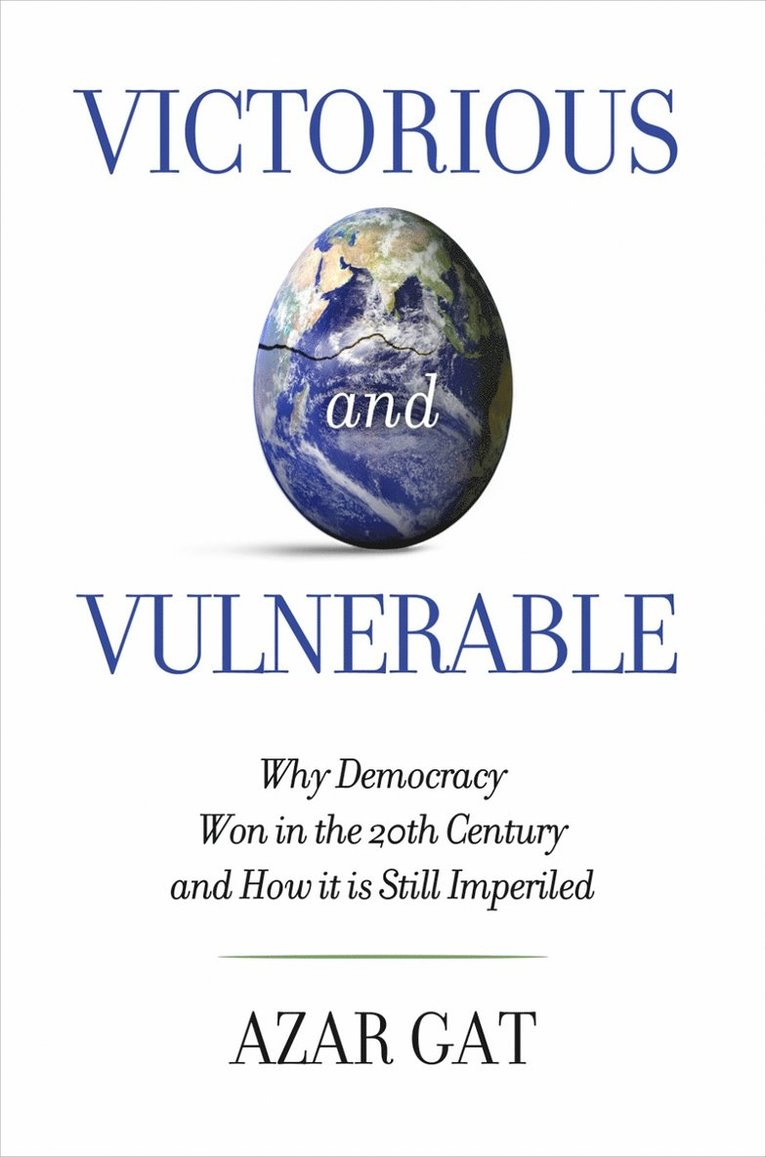
Victorious and Vulnerable
Why Democracy Won in the 20th Century and How it is Still Imperiled
Inbunden, Engelska, 2009
563 kr
Tillfälligt slut
In the blink of an eye, liberal democracy's moment of triumph was darkened by new threats, challenges, and doubts. Rejecting the view that liberal democracy's twentieth-century victory was inevitable, distinguished student of war Azar Gat argues that it largely rested on contingent factors and was more doubtful than has been assumed. The world's liberal democracies, with the United States at the forefront, face new and baffling security threats, with the return of capitalist nondemocratic great powers—China and Russia—and the continued threat of unconventional terror.The democratic peace, or near absence of war among themselves, is a unique feature of liberal democracies' foreign policy behavior. Arguing that this is merely one manifestation of much more sweeping and less recognized pacifist tendencies typical of liberal democracies, Gat offers a panoramic view of their distinctive way in conflict and war. His book provides a politically and strategically vital understanding of the peculiar strengths and vulnerabilities that liberal democracy brings to the formidable challenges ahead.Published in cooperation with the Hoover Institution
Unchecked and Unbalanced
How the Discrepancy Between Knowledge and Power Caused the Financial Crisis and Threatens Democracy
Inbunden, Engelska, 2009
617 kr
Skickas inom 11-20 vardagar
In Unchecked and Unbalanced, Arnold Kling provides a blueprint for those who are skeptical of political and financial elitism. At the heart of Kling's argument is the growing discrepancy between two phenomena: knowledge is becoming more diffuse, while political power is becoming more concentrated. Kling sees this knowledge/power discrepancy at the heart of the financial crisis of 2008. Financial industry executives and regulatory officials lacked the ability to fathom the complexity of the system that had emerged. And, in response, Treasury Secretary Henry Paulson and Federal Reserve Board Chairman Ben Bernanke, said that they required still more power, including $700 billion to purchase "toxic assets" from banks. Kling warns that increased concentration of power is a problem, not a panacea, for our modern world and suggests reforms designed to curb the growth of government and allow citizens greater control over the allocation of public goods.Published in cooperation with the Hoover Institution
354 kr
Skickas inom 10-15 vardagar
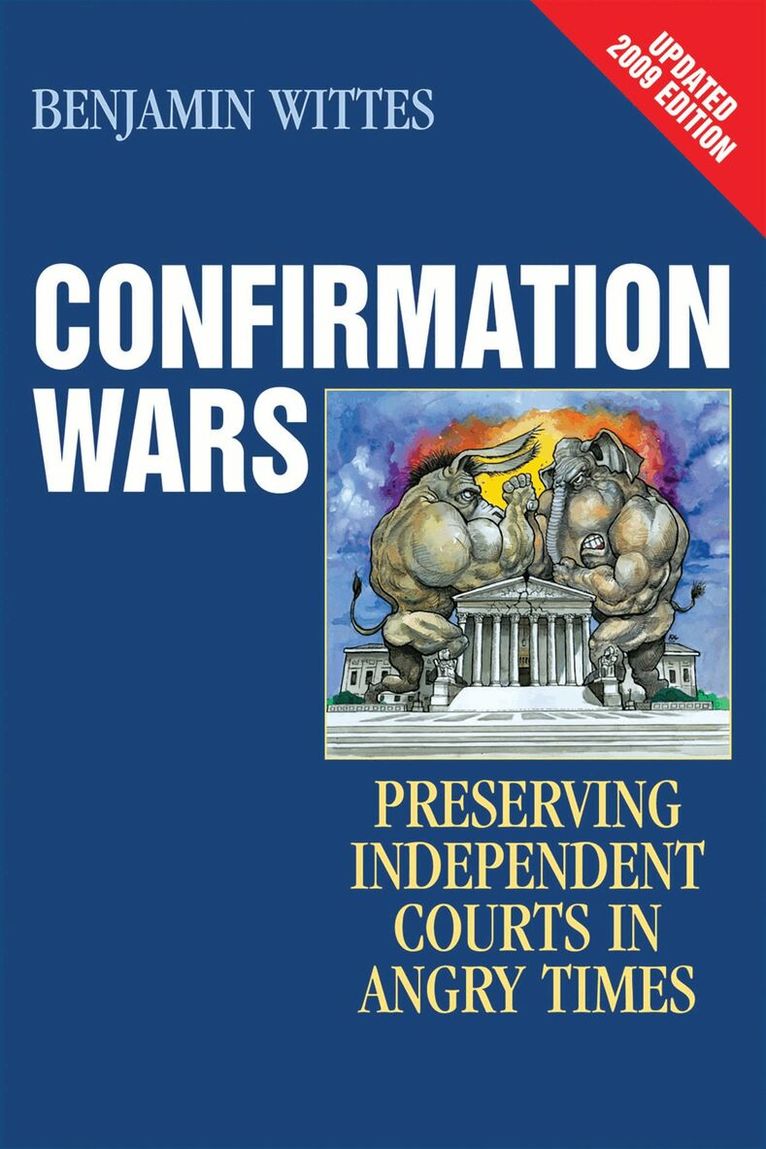
Just in time for the first Supreme Court confirmation of the Obama administration, one of America's most insightful legal commentators updates the critically acclaimed Confirmation Wars: Preserving Independent Courts in Angry Times to place the nomination of Judge Sonia Sotomayor in the context of the changing nature of judicial nominations by recent presidents. Our system has gone from one in which people like Sotomayor or recent highly qualified nominees like John Roberts and Samuel Alito are shoe-ins for confirmation to a system in which they are shoe-ins for confirmation confrontations. While rejecting parodies offered by both the Right and Left of the decline of the process by which the United States Senate confirms—or rejects—the president's nominees to the federal judiciary, Wittes explains why and how this change took place. He argues that the trade has been a bad one—offering only the crudest check on executive appointments to the judiciary and putting nominees in the most untenable and unfair situations. Published in cooperation with the Hoover Institution