• Fri frakt över 249 kr
  • •
  • Snabba leveranser
  • •
  • Billiga böcker
Kundservice

Du är på sajten för privatpersoner.

Företag, bibliotek eller offentlig verksamhet?

Du handlar på classic.bokus.com, där alla dina funktioner finns intakta.
Till classic.bokus.com
Bokus logotyp. Gå till startsidan.
  • Erbjudanden
  • Nyheter
  • Student
  • Topplistor
  • Barn & ungdom
  • Bokus Play
  • E-böcker
  • Pocketböcker
  • Spel & pussel

10% rabatt på allt med kod: NYSTART10 →

Sidfot

Mina sidor

    Hjälp

    • Kundservice
    • Vanliga frågor och svar
    • Frakt och leverans
    • Retur vid ångerrätt
    • Reklamera vara
    • Betalning
    • Köpvillkor
    • Allmänna villkor
    • Information om webbplatsens tillgänglighet

    Om Bokus

    • Om oss
    • Pressrum
    • För studenter
    • För företag
    • För bibliotek och offentlig verksamhet
    • För leverantörer
    • Hållbarhet

    Populärt

    • Aktuella erbjudanden
    • Presentkort
    • Studentlitteratur
    • Nya böcker
    • Topplistor
    • Signerade böcker
    • Engelska böcker

    Inspiration

    • Boktips
    • BookTok
    • Populära bokserier
    • Barnbokskaraktärer
    • Populära författare
    Logotyp för Bokus
    Följ oss på Facebook (extern länk)Följ oss på Instagram (extern länk)Följ oss på YouTube (extern länk)Följ oss på TikTok (extern länk)
    bokus @ CookiesAnpassa cookiesIntegritetspolicyKöpvillkor
    Till Citymail hemsida (extern länk)Till Budbee hemsida (extern länk)Till Postnord hemsida (extern länk)Till Schenker hemsida (extern länk)Till Early Bird hemsida (extern länk)Till Walleys hemsida (extern länk)
    1. Samhälle och politik
    2. Politik och statsskick
    3. Politisk aktivism

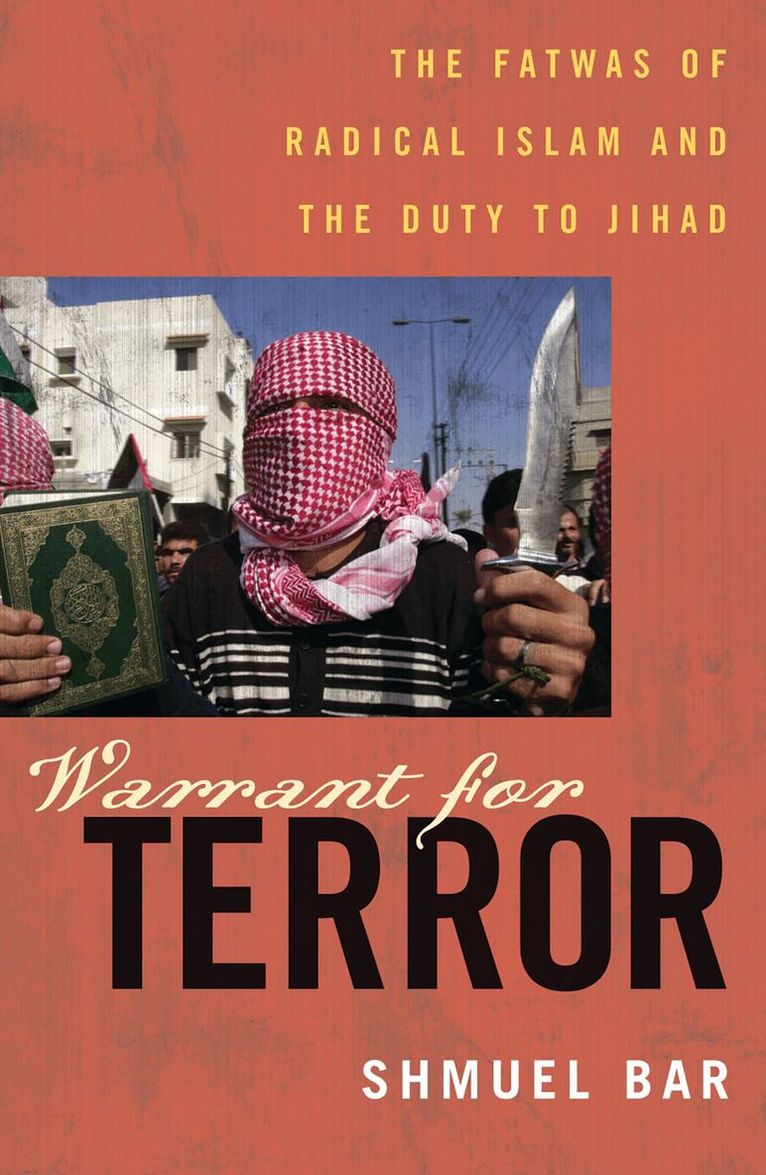
    Warrant for Terror

    The Fatwas of Radical Islam and the Duty to Jihad

    AvShmuel Bar

    Häftad, Engelska, 2008

    Del i serien Hoover Studies in Politics, Economics, and Society

    215 kr

    Beställningsvara. Skickas inom 10-15 vardagar. Fri frakt över 249 kr.

    Fler format och utgåvor

    Inbunden

    Tillf. slut

    Beskrivning

    Since September 11, 2001 much has been written about 'Islamist terrorism,' arguing that it is a perversion that has 'hijacked Islam' in the service of social, political and economic grievances. However, such accounts cannot explain why other people that can lay claim to similar or more serious grievances have not developed such devastating religious terrorist ideologies. Moreover, many of the terrorists themselves have attested to their own religious motivation and their belief that they acted in accordance with the precepts of Islam. In Warrant for Terror Shmuel Bar examines fatwas—legal opinions declaring whether a given act under Islam is obligatory, permitted, or forbidden. Fatwas serve as a major instrument by which religious leaders impel believers to engage in acts of jihad. Bar argues that fatwas, particularly those that come from the Arab world, should not be dismissed as a cynical use of religious terminology in political propaganda. Many terrorists testify that they were motivated to act by them. Indeed, this book shows that Islamic law plays a central role in determining for believers the practical meaning of the duty to jihad. Bar examines the underlying religious, legal, and moral logic of fatwas and the depth of their influence, particularly in contrast to alternative moderate Islamic interpretations. He explores the wide scope of issues that fatwas deal with, covering almost all facets of Islamic 'law of war': the justification for declaring jihad; the territory in which the jihad should be fought; whether women and children may participate in jihad; the legality of killing women, children and other non-combatants; the justification for killing hostages and mutilating their bodies; and the permissibility of diverse tactics and weapons, including suicide attacks and even nuclear weapons and other weapons of mass destruction. Warrant for Terror also delves into the contradictions between the radical and the mainstream narratives and the sources of the weakness of the latter in the face of the former. In the conclusion, the author raises a number of provocative questions relating to the 'religious policy' of the West in the face of the threat of Islamic extremism. This book is published in cooperation with the Hoover Institution

    Produktinformation

    • Utgivningsdatum:2008-06-13
    • Mått:154 x 229 x 12 mm
    • Vikt:245 g
    • Format:Häftad
    • Språk:Engelska
    • Serie:Hoover Studies in Politics, Economics, and Society
    • Antal sidor:152
    • Förlag:Bloomsbury Publishing Plc
    • ISBN:9780742551213

    Utforska kategorier

    • Politisk aktivism inom Samhälle och politik

    Mer om författaren

    Shmuel Bar is a senior research fellow dealing with Middle Eastern and Islamic affairs at the Institute of Policy and Strategy in Herzliya, Israel. Bar retired (in 2003) after 30 years of service in the Israeli civil service (as an intelligence officer in the IDF and in the Office of the Prime Minister) in senior staff and operational positions, including diplomatic posting in Europe. Bar holds a Ph.D. in History of the Middle East from Tel-Aviv University and has published numerous books and papers on Middle Eastern affairs, terrorism, and radical Islam.

    Recensioner i media

    If you are sick of instant experts offering sound-bite style insight into the phenomenon of Radical Islam, then Warrant for Terror is the right medicine for you. Through an exhaustive yet refreshingly readable analysis of fatwas—Muslim religious injunctions—Shmuel Bar takes us deep into the minds of both those who issue calls for jihad and those who heed them. As a tool to understand the logic, the rationale, and the motivation of the enemy in the war on terror, this book is sure to be assigned in counter-terror training courses around the world. Thankfully, the rest of us can read it, too.

    Innehållsförteckning

    • Chapter 1 PrefaceChapter 2 IntroductionChapter 3 1. 'Ulama and Fatwas in IslamChapter 4 2. The Mechanism of the Jihad FatwaChapter 5 3. The House of Islam vs. the House of WarChapter 6 4. The Doctrine of JihadChapter 7 5. The Defensive Jihad, an Individual DutyChapter 8 6. Rules of EngagementChapter 9 7. Apostates and Apostate RulersChapter 10 8. Palestine, Afghanistan, and IraqChapter 11 9. The War of the FatwasChapter 12 Conclusion