Religion, Politics, and Society in the New Millennium – serie
Visar alla böcker i serien Religion, Politics, and Society in the New Millennium. Handla med fri frakt och snabb leverans.
10 produkter
10 produkter
1 824 kr
Skickas inom 5-8 vardagar
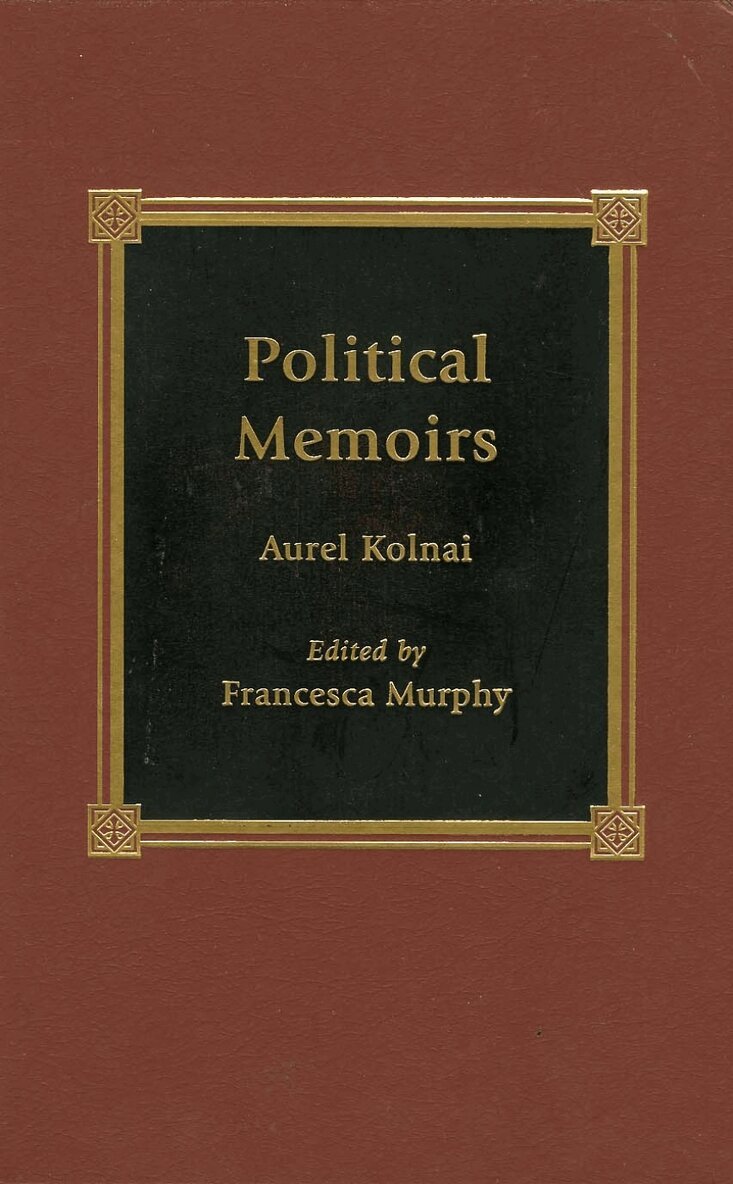
Ranked by many scholars as one of the most important moral philosophers of the twentieth century, Aurel Kolnai has been inexplicably neglected in this country until quite recently. He is best known for his works of political philosophy, recently published under the title The Utopian Mind: A Critical Study in Moral and Political Philosophy. Here, for the first time ever in English, is Kolnai's magnum opus, his Political Memoirs, superbly annotated and edited by Francesca Murphy of the University of Aberdeen, Scotland. The memoirs recount the author's life, from his childhood in the turn-of-the-century Austro-Hungarian Empire to his education in Germany and his early professional life in prewar Vienna. It was in these formative years that he converted from Judaism to Roman Catholicism and began his career as a writer and philosopher. The narrative continues through his years in exile in the United States and Canada, where he lived before ultimately settling in Great Britain and being granted citizenship in 1955.
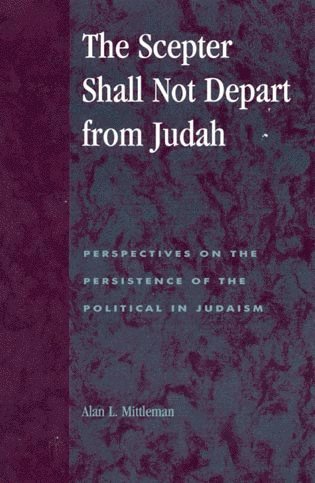
Scepter Shall Not Depart from Judah
Perspectives on the Persistence of the Political in Judaism
Häftad, Engelska, 2000
665 kr
Skickas inom 5-8 vardagar
The title of political theorist Alan L. Mittleman's captivating new book is drawn from the patriarch Jacob's blessing to his children and grandchildren. The blessing contains the promise that Judah will become a royal house, perhaps forever. Kings, of course, ceased in Israel, but politics did not. Regime replaced regime. National independence was compromised and lost, regained and lost again. Yet the attention to things political was never lost. Old texts were applied to new political realities. Political awareness and thought, constantly transformed and adapted to new historical exigencies, persisted among the Jews.In The Scepter Shall Not Depart from Judah, Mittleman looks at some of the central problems of political philosophy—such as fundamental rights and the common good—from the point of view of rabbinic Judaism. At the same time, he considers conceptual issues in Judaism—such as covenant and tradition—from the perspective of political philosophy. Mittleman's sources range from the ancient rabbis to contemporary political theorists, making this volume an important one for courses and research in both Jewish studies and political theory.
1 873 kr
Skickas inom 5-8 vardagar
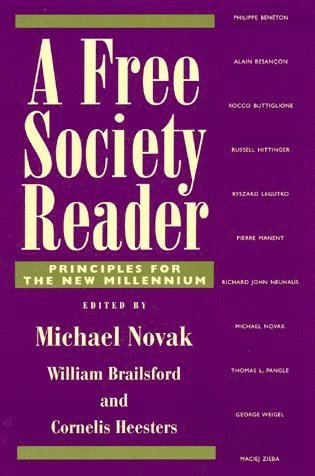
A Free Society Reader rises to the challenge of freedom in the twenty-first century, offering thoughts and insights with significant implications for citizens of today's brand new world. Our era's most prominent figures in the fields of Christianity and liberty speak about Pope John Paul II's vision of a free society, conceptualize Christianity and political economy, debate issues of democracy and the free society, and question the role of culture. Together for the first time in one volume, these preeminent thinkers provide inspiration and insight to scholars, students, and general readers charting the enormous changes the new millennium has seen.
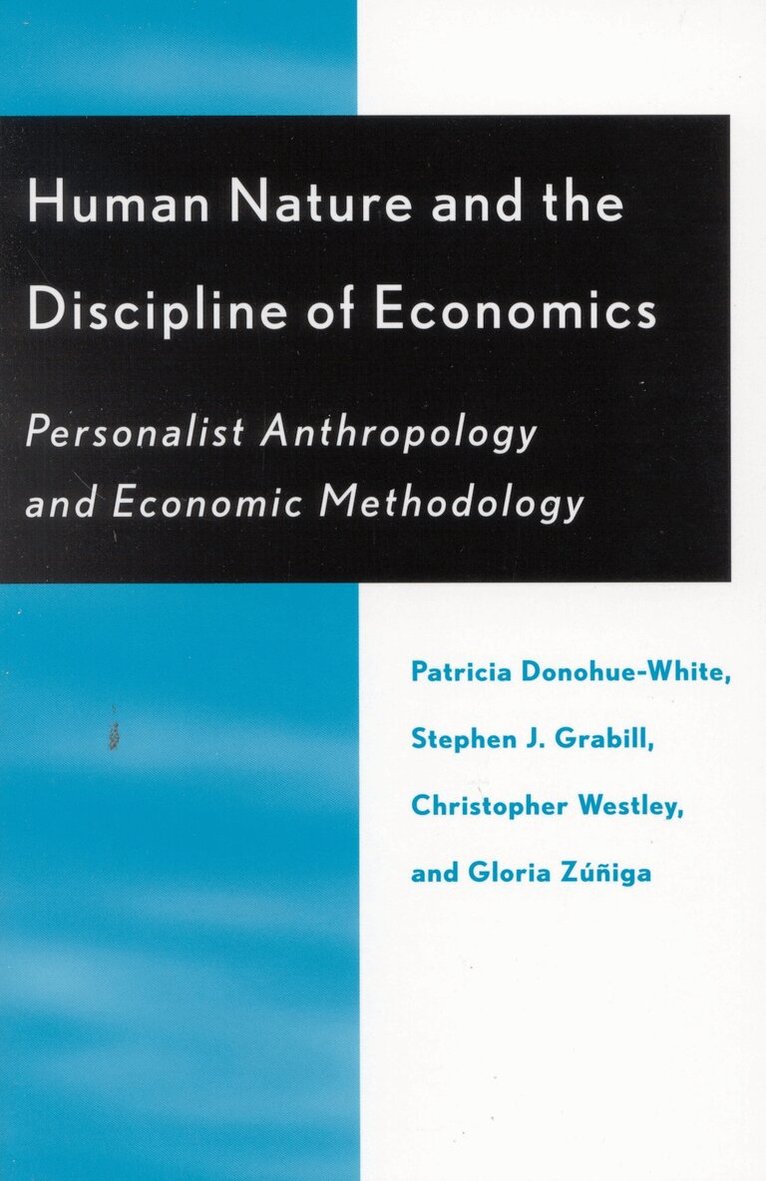
Human Nature and the Discipline of Economics
Personalist Anthropology and Economic Methodology
Häftad, Engelska, 2001
619 kr
Skickas inom 5-8 vardagar
Foundations of Economic Personalism is a series of three book-length monographs, each closely examining a significant dimension of the Center for Economic Personalism's unique synthesis of Christian personalism and free-economic market theory. In the aftermath of the momentous geo-political and economic changes of the late 1980s, a small group of Christian social ethicists began to converse with free-market economists over the morality of market activity. This interdisciplinary exchange eventually led to the founding of a new academic subdiscipline under the rubric of economic personalism. These scholars attempt to integrate economic theory, history, and methodology with Christian personalism's stress upon human dignity, humane social structures, and social justice. This second volume in the series surveys the anthropological foundations to the disciplines of economics and moral theology. The first part of the book presents an overview of the German, French, and Polish branches of personalist thought. Particular attention is given to theological anthropology, especially as it is developed by such thinkers as Emmanuel Mounier, Max Scheler, Gabriel Marcel, Karol Wojtyla, and Emil Brunner. Part two surveys models of human nature that have been espoused by various schools of free-market thought—including mainstream neoclassical economics. In conclusion, the authors demonstrate how an expanded understanding of human nature can augment the ability of economic science to model and predict human behavior.
1 258 kr
Skickas inom 10-15 vardagar
Hannah Arendt wrote that America was the greatest adventure of European man. Times have changed and stale anti-American sentiment flowing west from the European continent has replaced the flood of Europeans crossing the Atlantic in search of the American Dream. In Olof Murelius, one encounters a European observer who grasps what so many Europeans now miss, the adventure that is still America. Don't Play Away Your Cards, Uncle Sam is a spirited account of the growth of a nation. Murelius's work cuts a broad swathe through American history from the Founding Fathers to Bill Clinton, accentuating America's many and varied accomplishments. It is a gloriously unapologetic battle cry to America to cast off any lingering national self-doubt and will delight readers seeking a conversation with the best of Old Europe about the American "way of life."
1 142 kr
Skickas inom 10-15 vardagar
In Society as a Department Store Ryszard Legutko wrestles with the emancipatory ideology promulgated by postmodernists, libertarians, and liberal thinkers. Legutko argues that modern Western liberals have embraced a revolutionary ethic; they have turned their backs on their own cultural heritage, and used its political and ideological apparatus to destroy classical metaphysics and epistemology. The book considers the paradoxical implications of this state of affairs for Eastern European intellectuals arguing that, with the triumph of liberalism over communism, these intellectuals feel compelled to digest an ideology that shares many elements with the oppressive system from which they just liberated themselves. Based on hubris rather than genuine humane concerns, Legutko mourns not simply the loss of faith in classical Western culture, but the way in which that loss is becoming a central point of identity.
681 kr
Skickas inom 5-8 vardagar
What would the world be like if we no longer needed meaning? Australian sociologist Michael Casey's revealing work charts the collapse of the metaphysical world and the innate human need for meaning. With the decline of Christianity and the demise of secular universalism in the west, the meaning and value of metaphysical culture has been replaced by an entirely new post-metaphysical world. In Meaninglessness, Casey revisits the social theory of Nietzsche, Freud, and Rorty, in order to conceive how this post-metaphysical culture may take shape in the third millennium. Framing questions of enduring significance to contemporary social and political theory in a new methodological light, this work will appeal to scholars and general readers interested in sociology, post-modernism, cultural studies, political theory, and philosophy.
In God We Trust?
Faith-Based Organizations and the Quest to Solve America's Social Ills
Inbunden, Engelska, 2003
1 564 kr
Skickas inom 5-8 vardagar
This pioneering book charts how President George W. Bush's "compassionate conservatism" creates a new path for American Social Policy. There is a growing interest in testing the proposition that faith-based organizations (FBOs) could do even greater good, especially if government supports an expanded role. The organizations represent a potentially valuable, but controversial, resource because they offer to fight a very different war against America's social ills. This work offers three conclusions. First, FBOs are effective in dealing with chronic social problems because they spark personal transformation. Second, financing them through the Tax Code or vouchers is preferable to direct federal funding. The fear that public funding means government take-over of religion serves as perhaps the greatest impediment to a more expansive role for FBOs. Third, although predicting the U.S. Supreme Court's resolution of church-state issues is fraught with difficulties, the emerging "equal treatment" of religion by the High Court suggests a more permissive attitude toward the federal funding of religous charities. The tax and voucher alternatives seem certain to pass constitutional muster. In God We Trust? is among the first works to assess President Bush's policy efforts to meet America's social ills by turning more tasks over to FBOs. In addition to demonstrating the constitutionality of the federal efforts to fund FBOs, the book analytically summarizes the existing empirical evidence dealing with the effectiveness of faith-based organizations.
665 kr
Skickas inom 5-8 vardagar
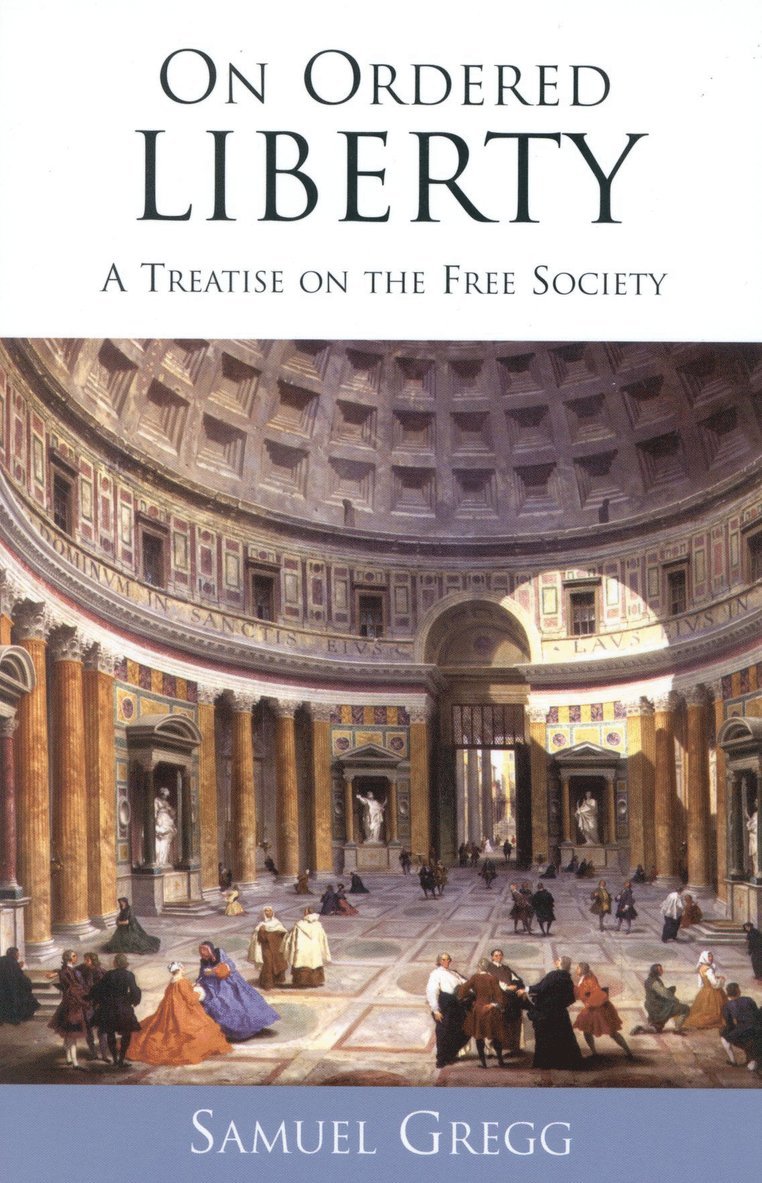
Perhaps no issue is more divisive among philosophers, jurists and theologians than the nature of human liberty. Liberty is central to the claims of the Christian Gospel, the Glorious Revolution of 1688 and the American Revolution. But discussions about the nature of freedom have been characterized by profound disagreement and unsettling questions. What does it mean to be free? Is freedom worth more than mens' lives? Why should man be free? What, if any, legitmate responsibilities accompany freedom? These subjects are that the heart of Samuel Gregg's new book On Ordered Liberty. Beginning with the insights of Alexis de Tocqueville and some natural law theorists, Gregg suggests that something which he terms 'integral law' must be distinguished from most contemporary visions of freedom. He argues that this new arrangement requires a complete repudiation of utilitarian ideas on the grounds that they are incompatable with human nature. He also recommends a new and more rigorous focus on the basic but often neglected-question: what is man? On Ordered Liberty goes beyond the liberal and conservative divide, asking its readers to think about the proper ends of human choice and actions in a free society.
In God We Trust?
Faith-Based Organizations and the Quest to Solve America's Social Ills
Häftad, Engelska, 2007
622 kr
Skickas inom 10-15 vardagar
This pioneering book charts how President George W. Bush's "compassionate conservatism" creates a new path for American Social Policy. There is a growing interest in testing the proposition that faith-based organizations (FBOs) could do even greater good, especially if government supports an expanded role. The organizations represent a potentially valuable, but controversial, resource because they offer to fight a very different war against America's social ills. This work offers three conclusions. First, FBOs are effective in dealing with chronic social problems because they spark personal transformation. Second, financing them through the Tax Code or vouchers is preferable to direct federal funding. The fear that public funding means government take-over of religion serves as perhaps the greatest impediment to a more expansive role for FBOs. Third, although predicting the U.S. Supreme Court's resolution of church-state issues is fraught with difficulties, the emerging "equal treatment" of religion by the High Court suggests a more permissive attitude toward the federal funding of religous charities. The tax and voucher alternatives seem certain to pass constitutional muster. In God We Trust? is among the first works to assess President Bush's policy efforts to meet America's social ills by turning more tasks over to FBOs. In addition to demonstrating the constitutionality of the federal efforts to fund FBOs, the book analytically summarizes the existing empirical evidence dealing with the effectiveness of faith-based organizations.