Studies in Science and the Humanities from the Reilly Center for Science, Technology, and Values – Serie
Visar alla böcker i serien Studies in Science and the Humanities from the Reilly Center for Science, Technology, and Values. Handla med fri frakt och snabb leverans.
7 produkter
7 produkter
Controlling Our Destinies
Historical, Philosophical, Ethical, and Theological Perspectives on the Human Genome Project
Häftad, Engelska, 2000
368 kr
Skickas inom 10-15 vardagar
This work considers the complex, far reaching issues surrounding the Human Genome Project - an international scientific enterprise aimed at attaining a complete sequence and locator map of the human genetic structure by the year 2005 - offering the elimination of genetic abnormalities and diseases.
Causality in Crisis?
Statistical Methods & Search for Causal Knowledge in Social Sciences
Häftad, Engelska, 1997
261 kr
Skickas inom 10-15 vardagar
In the past fifty years statisticians and methodologists in the social sciences have developed and refined a family of closely related statistical methods for the study of social phenomena. While the value of such methods of analysis is universally acknowledged, their use has never been wholly uncontroversial. In 1993 prominent scholars from a variety of disciplines (social sciences, statistics, philosophy of science) gathered at the University of Notre Dame to debate whether causal modeling techniques old or new can really justify the drawing of causal conclusions on the basis of correlational statistical data. The resulting volume from that groundbreaking conference is Causality in Crisis? a comprehensive and sophisticated introduction to perhaps the most important set of issues confronting social scientific researchers in the 1990s and beyond.In the essays presented here contributors critically reassess the widely accepted view that statistical methods of analysis can and do yield causal understanding of social phenomena. Although a number of technical issues receive attention, the overall emphasis is on the larger historical, philosophical, and conceptual perspectives that underlie and inform current methodological controversies.The debates in Causality in Crisis? have far-ranging implications, for on their resolution hinges the question of what sort of knowledge of social life it is possible to achieve on the basis of non-experimental social scientific research. Any scholar who makes use of causal methods, as well as all who are affected by decisions reached on the basis of such methods, will have a stake in the challenging arguments put forth in this volume.
1 077 kr
Skickas inom 10-15 vardagar
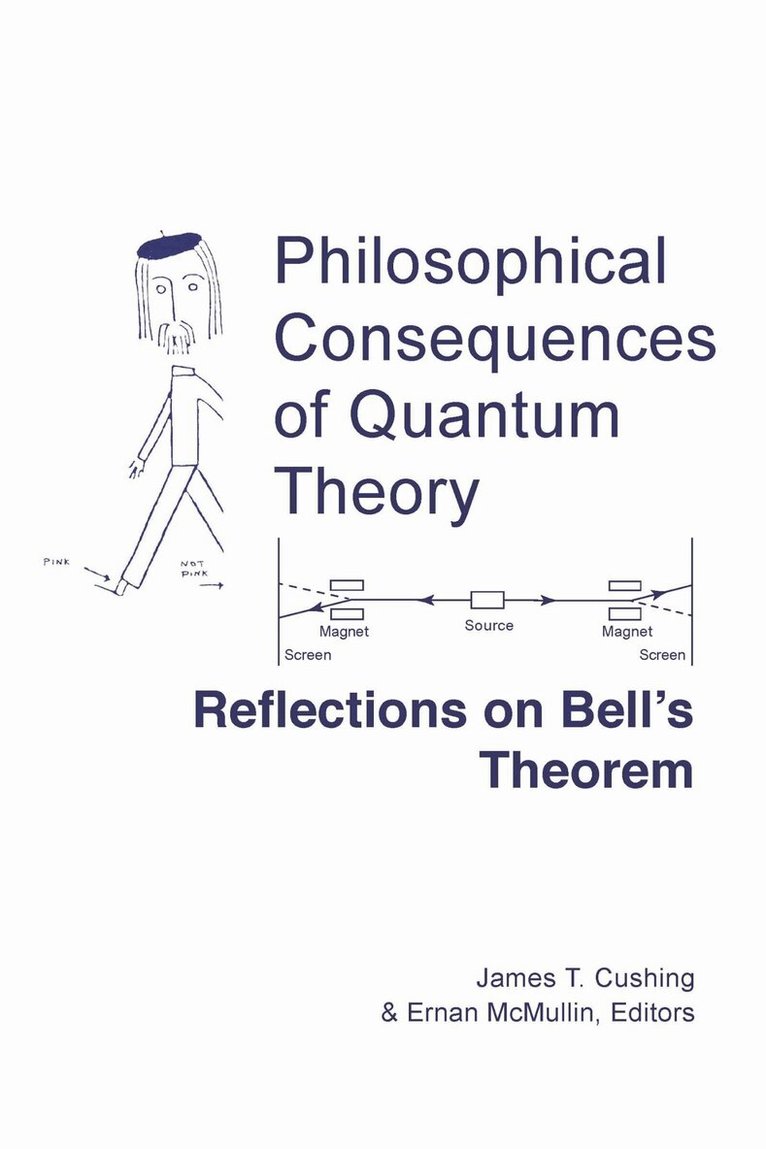
From the beginning, the implications of quantum theory for our most general understanding of the world have been a matter of intense debate. Einstein argues that the theory had to be regarded as fundamentally incomplete. Its inability, for example, to predict the exact time of decay of a single radioactive atom had to be due to a failure of the theory and not due to a permanent inability on our part or a fundamental indeterminism in nature itself.In 1964, John Bell derived a theorem which showed that any deterministic theory which preserved "locality" (i.e., which rejected action at a distance) would have certain consequences for measurements performed at a distance from one another. An experimental check seems to show that these consequences are not, in fact, realized. The correlation between the sets of events is much stronger than any "local" deterministic theory could allow. What is more, this stronger correlation is precisely that which is predicted by quantum theory. The astonishing result is that local deterministic theories of the classical sort seem to be permanently excluded. Not only can the individual decay not be predicted, but no future theory can ever predict it.The contributors in this volume wrestle with this conclusion. Some welcome it; others leave open a return to at lease some kind of deterministic world, one which must however allow something like action-at-a distance. How much lit it? And how can one avoid violating relativity theory, which excludes action-at-a-distance? How can a clash between the two fundamental theories of modern physics, relativity and quantum theory, be avoided? What are the consequences for the traditional philosophic issue of causality explanation and objectivity? One thing is certain; we can never return to the comfortable Newtonian world where everything that happened was, in principle, predictable and where what happened at one measurement site could not affect another set of measurements being performed light-years away, at a distance that a light-signal could not bridge.Contributors: James T. Cushing, Abner Shimony, N. David Mermin, Jon P. Jarrett, Linda Wessels, Bas C. van Fraassen, Jeremy Butterfield, Michael L. G. Redhead, Henry P. Stapp, Arthur Fine, R. I. G. Hughes, Paul Teller, Don Howard, Henry J. Folse, and Ernan McMullin.
301 kr
Skickas inom 10-15 vardagar
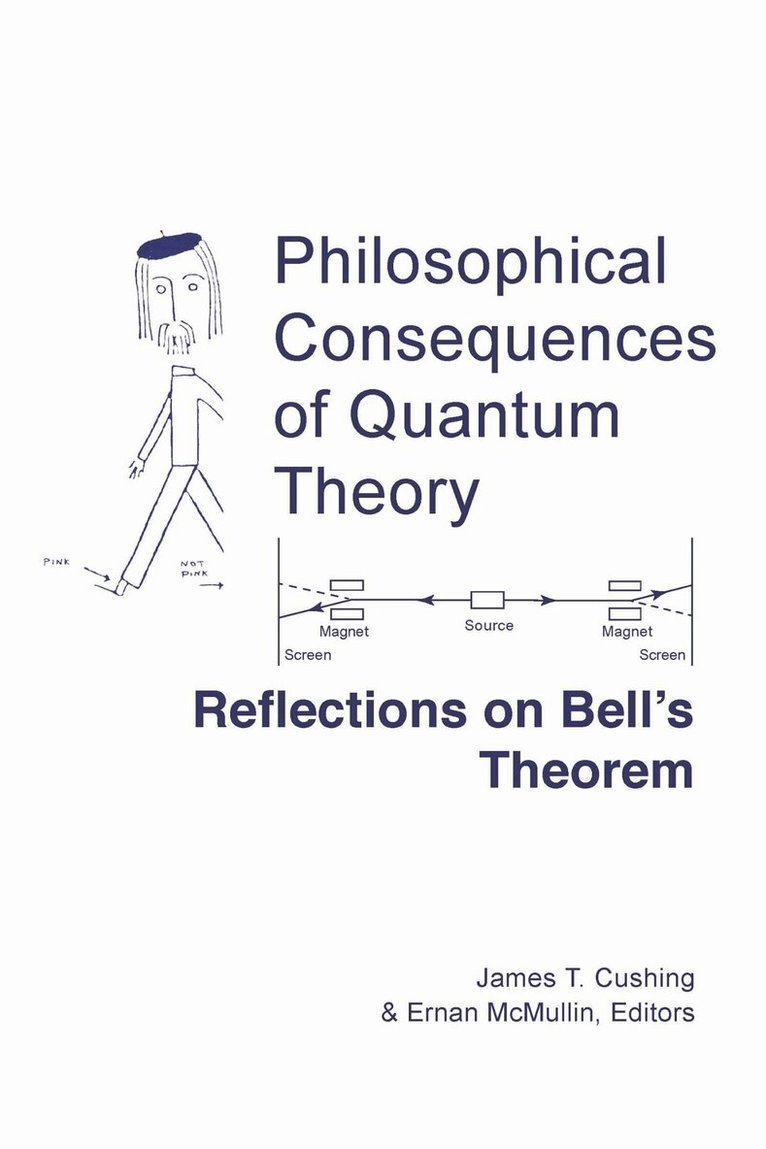
From the beginning, the implications of quantum theory for our most general understanding of the world have been a matter of intense debate. Einstein argues that the theory had to be regarded as fundamentally incomplete. Its inability, for example, to predict the exact time of decay of a single radioactive atom had to be due to a failure of the theory and not due to a permanent inability on our part or a fundamental indeterminism in nature itself.In 1964, John Bell derived a theorem which showed that any deterministic theory which preserved "locality" (i.e., which rejected action at a distance) would have certain consequences for measurements performed at a distance from one another. An experimental check seems to show that these consequences are not, in fact, realized. The correlation between the sets of events is much stronger than any "local" deterministic theory could allow. What is more, this stronger correlation is precisely that which is predicted by quantum theory. The astonishing result is that local deterministic theories of the classical sort seem to be permanently excluded. Not only can the individual decay not be predicted, but no future theory can ever predict it.The contributors in this volume wrestle with this conclusion. Some welcome it; others leave open a return to at lease some kind of deterministic world, one which must however allow something like action-at-a distance. How much lit it? And how can one avoid violating relativity theory, which excludes action-at-a-distance? How can a clash between the two fundamental theories of modern physics, relativity and quantum theory, be avoided? What are the consequences for the traditional philosophic issue of causality explanation and objectivity? One thing is certain; we can never return to the comfortable Newtonian world where everything that happened was, in principle, predictable and where what happened at one measurement site could not affect another set of measurements being performed light-years away, at a distance that a light-signal could not bridge.Contributors: James T. Cushing, Abner Shimony, N. David Mermin, Jon P. Jarrett, Linda Wessels, Bas C. van Fraassen, Jeremy Butterfield, Michael L. G. Redhead, Henry P. Stapp, Arthur Fine, R. I. G. Hughes, Paul Teller, Don Howard, Henry J. Folse, and Ernan McMullin.
921 kr
Skickas inom 5-8 vardagar
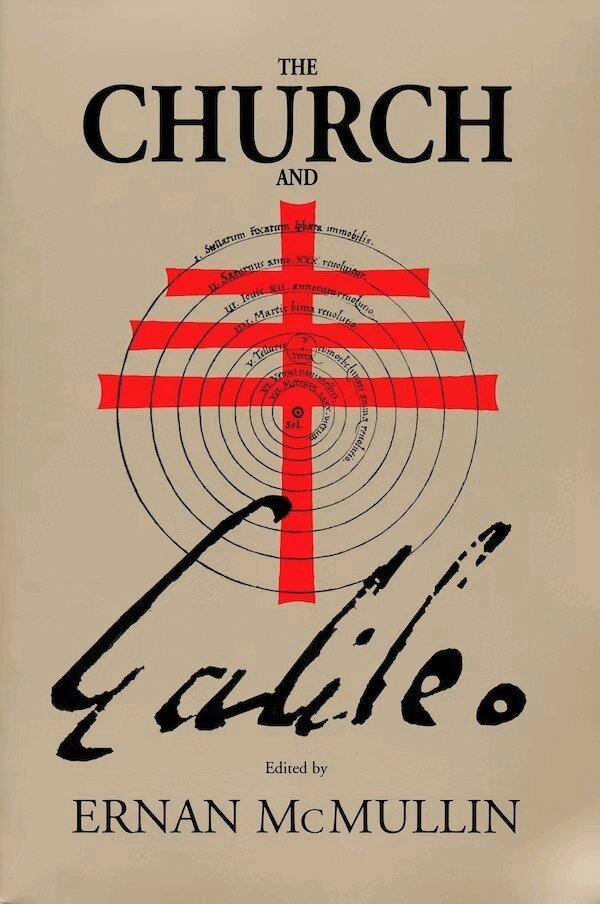
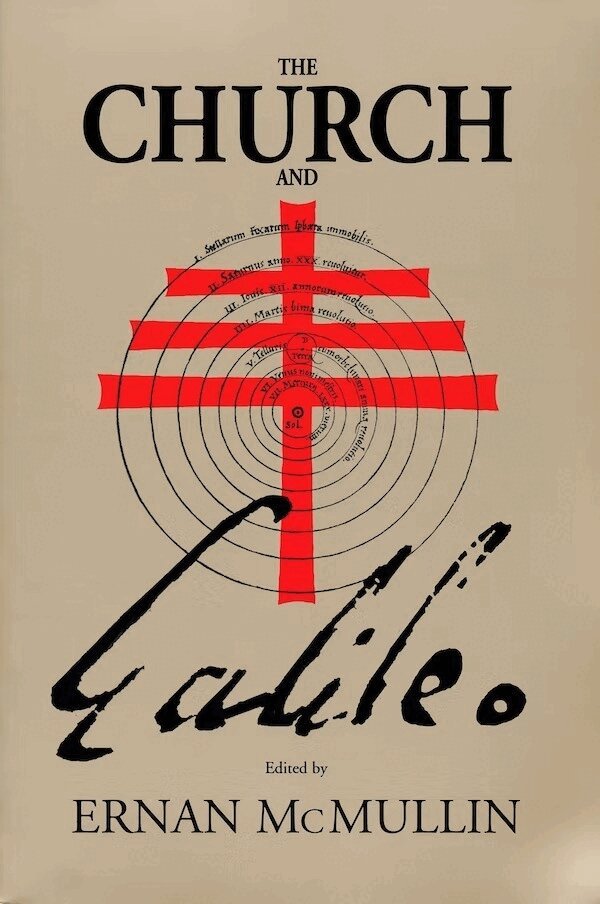
"The 'Galileo affair' has been the object of innumerable studies, which (taken as a whole) have spread nearly as much fog as they have sunshine. The studies in this volume, many of them based at least in part on newly discovered or released sources, have convincingly blown away much of that fog. This is easily the most important volume on the 'Galileo affair' ever produced." –David C. Lindberg, University of WisconsinThis collection of first-rate essays aims to provide an accurate scholarly assessment of the relationship between the Roman Catholic Church and Galileo. In 1981, Pope John Paul II established a commission to inquire into the Church's treatment of Galileo "in loyal recognition of wrongs, from whatever side they came," hoping this way to "dispel the mistrust . . . between science and faith." When the Galileo Commission finally issued its report in 1992, many scholars were disappointed by its inadequacies and its perpetuation of old defensive stratagems. This volume attempts what the Commission failed to provide—a historically accurate, scholarly, and balanced account of Galileo and his difficult relationship with the Roman Catholic Church.Contributors provide careful analyses of the interactions of the Church and Galileo over the thirty years between 1612 and his death in 1642. They also explore the attitudes of theologians to the Copernican innovation prior to Galileo's entry into the fray; survey the political landscape within which he lived; assess the effectiveness (or otherwise) of censorship of his work; and provide an analysis and occasional critique of the Church's later responses to the Galileo controversy. The book is divided into three sections corresponding to the periods before, during, and after the original Galileo affair. Particular attention is paid to those topics that have been the most divisive among scholars and theologians. The Church and Galileo will be welcomed by all those interested in early modern history and early modern science.Contributors: Michel-Pierre Lerner, Irving A. Kelter, Michael Shank, Ernan McMullin, Annibale Fantoli, Mariano Artigas, Rafael Martínez, William R. Shea, Francesco Beretta, Stéphane Garcia, John Heilbron, Michael Sharratt, and George Coyne.
368 kr
Skickas inom 10-15 vardagar
"The 'Galileo affair' has been the object of innumerable studies, which (taken as a whole) have spread nearly as much fog as they have sunshine. The studies in this volume, many of them based at least in part on newly discovered or released sources, have convincingly blown away much of that fog. This is easily the most important volume on the 'Galileo affair' ever produced." –David C. Lindberg, University of WisconsinThis collection of first-rate essays aims to provide an accurate scholarly assessment of the relationship between the Roman Catholic Church and Galileo. In 1981, Pope John Paul II established a commission to inquire into the Church's treatment of Galileo "in loyal recognition of wrongs, from whatever side they came," hoping this way to "dispel the mistrust . . . between science and faith." When the Galileo Commission finally issued its report in 1992, many scholars were disappointed by its inadequacies and its perpetuation of old defensive stratagems. This volume attempts what the Commission failed to provide—a historically accurate, scholarly, and balanced account of Galileo and his difficult relationship with the Roman Catholic Church.Contributors provide careful analyses of the interactions of the Church and Galileo over the thirty years between 1612 and his death in 1642. They also explore the attitudes of theologians to the Copernican innovation prior to Galileo's entry into the fray; survey the political landscape within which he lived; assess the effectiveness (or otherwise) of censorship of his work; and provide an analysis and occasional critique of the Church's later responses to the Galileo controversy. The book is divided into three sections corresponding to the periods before, during, and after the original Galileo affair. Particular attention is paid to those topics that have been the most divisive among scholars and theologians. The Church and Galileo will be welcomed by all those interested in early modern history and early modern science.Contributors: Michel-Pierre Lerner, Irving A. Kelter, Michael Shank, Ernan McMullin, Annibale Fantoli, Mariano Artigas, Rafael Martínez, William R. Shea, Francesco Beretta, Stéphane Garcia, John Heilbron, Michael Sharratt, and George Coyne.
508 kr
Skickas inom 10-15 vardagar
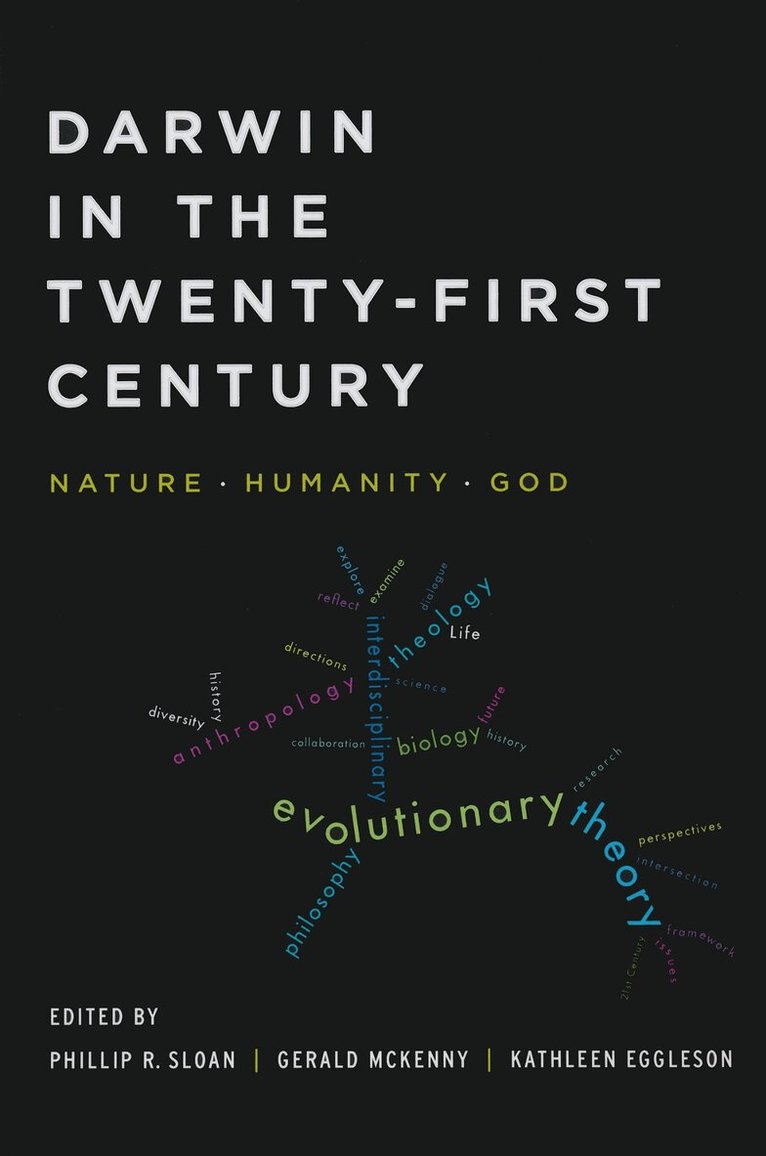
This collection of essays originated in conferences held at the Gregorian University in Rome and at the University of Notre Dame to commemorate the 150th anniversary of the publication of Charles Darwin's On the Origin of Species. These essays, by leading scholars, assess the continuing relevance of Darwin's work from the perspectives of biological science, history, philosophy, and theology. The contributors focus on three primary areas: developments in evolutionary biology that open up new ground for interdisciplinary dialogue; reflections on human evolution, with a particular focus on evolution and ethics; and new reflections on theology and evolution, particularly from a Roman Catholic perspective, drawing both on traditional perspectives and on new currents in Catholic theology.Contributors: Phillip R. Sloan, Gerald McKenny, Kathleen Eggleson, Scott F. Gilbert, Stuart A. Newman, Alessandro Minelli, David J. Depew, Gennaro Auletta, Ivan Colagè, Paolo D'Ambrosio, Bernard Wood, Robert J. Richards, Paul E. Griffiths, John S. Wilkins, John O'Callaghan, William E. Carroll, Józef Życiński, Celia Deane-Drummond, Peter J. Bowler, and Jean Gayon.