Ashgate Studies in Aviation Economics and Management - Böcker
Visar alla böcker i serien Ashgate Studies in Aviation Economics and Management. Handla med fri frakt och snabb leverans.
12 produkter
12 produkter
2 036 kr
Skickas inom 10-15 vardagar
Competition in air transport has been transformed by industry liberalization initiatives, resulting in the emergence of a wide array of new airline start-ups. Restrictions on low fares have been removed, uniform control requirements have been established, and legislation has facilitated the proliferation of low-fare carriers and competition. The new breed of independent low-fare airlines (LFAs) use market freedoms to shake up the industry's competitive dynamics and offer the customer the alternative of low prices and basic service. A successful low fare business model requires a ruthless and relentless focus on cost cutting and increased operational productivity, combined with an ability to generate and maintain a cash surplus and a cautious but steady fleet and route network expansion. The mastery of these techniques has made Southwest and Ryanair industry leaders, but others such as EasyJet also have a proven record of profitability and market growth, despite not always being the lowest cost or price providers. In this comprehensive and topical study the author systematically provides: · a step-by-step approach to understanding the conditions and choices shaping airline competitiveness, and an assessment of the nature of the low fare market · a comprehensive study of the low fare airline sector's evolution and growth and arguments as to why the European low fare industry is here to stay despite the inevitability of a shake out (reminiscent of the early 1980s in the USA). · unique insights into the success of low fare market leaders in Europe, North America and Australasia and an examination of the experience of US new entrants in the post-deregulations era, to discern strategic lessons for their counterparts; · critical perspectives on strategic management principles and practices in modern airline companies, discussing strategies for survival, and comparing competitive strategies for the main low fare airlines and their limitations; · key reasons for the robustness of the low fare business model during industry crises The book also determines the conditions and strategies that shape sustainable advantage for LFAs in highly competitive deregulated markets where established airlines seek to force out new entrants and considerable political interference remains. Moreover, the book considers why, during the airline industry crisis of late 2001, the market capitalizations of low fare leaders held steady in the wake of the US terrorist attacks, while the major carriers on both sides of the Atlantic were decimated. Cleared for Take-Off is essential reading for airline executives, aerospace manufacturers, regulatory and government transportation agencies, researchers or students of aviation management, transport studies, the travel industry and/or corporate strategy.
2 176 kr
Skickas inom 10-15 vardagar
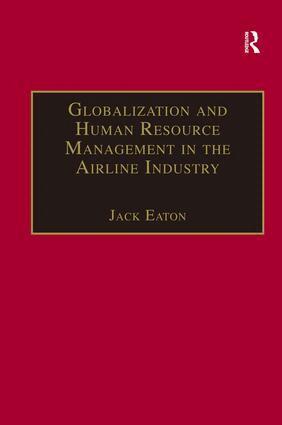
Globalization is a pervasive feature of recent industrial and commercial developments, not least in the airline business with concomitant effects on human resource management. This book focuses on the organization and human resource changes that have taken place in the international airline industry in recent years. It provides an extensive analysis of airline organization and external relations, airline organization and internal relations, changes in industrial relations and human resource management and also, the integration of human resource management and other management functions. The authoritative second edition of an already established work that covers both theory and practice, this book will be of great interest to managers in all areas of the airline industry, as well as to students of air transport and personnel/human resource management.
2 036 kr
Skickas inom 10-15 vardagar
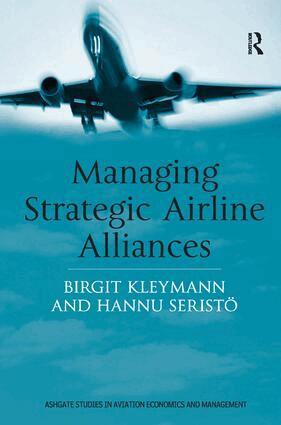
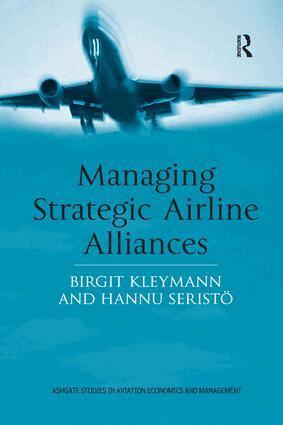
Strategic airline alliances are an important topic in airline management today, stimulated by poor access of international airlines to large domestic markets such as the USA and EU and the increasing importance of network scope. Outright mergers of international airlines have proved to be difficult for political, cultural and legal reasons, making alliances the best available form to strengthen strategic positions and streamline networks. However, there are a number of difficulties associated with an alliance such as long-term stability, political climate, cultural conflict and how much capital alliance partners should sink into the integration. The main purpose of the book is to convey in an accessible form to a wide audience, the results of recent academic research on strategic airline alliances. The authors systematically cover: policy, regulation and consumer issues; management, marketing and strategic issues; the mechanics of airline alliances; the airline alliance group as an organisation in its own right; different forms of alliances and clusters; success and failure factors of airline alliances. The book successfully: - provides an analytical framework for understanding the dynamics of airline alliance groups - examines both the level of the individual airline and the alliance group itself - applies recent insights from organisation theory. The readership includes airline managers, policy-makers, academic researchers and others interested in evolving multilateral alliances. It can also be used as a course book both in aviation management training and in more general modules on alliances for advanced students in air transport management.
2 176 kr
Skickas inom 10-15 vardagar
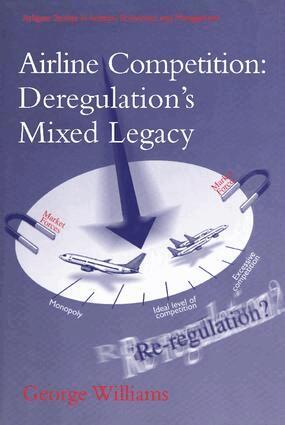
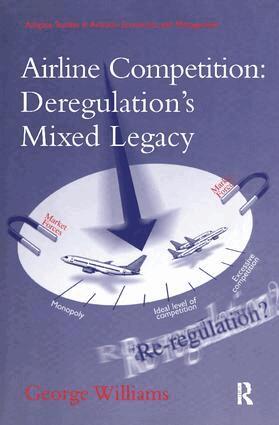
The advantages of airline competition to consumers are clearly apparent. Lower fares, greater choice, more frequent flights and a wider range of available services have all been evident when the entry of a new competitor has occurred. In many instances however, after an initial, relatively short-lived, period of aggressive competition the new entrant has either gone bankrupt or found a less stressful existence co-operating in some manner with the incumbent. In this wide-ranging book, the author looks at the competitive arena in the post-regulation era and especially focusses on deregulation’s legacy; globalization in a bilateral world breaking the link between nationality and airlines. The book is of special interest to those members engaged in the Airline Industry, Regulatory Authorities and Government Departments of Transport and Industry. It will be of value to academic specialists in transport economics and public policy; MSc students and Institutes of Transport; pressure groups and the Travel and Tourism Industry.
Economic Regulation of Airports
Recent Developments in Australasia, North America and Europe
Inbunden, Engelska, 2004
2 176 kr
Skickas inom 10-15 vardagar
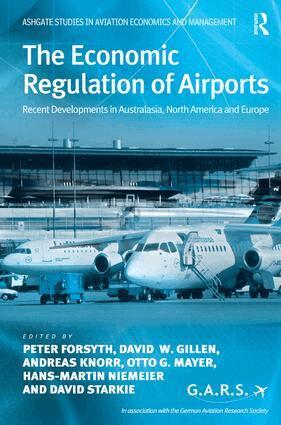
This tour d'horizon book reviews airport regulation and competition in different regions of the world and contrasts different policy perspectives. Organized in four parts, the first three examine, in turn, Australasia, North America, and Europe, while the last section looks at the institutional reforms that have taken place in these regions. The book covers the regulation of airports, and competition in different regions, as well as privatization policy, the interaction between airports and airlines, and regional economic impacts. It also examines the linkages between governance structures and forms of regulation. The book's global sweep embraces all the large aviation markets, bringing together the ideas and challenges of academic economists, airlines, airport managers, consultants and government regulators. As well as looking at different methods, degrees and paradigms of regulation it also spells out the stress-points, in a way that makes essential reading for airport operators, airline operations staff, as well as academic economists concerned with transport studies. It also offers interesting reading and important lessons for those concerned with regulation of the utility industries such as, telecommunications, water and power generation and distribution - where infrastructure can be subject to natural monopoly characteristics and where firms competing in downstream markets are dependent on the investment and operational strategies of the upstream infrastructure operator.
1 966 kr
Skickas inom 10-15 vardagar
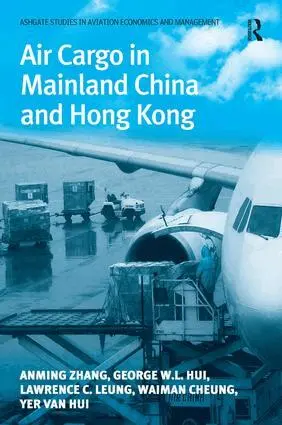
Air traffic and the aviation industry have grown rapidly on the Chinese mainland in the two and a half decades since China's open door policy. Accession to the WTO will further stimulate trade and foreign direct investment (FDI), intensifying the demand for air cargo services. It will also open up the Chinese economy to foreign participation in the transportation and logistics sectors, making these sectors more competitive and efficient. This book provides a systematic and comprehensive study of China's air cargo industry as well as its policy evolution. It covers the sources and destinations of air cargo in mainland China and Hong Kong: whence it comes and where it goes to. The major hubs of the transportation network - Beijing, Shanghai, Hong Kong, and Guangzhou - are discussed one by one. The virtual aspects of the network at these hubs in terms of IT applications, preparedness, and needs are examined and compared. Though the subject matter of this book is air cargo, there is considerable coverage of the aviation industry and policy on the mainland and Hong Kong. Changes have been happening so fast there are few books and publications that cover them systematically and comprehensively. Readership includes business executives in airfreight companies, airports and airlines, logistics specialists, aviation university lecturers and students.
809 kr
Skickas inom 10-15 vardagar
Strategic airline alliances are an important topic in airline management today, stimulated by poor access of international airlines to large domestic markets such as the USA and EU and the increasing importance of network scope. Outright mergers of international airlines have proved to be difficult for political, cultural and legal reasons, making alliances the best available form to strengthen strategic positions and streamline networks. However, there are a number of difficulties associated with an alliance such as long-term stability, political climate, cultural conflict and how much capital alliance partners should sink into the integration. The main purpose of the book is to convey in an accessible form to a wide audience, the results of recent academic research on strategic airline alliances. The authors systematically cover: policy, regulation and consumer issues; management, marketing and strategic issues; the mechanics of airline alliances; the airline alliance group as an organisation in its own right; different forms of alliances and clusters; success and failure factors of airline alliances. The book successfully: - provides an analytical framework for understanding the dynamics of airline alliance groups - examines both the level of the individual airline and the alliance group itself - applies recent insights from organisation theory. The readership includes airline managers, policy-makers, academic researchers and others interested in evolving multilateral alliances. It can also be used as a course book both in aviation management training and in more general modules on alliances for advanced students in air transport management.
Flying Too Close to the Sun
The Success and Failure of the New-Entrant Airlines
Häftad, Engelska, 2016
496 kr
Skickas inom 10-15 vardagar
Since deregulation in the United States, most jet operating new-entrant carriers have failed. Theories on competition had been put to the test and reality turned out to be different to the vision. To begin with many new-entrant airlines were successful, but were not able to create sustainable strategies to survive as incumbent carriers adjusted to the new operating environment. This book explains the complex issues that led to the almost total failure rate of the 'first wave' new-entrant airlines. The background to the pre-nineties failure predicament is examined in order to give a good overview of the characteristics of new-entrant airlines and of the environment in which they operate. Attention is given to the new-entrants’ strategies and management in order to explore past deficiencies and to pave the way for successful new strategies. The author covers the new-entrants’ structure and then identifies critical factors through distress/failure prediction models. His approach is broad, and conclusions on airline failure are based on a dynamic framework, rather than a simple prescription for success or how to avoid failure. It is hoped that the reader will thereby come to recognize more fully the adaptability of incumbent airlines as well as the past mistakes of new airlines and gain some insights into new airline strategies. The book is in two main parts. The first part establishes what sort of an environment the new-entrants encounter. The second part gives results of a survey research giving an insight into management priorities and organization characteristics at new-entrant airlines and their linkage with good and poor performance. In addition critical factors are derived from failure and distress prediction models based on survey data and financial and traffic data on new-entrants. The final chapter brings together the various parts of the book and covers an inventory of new-entrants’ critical factors. The readership includes managers in
833 kr
Skickas inom 10-15 vardagar
Globalization is a pervasive feature of recent industrial and commercial developments, not least in the airline business with concomitant effects on human resource management. This book focuses on the organization and human resource changes that have taken place in the international airline industry in recent years. It provides an extensive analysis of airline organization and external relations, airline organization and internal relations, changes in industrial relations and human resource management and also, the integration of human resource management and other management functions. The authoritative second edition of an already established work that covers both theory and practice, this book will be of great interest to managers in all areas of the airline industry, as well as to students of air transport and personnel/human resource management.
754 kr
Skickas inom 10-15 vardagar
Competition in air transport has been transformed by industry liberalization initiatives, resulting in the emergence of a wide array of new airline start-ups. Restrictions on low fares have been removed, uniform control requirements have been established, and legislation has facilitated the proliferation of low-fare carriers and competition. The new breed of independent low-fare airlines (LFAs) use market freedoms to shake up the industry's competitive dynamics and offer the customer the alternative of low prices and basic service. A successful low fare business model requires a ruthless and relentless focus on cost cutting and increased operational productivity, combined with an ability to generate and maintain a cash surplus and a cautious but steady fleet and route network expansion. The mastery of these techniques has made Southwest and Ryanair industry leaders, but others such as EasyJet also have a proven record of profitability and market growth, despite not always being the lowest cost or price providers. In this comprehensive and topical study the author systematically provides: · a step-by-step approach to understanding the conditions and choices shaping airline competitiveness, and an assessment of the nature of the low fare market · a comprehensive study of the low fare airline sector's evolution and growth and arguments as to why the European low fare industry is here to stay despite the inevitability of a shake out (reminiscent of the early 1980s in the USA). · unique insights into the success of low fare market leaders in Europe, North America and Australasia and an examination of the experience of US new entrants in the post-deregulations era, to discern strategic lessons for their counterparts; · critical perspectives on strategic management principles and practices in modern airline companies, discussing strategies for survival, and comparing competitive strategies for the main low fare airlines and their limitations; · key reasons for the robustness of the low fare business model during industry crises The book also determines the conditions and strategies that shape sustainable advantage for LFAs in highly competitive deregulated markets where established airlines seek to force out new entrants and considerable political interference remains. Moreover, the book considers why, during the airline industry crisis of late 2001, the market capitalizations of low fare leaders held steady in the wake of the US terrorist attacks, while the major carriers on both sides of the Atlantic were decimated. Cleared for Take-Off is essential reading for airline executives, aerospace manufacturers, regulatory and government transportation agencies, researchers or students of aviation management, transport studies, the travel industry and/or corporate strategy.
673 kr
Skickas inom 10-15 vardagar
The advantages of airline competition to consumers are clearly apparent. Lower fares, greater choice, more frequent flights and a wider range of available services have all been evident when the entry of a new competitor has occurred. In many instances however, after an initial, relatively short-lived, period of aggressive competition the new entrant has either gone bankrupt or found a less stressful existence co-operating in some manner with the incumbent. In this wide-ranging book, the author looks at the competitive arena in the post-regulation era and especially focusses on deregulation’s legacy; globalization in a bilateral world breaking the link between nationality and airlines. The book is of special interest to those members engaged in the Airline Industry, Regulatory Authorities and Government Departments of Transport and Industry. It will be of value to academic specialists in transport economics and public policy; MSc students and Institutes of Transport; pressure groups and the Travel and Tourism Industry.
Flying Too Close to the Sun
The Success and Failure of the New-Entrant Airlines
Inbunden, Engelska, 1999
1 336 kr
Skickas inom 10-15 vardagar
Since deregulation in the United States, most jet operating new-entrant carriers have failed. Theories on competition had been put to the test and reality turned out to be different to the vision. To begin with many new-entrant airlines were successful, but were not able to create sustainable strategies to survive as incumbent carriers adjusted to the new operating environment. This book explains the complex issues that led to the almost total failure rate of the 'first wave' new-entrant airlines. The background to the pre-nineties failure predicament is examined in order to give a good overview of the characteristics of new-entrant airlines and of the environment in which they operate. Attention is given to the new-entrants’ strategies and management in order to explore past deficiencies and to pave the way for successful new strategies. The author covers the new-entrants’ structure and then identifies critical factors through distress/failure prediction models. His approach is broad, and conclusions on airline failure are based on a dynamic framework, rather than a simple prescription for success or how to avoid failure. It is hoped that the reader will thereby come to recognize more fully the adaptability of incumbent airlines as well as the past mistakes of new airlines and gain some insights into new airline strategies. The book is in two main parts. The first part establishes what sort of an environment the new-entrants encounter. The second part gives results of a survey research giving an insight into management priorities and organization characteristics at new-entrant airlines and their linkage with good and poor performance. In addition critical factors are derived from failure and distress prediction models based on survey data and financial and traffic data on new-entrants. The final chapter brings together the various parts of the book and covers an inventory of new-entrants’ critical factors. The readership includes managers in