Bettie Allison Rand Lectures in Art History - Böcker
Visar alla böcker i serien Bettie Allison Rand Lectures in Art History. Handla med fri frakt och snabb leverans.
4 produkter
4 produkter
277 kr
Skickas inom 10-15 vardagar
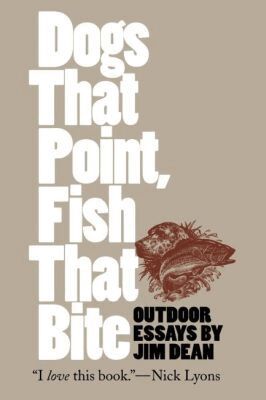
Jim Dean, longtime editor of Wildlife in North Carolina , offers his personal observations on the pleasures and frustrations of hunting, fishing, camping, and other outdoor pursuits. Dogs That Point, Fish That Bite draws together fifty of the best columns that Dean has written for the magazine over the last seventeen years. The witty, sometimes poignant pieces are arranged into a loose chronicle of the sporting year, with a generous allowance for digression: the first is set in April, on the opening day of trout season, and the last tells of a New Year's Day spent alone in a mountain cabin. At first glance, hunting and fishing are the focus of most of the columns. Often, however, Dean is after bigger game. A crab that escapes the pot leads him to reflect on the capricious nature of life. The restoration of a cabin at the old family farm evokes memories of family and simpler times. And a May panfishing trip takes on the quality of ritual, performed by two old friends. The consistent theme uniting all the essays is the celebration of wild places and rural traditions that have become endangered in our modern world. |Fifty outdoor essays by Jim Dean, the longtime editor of Wildlife in North Carolina magazine and a noted outdoor writer and photographer. Here Dean shares his personal observations on the pleasures and frustrations of hunting, fishing, camping, and other outdoor pursuits.
530 kr
Skickas inom 10-15 vardagar
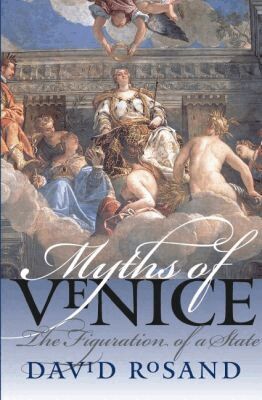
Over the course of several centuries, Venice fashioned and refined a portrait of itself that responded to and exploited historical circumstance. Never conquered and taking its enduring independence as a sign of divine favour, free of civil strife and proud of its internal stability, Venice broadcast the image of itself as the Most Serene Republic, an ideal state whose ruling patriciate were selflessly devoted to the commonweal. All this has come to be known as the ""myth of Venice"". Exploring the imagery developed in Venice to represent the legends of its origins and legitimacy, David Rosand reveals how artists such as Gentile and Giovanni Bellini, Carpaccio, Titian, Jacopo Sansovino, Tintoretto and Veronese gave enduring visual form to the myths of Venice. He argues that Venice, more than any other political entity of the early modern period, shaped the visual imagination of political thought. This visualization of political ideals, and its reciprocal effect on the civic imagination, is the larger theme of the book.
434 kr
Skickas inom 10-15 vardagar
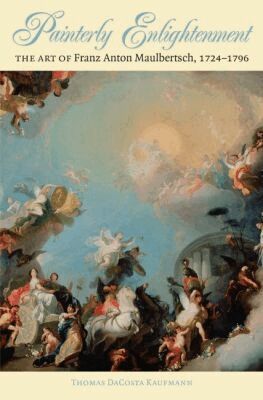
Franz Anton Maulbertsch (1724-1796) was an Austrian fresco painter known for his bold use of color. Although he has been recognized in the Central European regions where he worked, Maulbertsch has remained outside the general canon of art history. With Painterly Enlightenment, Thomas DaCosta Kaufmann recovers the story of Maulbertsch, offering the first comprehensive English-language study of the long-neglected artist. Kaufmann situates Maulbertsch as a fresco painter at a time of transition to easel painting, a colorist at a time when color was not fully appreciated by contemporary observers, and an interpreter of religious themes at a time when secular subjects were becoming more popular. In this analysis, he is shown caught between the intellectual forces of the Enlightenment and the waning power of the traditional church, thus helping to illuminate the relationship between the Enlightenment and the arts. Kaufmann provides a thorough foundation for the fresh recognition of one of the great painters of eighteenth-century Europe, a leading fresco painter who is a colorist worthy of comparison to the best of his contemporaries, including the celebrated Venetian artist Giovanni Battista Tiepolo.
586 kr
Skickas inom 10-15 vardagar
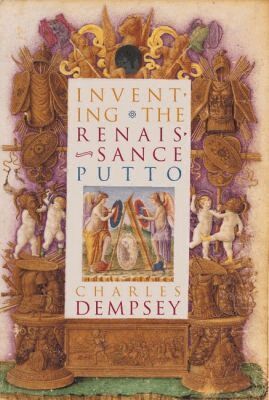
The figure of the putto (often portrayed as a mischievous baby) made frequent appearances in the art and literature of Renaissance Italy. Commonly called spiritelli, or sprites, putti embodied a minor species of demon, in their nature neither good nor bad. They included natural spirits, animal spirits, and the spirits of sight and sound, as well as hobgoblin fantasies, bogeys, and the spirits contained in wine. Among the sensations ascribed to spiritelli were feelings of love, erotic arousal, and startling frights. After discussing the many manifestations of the putto-spiritello in fifteenth-century Italian art and literature, Charles Dempsey offers parallel interpretations of two works: Botticelli's Mars and Venus, a painting in which infant Satyr-putti appear as the panic-inducing spirits of the nightmare, and Politian's Stanze, a poem in which masked cupids appear to the hero in a deceiving dream. He concludes with an examination of the function of such masks in the poetry and public masquerades sponsored by Lorenzo de'Medici and in Michelangelo's scheme for the decoration of the Medici Chapel.Throughout, Dempsey advances a larger argument about the nature of Italian Renaissance art. Rather than simply reviving classical forms, he says, the art accommodated and fused them within local, vernacular, and modern Italian traditions, both literary and pictorial.