Thomas DaCosta Kaufmann - Böcker
Visar alla böcker från författaren Thomas DaCosta Kaufmann. Handla med fri frakt och snabb leverans.
8 produkter
8 produkter
1 393 kr
Skickas inom 3-6 vardagar
Art history traditionally classifics works of art by country as well as period, but often political borders and cultural boundaries are highly complex and fluid. Questions of identity, policy, and exchange make it difficult to determine the "place" of art, and often the art itself results from these conflicts of geography and culture. Addressing an important approach to art history, Thomas DaCosta Kaufmann's book offers essays that focus on the intricacies of accounting for the geographical dimension of art history during the early modern period in Europe, Latin America, and Asia. Toward a Geography of Art presents a historical overview of these complexities, debates contemporary concerns, and completes its exploration with a diverse collection of case studies. Employing the author's expertise in a variety of fields, the book delves into critical issues such as transculturation of indigenous traditions, mestizaje, the artistic metropolis, artistic diffusion, transfer, circulation, subversion, and center and periphery.What results is a foundational study that establishes the geography of art as a subject and forces us to reconsider assumptions about the place of art that underlic the longstanding narratives of art history.
331 kr
Skickas inom 7-10 vardagar
Art history traditionally classifics works of art by country as well as period, but often political borders and cultural boundaries are highly complex and fluid. Questions of identity, policy, and exchange make it difficult to determine the "place" of art, and often the art itself results from these conflicts of geography and culture. Addressing an important approach to art history, Thomas DaCosta Kaufmann's book offers essays that focus on the intricacies of accounting for the geographical dimension of art history during the early modern period in Europe, Latin America, and Asia. Toward a Geography of Art presents a historical overview of these complexities, debates contemporary concerns, and completes its exploration with a diverse collection of case studies. Employing the author's expertise in a variety of fields, the book delves into critical issues such as transculturation of indigenous traditions, mestizaje, the artistic metropolis, artistic diffusion, transfer, circulation, subversion, and center and periphery.What results is a foundational study that establishes the geography of art as a subject and forces us to reconsider assumptions about the place of art that underlic the longstanding narratives of art history.
821 kr
Skickas inom 3-6 vardagar
730 kr
Skickas inom 10-15 vardagar
The project of global art history calls for balanced treatment of artifacts and a unified approach. This volume emphasizes questions of transcultural encounters and exchanges as circulations. It presents a strategy that highlights the processes and connections among cultures, and also responds to the dynamics at work in the current globalized art world. The editors’ introduction provides an account of the historical background to this approach to global art history, stresses the inseparable bond of theory and practice, and suggests a revaluation of materialist historicism as an underlying premise. Individual contributions to the book provide an overview of current reflection and research on issues of circulation in relation to global art history and the globalization of art past and present. They offer a variety of methods and approaches to the treatment of different periods, regions, and objects, surveying both questions of historiography and methodology and presenting individual case studies. An 'Afterword' by James Elkins gives a critique of the present project. The book thus deliberately leaves discussion open, inviting future responses to the large questions it poses.
431 kr
Skickas inom 10-15 vardagar
Franz Anton Maulbertsch (1724-1796) was an Austrian fresco painter known for his bold use of color. Although he has been recognized in the Central European regions where he worked, Maulbertsch has remained outside the general canon of art history. With Painterly Enlightenment, Thomas DaCosta Kaufmann recovers the story of Maulbertsch, offering the first comprehensive English-language study of the long-neglected artist. Kaufmann situates Maulbertsch as a fresco painter at a time of transition to easel painting, a colorist at a time when color was not fully appreciated by contemporary observers, and an interpreter of religious themes at a time when secular subjects were becoming more popular. In this analysis, he is shown caught between the intellectual forces of the Enlightenment and the waning power of the traditional church, thus helping to illuminate the relationship between the Enlightenment and the arts. Kaufmann provides a thorough foundation for the fresh recognition of one of the great painters of eighteenth-century Europe, a leading fresco painter who is a colorist worthy of comparison to the best of his contemporaries, including the celebrated Venetian artist Giovanni Battista Tiepolo.
2 162 kr
Skickas inom 10-15 vardagar
The project of global art history calls for balanced treatment of artifacts and a unified approach. This volume emphasizes questions of transcultural encounters and exchanges as circulations. It presents a strategy that highlights the processes and connections among cultures, and also responds to the dynamics at work in the current globalized art world. The editors’ introduction provides an account of the historical background to this approach to global art history, stresses the inseparable bond of theory and practice, and suggests a revaluation of materialist historicism as an underlying premise. Individual contributions to the book provide an overview of current reflection and research on issues of circulation in relation to global art history and the globalization of art past and present. They offer a variety of methods and approaches to the treatment of different periods, regions, and objects, surveying both questions of historiography and methodology and presenting individual case studies. An 'Afterword' by James Elkins gives a critique of the present project. The book thus deliberately leaves discussion open, inviting future responses to the large questions it poses.
Art and Curiosity Cabinets of the Late Renaissance - A Contribution to the History of Collecting
Häftad, Engelska, 2021
556 kr
Skickas inom 7-10 vardagar
For the first time, the pioneering book that launched the study of art and curiosity cabinets is available in English. Julius von Schlosser's Die Kunst- und Wunderkammern der Spatrenaissance (Art and Curiosity Cabinets of the Late Renaissance) is a seminal work in the history of art and collecting. Originally published in German in 1908, it was the first study to interpret sixteenth- and seventeenth-century cabinets of wonder as precursors to the modern museum, situating them within a history of collecting going back to Greco-Roman antiquity. In its comparative approach and broad geographical scope, Schlosser's book introduced an interdisciplinary and global perspective to the study of art and material culture, laying the foundation for museum studies and the history of collections. Schlosser was an Austrian professor, curator, museum director, and leading figure of the Vienna School of art history whose work has not achieved the prominence of his contemporaries until now. This eloquent and informed translation is preceded by Thomas DaCosta Kaufmann's substantial introduction. Tracing Schlosser's biography and intellectual formation in Vienna at the turn of the twentieth century, it contextualizes his work among that of his contemporaries, offering a wealth of insights along the way.
199 kr
Skickas
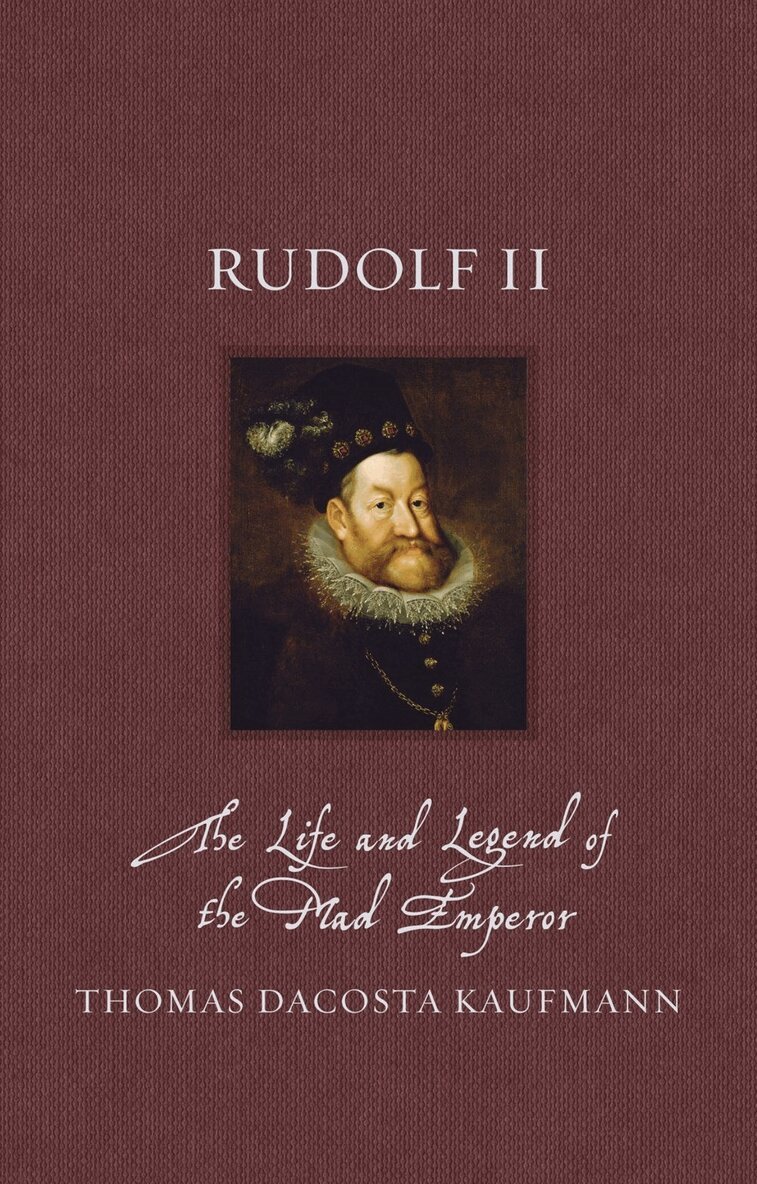
Rudolf II: The Life and Legend of the Mad Emperor offers a fresh perspective on the Habsburg ruler, shedding new light on a reign often coloured by myths of madness. Contrary to popular belief, Rudolf was not a passive recluse but an engaged monarch, navigating the complexities of state affairs with a moderate hand amid turbulent times. By contextualizing his interests in astrology, alchemy and magic, Thomas DaCosta Kaufmann offers new insights into Rudolf’s support for scientific endeavours and his quest for power. It also demonstrates that Rudolf’s assembling of the greatest Kunstkammer and painting collection of his time and his patronage of artists were essential elements of Renaissance rulership. This book will appeal to a diverse audience, including enthusiasts of the occult, as well as those fascinated by Renaissance history, the Habsburg dynasty and art history.