Charles Dempsey - Böcker
Visar alla böcker från författaren Charles Dempsey. Handla med fri frakt och snabb leverans.
3 produkter
3 produkter
Del 4 - Bernard Berenson Lectures on the Italian Renaissance Delivered at Villa I Tatti
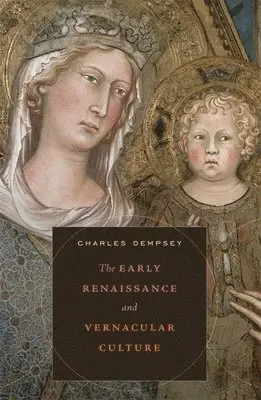
Early Renaissance and Vernacular Culture
Inbunden, Engelska, 2012
495 kr
Skickas inom 10-15 vardagar
Why do the paintings and poetry of the Italian Renaissance—a celebration of classical antiquity—also depict the Florentine countryside populated with figures dressed in contemporary silk robes and fleur-de-lys crowns? Upending conventional interpretations of this well-studied period, Charles Dempsey argues that a fusion of classical form with contemporary content, once seen as the paradox of the Renaissance, can be better understood as its defining characteristic.Dempsey describes how Renaissance artists deftly incorporated secular and popular culture into their creations, just as they interwove classical and religious influences. Inspired by the love lyrics of Parisian troubadours, Simone Martini altered his fresco Maestà in 1321 to reflect a court culture that prized terrestrial beauty. As a result the Maestà scandalously revealed, for the first time in Italian painting, a glimpse of the Madonna’s golden locks. Modeled on an ancient statue, Botticelli’s Birth of Venus went much further, featuring fashionable beauty ideals of long flowing blonde hair, ivory skin, rosy cheeks, and perfectly arched eyebrows. In the only complete reconstruction of Feo Belcari’s twelve Sybilline Octaves, Dempsey shows how this poet, patronized by the Medici family, was also indebted to contemporary dramatic modes. Popularizing biblical scenes by mixing the familiar with the exotic, players took the stage outfitted in taffeta tunics and fanciful hats, and one staging even featured a papier-maché replica of Jonah’s Whale. As Dempsey’s thorough study illuminates, Renaissance poets and artists did not simply reproduce classical aesthetics but reimagined them in vernacular idioms.
Drawing Relationships in Northern Italian Renaissance Art
Patronage and Theories of Invention
Häftad, Engelska, 2016
845 kr
Skickas inom 10-15 vardagar
Vasari's celebration of the art of the central Italian cities of Florence, Rome and Venice, has long left in shadow the art of northern Italy. The economic and historical decline of the region compounded this effect with the dispersal of the treasures of the Farnese to Naples, the Este to Dresden and the Gonzaga to Madrid and Paris. Each chapter in this volume celebrates a stunning work from the region, among them Correggio's famed Camera di San Paolo in Parma, Parmigianino's Camerino in the Rocca Sanvitale near Parma, the studiolo of Alberto Pio at Carpi, and the Tomb of the Ancestors in the Tempio Malatestiano in Rimini. The volume as a whole offers fascinating insights into the tussle between the maniera moderna and the maniera devota in the first half of the sixteenth century, when the unity between the elegance and beauty of art and its religious significance came under debate. Around the year 1550, when Michelangelo's Last Judgement came under attack for impiety and lasciviousness and the reformists called for an art that would invoke in the viewer a devotional response that identified manifestations of the divine with human feelings and emotions. In northern Italy, it was on the foundation laid by Correggio, with his tenderness and ability to evoke the softness of living flesh, that the Carracci brothers built their reform of painting.
584 kr
Skickas inom 10-15 vardagar
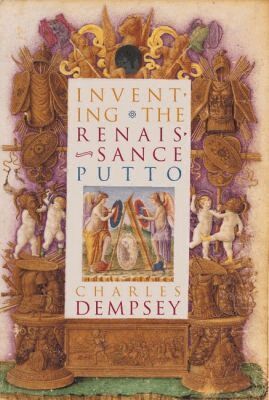
The figure of the putto (often portrayed as a mischievous baby) made frequent appearances in the art and literature of Renaissance Italy. Commonly called spiritelli, or sprites, putti embodied a minor species of demon, in their nature neither good nor bad. They included natural spirits, animal spirits, and the spirits of sight and sound, as well as hobgoblin fantasies, bogeys, and the spirits contained in wine. Among the sensations ascribed to spiritelli were feelings of love, erotic arousal, and startling frights. After discussing the many manifestations of the putto-spiritello in fifteenth-century Italian art and literature, Charles Dempsey offers parallel interpretations of two works: Botticelli's Mars and Venus, a painting in which infant Satyr-putti appear as the panic-inducing spirits of the nightmare, and Politian's Stanze, a poem in which masked cupids appear to the hero in a deceiving dream. He concludes with an examination of the function of such masks in the poetry and public masquerades sponsored by Lorenzo de'Medici and in Michelangelo's scheme for the decoration of the Medici Chapel.Throughout, Dempsey advances a larger argument about the nature of Italian Renaissance art. Rather than simply reviving classical forms, he says, the art accommodated and fused them within local, vernacular, and modern Italian traditions, both literary and pictorial.